There’s a strange assumption many people carry around – that a book has to be long to be meaningful. Like somehow the weight of the thing on your nightstand determines how deeply it can cut. Honestly, that couldn’t be further from the truth.
Some of the most devastating, life-altering reading experiences in literary history have come from books you can finish in a single afternoon. Reading for just six minutes can reduce stress levels by roughly two thirds, according to research from the University of Sussex. Now imagine what a tightly wound, emotionally explosive short novel can do to you over a few hours. These six books prove that brevity and power are not enemies. They are, in fact, the perfect team. Let’s dive in.
1. Of Mice and Men – John Steinbeck (1937)

This one is a gut punch you don’t see coming, even if you think you’re prepared. Structured in three acts of two chapters each, it was intended to be both a novella and a script for a play, and it is only 30,000 words in length. That is roughly the length of a long magazine feature. Yet somehow, in that thin container, Steinbeck packs an entire universe of loneliness, hope, and heartbreak.
Steinbeck based the novella on his own experiences as a teenager working alongside migrant farm workers in the 1910s. That lived reality gives the prose a gritty, unshakeable authenticity. It focuses on two men in the Great Depression era – George, a small man, and Lennie, the bigger man – two farmhands who have a big dream to one day own their own small place.
Attaining the greatest positive response of any of his works up to that time, Steinbeck’s novella was chosen as a Book of the Month Club selection before it was even published. It remains a fixture in schools around the world today. Although the book is taught in many schools, it has been a frequent target of censorship and book bans, and consequently appears on the American Library Association’s list of the Most Challenged Books of the 21st Century. A book that makes people that uncomfortable is usually doing something very, very right.
2. The Old Man and the Sea – Ernest Hemingway (1952)

What is a freight train, if not exactly this? The Old Man and the Sea, Hemingway’s final major work of fiction, remains one of the most acclaimed and influential novellas of the 20th century. Published in 1952, this deceptively simple tale of an aging Cuban fisherman’s epic struggle with a giant marlin earned Hemingway both the Pulitzer Prize for Fiction in 1953 and contributed to his Nobel Prize for Literature the following year.
He wrote up to a thousand words a day, completing the 26,531-word manuscript in just six weeks. Six weeks. The brevity of its creation mirrors the brevity of the book itself, and yet neither feels rushed. When Life magazine published the full novella, they sold a record 5.3 million copies in just two days. That kind of immediate, explosive response tells you everything about how deeply it connected with readers.
Written in Hemingway’s characteristically spare and understated prose, the novella explores timeless themes of courage, perseverance, and man’s relationship with nature – and at just over 100 pages, it distills the essence of Hemingway’s literary style into a powerful meditation on the human condition. I think that is what makes it so relentless. There is nowhere to hide. Every sentence is doing real work.
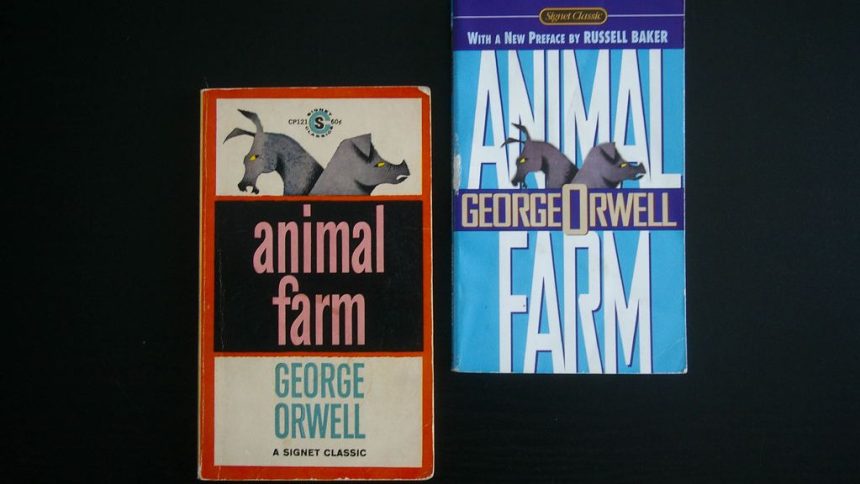
3. Animal Farm – George Orwell (1945)

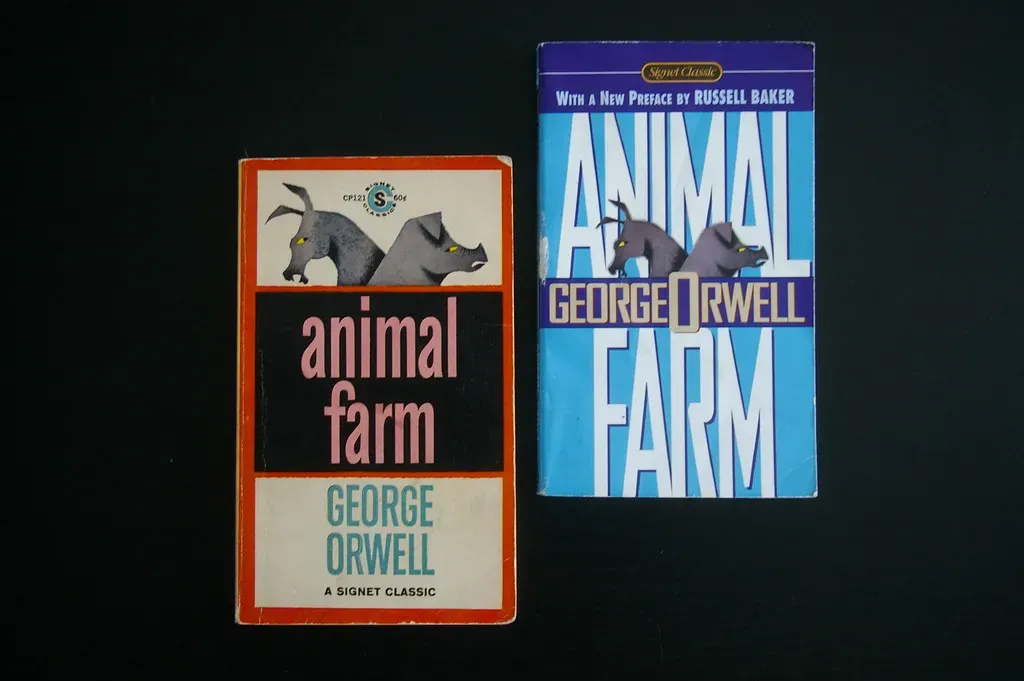
Here’s the thing about Animal Farm: it reads like a children’s story. Talking pigs, a farm rebellion, silly slogans on a barn wall. Then it slowly dawns on you that you are reading one of the sharpest political critiques ever written. Animal Farm is George Orwell’s brilliant political satire and allegorical fable about the corrupting effects of power, and published in 1945, it is to this day one of the most famous and influential works of fiction ever written.
Based on audiobook length, there are estimated to be around 29,605 words in this book – making it shorter than most people’s university dissertations. Yet it toppled regimes in the minds of millions of readers. When Animal Farm was first published, Stalinist Russia was seen as its target. Today it is devastatingly clear that wherever and whenever freedom is attacked, the cutting clarity and savage comedy of Orwell’s masterpiece have a meaning and message still ferociously fresh.
An author and journalist, Orwell was one of the most prominent and influential figures in twentieth-century literature. His unique political allegory Animal Farm, together with the dystopia of Nineteen Eighty-Four, brought him worldwide fame. It’s hard not to feel a chill reading it in 2026 and recognizing how little has changed. That is the terrifying genius of a truly short, truly great book.
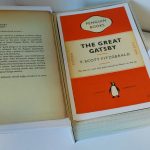
4. The Great Gatsby – F. Scott Fitzgerald (1925)

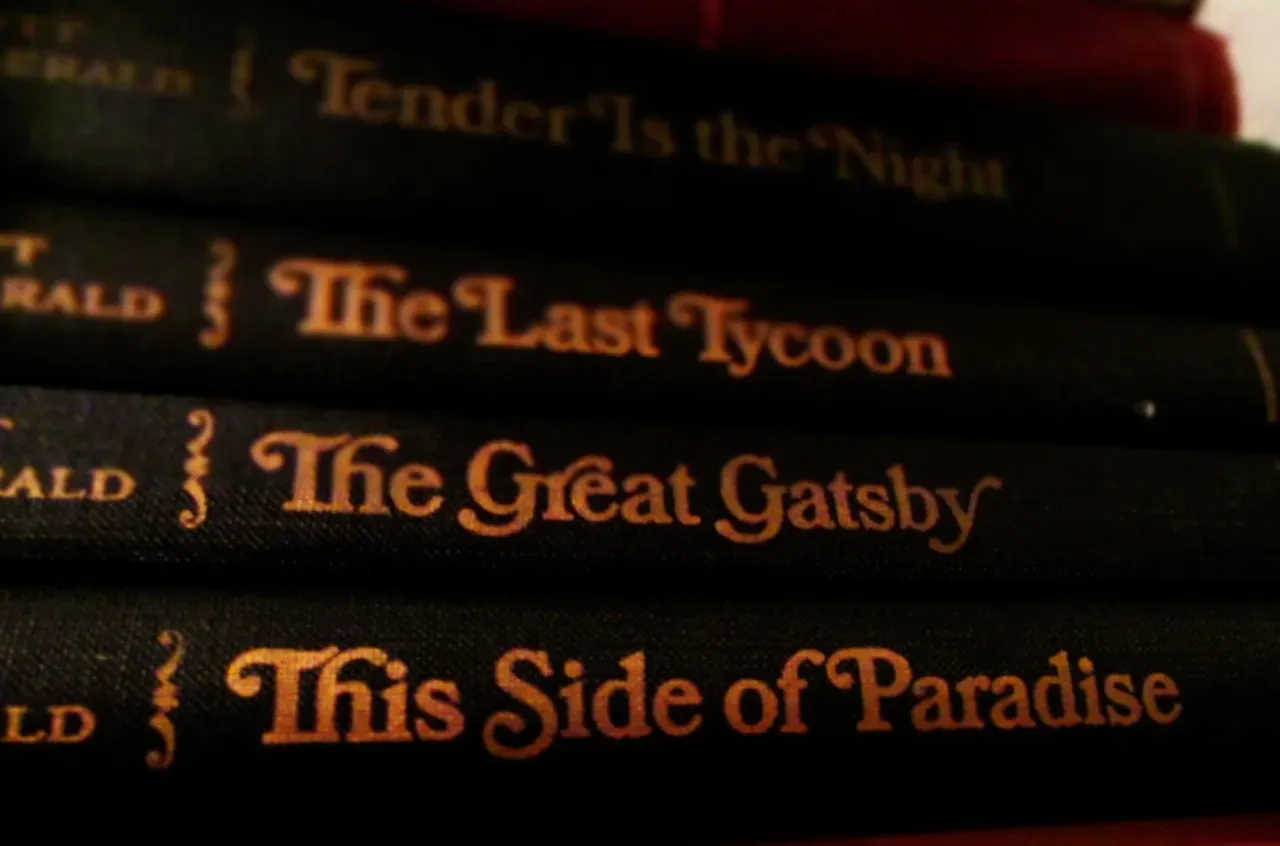
People are sometimes surprised to learn how thin this novel actually is. The Great Gatsby by F. Scott Fitzgerald clocks in at roughly 47,094 words. That is almost laughably short for a novel that is widely considered one of the greatest works of American literature ever produced. Yet page count was never the point.
Fitzgerald packs the entire rotting dream of American ambition, class anxiety, and obsessive love into something you can read in a long afternoon. The prose shimmers. The tragedy creeps. And by the final line, you feel like someone just pulled the rug out from under your whole worldview. The word count of shorter novels such as The Great Gatsby, Slaughterhouse-Five, and Fahrenheit 451 all fall between around 40,000 and 50,000 words – proof that a tight story, written with precision, can outlast everything.
Honestly, I think Gatsby works because of its constraints, not in spite of them. The compression forces every image to carry maximum weight. The green light at the end of Daisy’s dock has haunted readers for a century. That is what a short book can do when it is written by someone who understands that less, in literature, is almost always more.
5. Fahrenheit 451 – Ray Bradbury (1953)

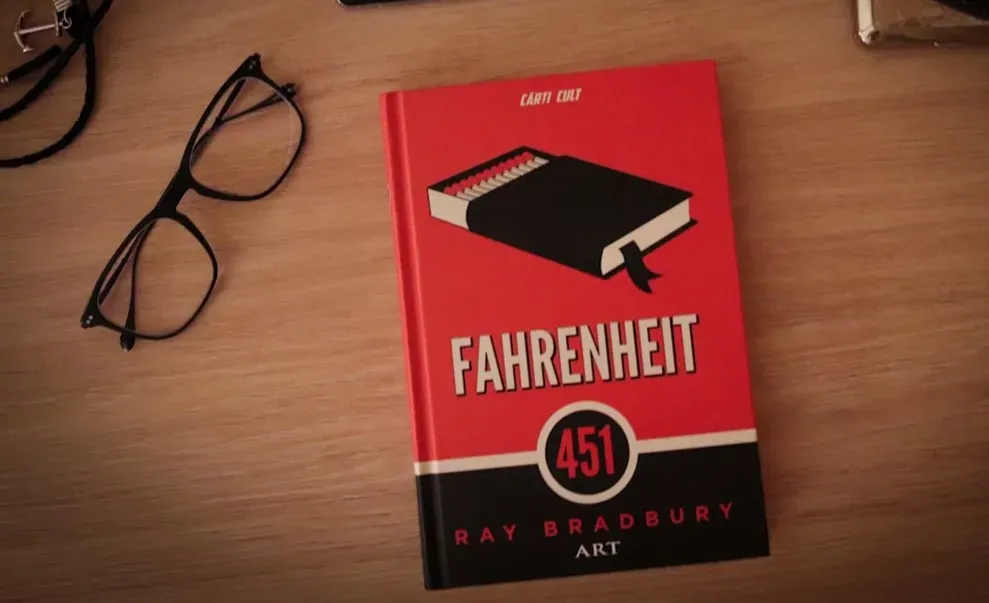
Ray Bradbury wrote a book about the burning of books, and it is one of the shortest on this list. There is a delicious irony in that. Fahrenheit 451 has a word count of only around 46,000 words – a book you can finish in one evening, one that asks questions about censorship and the death of knowledge that will follow you for the rest of your life.
The story follows Guy Montag, a fireman whose job is not to put out fires but to start them – burning books in a society that has outlawed them. It sounds dystopian and remote. Then you look around at declining reading rates and findings from a 2024 national survey showing that preferences among younger adults are shifting toward digital entertainment rather than traditional reading, with the generational decline in reading particularly pronounced among teenagers, and suddenly Bradbury’s vision doesn’t feel remote at all.
Fahrenheit 451 was written as an indictment of totalitarian governments and the restrictions they put on humanity. Yet it reads urgently even when no government is doing the burning. Sometimes people simply stop picking up books on their own. That quiet surrender might be the more chilling scenario Bradbury was really warning us about.
6. Night – Elie Wiesel (1960)


There are short books that entertain. There are short books that provoke. Then there is Night, a book that does something different entirely – it bears witness. Elie Wiesel’s memoir of surviving the Nazi concentration camps at Auschwitz and Buchenwald is one of the most harrowing documents of the 20th century, and it runs to under 120 pages. The brevity is not a limitation. It is a form of respect for the unspeakable.
Wiesel was awarded the Nobel Peace Prize in 1986, and the Nobel Committee described him as “one of the most important spiritual leaders and guides in an age when violence, repression and racism continue to characterize the world.” Night was the foundational text that launched that recognition. It was originally written in Yiddish and later translated into dozens of languages, reaching tens of millions of readers worldwide.
Programs such as the NEA Big Read rally entire communities around a single book, fostering local creativity and engagement through literary and cultural connection – and Night has been one of the most selected titles for exactly that reason. It does what only the finest short literature can: it refuses to let you look away, and it refuses to be forgotten. You finish the last page and simply sit there. Changed. That is the freight train. You never quite hear it coming until it has already hit you.
These six books share something beyond their brevity. They trust the reader. They do not over-explain or over-extend. They arrive, deliver something devastating and essential, and then they let you sit in the silence of what just happened. Novellas and shorter works have the advantage of being able to intensify the impact of their themes more than other modes of writing. That intensity is exactly what makes these books impossible to forget.
In an era when only 48.5 percent of adults reported having read at least one book in the past year, the case for short, powerful literature has never been more important. Pick one of these six. You have the time. What surprises you most – that books this thin could leave a mark this deep?