There’s a strange irony built into the music business. The song that pays the bills, fills the arenas, and gets requested at every single show is sometimes the one the person who wrote it can barely stand to perform. Success doesn’t always sit well with the artist who created it, especially when that success starts to define an entire career. What follows are six real cases of songwriters who found themselves at odds with their own signature tracks, told through their own words and documented history rather than speculation.
Thom Yorke and Radiohead’s “Creep”

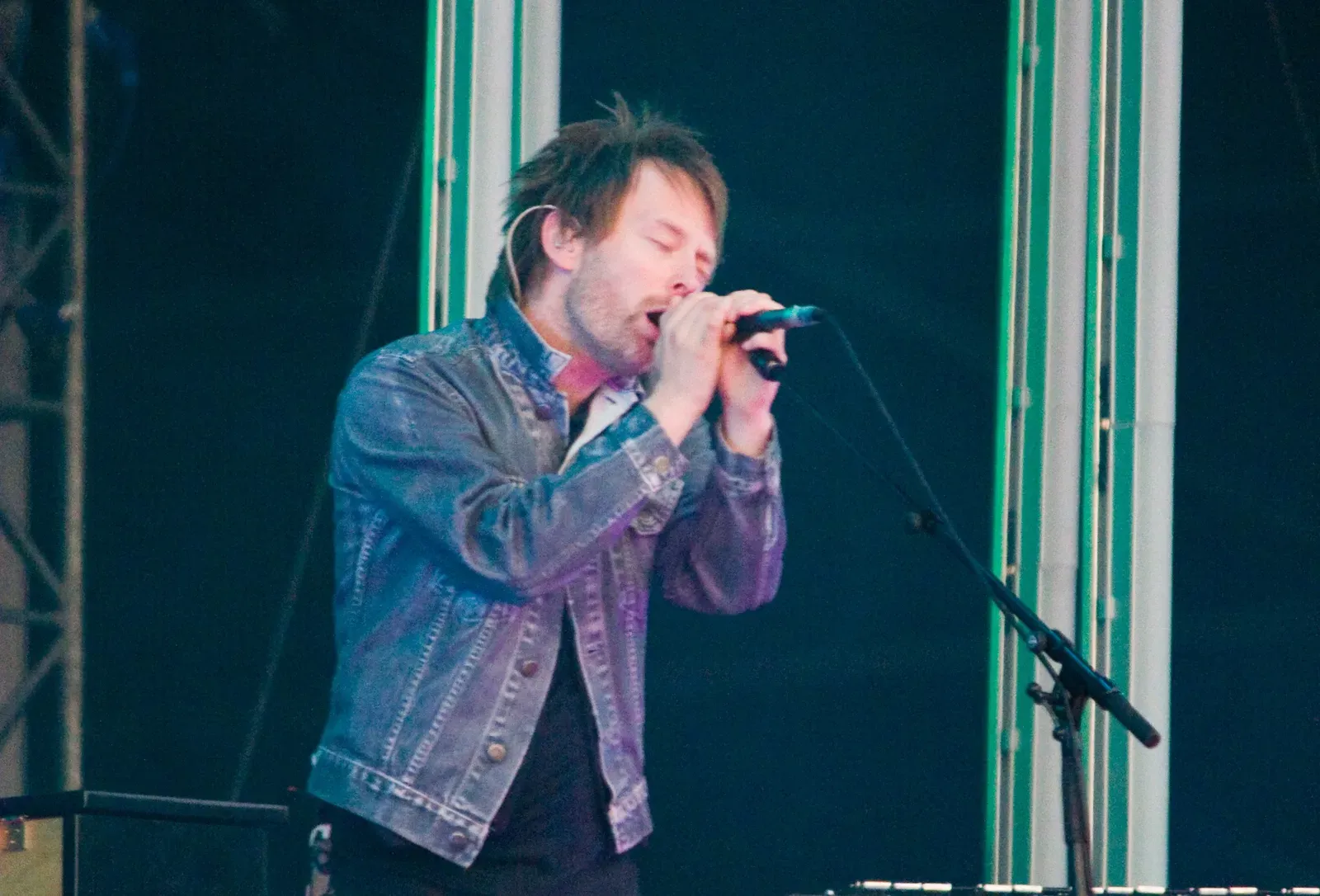
Thom Yorke wrote “Creep” as a college student dealing with feelings of inadequacy, and the song eventually became Radiohead’s breakout single and, to this day, their most streamed track by a wide margin. Despite the band’s uneasy relationship with it, Creep was Radiohead’s breakthrough track, and remains their most well-known single to date, notching up over 2.3 billion streams on Spotify, and over 1.2 billion video views on YouTube. That massive reach never translated into affection from its writer.
Yorke was blunt about his feelings toward the lyrics not long after the song came out. Speaking to Rolling Stone magazine in 1993, Yorke said: “I wasn’t very happy with the lyrics; I thought they were pretty crap.” The disdain didn’t fade with time either. Yorke has said that the band “sucked Satan’s cock” in writing ‘Creep’ and has taken to calling it ‘Crap’ instead. Even bandmate reflections point to early tension, since the band all hated ‘Creep,’ especially Johnny Greenwood, who, hoping to fuck it up so badly that they would move on, played some loud, incongruous and quite flat guitar chords just before the chorus.
Kurt Cobain and Nirvana’s “Smells Like Teen Spirit”


“Smells Like Teen Spirit” turned Nirvana from an underground punk band into the defining voice of a generation almost overnight. Kurt Cobain, however, never seemed entirely comfortable with what the song became or with the fame it dragged in behind it. He wrote it as a fairly straightforward pop song, and that simplicity is partly why he grew tired of it so quickly.
Back in the day, Cobain thought it was a commercialized burden that overshadowed the harder, more poignant work in the band’s discography, and it was clear from the start that Cobain wrote it to be a pop song and didn’t necessarily have much respect for it. He was self-critical about it from the very first playback too. When he presented the demo to his bandmates, he called his own riff “clichéd,” and bassist Krist Novoselic called it “ridiculous.” The song would become the band’s signature track after its release and peaked at No. 6 on the Hot 100 chart.
Robert Plant and Led Zeppelin’s “Stairway to Heaven”

“Stairway to Heaven” is routinely ranked among the greatest rock songs ever recorded, yet Robert Plant, who wrote the lyrics, spent decades trying to distance himself from it. The song was never even released as a single, but it became so inescapable on classic rock radio that Plant reportedly grew to resent the demand to perform it night after night.
Robert Plant hates this song, and he went as far as to admit that he would “break out in hives” if he had to perform the track at every concert. When a radio station in Oregon said they would never play the song, Plant even donated to them. Despite his feelings, the song’s cultural weight never diminished. Still, even today, “Stairway To Heaven” is considered one of the greatest progressive rock songs in history, and despite not being originally released as a single, the song has stood out from the rest of Led Zeppelin IV in a major way, remaining one of the most requested radio hits of all time.
Billy Joel and “We Didn’t Start the Fire”


Billy Joel’s rapid-fire rundown of historical headlines became one of his most recognizable songs, hitting number one on the charts and earning him a Grammy nomination. Joel’s problem was never with the concept or the lyrics listing decades of news events. His frustration was aimed squarely at the melody itself, which he considered a low point in his songwriting.
Billy Joel’s distaste for the melody of “We Didn’t Start the Fire” goes back almost to the time of its release, and “It’s really not much of a song,” he said in 1993, sitting at the piano for a filmed interview. He didn’t soften that opinion as the years passed. More than 10 years later, he went on The Howard Stern Show and called it “probably the worst musical thing I’ve ever written” before demonstrating the tune on the piano. He repeated a similar sentiment in other interviews as well, once telling an audience that “I didn’t really think it was that good to begin with,” and that “Melodically, it’s almost like a dentist’s drill.”
John Mellencamp and “R.O.C.K. in the U.S.A.”

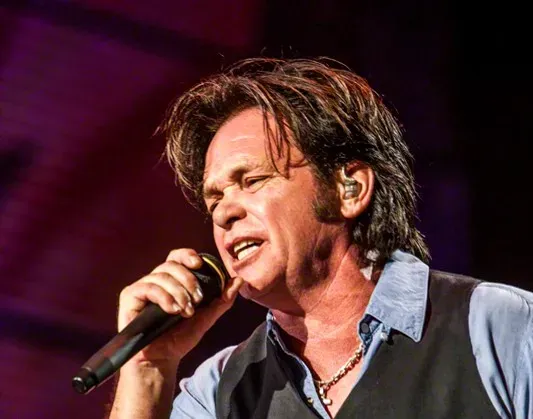
John Mellencamp built a decades-long career on heartland rock anthems, but one of his biggest crossover hits almost never made it onto an album at all. John Mellencamp has a long list of hit songs over more than four decades, but that doesn’t mean he likes all of them, and Mellencamp said during a recent interview with Bill Maher that he hates the song “R.O.C.K. in the U.S.A. (A Salute To 60’s Rock)” and that he was forced to include it on his hit 1985 album “Scarecrow.”
Mellencamp’s dismissiveness toward the track went beyond a passing comment. “I had a song called ‘R.O.C.K. in the U.S.A.’ And I hated it,” Mellencamp told Maher, according to Ultimate Classic Rock. He explained just how casually the song ended up shaping his career despite his own reservations. “I just thought, this is f—ing stupid and silly,” but he says he allowed executives with his record label to hear the song before the album was completed, something he usually didn’t do, and “they just went nuts,” saying “That’s a number one record.”
Jani Lane and Warrant’s “Cherry Pie”


Warrant’s “Cherry Pie” was written quickly and almost as a joke, yet it became the defining song of the band’s career and one of the most recognizable anthems of the glam metal era. Frontman and songwriter Jani Lane later admitted the speed of its creation was part of why it eventually wore on him. Warrant’s “Cherry Pie” is an instant earworm, one that began to rub the ’80s glam metal band the wrong way after a while, especially frontman and songwriter Jani Lane.
Lane described the experience of writing and recording the track with a mix of fondness and frustration. In an interview with BAM magazine, he called the song “a blessing and a curse,” adding, “I had fun writing it, all 20 minutes, and I had fun singing it, unfortunately the song rubbed some people the wrong way, and of course, the whole title got out of control, becoming the album title, the first video, Cherry Pie this, Cherry Pie that, I had fun recording the tune, but it’s probably the last of its type in our repertoire.” He later spoke even more directly about how the song swallowed his public identity. He went on to elaborate on his discontent with the raucous hit in an interview with VH1, saying, “My legacy is ‘Cherry Pie.’ Everything about me is ‘Cherry Pie.’ I’m the ‘Cherry Pie’ guy.”
Six different songwriters, six different reasons, but a common thread runs through all of them. A hit song can outgrow the person who wrote it, turning into something the audience owns more than the artist ever will again. Whether that’s a fair trade for decades of royalties and recognition probably depends on who you ask, and in these six cases, the answer was rarely a simple yes.