
Hollywood has always run on a fundamental tension: the people holding the creative vision and the people holding the budget rarely see the world the same way. Studios answer to shareholders, release schedules, and test screening data. Directors answer to something harder to quantify. Most of the time, both sides make compromises and the film lands somewhere in the middle. Occasionally, though, a studio overrules a director completely, convinced it knows better, and history ends up proving them wrong in the most spectacular fashion possible.
These six cases are not about ego or artistic temperament for its own sake. They are about specific creative decisions where the studio’s interference damaged a film, and where time, restored cuts, or audience reappraisal eventually confirmed that the director had been right from the beginning. The gap between what was released and what was intended turned out to matter enormously.
1. Ridley Scott and Blade Runner (1982): The Forced Happy Ending That Ruined the Point

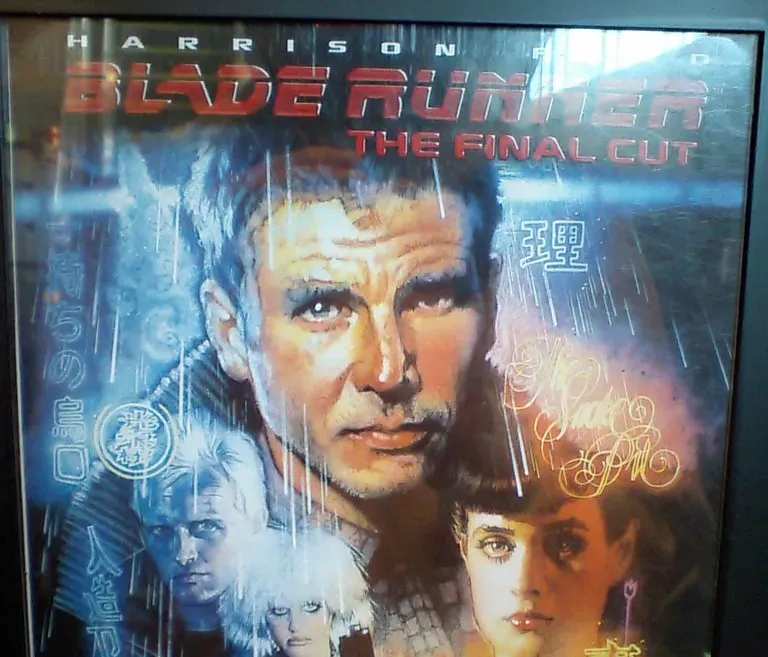
Blade Runner was, by all accounts, a nightmare to shoot. The film was infamously taken out of Scott’s hands during post-production and completed without his approval. That included several new components that proved disastrous, notably an improbably happy ending and voice-over narration from star Harrison Ford packed with tired detective clichés. The studio, worried about audiences finding the story too cold and ambiguous, wanted something more conventional bolted onto the end.
Although Scott had developed a workprint and rough cut that screened to select preview audiences in early 1982, Blade Runner was significantly changed prior to its domestic release. This was due to Warner Brothers’ concerns about not having a happy ending, even if that was counterintuitive to the dark noir story that Scott had intended to tell. The Final Cut of Blade Runner is what Ridley Scott considers to be the definitive version of the film, and it only took him 25 years to release it to the public. Today the film is regarded as one of science fiction’s greatest achievements, and the studio’s tacked-on ending is treated as a cautionary footnote.
2. Sergio Leone and Once Upon a Time in America (1984): Ninety Minutes Carved Out Without the Director’s Knowledge

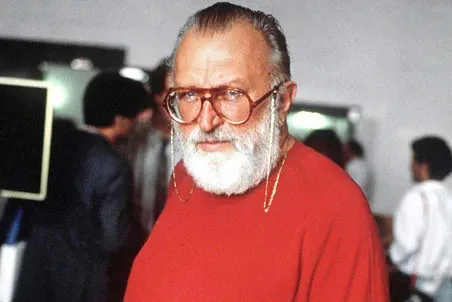
Once Upon a Time in America received a nearly 20-minute ovation at the 1984 Cannes Film Festival. Despite such a fawning reception, Warner Brothers felt it was too long. The studio drastically recut it down to two hours for the American market, abandoning its flashback structure for a linear narrative. This version suffered heavy criticism and flopped. The structural rearrangement did not just shorten the film. It dismantled the entire architecture of how Leone told the story.
Because of early audience reaction, the fear of its length, its graphic violence, and the inability of theaters to have multiple showings in one day, The Ladd Company cut entire scenes and removed approximately 90 minutes of the film without the supervision of Sergio Leone. Leone was reportedly heartbroken by the American cut, and never made another film before his death in 1989. When the original version of the film was released on home video in the US, it gained major critical acclaim, with some critics hailing the film as a magnum opus.
3. David Fincher and Alien 3 (1992): Fired Three Times, Still Had to Finish the Film


David Fincher’s feature debut exemplifies how studio interference traumatizes directors and damages both films and careers. Fox relentlessly controlled him by forcing reshoots based on deliberately bad test screenings. Sigourney Weaver recalled that Fincher “had to get on the phone and fight every day for us to shoot what he wanted to the next day.” He was a music video director handed one of the most hotly anticipated sequels in franchise history, with almost no room to actually make creative decisions.
The third alien film was highly anticipated, but with that anticipation came much studio pressure and guidance. While Fincher’s original cut of the movie had a runtime of 144 minutes, the theatrical cut was trimmed down by thirty minutes, with a significant subplot completely removed. Three years after the Alien 3 fiasco, Fincher directed Seven. It turned him into one of the biggest directors in Hollywood, leaving Alien 3 as little more than a tough lesson from his past. The eventual assembly cut, closer to Fincher’s intentions, earned considerably warmer retrospective assessments than the theatrical release ever did.
4. Sam Raimi and Spider-Man 3 (2007): A Villain Inserted to Sell Toys

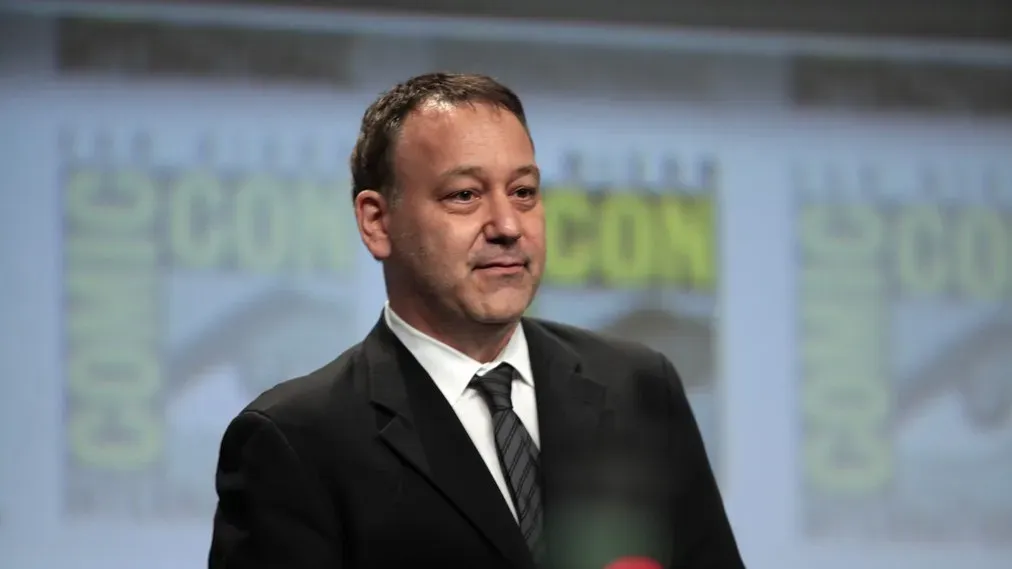
Sam Raimi had a vision for Spider-Man 3. Unfortunately, so did the producers. Avi Arad apparently approached Raimi about toy sales: in order to drum up as many potential figures as possible for shelves, he had to fit in as many characters as possible. That’s where Venom, a character that Raimi wasn’t overly familiar with, came from. The decision turned a film that might have been a tight character-driven conclusion into a crowded, tonally inconsistent blockbuster.
In the end, Spider-Man 3 ended up becoming the highest-grossing installment of the trilogy, however, pushed away many loyal fans and actors for its overloaded story. The commercial success gave the studio the cover it needed, but the damage to the franchise’s creative reputation was real. Raimi himself spoke openly about the difficulty of integrating a character he did not believe in, and the film is now widely cited as the weakest entry in a trilogy that had started so strongly. The fact that a later standalone Venom film required an entirely fresh start says something about how poorly the studio’s instinct served the character in the long run.
5. Terry Gilliam and Brazil (1985): Two Films Made From the Same Material


Universal Pictures was so alarmed by Terry Gilliam’s cut of Brazil that the studio executive Sid Sheinberg edited his own version, running about 94 minutes and given the internal title “Love Conquers All.” It replaced the film’s dark, ambiguous conclusion with an upbeat resolution, effectively reversing the entire meaning of the story. Gilliam fought back with one of the most unusual campaigns in Hollywood history, privately screening his version for critics and members of the Los Angeles Film Critics Association until public pressure forced Universal to release his cut.
Films that achieved long-term cultural impact and influenced generations of filmmakers were overwhelmingly those where directors maintained creative authority. Brazil is one of the clearest illustrations of that principle. Gilliam’s version went on to become a landmark of dystopian cinema and routinely appears on lists of the greatest films of the 1980s. The studio’s preferred version has been largely forgotten. The two cuts still exist, and watching them back to back is one of the more instructive exercises in what studio interference actually costs a film when the stakes are high enough.
6. Orson Welles and The Magnificent Ambersons (1942): Over an Hour Cut and the Negative Destroyed


RKO Pictures had already had a bruising experience with Orson Welles on Citizen Kane. When his follow-up, The Magnificent Ambersons, tested poorly with preview audiences, the studio took radical action. Roughly 50 minutes were cut from Welles’s original cut while he was out of the country working on another project in Brazil, and a new, more conventional ending was filmed without him. The studio then destroyed the excised footage entirely, burning the negative to reclaim the silver content.
Studios, especially the larger ones, have historically interfered with the final version of several films, in many cases generating huge conflicts with the directors due to creative differences or rushing a release date. This has led to long legal battles that have taken the creative control from the directors, resulting in a lot of them actually disowning their work. In Welles’s case there was not even a legal battle to be had. The footage was simply gone. What remained was still considered significant enough to earn Academy Award nominations, and film historians have spent decades trying to reconstruct what the full version might have looked like. A master filmmaker’s career ended because studio executives believed they understood storytelling better than a director who had proven his genius repeatedly. With Welles, the studio’s interference did not just alter a single film. It permanently foreclosed what might have been one of cinema’s great works.
What connects all six of these cases is not simply that the directors were talented. It’s that the studios made their calls based on short-term anxieties, whether about runtime, tone, test audiences, or toy shelves, while the directors were thinking about the whole shape of the work. Sometimes the commercial logic wins on opening weekend. The longer record, though, tends to side with the person who understood what the film was actually trying to do.