



Critics get it wrong sometimes. That’s not a scandal, it’s just the nature of writing about something new before anyone has had time to sit with it. Rolling Stone has been reviewing records since 1967, and across those decades a handful of albums that critics dismissed on arrival went on to reshape entire genres, leaving the original reviews looking almost quaint by comparison. What follows are seven records that got savaged, shrugged at, or flatly misunderstood by Rolling Stone’s writers, only to become foundational texts for hard rock, heavy metal, grunge, and beyond. Reading the old reviews next to the albums’ current reputations is a strange kind of time travel.
Led Zeppelin – Led Zeppelin (1969)


When Led Zeppelin’s debut landed in March 1969, a 21-year-old critic named John Mendelsohn tore into it for Rolling Stone. He wrote that the album offered little the Jeff Beck Group hadn’t already said better, and that the excesses of Beck’s Truth album were fully on display in Zeppelin’s version. Mendelsohn went further, calling Jimmy Page a very limited producer and a writer of weak, unimaginative songs, adding that the record suffered from Page having produced and written most of it himself.
History did not agree. Later Rolling Stone writing described Jimmy Page’s guitar pouncing from the speakers with menace and John Bonham’s kick drum swinging with anvil force, concluding that hard rock would never be the same. The album is now routinely ranked among the greatest debuts in rock history, and it effectively wrote the blueprint for the hard rock and heavy blues sound that dominated the next decade.
Black Sabbath – Black Sabbath (1970)

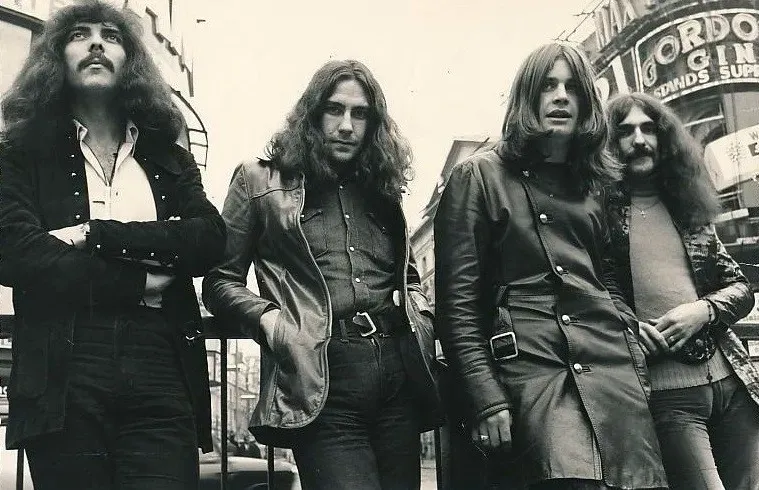
Lester Bangs, a critic many consider one of rock writing’s greats, did not see the point of Black Sabbath’s self-titled debut in 1970. He described the band as unskilled laborers hyped as a celebration of the Satanic mass, calling the whole album a shuck full of stiff recitations of Cream clichés that sounded like the musicians had learned them out of a book. It was not a gentle notice.
The record is now widely credited as the album that invented heavy metal outright. It is widely regarded as the first true heavy metal album, and its opening title track has been named the greatest heavy metal song of all time by the very publication that once panned it. Tony Iommi’s down tuned, sludgy riffs, born partly out of an injury that cost him two fingertips, became the template that thousands of metal bands would chase for the next fifty years.
The Jimi Hendrix Experience – Are You Experienced (1967)


Even Jimi Hendrix could not escape a rough notice. Rolling Stone’s Jon Landau reviewed Are You Experienced and found plenty to like in a few singles, but not much else. While Landau praised songs like Purple Haze, Hey Joe, and The Wind Cries Mary, he wrote that everything else was insane and simply a matter of taste, adding that he mostly didn’t dig it because the poor quality of the songs and the inanity of the lyrics got in the way of Hendrix’s musical brilliance.
That verdict has not held up well. Are You Experienced is now considered one of the founding documents of psychedelic rock, a record that redefined what an electric guitar could sound like and directly influenced the birth of hard rock. Hendrix’s use of feedback, distortion, and studio effects as compositional tools, rather than accidents to be avoided, changed how a generation of guitarists approached the instrument.
Van Halen – Van Halen (1978)


Rolling Stone critic Charles M. Young greeted Van Halen’s 1978 debut with a prediction that turned out spectacularly wrong. He wrote that in three years Van Halen was going to be fat, self indulgent, and disgusting, following Deep Purple and Led Zeppelin right into the toilet, though he conceded that in the meantime they were likely to be a big deal. He did grant that Eddie Van Halen had mastered the art of lead and rhythm guitar in the tradition of Jimmy Page and Joe Walsh, and that several riffs on the record beat anything Aerosmith had come up with in years.
The album’s actual legacy has nothing to do with decline. It is widely regarded as one of the greatest debut albums in rock music, having sold more than ten million copies in the United States. A later Allmusic assessment placed it alongside the debut records of Led Zeppelin, the Ramones, the Rolling Stones, and the Sex Pistols as an epochal generational shift for the genre. Eddie Van Halen’s two handed tapping technique on “Eruption” alone reshaped how an entire generation of guitarists approached the instrument.
Nirvana – Nevermind (1991)


Nevermind’s original Rolling Stone review, written by Ira Robbins, was not a hatchet job exactly, but it undersold the record badly given what came next. His three star review is perhaps the most notorious Rolling Stone notice of the 1990s, and reading it now it is clear he actually enjoyed the album, understood its influences, and placed it well within the context of its time, but there was no way to know it was about to change the world.
Robbins described the record as finding Nirvana at a crossroads, scrappy garageland warriors setting their sights on a land of giants. That framing looks modest next to what actually happened. Nevermind did not just sell tens of millions of copies, it effectively ended the dominance of hair metal on rock radio and pushed grunge and alternative rock into the mainstream almost overnight.
Neil Young – Harvest (1972)

Three years after taking apart Led Zeppelin, John Mendelsohn turned his pen on Neil Young’s Harvest. He wrote that the album, a painfully long year plus in the making, found Young invoking the weariest clichés of L.A. superstardom, admitting he could only come up with one happy thing to say, that Young still sang awful pretty, before concluding the record could not help but bring him down.
Harvest went on to become one of the best selling albums of 1972 and a defining record of the singer songwriter era, with “Heart of Gold” giving Young his only number one single. Its plain spoken acoustic arrangements and unpolished vocal delivery became a touchstone for the country tinged folk rock that followed throughout the seventies, influencing everyone from later Americana acts to the lo fi singer songwriters of subsequent decades.
Weezer – Pinkerton (1996)


Weezer’s 1996 follow up to their breezy, radio friendly debut was a much darker, rawer record, built around themes of loneliness, obsession, and awkward desire. It baffled listeners expecting more of the same power pop charm, and it landed near the bottom of Rolling Stone’s own readers’ poll for worst albums of the year, a reception that stung the band enough that Rivers Cuomo has spoken about avoiding that kind of vulnerability in songwriting for years afterward.
The reassessment took roughly a decade, but it has been thorough. Pinkerton is now considered a foundational record for emo and confessional indie rock, cited by countless bands as the album that gave them permission to write with that level of discomfort and specificity. What once read as an embarrassing misstep is now treated as one of the most influential rock records of the 1990s.
Looking back at these seven cases, a pattern emerges that has little to do with critics being careless. Genuinely new sounds tend to resist quick judgment, because the vocabulary for describing them often does not exist yet. A record that sounds “wrong” on first listen, whether it’s too heavy, too raw, too strange, or too painfully honest, is sometimes wrong only in the sense that it does not match what anyone was expecting to hear. Rolling Stone has been honest enough over the years to revisit its own missed calls, and that willingness to reconsider is arguably more useful to music history than getting every review right the first time ever could have been.

