There is something deeply strange about a novelist sitting down to write fiction and accidentally getting science right. Not just a little bit right. Eerily, almost impossibly right. The kind of right that makes you wonder whether great writers are simply paying closer attention to the world than the rest of us.
Some of the most jaw-dropping moments in science history were preceded, sometimes by decades, by the imaginations of authors writing stories for entertainment. From the moons of Mars to the atom bomb, from cyberspace to mood-altering pharmaceuticals, fiction has repeatedly found the future before science even knew where to look. Here are seven books that did exactly that. Get ready to be surprised.
1. From the Earth to the Moon by Jules Verne (1865) – The Moon Mission That Happened a Century Later
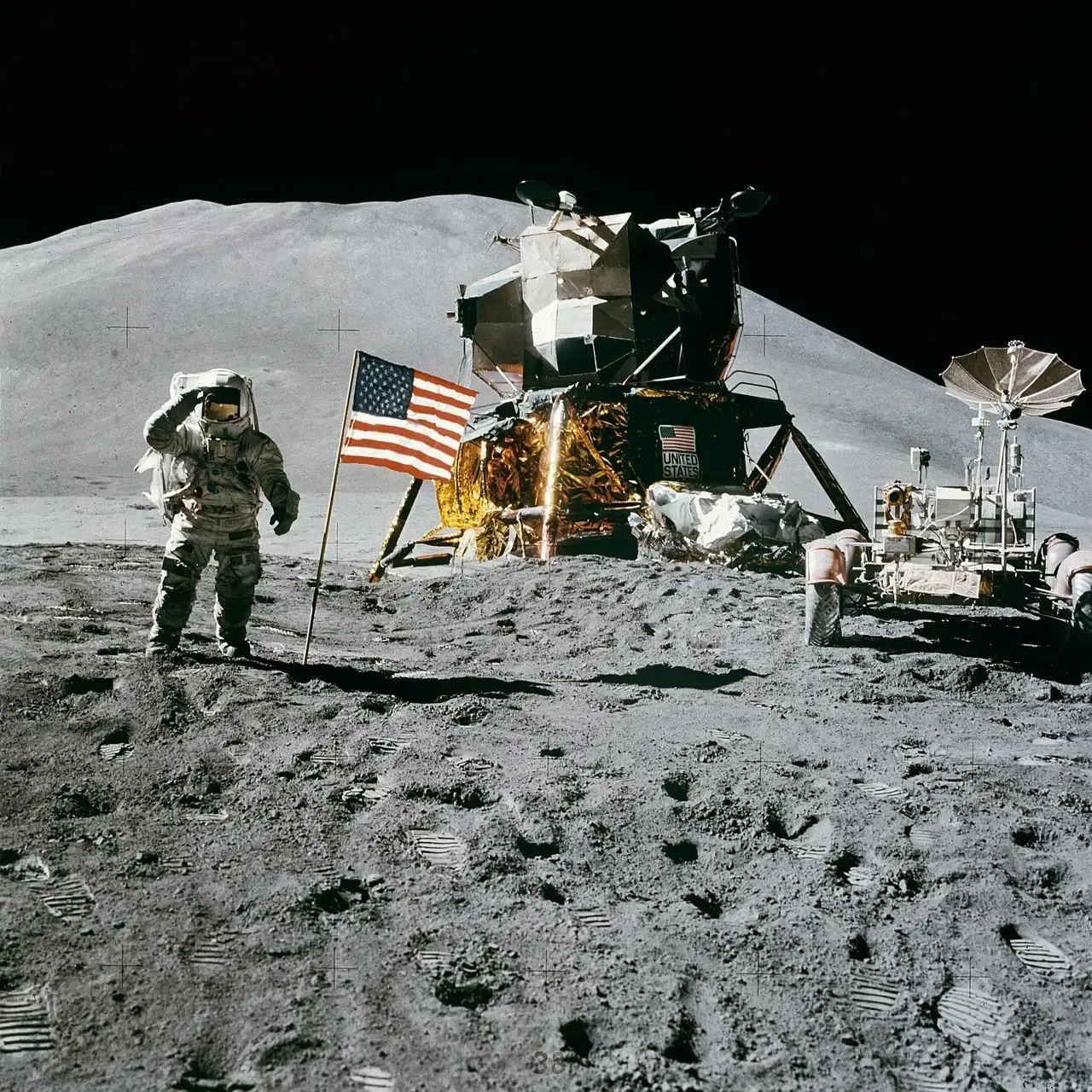
In “From the Earth to the Moon,” Jules Verne captured humanity’s fascination with the moon and imagined a world where people would launch themselves to it via spacecraft, describing them as projectiles fired like a gun and a bullet. What makes this so remarkable is not just the broad idea, but the strikingly specific details that Verne got right.
Verne described a manned mission to the Moon launched from Florida, using an enormous cannon to propel the spacecraft. This vision was uncannily similar to NASA’s Apollo missions, which began blasting off from Cape Canaveral, Florida, over a hundred years later.
Verne also mentioned splashdown spaceships, a space base in Florida, light pressure propulsion, and space suits, all way before their time. Honestly, it reads less like science fiction and more like a rough draft of a NASA mission report. NASA’s chief historian has noted that the agency’s moon landing was inspired partly by works of fiction like Verne’s “From the Earth to the Moon.”
Verne also wrote in this same book about solar sails used to travel through space. In 2010, roughly 145 years later, the first solar sail, known as IKAROS, was actually used. It is the kind of detail that makes you want to sit down quietly and think about what fiction you should be reading today.
2. Twenty Thousand Leagues Under the Sea by Jules Verne (1870) – The Electric Submarine
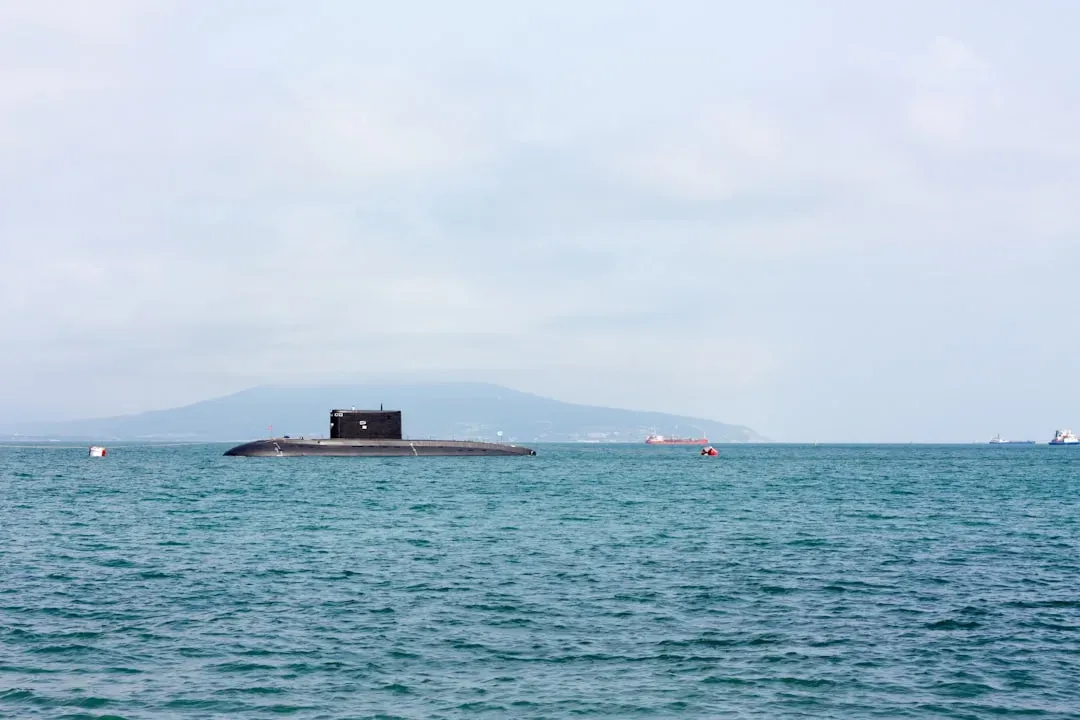
In perhaps his most famous novel, Verne’s Captain Nemo travels the world’s oceans in a giant electric submarine, the Nautilus. At the time, submarines were clumsy, barely-functional curiosities. What Verne described was something else entirely.
Verne’s “Twenty Thousand Leagues Under the Sea” introduced the world to the Nautilus, an all-electric submarine powered by lead-acid batteries. At a time when submarines barely functioned, Verne described one with remarkable capabilities. Today, electric submarines like the Alvin and deep-sea exploration vessels mirror much of what Verne envisioned, including the importance of oceanography and marine biology.
The first submarine ever launched that did not rely on human muscle for propulsion was the French Navy submarine Plongeur, launched in 1863. The Plongeur was powered by compressed air and was about as fast and maneuverable underwater as a soggy brick. However, refinements to the submarine design, likely driven at least in part by Verne’s depiction of Nautilus, would make it into the fearsome, stealthy weapon of today.
The novel predicted electric submarines roughly 90 years before they were officially invented. That is not a lucky guess. That is a man thinking carefully about where technology was going and then writing it down as entertainment.
3. Gulliver’s Travels by Jonathan Swift (1726) – The Moons of Mars
Here is one that should genuinely stop you in your tracks. Jonathan Swift is remembered as a biting satirist, a literary giant who mocked British society with extraordinary wit. What he is less remembered for is accidentally predicting one of astronomy’s most significant discoveries. I know it sounds crazy, but it is completely true.
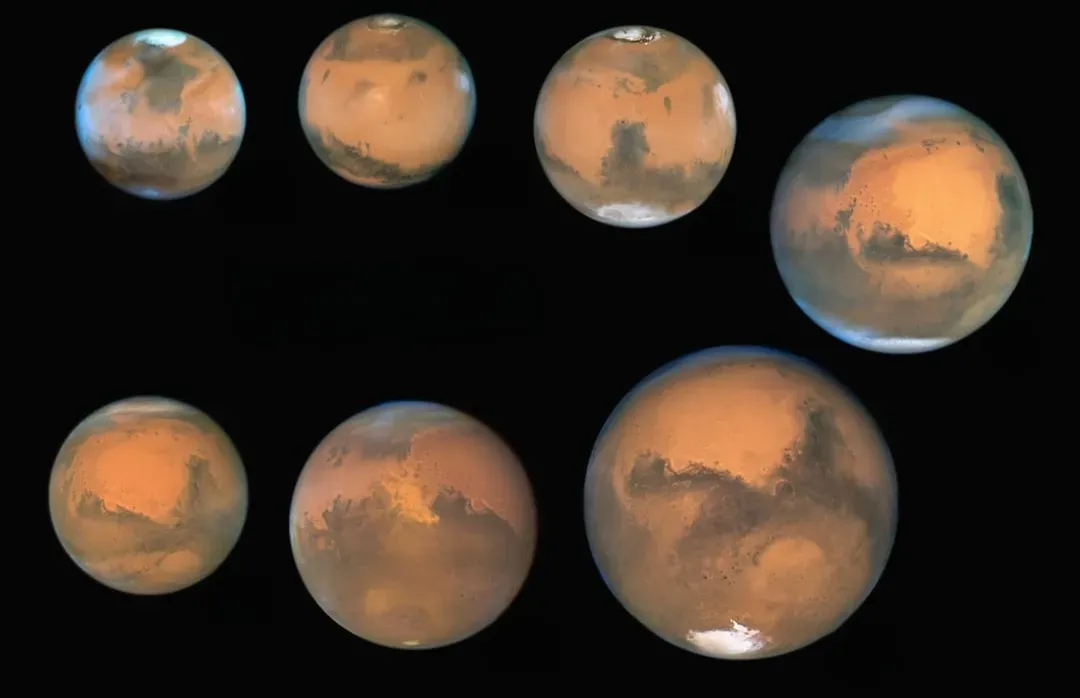
Jonathan Swift’s “Gulliver’s Travels” predicted the discovery of Mars’ two moons. The 1726 social satire follows a man named Gulliver as he travels into different worlds. When Gulliver is on the island of Laputa, a floating world filled with scientists, the astronomers notice Mars has two moons in its orbit. Over 150 years later in 1877, it was discovered Mars did indeed have two moons, Phobos and Deimos.
Swift speculated that Mars had two moons, a fact not confirmed by scientists until over 150 years later, in 1877, when astronomer Asaph Hall discovered Mars’s satellites, Phobos and Deimos. Swift’s choice of two moons was based on creative speculation, as his description was not founded on any scientific evidence of the time. Yet, his intuition turned out to be right.
It wasn’t just the existence of the moons that Swift got right. According to S.H. Gould in the “Journal of the History of Ideas,” the moons’ “strange behavior agreed very closely with Swift’s description.” Several craters on Mars’s moon Phobos are now named after Swift’s characters. The universe apparently read “Gulliver’s Travels” and decided to oblige.
4. The World Set Free by H.G. Wells (1914) – The Atomic Bomb
If Jules Verne was the father of technological prediction, H.G. Wells was the prophet of mankind’s darkest scientific capabilities. His 1914 novel “The World Set Free” is one of the most chilling examples of fiction anticipating catastrophic reality.
Wells’ 1914 novel “The World Set Free” displayed remarkable foresight in predicting the development of atomic power and its profound implications for humanity. Wells envisioned “atomic bombs” that could release enormous destructive energy through the splitting of atoms, a concept that wouldn’t be scientifically realized until decades later. He accurately foresaw the devastating potential of nuclear weapons, describing cities reduced to radioactive ruins. Beyond weaponry, Wells also predicted the use of atomic energy for peaceful purposes, anticipating nuclear power plants.
In this 1914 novel, H.G. Wells predicted that the problem of extracting energy from the atom would be solved in 1933, and in that year, Leo Szilard did in fact come up with the idea of a nuclear chain reaction. That wasn’t the only prescient element of “The World Set Free.” Wells also described how radioactive elements could be used in “atomic bombs” that left battlefields radioactive for years to come.
Published in 1914, “The World Set Free” not only foresaw nuclear weapons, but may have given Dr. Leo Szilard, the man who split the atom, the idea for the destructive nuclear bomb in the first place. Though the atomic bomb in Wells’ universe was a uranium hand grenade, the science behind the idea was still roughly three decades ahead of its time. Let that sink in for a moment. A novelist’s imagination may have literally helped inspire the most destructive weapon in human history.
5. Futility (The Wreck of the Titan) by Morgan Robertson (1898) – The Titanic
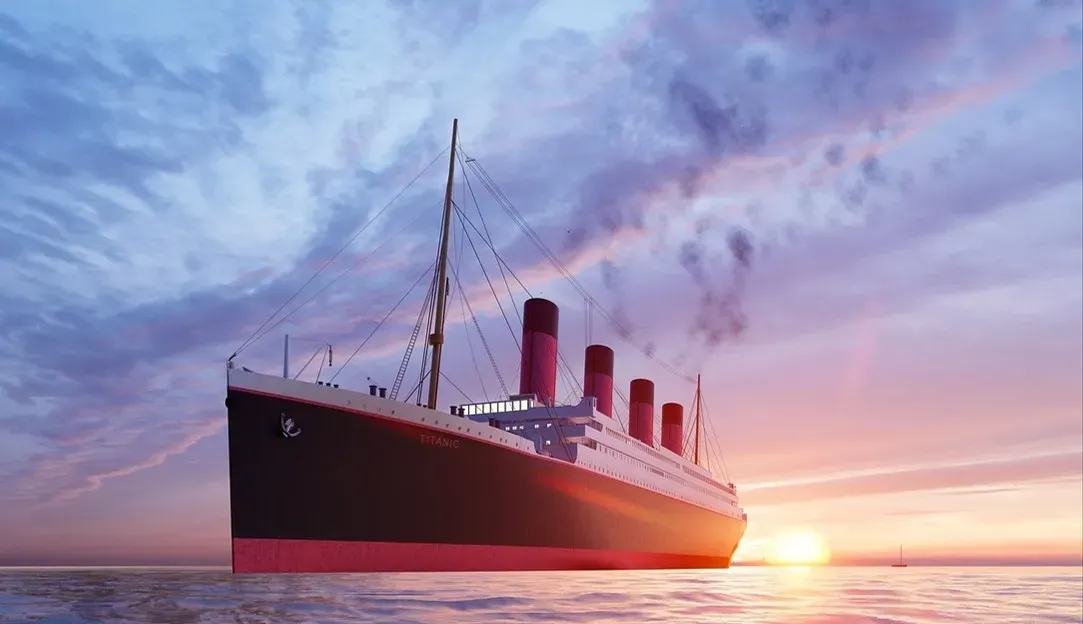
This one is not about technology or physics. It is something altogether stranger: a near-perfect fictional account of one of history’s most iconic real-world disasters, written fourteen years before that disaster occurred.
The “Wreck of the Titan: Or, Futility” is an 1898 novella by Morgan Robertson about an “unsinkable” ship that sinks in the North Atlantic after hitting an iceberg. We all know what happened to the Titanic in April 1912.
In this book, a massive ocean liner described as “the largest craft afloat” is steaming at full speed through the North Atlantic when a watchman cries out “Iceberg.” The ship hits the ice and begins to sink. With too few lifeboats, many of the passengers drown when the ship goes down. Robertson penned his novel 14 years before the Titanic took its doomed maiden voyage, and those aren’t the only similarities between Robertson’s Titan and the Titanic.
Such was the predictive power of the text that just a week after the sinking of the Titanic, the story, now called “The Wreck of the Titan; or, Futility,” was being serialized in newspapers as “an amazing prophecy.” The ship’s name, its size, the iceberg, the North Atlantic location, the shortage of lifeboats. The parallels go on and on, and none of them have ever been fully explained.
6. Brave New World by Aldous Huxley (1932) – Psychopharmacology and Mood-Altering Drugs

Brave New World is a dystopian novel by English author Aldous Huxley, written in 1931 and published in 1932. Largely set in a futuristic World State, the novel anticipates huge scientific advancements in reproductive technology, sleep-learning, psychological manipulation and classical conditioning. But the prediction that stands out most starkly to modern eyes involves a little pill called Soma.
Valium was not invented until 1963 by Leo Sternbach, who was working for the pharmaceutical company Hoffman-La Roche. But Aldous Huxley’s 1932 novel “Brave New World” more or less anticipated its discovery, describing the emergence of a revolutionary new psychotropic pill, soma, which could cure virtually all mental disturbances, from anxiety and depression to alienation and anger, at a time when the emerging field of psychopharmacology itself barely even existed.
Anti-depressants are so popular that one in eight Americans are on them right now. This doesn’t include the large number of Americans on tranquilizers, anti-anxiety medications, or those who self-medicate with alcohol or increasingly legal marijuana. These drugs aren’t quite Soma, but they bear a striking resemblance in function and use.
More perceptive than his peers, Huxley recognized almost before the fact that psychotropic pills would be the wave of the future. Not only would they soon be invented, but they would also be distributed on an almost unimaginable scale, and they would come to exert a pervasive, almost all-encompassing impact on people’s day-to-day lives and how they would deal with everyday anxieties and stresses. He was writing a warning. We turned it into a business model.
7. Neuromancer by William Gibson (1984) – Cyberspace and the Internet
Think about what the world looked like in 1984. Personal computers were a novelty. The internet as we know it did not exist. And yet, in that very year, William Gibson published a novel that described something almost identical to our modern digital reality with what can only be called disturbing accuracy.
William Gibson’s “Neuromancer” (1984) is often credited with introducing the term “cyberspace” and predicting the rise of computer hackers. Gibson’s novel explored a world where digital networks formed a separate realm for identity.
In 1984, five years before Tim Berners-Lee introduced the internet to the world, Gibson coined the term “cyberspace.” His description of hackers, virtual reality, and corporate-controlled digital realms in “Neuromancer” reads like a prophecy of today’s internet landscape.
Neuromancer was not only the first novel to win the triple crown of sci-fi awards (the Hugo Award, the Nebula Award, and the Philip K. Dick Award) and inspired the “Matrix” series, but also predicted our future cyberspace society and computer hackers. The novel’s exploration of corporate power in digital spaces seems prophetic given today’s tech monopolies and data mining operations. Perhaps most unsettling is how Gibson predicted that our digital lives would become more compelling than our physical ones, a reality anyone with screen time reports can confirm.
The Pattern Behind the Prophecies

Looking at all seven books together, a clear thread emerges. These were not random lucky guesses. More of a futurist than a prophet, some describe Jules Verne as someone who was paying great attention to the times rather than simply outright prophesying. Verne was well acquainted with the technology of the time and played with ideas of how those technologies could evolve. The same was true of nearly every author on this list.
They were obsessive observers. They read voraciously, they paid close attention to emerging science, and they asked the single question that separates great thinkers from average ones: “What happens next?” The predictions Jules Verne made about the future weren’t always perfect, but they were rooted in logic, science, and observation. He saw where technology was heading and accelerated it with imagination. His works continue to inspire scientists, writers, engineers, and dreamers alike.
It is worth noting that the influence ran in both directions. Some cyber-security experts have admitted that reading Gibson’s “Neuromancer” influenced their careers. Scientists and engineers did not just stumble upon these inventions independently. They sometimes read the books first. Fiction, in other words, did not just predict the future. In some cases, it actively created it.
Conclusion: When Fiction Outpaces Science
Seven books. Seven moments when human imagination got somewhere before human science did. Whether by careful observation, extraordinary logic, or something harder to explain, these authors crossed a line that is usually reserved for laboratories and research institutes.
The lesson here is not just historical curiosity. It is a reminder that the line between storytelling and discovery has always been thinner than we like to think. Some books and authors have anticipated the future with eerie accuracy, from predicting technological marvels to foreseeing social changes. The next great scientific breakthrough might already be sitting on a bookshelf somewhere, disguised as a novel.
What do you think the books being written today are quietly predicting about our future? Tell us in the comments.