Most of us don’t think twice about the objects cluttering our kitchen drawers or desks. A sticky note here, a strip of Velcro there, maybe a roll of bubble wrap tucked away for the next package. Yet behind nearly every one of these mundane items sits a story involving a wrong turn, a broken tool, or a scientist who happened to notice something odd instead of shrugging it off. The history of invention is full of these quiet detours, and the seven objects below are proof that curiosity often beats intention when it comes to changing daily life.
The microwave oven and a melting candy bar
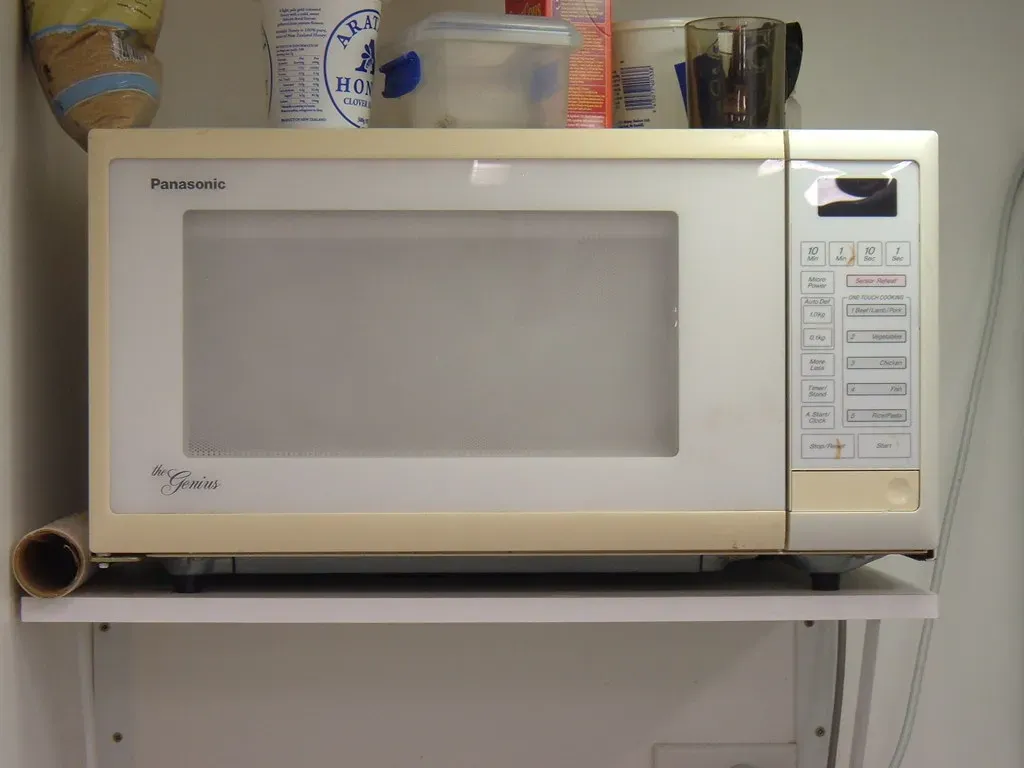
In 1945, a Raytheon engineer named Percy Spencer was standing near an active magnetron, the vacuum tube used to generate radar signals, when he noticed something strange. Spencer noticed that a candy bar in his pocket had mysteriously melted while testing an active magnetron. Rather than brushing it off as a fluke, he got curious about what had just happened.
Spencer’s background made him uniquely suited to chase the mystery further. A self-taught engineer with no formal education beyond grammar school, he rose to prominence at Raytheon, where his early work focused on streamlining the production of magnetrons that powered Allied radar systems. He followed his hunch by placing popcorn kernels near the tube, watched them pop, and within a couple of years Raytheon had built the first commercial microwave oven, a six-foot-tall appliance nicknamed the Radarange that weighed hundreds of pounds and cost thousands of dollars.
Post-it Notes and a glue that refused to stick

Spencer Silver was a 3M chemist trying to invent something completely different from what he ended up with. In 1968, while conducting experiments with adhesives for aerospace applications, Silver inadvertently concocted a glue that did not stick permanently. He considered it a failure and, understandably, had no idea what to do with a weak adhesive that peeled away without leaving residue.
The idea sat unused for years until a colleague found a personal use for it. Art Fry tested Silver’s failed adhesive to make reusable paper bookmarks for his church hymnal, and his idea became Post-it Notes, one of the most useful and iconic inventions of the past century. The original yellow color, now instantly recognizable, was simply the only scrap paper available in the lab when Fry built his first prototypes.
Velcro and a dog covered in burrs
Nature gets the real credit for this one. In 1941, Swiss engineer George de Mestral was hiking through the woods with his dog when he noticed that burrs from burdock plants clung to his pants and his dog’s fur. Instead of simply picking them off and moving on, he decided to take a burr home and study it more closely.
What he found under a microscope changed the direction of his career. The burr was covered in thousands of tiny hooks, which allowed it to firmly cling to the looped threads of his clothing and the strands of his dog’s coat. It took roughly a decade of trial and error before de Mestral perfected a manufacturable version, and the name he chose blended the French words for velvet and hook, a nod to the fastener’s dual nature.
The Slinky and a spring that wouldn’t sit still
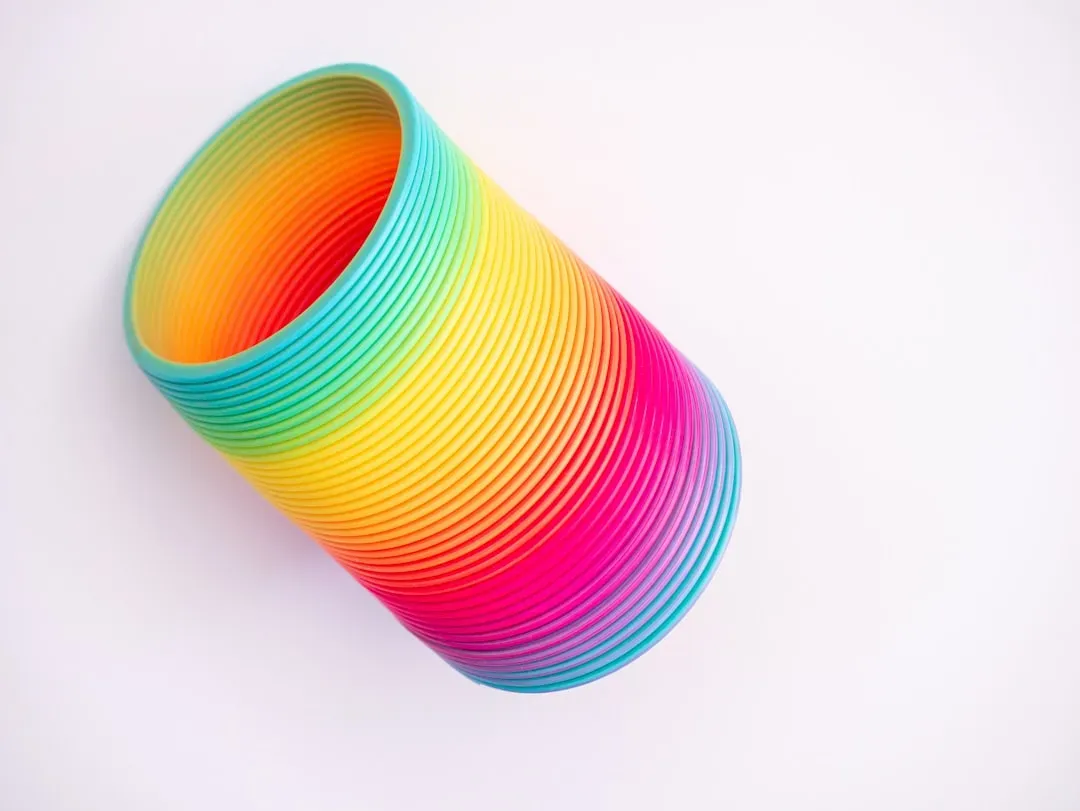
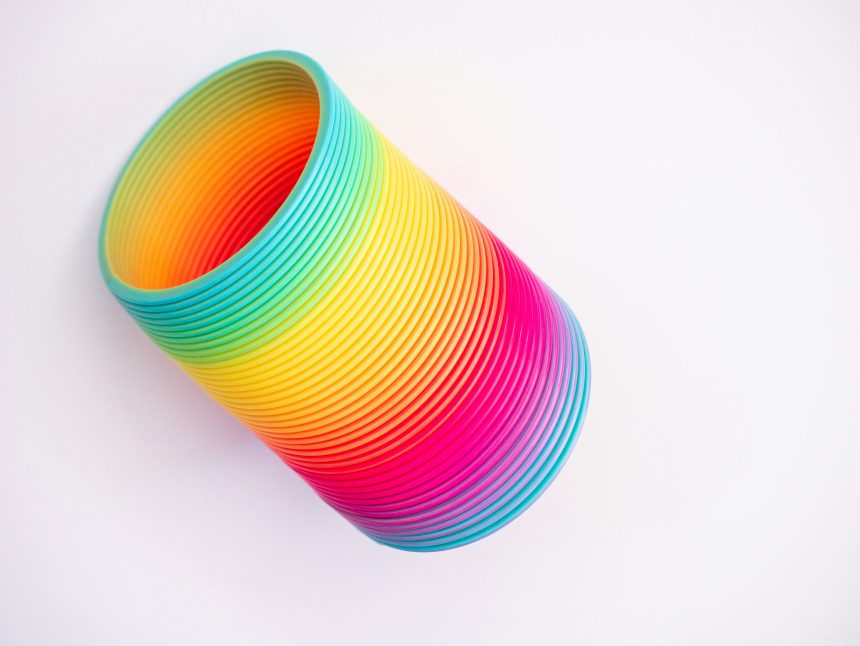
Richard James was a naval mechanical engineer trying to solve a very unglamorous problem during World War Two. In 1943, he was trying to develop a way to suspend sensitive shipboard instruments aboard naval vessels and was working with torsion springs when he accidentally dropped one. Instead of just picking it up, he watched it happen.
What followed was pure curiosity turning into a toy company. He noticed that the spring kept moving after it hit the ground, and it was this moment that he was inspired to create a toy made out of the spring, eventually buying a coil-winding machine and starting a company to mass-produce it. His wife Betty came up with the name, and after a wildly successful demonstration at a Philadelphia department store in 1945, the toy became a permanent fixture of American childhood.
Teflon and a cylinder that wouldn’t empty
Chemist Roy Plunkett was not trying to invent a nonstick coating. He was working on safer refrigerants at DuPont in 1938 when an experiment took an unexpected turn. The Teflon story began on April 6, 1938, when Dr. Roy J. Plunkett was working with gases related to refrigerants, and after checking a frozen, compressed sample of tetrafluoroethylene, he and his associates found that it had polymerized spontaneously into a white, waxy solid.
What made the discovery valuable was Plunkett’s decision to actually test the strange substance rather than discard it. PTFE is inert to virtually all chemicals and considered the most slippery material in existence, making it one of the most valuable and versatile technologies invented. That slipperiness eventually found its way into cookware, and today Teflon coatings show up everywhere from frying pans to aerospace components, all traced back to a supposedly empty gas cylinder that turned out to be full of something entirely new.
Bubble Wrap and a failed wallpaper experiment
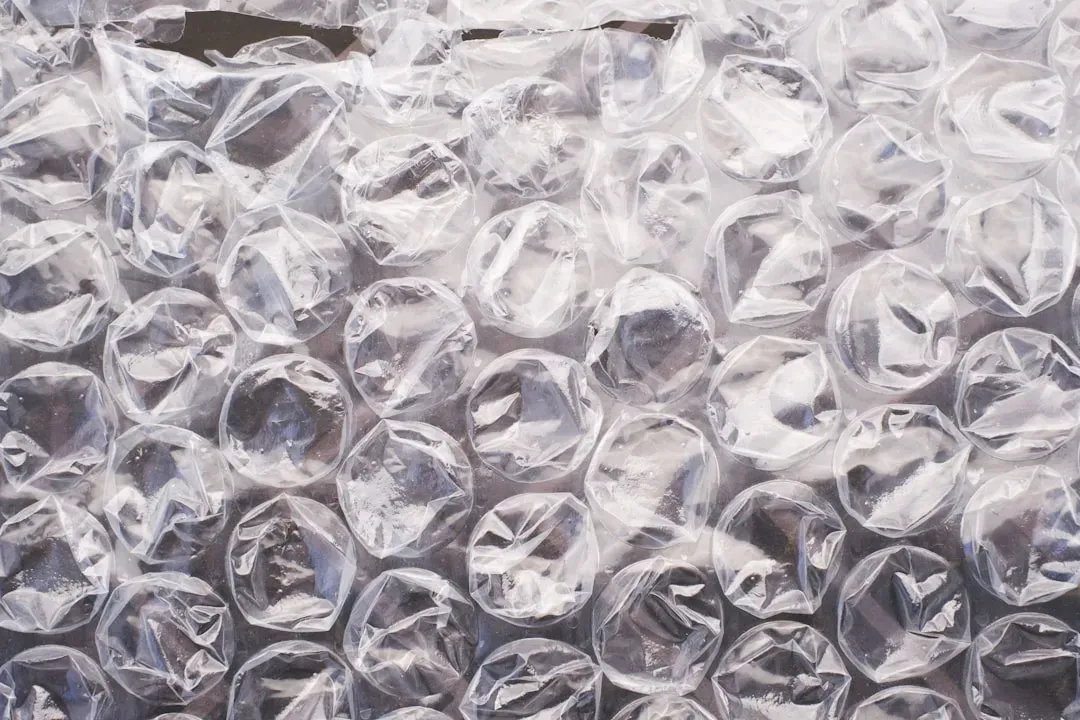
Two engineers named Alfred Fielding and Marc Chavannes set out in 1957 to create a textured plastic wallpaper, sealing two shower curtains together to trap air bubbles between them. The wallpaper idea flopped almost immediately, since nobody wanted plastic bumps on their walls, but the two men kept experimenting with other uses for their sealed-air material. They eventually pitched it as greenhouse insulation before settling on its most successful application, protective packaging.
By the 1960s their company, Sealed Air Corporation, had turned the failed wallpaper into a packaging staple that shipping departments now rely on worldwide. It’s a reminder that a product’s first intended purpose rarely predicts its lasting one. The popping sound, incidentally, has become such a cultural touchstone that stress-relief apps and toys now mimic it purely for the sensory satisfaction.
Play-Doh and a wallpaper cleaner nobody needed anymore
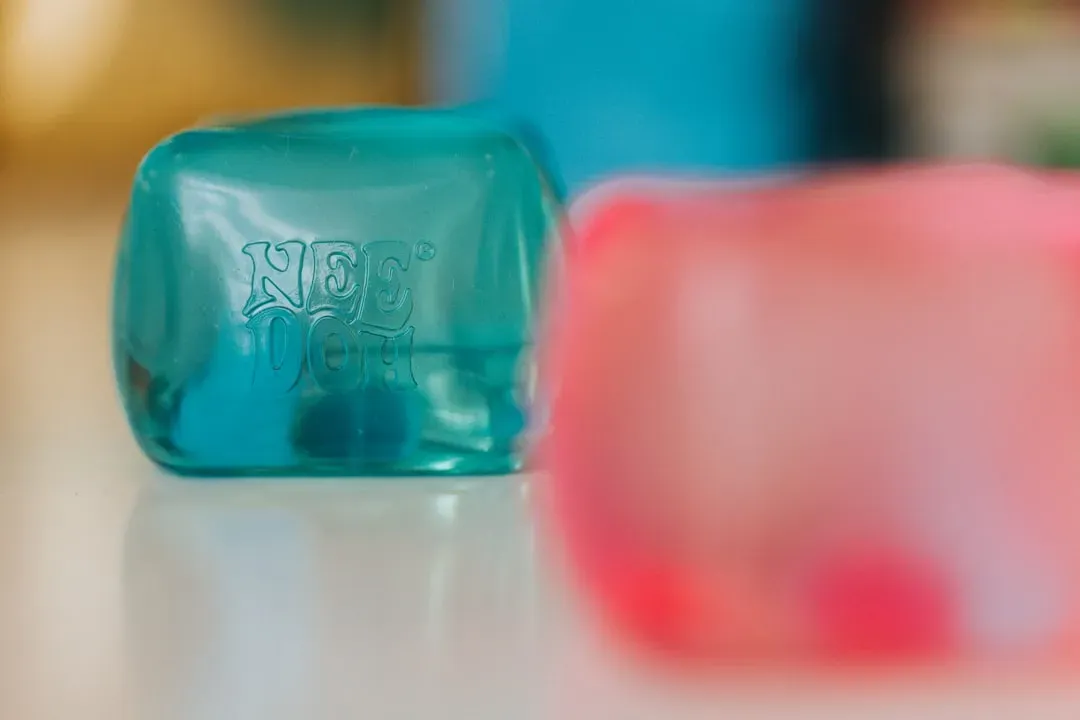
Long before it became a staple of preschool classrooms, Play-Doh started life in the 1930s as a putty designed to clean soot off wallpaper, produced by a Cincinnati company called Kutol Products. As homes shifted from coal heating to cleaner alternatives and vinyl wallpaper became common, the demand for wallpaper cleaner collapsed almost entirely. The company was facing the possibility of shutting down when a family connection to a school changed everything.
A relative of the company’s founders noticed that children enjoyed molding the soft, nontoxic compound far more than teachers appreciated it for cleaning. The cleaning putty was reformulated, given some color and a catchy new name, and relaunched as a children’s modeling compound in the 1950s. What began as an industrial cleaning product aimed at coal residue ended up becoming one of the best-selling toys in American history.
These seven stories share a common thread that has little to do with grand ambition. In each case, someone noticed a small, easily dismissed detail, a melted chocolate bar, a burr stuck to a sock, a spring that wouldn’t stop moving, and chose to follow the thread instead of letting it go. That habit of paying attention to the unplanned result is, in its own quiet way, as much a part of invention as the flash of genius people usually imagine.