Long before some of Hollywood’s most recognizable scores hit theaters, a handful of composers were standing on stages with guitars, synthesizers, and drum kits, chasing an entirely different kind of applause. Their paths into film music were rarely planned. Many stumbled into scoring through a friend’s request or a director’s gamble, carrying with them the instincts, rebellion, and raw sound of the rock scenes that shaped them.
What makes these seven composers interesting isn’t just that they crossed over. It’s how much of their band背景 still echoes in the music they write for the screen today, decades after the amps were unplugged.
1. Danny Elfman: from Oingo Boingo frontman to Tim Burton’s go-to composer
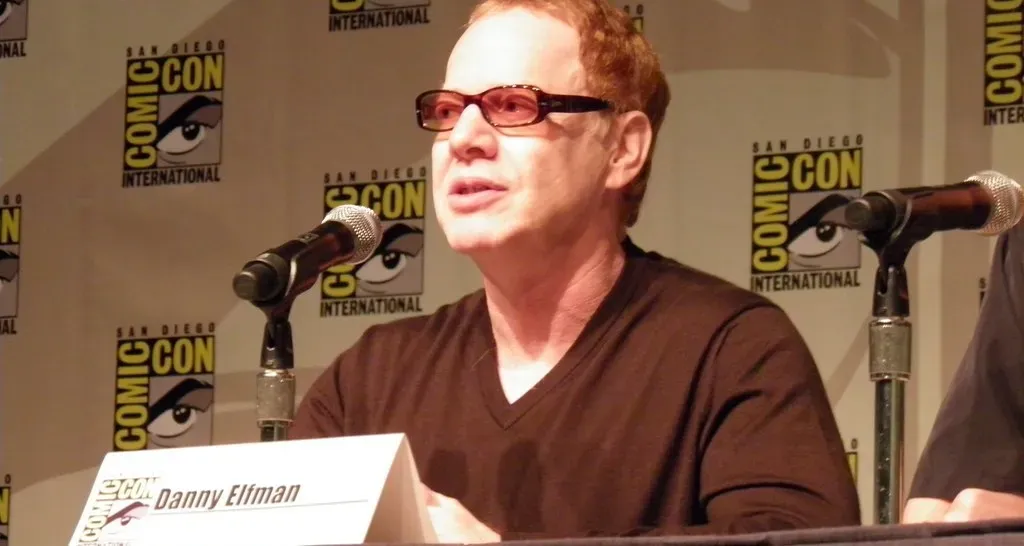
Danny Elfman spent years as the frontman of Oingo Boingo, an eccentric new wave outfit that mixed ska, punk, and theatrical flair through the late seventies and eighties. Established in 1979, Oingo Boingo mixed ska, punk, jazz and a Zappa-esque experimental streak during the rise of new wave. The band never became a mainstream juggernaut, but it built a devoted following and gave Elfman a reputation as an unpredictable, theatrical performer.
His leap into film came almost by accident when Tim Burton, who had seen Oingo Boingo perform at Los Angeles punk clubs, asked him to score Pee-wee’s Big Adventure. In 1985, Tim Burton and Paul Reubens invited Elfman to write the score for their first feature film, Pee-wee’s Big Adventure, and Elfman achieved his goal of emulating the mood of composers like Nino Rota and Bernard Herrmann with orchestration help from Oingo Boingo guitarist Steve Bartek. That partnership grew into one of the most enduring director-composer relationships in modern cinema, and Elfman has since garnered international recognition for composing over 100 feature film scores, as well as compositions for television, stage productions, and the concert hall.
2. Clint Mansell: Pop Will Eat Itself’s frontman turned Aronofsky’s musical voice
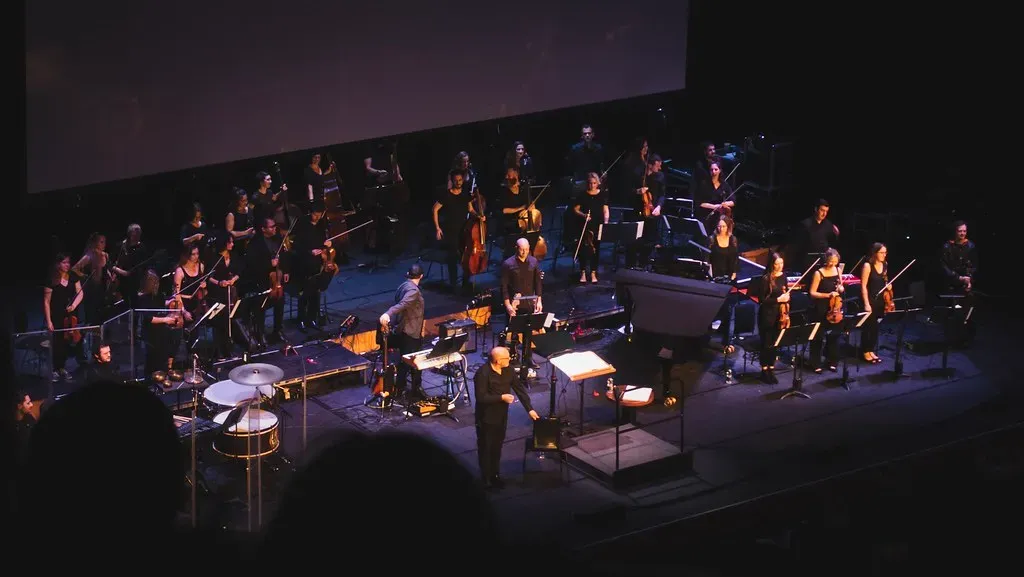
Clint Mansell grew up in Stourbridge, England, and by his own account it was hearing the Ramones that pulled him toward music in the first place. While living in Stourbridge, Mansell played in rock bands as a youth, and at 19 years of age he joined the band that became Pop Will Eat Itself. That group blended rock, dance, and hip hop influences and built a loyal UK following, with Mansell serving as its frontman for close to a decade before the band split.
After the group’s dissolution, Mansell relocated to the United States and, through a chance connection, began working with director Darren Aronofsky. He served as the lead vocalist of alt-rock band Pop Will Eat Itself, and after the band’s dissolution moved to the United States, embarking on a career as a film score composer and composing scores for Aronofsky’s films Pi, Requiem for a Dream, The Fountain, The Wrestler, Black Swan, and Noah. The haunting “Lux Aeterna” theme from Requiem for a Dream went on to become one of the most widely recognized pieces of film music of its era, used repeatedly in trailers well beyond the film itself.
3. Mark Mothersbaugh: Devo’s synth pioneer scoring Wes Anderson’s world

Mark Mothersbaugh co-founded Devo while studying art at Kent State University, and the band’s blend of new wave weirdness and sharp social commentary made them icons of the early MTV era. He came to prominence in the late 1970s as co-founder, lead vocalist and keyboardist of the new wave band Devo, whose “Whip It” was a top 20 single in the US in 1980, and which has since maintained a cult following. Devo’s visual inventiveness and offbeat humor turned out to be excellent preparation for a second career behind the scenes of Hollywood.
Mothersbaugh’s transition into scoring began modestly with children’s programming before expanding into film work through his production company. In addition to his work with Devo, Mothersbaugh has made music for television series, films and video games via his production company Mutato Muzika, and composed the music for the 13-year run of the animated series Rugrats and its three related theatrical films. He later became closely associated with Wes Anderson’s distinctive visual style, and by the time The Lego Movie arrived, it marked his 54th time in the role of composer, a striking output for someone who once fronted a band built almost entirely around irony.
4. Trevor Rabin: from Yes guitarist to Bruckheimer’s action-movie composer
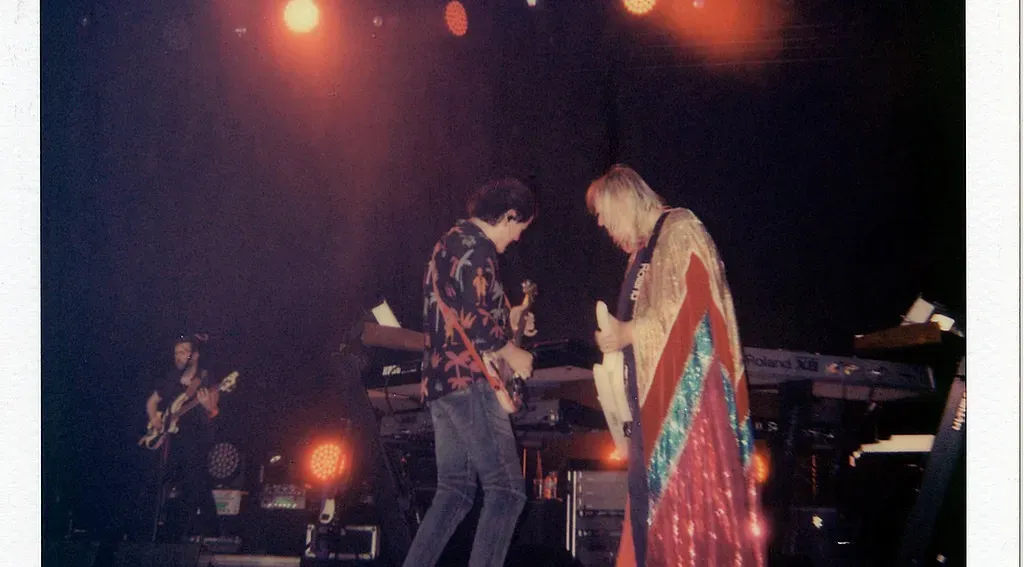
Trevor Rabin’s musical path started in South Africa, where he formed the band Rabbitt before moving to London and eventually Los Angeles. He is known as a guitarist and singer in the pop rock band Rabbitt from 1972 to 1978, and the English progressive rock band Yes from 1983 to 1995. His songwriting helped push Yes toward mainstream success, most notably with the chart topping single “Owner of a Lonely Heart” from the album 90125.
Partner offer
When Rabin left Yes in the mid-nineties, he pivoted almost immediately into film scoring, and the transition proved remarkably smooth. Rabin left Yes in 1995 after the Talk tour and changed career to become a prolific film composer, having since scored over forty feature films. His scores for big-budget action films like Armageddon, Con Air, and National Treasure carried the same driving energy that once defined his guitar work, just rearranged for orchestra and brass.
5. Jonny Greenwood: Radiohead’s guitarist writing for Paul Thomas Anderson
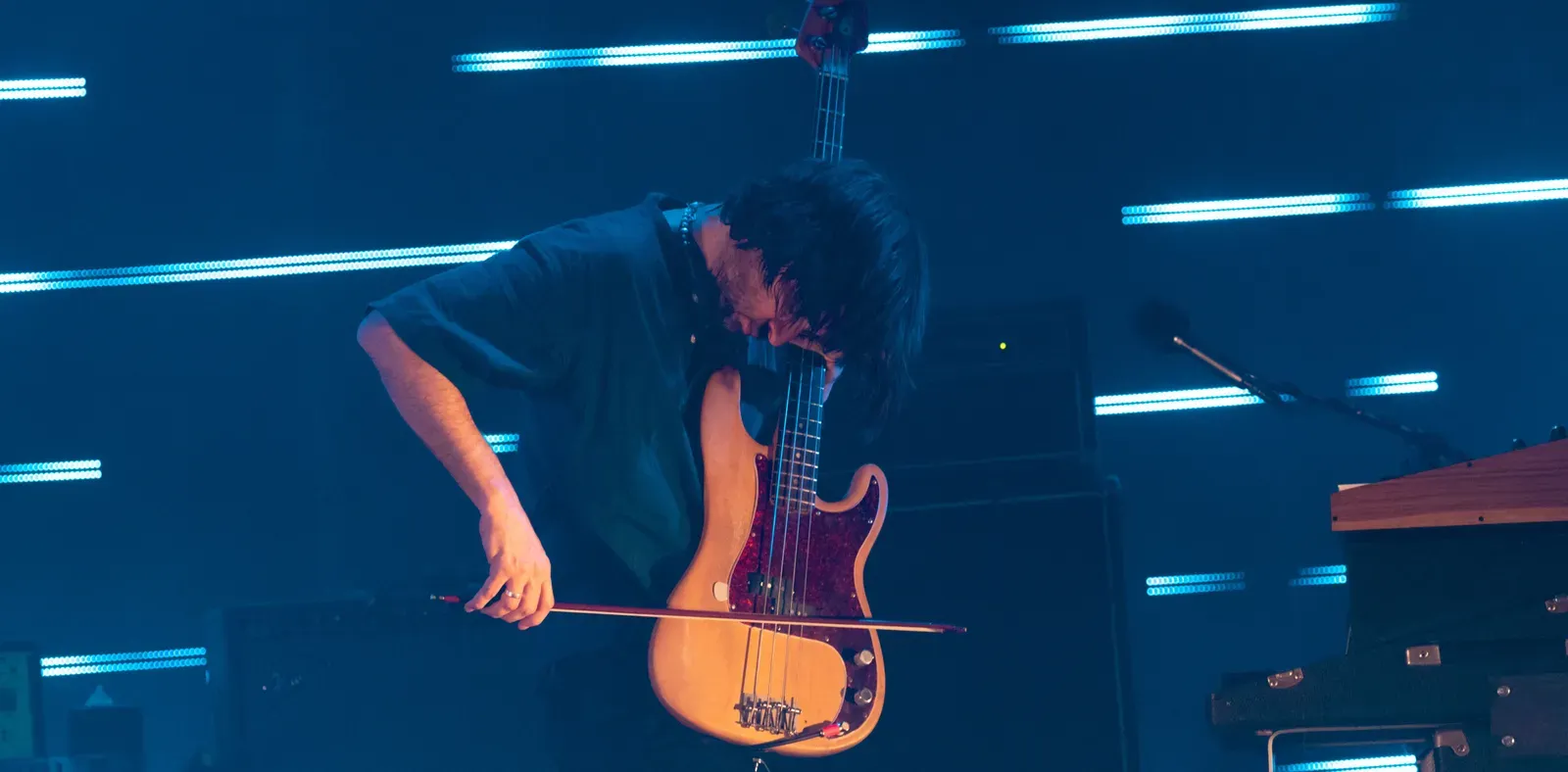
Jonny Greenwood has spent decades as Radiohead’s lead guitarist and multi-instrumentalist, known for textured, unconventional arrangements that pushed the band away from standard rock formulas. His interest in orchestral composition long predated his film work, stretching back to commissions for the BBC and various concert ensembles well before he wrote his first score.
That grounding paid off when director Paul Thomas Anderson brought him on to score There Will Be Blood, a partnership that has continued through films like Phantom Thread, Spencer, and Licorice Pizza. Greenwood remains an active member of Radiohead even as his film work has grown, giving him one of the more unusual dual careers among composers who came out of rock bands, since he never fully left the group that made him famous.
6. Nick Cave: from The Birthday Party’s chaos to atmospheric film scores with Warren Ellis

Nick Cave built his early reputation fronting The Birthday Party, an abrasive post-punk band out of Australia known for confrontational live shows, before forming the more expansive Nick Cave and the Bad Seeds. His songwriting has always leaned toward the theatrical and literary, which made the move into film scoring feel less like a detour and more like a natural extension.
Working alongside longtime Bad Seeds collaborator Warren Ellis, Cave has scored a run of films including The Proposition, The Assassination of Jesse James by the Coward Robert Ford, and Hell or High Water, often favoring sparse, haunting arrangements over conventional orchestral scoring. The duo’s film work has become its own respected strand of their careers, distinct from but clearly informed by the moody intensity of Cave’s rock output.
7. Trent Reznor: Nine Inch Nails’ architect turned Oscar-winning composer
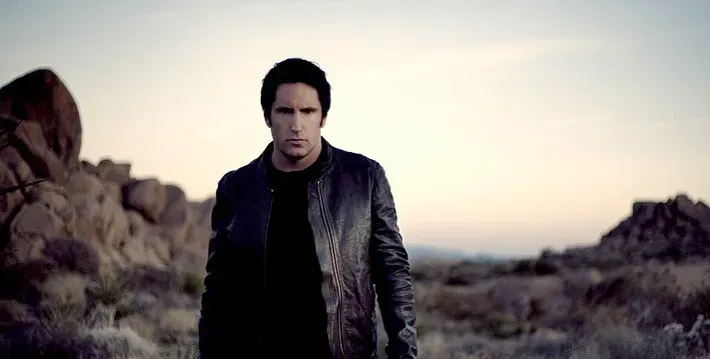
Trent Reznor built Nine Inch Nails into one of the defining industrial rock acts of the nineties, known for combining aggressive electronics with deeply personal songwriting. That same appetite for texture and tension carried directly into his second career, which began when director David Fincher asked him to score The Social Network alongside longtime collaborator Atticus Ross.
The pairing won an Academy Award for Best Original Score, a rare achievement for composers coming from a rock and industrial background rather than traditional film scoring training. Reznor and Ross have since scored numerous Fincher projects along with other films, all while Reznor continues to write and perform new Nine Inch Nails material, balancing both careers rather than choosing one over the other.
Taken together, these seven careers say something about how porous the line between rock music and film scoring really is. None of them set out to become film composers in a traditional sense. What connects them instead is a willingness to bring the instincts sharpened on stage, the sense of tension, restraint, and mood, into a completely different medium, and to keep evolving long after the bands that made them famous had run their course.
Partner offer
Planning a trip to Vegas?
Compare hotel rates and show tickets on VEGAS.com.