There’s something almost mythological about a musician who walks away at the very top. No farewell tour. No greatest hits cash grab. Just silence – and then nothing. It’s rare, honestly, and maybe a little alarming if you think about it too hard. Why would someone with the whole world listening just… stop?
The truth is, fame has a cost. For some artists, that cost was simply too high. These are the people who reached the summit, looked around at the view, and decided to go home anyway. What drove them there? That’s the real story. Let’s dive in.
1. Lauryn Hill – The Voice That Refused to Be Owned


Regarded as one of the most influential musical artists of her time, Lauryn Hill is credited with breaking barriers for female rappers, contributing to the mainstream success of both hip-hop and neo soul, and pioneering rap-singing. The world was hers. Then she gave it back.
At the 1999 Grammy Awards, Hill broke a number of records, becoming the first woman to be nominated in ten categories in a single year, and the first woman to win five trophies in one night: Album of the Year, Best R&B Album, Best R&B Song, Best Female R&B Vocal Performance, and Best New Artist. That’s a historic sweep that most artists could never dream of.
Hill’s decision to step away from the music came down to her skepticism about the way the industry works and the pressure put on artists. Her lack of trust in the industry began after she was named in a 1998 lawsuit by four musicians, New Ark, who demanded writing and production credit on her Miseducation album. The settlement reportedly cost her five million dollars and, more importantly, her trust in the entire system.
Hill explained her exit bluntly: “People need to understand that the Lauryn Hill they were exposed to in the beginning was all that was allowed in that arena at that time… I had to step away when I realized that for the sake of the machine, I was being way too compromised.” That’s not a vague artistic statement. That’s someone drawing a hard line.
2. Bill Withers – The Man Who Simply Didn’t Miss It

By the mid-1970s, Bill Withers had become a soul and R&B icon, penning timeless classics such as “Ain’t No Sunshine,” “Lean on Me,” and “Use Me.” Yet at the peak of his career, he quietly stepped away from the industry, frustrated by the music business’s demands and politics. What makes his story unique is what came after.
Withers’ disdain for Columbia’s A&R executives – or “blaxperts” as he termed them – trying to exert control over his sound to sell more albums played a part in his decision to not record or re-sign with a record label after 1985. This effectively ended his performing career. He wasn’t pushed out. He walked out on his own terms.
Finding musical success later in life than most, at 32, he said he was socialized as a “regular guy” who had a life before the music, so he did not feel an inherent need to keep recording once he fell out of love with the industry. After he left the music industry, he said that he did not miss touring and performing live and did not regret leaving music behind. That kind of contentment is genuinely rare.
Feeling disillusioned with the industry, Withers left music behind in 1985 and reportedly never missed it. He passed away on March 30, 2020 from heart complications, at the age of 81. His songs are still everywhere. The man himself chose peace.
3. Syd Barrett – The Psychedelic Visionary Who Retreated Into Silence

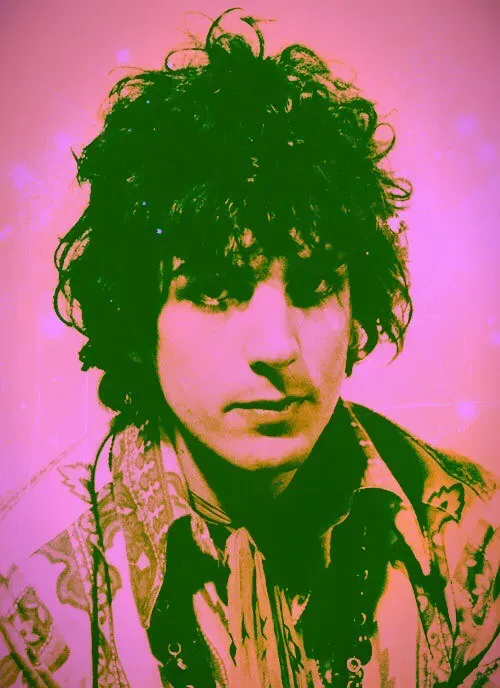
A founding member of Pink Floyd, Syd Barrett was the band’s original frontman and primary songwriter, known for his whimsical style of psychedelia and stream-of-consciousness writing. However, by 1968, his behaviour became increasingly erratic, reportedly due to heavy use of psychedelic drugs and possible underlying mental health issues. This led to his departure from the band, replaced by his old Cambridge mate David Gilmour.
Barrett’s brief solo career included the albums “The Madcap Laughs” and “Barrett,” but by 1972, he had withdrawn from the public eye entirely. He retreated to Cambridge, where he lived a reclusive life, focusing on painting and avoiding the music industry. It wasn’t a dramatic exit. It was a quiet fade.
After deteriorating mental health and erratic behavior, Barrett was replaced in the band and retreated to a quiet life in Cambridge. He rarely spoke of his time in the band and refused all interviews for decades. Think about that for a second. He co-founded one of the greatest rock bands in history, then essentially pretended none of it had happened.
Barrett was released from the band in 1968, and following two solo albums, retreated from the public eye completely. He moved back in with his mother and spent his years painting and gardening before dying of pancreatic cancer in 2006. The mystery around him only deepened with every year of silence.
4. Cat Stevens – A Spiritual Awakening That Changed Everything


Stevens was at his peak in the early 1970s with the multi-platinum albums “Tea for the Tillerman” and “Teaser and the Firecat,” which include such legendary songs as “Peace Train” and “Father and Son.” Stevens had been developing an interest in world religions throughout the ’70s, and after receiving the Qur’an as a birthday gift, he converted to Islam in 1977 and took the name Yusuf Islam.
After achieving international fame with hits like “Father and Son” and “Peace Train,” Stevens experienced a series of life-changing events, including a near-drowning incident in 1976, which led to a profound spiritual awakening. In 1977, he converted to Islam, changed his name to Yusuf Islam, and retired from the music industry, focusing instead on religious and philanthropic endeavours. This sudden departure puzzled fans and the media, as Stevens not only stopped performing but also distanced himself from his past musical work.
His hiatus lasted nearly three decades, during which he dedicated himself to education and humanitarian causes. That’s not a sabbatical. That’s a complete reinvention of purpose. Following his conversion, Yusuf used his hefty royalty payments for philanthropic purposes, like founding the Islamia Primary School in London and setting up various charities.
After a 28-year-long break, he surprised everyone by coming back to the music world in 2006 when he released the pop album “An Other Cup.” He’s since released two more albums, went on his first US tour in nearly 30 years, and was inducted into the Rock and Roll Hall of Fame. So he did eventually return – but the man who came back was genuinely different from the one who left.
5. Captain Beefheart – The Avant-Garde Icon Who Chose the Canvas Over the Stage

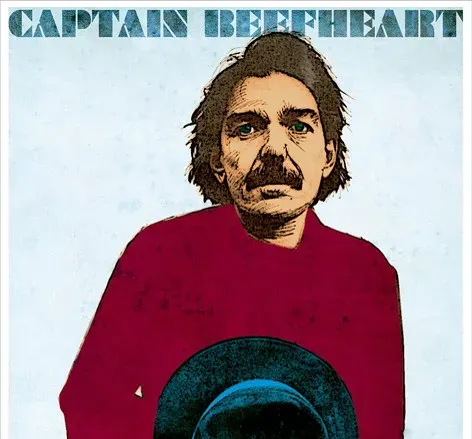
Don Van Vliet, known by his stage name Captain Beefheart, was an American singer, songwriter, multi-instrumentalist, and visual artist. Conducting a rotating ensemble known as the Magic Band, he recorded 13 studio albums between 1967 and 1982. His music blended elements of blues, free jazz, rock, and avant-garde composition with idiosyncratic rhythms, absurdist wordplay, and Vliet’s gravelly singing voice with a wide vocal range.
Beefheart’s best music had never been made for commercial consumption; he was a bona fide artiste – a natural visionary who had no choice but to follow his muse. After “Ice Cream for Crow” emerged, he suddenly disappeared, renouncing music-making for the rest of his life as he focused on his painting. The transition wasn’t a shock to those who knew him well.
In 1982, he retired from music and pursued a career in art. His abstract expressionist paintings and drawings command high prices, and have been exhibited in art galleries and museums across the world. His abstract expressionist paintings were actually well received – some sold for nearly $25,000, and his artwork has become the subject of academic essays.
Don Van Vliet, who became a rock legend as Captain Beefheart, died from complications from multiple sclerosis in California. His passing was announced by the New York-based Michael Werner Gallery, which represented his work as a painter. He was remembered not just as a musician, but as a full artist in the truest sense.
6. Grace Slick – The Rock Queen Who Retired on Her Own Rules

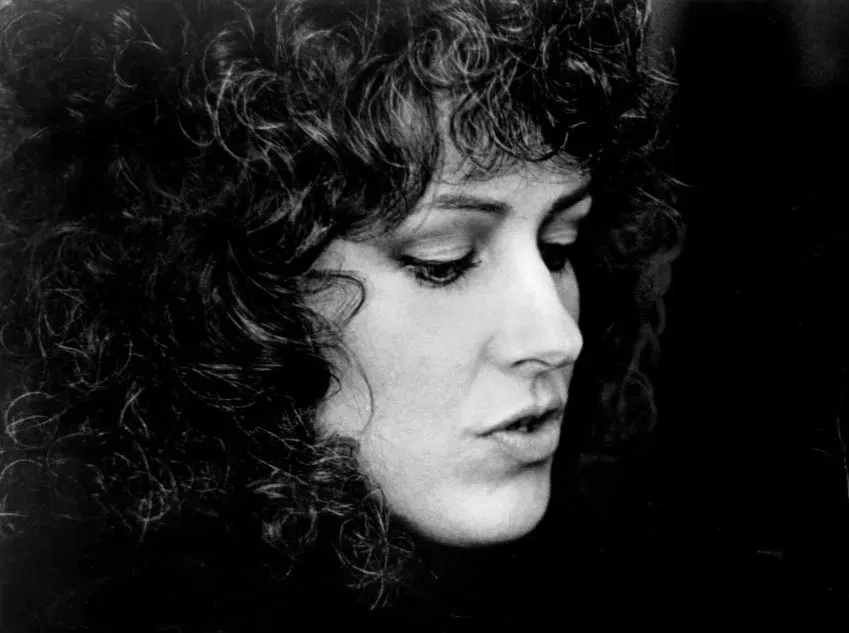
photo front
photo back, Public domain)
Slick was one of the most influential artists to come out of the San Francisco psychedelic scene, singing with the likes of Jefferson Airplane and Jefferson Starship. To this day, her deep, haunting vocals remain a cornerstone of ’60s psychedelia. She was, without question, one of the defining voices of an entire era.
Following a brief Jefferson Airplane reunion in 1989, Slick retired from the music scene altogether, as she believes that “all rock and rollers over the age of 50 look stupid and should retire.” According to her, rock and roll serves primarily as an outlet for young and frustrated individuals, not aging rich celebrities. Slick retreated from the public spotlight and focused on painting, drawing, and writing her autobiography.
Grace Slick’s warbling voice should, itself, be enshrined in the Hall of Fame. The frontwoman for Jefferson Airplane retired more than two decades ago from the music business, after one more Jefferson Airplane reunion. Instead, she replaced her devotion to music with one for visual art and has no regrets. That’s a level of self-awareness that the music industry rarely rewards, but Slick clearly never needed the industry’s approval anyway.
Honestly, I think there’s something almost admirable about knowing when a chapter is over. Most people can’t do that in any area of their lives. Slick looked at the stage, looked at her age, and made a choice – unapologetically. It’s hard not to respect it, even if rock fans have spent decades wishing she hadn’t.
7. Meg White – The Minimalist Who Simply Chose Silence


As one half of the White Stripes, the band she co-founded with then-husband Jack White, Meg White saw tremendous success with breakthrough singles like “Seven Nation Army” and “Fell in Love With a Girl,” but following a lengthy hiatus, the White Stripes officially confirmed their split in February 2011, and while Jack has continued performing, Meg stepped away from the spotlight completely.
Since then, she has largely stayed out of the spotlight, preferring privacy over fame. Her absence has left fans curious, but Meg’s impact on modern rock drumming is still widely acknowledged. Here’s the thing – she never issued a statement. No open letter, no farewell post. She was there, and then she wasn’t.
In June 2023, a writer for ELLE documented her attempts to secure an interview with Meg, but she was only able to communicate with Meg’s friend, who said: “She spent 15 years traveling and touring and playing. It’s not that odd to think that she just likes to be home.” That friend’s explanation might be the most honest one ever given for any retirement in music history.
There is something quietly radical about Meg White’s disappearance. In an era of relentless personal branding and social media oversharing, she chose the exact opposite. No podcast, no comeback single, no curated Instagram aesthetic. Just privacy. It sounds simple, but in 2026, that kind of discipline is almost impossible to imagine.
What These Stories All Have in Common

Look at this list long enough and a pattern starts to emerge. None of these artists left because their talent ran out. Lauryn Hill was a generational voice. Bill Withers was a master of emotional simplicity. Syd Barrett was a genuine original. These weren’t people who burned out artistically. They burned out emotionally, institutionally, or spiritually.
The music industry – with all its commercial pressure, contract disputes, label politics, and relentless demand for more, more, more – broke something in each of them. Or at the very least, made staying feel impossible. Few moments in music are as arresting as when an artist at the peak of their powers simply vanishes from the stage – leaving fans, critics, and collaborators alike stunned. These departures often carry an air of mystery and enigma, as if the musician has stepped out of time, retreating from fame, fortune, and the relentless pressures of public life.
It’s hard to say for sure whether any of them made the “right” call. There’s no way to know what albums we lost, what concerts never happened, what collaborations never came to be. What we do know is that every single one of them seemed to find something on the other side: peace, art, family, faith. Some version of a life that felt more like theirs.
And maybe that’s the most honest takeaway of all. Fame is not the same thing as fulfillment. These seven stories are a powerful reminder of that – whether the world ever got to hear their next album or not. Which one of these departures hits you hardest?