
There’s a persistent gap between what parents picture when they say “educational” and what actually lands with a child in real time. The flash cards, the museum tours, the assigned reading lists – they all carry the same optimistic logic: if it’s structured and enriching, the learning will follow. Kids, predictably, see things differently.
Research over the past few decades has consistently shown that children learn more deeply when they feel engaged and autonomous. Force the activity, add tracking and timers and checklists, and something quietly breaks. What follows are seven “educational” experiences that well-meaning parents swore by – but that left many kids counting the minutes.
1. Mandatory Reading Logs

Few parenting tools look more reasonable on paper. Track what you read, how long you read, get a parent signature. Done. The problem is that the research paints a surprisingly grim picture of what actually happens. In a study where second and third-grade students were assigned either a mandatory or voluntary log and surveyed about their motivation to read at baseline and after two months, students with mandatory logs expressed declines in both interest and attitudes towards recreational reading in comparison to peers with voluntary logs.
Reading logs turned a fun, self-directed activity into a top-down chore that chafed at the soul. The issue is intrinsic versus extrinsic motivation: when you’re intrinsically motivated to do something, you work harder and enjoy it more. When someone else is making you do it – even something you used to enjoy – it becomes a drag. Kids who loved reading began choosing shorter, easier books simply to clock the minutes faster. That’s the opposite of what any parent had in mind.
2. Tightly Scripted Museum Field Trips
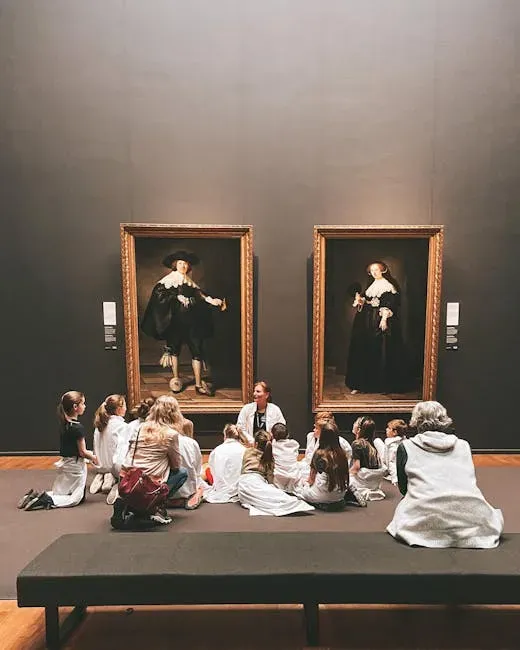
The idea sounds solid: take kids somewhere culturally significant, walk them through exhibits with educational purpose, and let the knowledge sink in. The reality is often a tired child being herded from display to display with a worksheet to fill out. Research found that children generally find the single-focus field trips usually planned by teachers to be boring. They want to wander, linger, and follow their own curiosity.
To maximize both cognitive and emotional outcomes, field trips should provide a moderate amount of structure while still allowing for free exploration. This approach is also congruent with preferences expressed by children for less rigidly structured museum visits. Children and families alike requested more interactive exhibits, sensory experiences, making and doing activities, and role play opportunities. The timed, clipboard-driven tour format rarely delivers on any of those fronts.
3. Forced Summer Reading Assignments

Parents who wanted to prevent the summer learning slide often reached for the assigned reading list. Schools sent them home. Libraries built entire programs around them. Every summer, many families across the country receive suggested or required reading lists from schools – and every summer, some version of the same battle begins, with kids pushing back against reading expectations and parents trying to motivate them.
For most children, summer reading becomes summer homework, and for parents it becomes something to fuss about over the summer. The approach that requires kids to track books leaves many children pushing through a book they hate so they can count it for summer reading – and that is not a solid way to build a love of reading. The activity meant to keep them sharp through July can quietly teach them that reading is a chore, not a pleasure.
4. Passive “Educational” TV Time
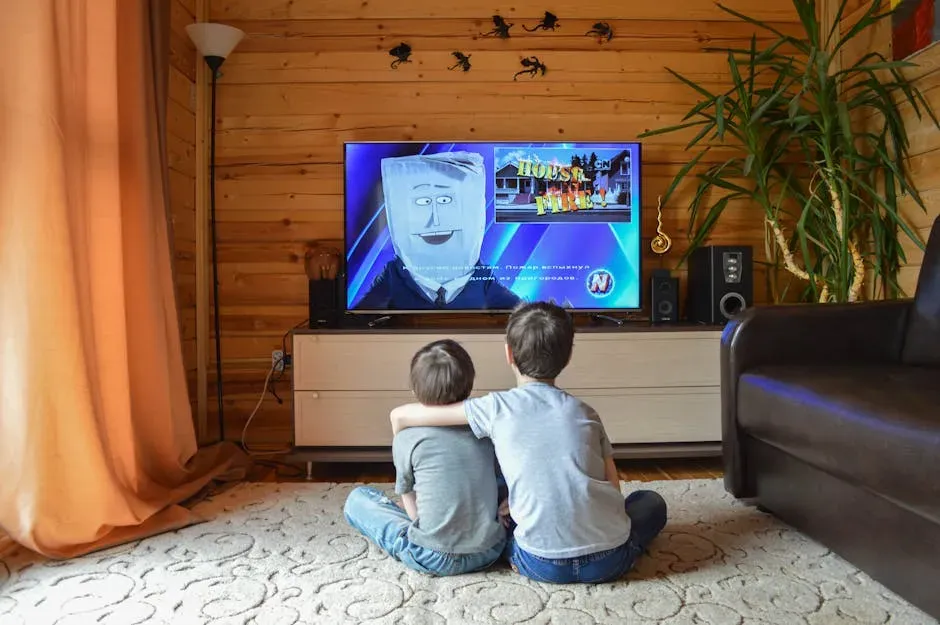
Parents who swapped regular cartoons for educational programming felt they were making a smart trade. The shows had lessons. There were counting segments, vocabulary words, moral moments. What the research found, though, was more complicated. A study in the Journal of Applied Developmental Psychology found that even educational shows could come with added lessons that influence a child’s behavior, with children who spent more time watching educational programs actually increasing their relational aggression toward other children over initial levels.
Preschool children really don’t get the moral of the story because that requires understanding how all the parts of the show fit together – and that takes complicated cognitive skills and memory skills that are still developing in young children. Excessive screen time can lead to delayed milestones by taking away from other important developmental activities like physical play, social interaction, and creative exploration. The educational label on the box doesn’t automatically make the experience valuable for every age group.
5. Heavy Homework Loads Assigned as “Reinforcement”

Homework has long carried the assumption that more is more. If a child learned something in school, a few pages of practice at home will lock it in. Parents reinforced this belief by sitting kids down at the kitchen table every evening without question. Research consistently shows that excessive homework negatively impacts student well-being, with more than half of students reporting it as a primary source of stress.
Students burdened with large amounts of homework have less time to spend with their families and friends, pursue hobbies, or participate in sports and extracurricular activities – and research from the National Center for Education Statistics highlights that students who participate in extracurricular activities often demonstrate better attendance and higher academic success. Yet heavy homework loads frequently prevent participation in these beneficial activities. Research tells us that homework does not hold much added value in terms of learning at the elementary level, a finding that surprises most parents who grew up thinking the opposite.
6. Drills and Flashcard Sessions

Flashcards feel productive. They’re organized, portable, and measurable. Parents used them to drill multiplication tables, spelling words, and foreign language vocabulary. The kids? Many found them the most reliably soul-crushing part of an afternoon. Research found that roughly a third of classroom time was spent in passive activities, and only about fifteen percent of class time involved any real interactivity like discussions or lab experiments. Flashcards at home extended exactly that dynamic.
In one study of teens learning about health topics, when teachers approached the material in the context of test preparation, students were less engaged and less likely to retain what was taught. If teachers instead gave a message focused on the content itself, students retained more information. The same principle applies to home drill sessions: memorization under pressure tends to stick less, not more. Kids sense this intuitively, even when they can’t articulate it.
7. School-Style “Enrichment” Activities During Breaks
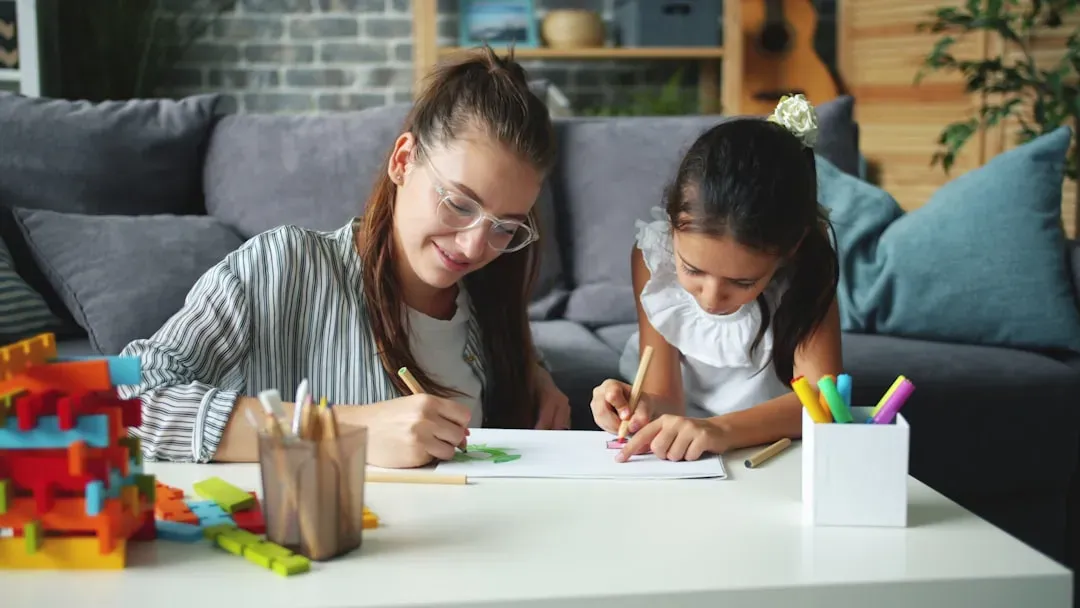
Summers and school holidays were prime real estate for the enrichment agenda. Workbooks, educational software, structured learning camps with formal curricula – parents filled the gaps with activities that looked like slightly disguised school. Research shows that children lose their spark for learning as they progress through their school years, with a significant number checking out and viewing school as boring, frustrating, and irrelevant to their lives. Doubling down on the same format during free time rarely reverses that slide.
Students are more likely to be in a genuinely engaged, flow-like state during after-school activities where they are both enjoying and being challenged by what they’re doing. In a nationwide survey of more than twenty thousand U.S. high school students, researchers found that most of their days are spent feeling tired, stressed, and bored, with nearly three quarters of self-reported feelings related to school being negative. Extending that emotional environment into vacation time, even with the best intentions, tends to produce predictable results.
None of this means that structure, reading, or museum visits are bad ideas. Context and execution matter enormously. The through-line in all seven cases is the same: when children feel surveilled, pressured, or stripped of any say in the process, the educational payoff shrinks. Giving kids even modest control over how and when they engage with learning changes the experience in ways that are hard to overstate. Sometimes the most educational thing a parent can do is step back and let curiosity do its job.