Every year, millions of tourists return from their dream vacations with a story they never planned to tell. Not about a stunning sunset or an unforgettable meal, but about the moment they realized their wallet was gone. It happens faster than you can blink, and most victims never see it coming.
Pickpocketing is the most common crime against tourists. It’s easy to commit in crowds and often goes unreported. The numbers behind this are genuinely alarming, and the habits that make travelers vulnerable are more common than most people think. So let’s dig into exactly what makes you a walking target, straight from what security experts and travel crime researchers have consistently documented.
1. Wearing Your Backpack on Your Back in Crowded Spaces
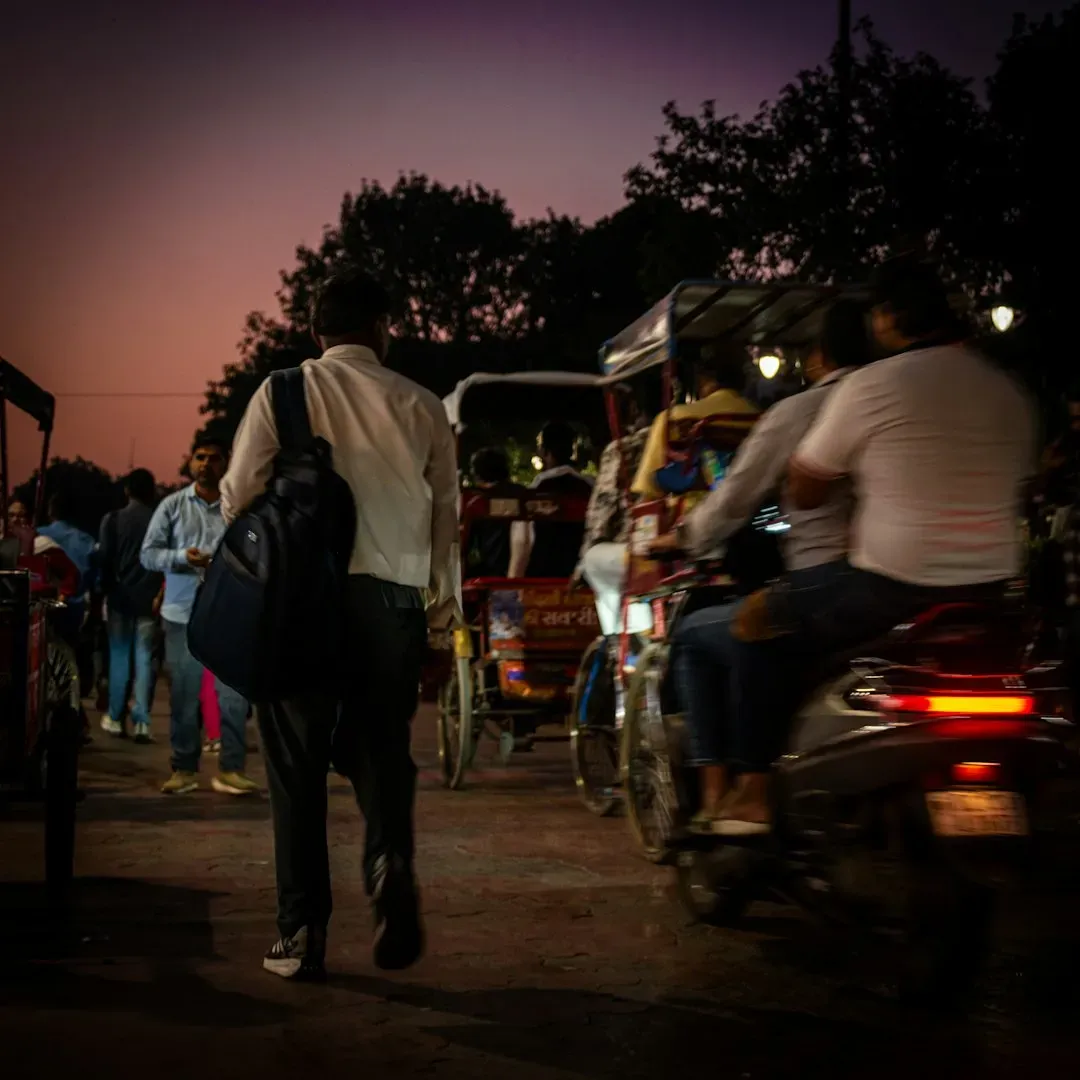
Let’s be real. That backpack on your shoulders feels secure, right? It’s physically attached to you. Surely nobody can reach it. Honestly, that confidence is exactly what pickpockets are counting on.
Experts consistently warn travelers: don’t wear a backpack on your back in metros or on escalators. The moment you turn your back to a crowd, you’ve handed a thief a private workspace they can rifle through for several seconds without you feeling a thing.
Pickpockets specifically prefer the outside pockets of a backpack or shoulder bag, and outer jacket pockets. These are their favorite spots, low-risk, fast to access, and nearly impossible for the victim to feel. Wearing a bag in front of you, or at minimum pressing it against your body in tight spaces, dramatically changes the risk equation.
2. Pulling Out a Wad of Cash in Public

Here’s the thing. That moment you open your wallet at a market stall and fan out your bills to find the right change? You just gave every pair of eyes nearby a full inventory of what you’re carrying. It’s the travel equivalent of holding up a sign that says “rob me.”
Pickpockets don’t just look for easy targets, they look for lucrative ones. Experts advise travelers to try to camouflage their wealth and their use of money, and specifically warn against pulling out a wad of cash and counting it out in public.
Pulling out large sums of cash for purchases makes you an immediate target. Pickpockets watch for travelers revealing bills, seeing them as easy prey. A simple fix? Keep a small amount of spending cash in a separate, accessible pocket. Your main funds stay hidden, and nobody watching you makes a mental note of your wallet’s contents.
3. Keeping Your Phone or Wallet in Your Back Pocket

This one is almost too obvious to write, yet it remains one of the most common mistakes travelers make worldwide. Security experts are blunt about it: don’t put your wallet in your back pocket. It’s a target on your butt and you won’t feel the wallet being removed.
Carrying wallets or phones in back pockets or loose bags is an easy target for pickpockets. Opportunistic thieves in crowded areas can quickly slip a hand into an exposed pocket without the victim noticing. The physics of it make perfect sense. Your back pocket is the one place on your body you genuinely cannot feel subtle movement.
On pants, front pockets are a much safer holding place than back pockets. This is a pickpocket’s specialty. Think of it this way: your front pocket is like keeping your wallet inside your own field of vision. Your back pocket is like leaving it on the table behind you and hoping nobody walks past.
4. Looking Lost, Distracted, or Glued to Your Phone

Skilled pickpockets are, before anything else, expert people-watchers. They scan crowds the way a lion scans a herd, looking for the one that seems confused, distracted, or separated from their instincts.
Pickpockets are expert people-watchers. They can recognize a confused tourist in a flash and often keep track of who has had a few drinks. Generally speaking, pickpockets won’t waste their time targeting someone who is fully alert, especially if they have taken observable safety measures.
Visitors who appear uncertain, like stopping mid-street to check maps or looking around anxiously, immediately draw attention. Pickpockets often seek travelers who seem distracted or unsure. The advice is simple but easy to forget in the excitement of travel. Step into a café, a shop doorway, or any quiet corner before checking your phone for directions. Never stop dead in the middle of a busy footpath with your face buried in a screen.
5. Flashing Expensive Jewelry, Watches, or Designer Gear

I know it sounds crazy, but wearing your nicest things on holiday is one of the clearest signals you can send to the wrong kind of people. You may feel great in that luxury watch or designer handbag. Someone else is calculating its resale value.
Showing off expensive watches, jewelry, or designer handbags immediately draws attention. Pickpockets often scan crowds for visitors displaying wealth, making flashy accessories a magnet for theft. Even a small, shiny item can signal that you’re carrying more valuable belongings.
Experts strongly advise travelers to leave valuables like expensive jewellery in a safe in the hotel and always travel with a secure cross-body bag with zips to secure phones and wallets or even a money belt. The logic is simple. What thieves can’t see, they can’t want. Travel like a local, not like a walking luxury boutique.
6. Getting Distracted by Staged Commotions or Overly Friendly Strangers
This is arguably the most sophisticated habit on this list because it’s not really your habit at all. It’s a trap specifically designed to trigger one of your best qualities: your natural human instinct to respond when something unusual happens.
Security experts warn that any time there’s a commotion nearby, it’s likely a smokescreen for theft. Artful-dodger thief teams create a disturbance, a fight, a messy spill, or a jostle or stumble, to distract their victims. The moment your attention shifts, the actual theft is already happening behind you or beside you.
Lewis Sage-Passant, a former British military intelligence officer and director of travel security firm How Safe Is My Trip, explains that usually one member of a gang will distract the mark, often with a fake tourist survey or petition, or by accidentally spilling something on them. Some pickpockets will even carry food or drinks and purposely pour it on you when they bump into you, or knock things from your hands. While you’re distracted cleaning up or gathering your belongings, their accomplice is already rifling through your pockets.
7. Overpacking and Dragging Too Much Luggage Through Busy Areas

Traveling with mountains of luggage feels like good preparation. In reality, it makes you one of the slowest, most distracted, and most vulnerable targets on any street or station platform.
You’re going to be a prime target for a pickpocket if you are pulling along two giant suitcases and have a backpack. You won’t be able to watch over all your things since you have so much stuff and you’re a slow-moving target. A thief looking for an easy mark will always gravitate toward the overwhelmed traveler wrestling with a heavy trolley and simultaneously trying to read a metro map.
Travellers with a lot of luggage are easier targets. They have more belongings to steal and are slow-moving targets as they concentrate on managing several pieces of luggage. Packing light isn’t just a travel philosophy. It’s genuinely a security strategy. The less you carry, the more control you maintain over your immediate environment and the less of a spectacle you become in crowded transit hubs.
The Scale of the Problem in 2025 Is Bigger Than Most Travelers Realize

It’s worth putting cold numbers against all of this because the data from recent years is striking. In 2024, there were over 2,000 reported robberies in Rome, a more than fifty percent rise compared to 2019. Pickpocketing incidents in the same city surged to 33,455 cases in 2024, marking a sixty-eight percent increase. That works out to nearly 100 incidents per day in one city alone.
Paris holds the title of pickpocket capital of the world, with over sixteen percent of all theft-focused reviews from the past year referring to the city. Bangkok has officially been ranked the world’s number one pickpocket and scam hotspot for 2025. These are not niche or obscure destinations. They are among the most visited places on earth.
What’s striking across all major tourist cities is how organized and sophisticated pickpocket operations have become in 2025. These aren’t random opportunistic crimes anymore. Professional theft rings study tourist patterns, exploit crowded conditions, and disappear into masses of people before victims even realize something’s missing.
The Pickpocket’s Playbook: How They Actually Choose Their Target

Understanding the mindset behind the theft is more useful than any single tip. Pickpockets are not simply opportunistic. They are selective, calculated, and remarkably fast at reading human behavior in a crowd.
Most pickpocketing is opportunistic in execution but deliberate in target selection. A thief spots an opportunity such as a phone or wallet in a back pocket, a person who isn’t paying attention, a purse hanging on the back of a chair, or a tourist taking photographs at a popular attraction. Eliminate the opportunity, or make yourself less of a target, and chances are the thieves will move on.
Pickpockets almost always work in groups. One or two people will do something to distract you while another member tries to take your stuff. Once the theft has occurred, the thief who stole the item will often hand it off to someone else and they’ll all run in separate directions. This makes it very hard to track the culprit. Think of them less like a lone opportunist and more like a small, practiced team running a rehearsed play.
What Actually Works: The Habits That Make Thieves Walk Away

The good news is that pickpockets consistently prioritize the path of least resistance. Generally speaking, pickpockets won’t waste their time targeting someone who is fully alert, especially if they have taken observable safety measures. You don’t need to be paranoid, you just need to look like the wrong choice.
According to the Summer 2024 Global Rescue Traveler Sentiment and Safety Survey, most experienced travelers reported splitting up their valuables as one of the best ways to prevent losing everything at once due to loss or theft. Spreading your cash, cards, and documents across different pockets and bags means that even in a worst-case scenario, you’re not completely stranded.
Thieves can identify the easiest mark, most likely the person with the bulging back pocket or the traveler who keeps patting a day bag to check that the money is still there. That last detail is surprisingly counterintuitive. Checking your pockets nervously when you see a “beware of pickpockets” sign is one of the clearest ways to advertise exactly where your valuables are hidden. Stay calm, walk with purpose, and keep your security routine invisible.
The uncomfortable truth is that most pickpocket victims were doing something completely normal. They were excited, distracted, or simply carrying their things the way they always do at home. The difference is that at home, nobody was watching for it. Abroad, in the wrong city and the wrong crowd, somebody very likely was. Now that you know what they’re looking for, the question is: would you still make it easy for them?