Movie credits tell a tidy story: one writer, maybe two, get their names on the poster and the awards speeches. The real story behind most Hollywood scripts is messier, full of secret drafts, panicked phone calls, and writers who never saw their names appear anywhere near the finished film. Some of the most beloved lines and scenes in cinema history came from people who were paid to fix a broken script, then sent home without a credit to show for it.
1. Ben Hecht rescued Gone With the Wind during a five day lockdown

By early 1939, producer David O. Selznick had shut down production on Gone With the Wind because he hated the script that had passed through the hands of Sidney Howard and several other writers. The movie almost never made it to the big screen after the producer shut down production because he was unhappy with the script and called in Ben Hecht, who had never read the book, to do a rewrite. The situation was dire enough that everyone involved knew a flop could end their careers.
What followed became one of Hollywood’s most famous emergency sessions. Selznick locked the office door, and for five days he allowed Hecht and Fleming no sleep and nothing but bananas and peanuts to eat, as Selznick and the director acted out the novel for Hecht while he banged away on a typewriter. Hecht was paid $10,000 by Selznick for a fast doctoring of the script, for which he received no credit, while Sidney Howard won the Oscar for the screenplay. The film went on to become one of the highest grossing pictures ever made, and Hecht’s frantic, sleep deprived week was largely forgotten by audiences who only saw the polished result on screen.
2. Robert Towne quietly fixed the heart of The Godfather

Francis Ford Coppola had a problem in the final stretch of The Godfather. He needed a scene between Vito and Michael Corleone that captured the weight of the entire story, but the pressures of production left him no time to write it himself. Coppola deputized Robert Towne to crystallize the relationship between Brando’s Don Vito Corleone and Al Pacino’s Michael, since his notebook noted they needed to do better in the definitive scene between the old and new don, and Towne responded with one of the greatest scenes in cinema.
Towne’s work became the garden scene, one of the most quoted moments in the film. Coppola later gave credit where it was due, telling the Oscars audience that the beautiful scene between Brando and Pacino in the garden was Towne’s scene. Towne received no formal writing credit on The Godfather, yet that public shoutout from the stage became the closest thing to recognition a script doctor could hope for.
3. Elaine May turned Tootsie into a sharper comedy

Tootsie is remembered as one of the smartest comedies of its era, but the shooting script needed help before it reached that level. During the early 1980s, Elaine May mainly worked as an uncredited script doctor who polished scripts by other screenwriters, and her greatest success in this role was Tootsie, for which she wrote several additional scenes. May had already built a reputation as one of the sharpest comedic minds in the business, and directors trusted her to find jokes that other writers had missed.
Her uncredited touch extended well beyond one film. Elaine May worked uncredited on movies including Reds, Tootsie, Labyrinth, Wolf, and Dangerous Minds. None of those credits list her name publicly, yet her fingerprints are widely acknowledged by industry historians who track this kind of behind the scenes work.
4. Tom Stoppard gave Indiana Jones and the Last Crusade its wit

Jeffrey Boam’s draft for the third Indiana Jones film had some strong moments, but Steven Spielberg wanted more heart and sharper banter between Indy and his father. He hired Tom Stoppard, a Tony winning playwright who would go on to win an Oscar for co-writing Shakespeare in Love, to give Boam’s script an uncredited polish, because when you’re Spielberg and your action picture needs punching up, you call one of the world’s leading writers. Stoppard was so uncomfortable taking the assignment publicly that he used a pseudonym rather than his own name.
The results speak for themselves nearly four decades later. Spielberg said in a 2006 oral history that it was an emotional story he didn’t want to get sentimental about, and the disconnection between father and son gave Stoppard, who was uncredited, a lot to write, adding that Tom is pretty much responsible for every line of dialogue. Stoppard, credited pseudonymously as Barry Watson, also cut several superfluous characters and introduced Sean Connery’s father figure twenty three pages earlier than the original draft.
5. Quentin Tarantino punched up Crimson Tide’s dialogue

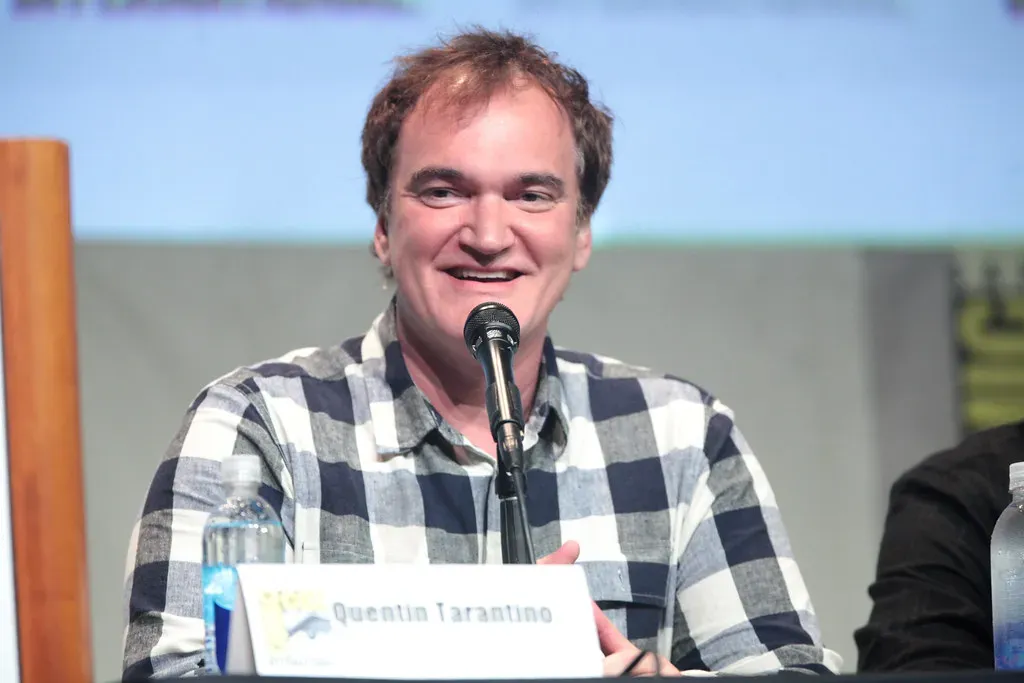
Crimson Tide had a solid submarine thriller premise from screenwriter Michael Schiffer, but director Tony Scott wanted more electricity in the verbal sparring between Denzel Washington and Gene Hackman’s characters. Scott suggested Tarantino to the studio to doctor the script after having worked with him on True Romance, and Tarantino rewrote some dialogue, though he was not in the Writers Guild yet, so was not allowed a credit on the film. His contribution became one of the film’s signature elements.
The pop culture heavy banter Tarantino is known for shows up throughout the finished movie. Tarantino was brought in to do uncredited punch ups of the dialogue, and his major contribution was the comic book bickering between the leads. The film later earned strong critical notice, with Rotten Tomatoes’ critics consensus praising the taut, high energy thrills and cracking dialogue courtesy of an uncredited Quentin Tarantino.
6. Carrie Fisher spent a decade fixing other people’s scripts

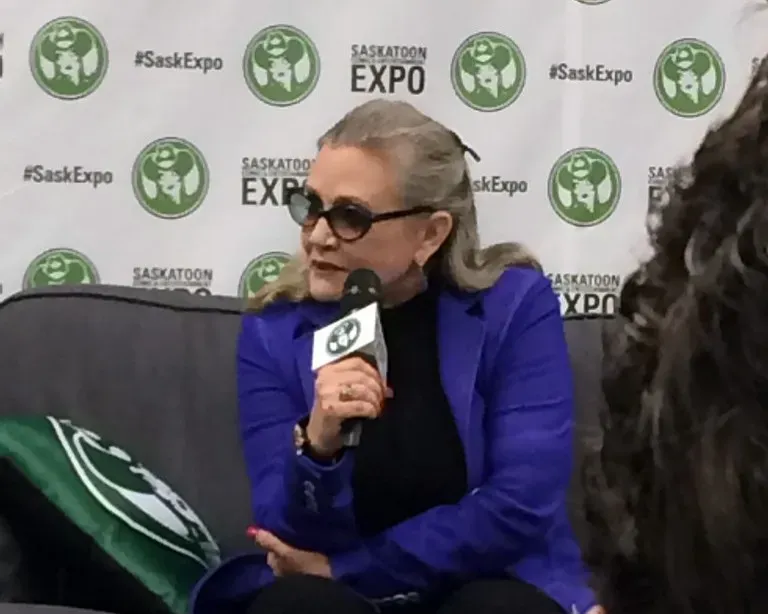
Long before most fans knew about her second career, Carrie Fisher had become one of the most reliable script doctors in Hollywood. In the 1990s, Carrie Fisher’s career as a script doctor became legendary, with Hook in 1991, Sister Act in 1992, Lethal Weapon 3 in 1992, and The Wedding Singer in 1998 all repaired by her uncredited work. Studios kept calling because her rewrites consistently made comedies funnier and characters more believable.
Sister Act offers a clear example of her impact. The screenplay is credited to Paul Rudnick, but according to Entertainment Weekly, Fisher rewrote some of the script, developing the film’s characters and ironing out kinks while also mediating star Whoopi Goldberg’s relationship with the studio. Fisher eventually stepped away from the practice, explaining to Newsweek that the business around script doctoring had changed, with studios collecting notes from many writers rather than committing to hire the one they actually wanted.
7. Joss Whedon reshaped Speed into a tighter thriller
Before Joss Whedon became known for Buffy the Vampire Slayer and later blockbuster franchises, he was one of the busiest uncredited script doctors of the 1990s. Speed arrived at 20th Century Fox with an action premise that needed sharper dialogue and a tighter emotional arc between Keanu Reeves and Sandra Bullock’s characters. Whedon was brought in to punch up the script, and much of the film’s now famous banter and the memorable ending bear his mark, even though the sole screenplay credit went to Graham Yost.
Whedon’s work on Speed became one of the clearest examples of how a script doctor can shape a film’s tone without ever appearing in the credits. The finished movie became one of the defining action hits of 1994, launching Bullock into stardom and reinforcing Reeves as a leading man. Industry writers and film historians have pointed to Whedon’s uncredited pass as a key reason the script’s humor and pacing felt sharper than the earlier drafts that circulated around the studio.
The pattern across all seven of these stories is remarkably consistent. A production runs into trouble, a talented writer gets a phone call, and within days or weeks the script transforms into something audiences remember decades later. None of these writers asked for public recognition at the time, and most of them never got it beyond a passing mention in an interview or an awards speech. Their work lives on anyway, quietly embedded in scenes that fans quote without ever knowing who actually wrote the words.