
Pick up almost any classic paperback and the name on the cover feels like a fixed point, something solid and unquestionable. Yet publishing has a long, quiet history of writers hiding behind invented identities, sometimes for protection, sometimes for marketing, and sometimes simply because they wanted their words judged without their name attached. Some of these disguises held for decades. Others fell apart within days, often in the most unglamorous way imaginable, like a leaked email or a nosy journalist comparing sentence structures.
1. The Cuckoo’s Calling by Robert Galbraith (J.K. Rowling)

In 2013, a modest crime novel called The Cuckoo’s Calling appeared in bookstores under the name Robert Galbraith, supposedly a retired member of the Royal Military Police writing his debut. Writing under the pseudonym Robert Galbraith, purportedly a retired investigator penning his debut novel, the blockbuster Scottish author released The Cuckoo’s Calling in the U.K. and U.S. in April. The book earned strong reviews but almost nobody bought it.
Her mystery debut barely made a ripple this spring when it was published under the pseudonym Robert Galbraith, selling just over 2,000 copies in the US and Britain. Everything changed once London’s Sunday Times traced the writing style back to Rowling, and the novel rapidly ascended to No. 1 on the Amazon bestseller list, where it remained. Rowling later admitted the disguise had given her something rare: a book judged purely on its own merits, at least for a few months.
2. Primary Colors by Anonymous (Joe Klein)


Few literary mysteries gripped Washington quite like the 1996 release of Primary Colors, a razor sharp roman à clef about a southern governor’s presidential run that read like an insider’s diary of Bill Clinton’s 1992 campaign. Primary Colors: A Novel of Politics is a 1996 book by columnist Joe Klein, published anonymously, about the presidential campaign of a southern governor, and it is a roman à clef about Bill Clinton’s first presidential campaign in 1992. The author’s silence only fueled speculation about who inside the political world had spilled so many secrets.
The book’s commercial run was extraordinary for something with no name attached. The book spent nine weeks as number one on the New York Times bestseller list. Eventually, Joe Klein, then a Newsweek columnist, eventually revealed himself to be the author of Primary Colors after The Washington Post published evidence linking him to the manuscript. The unmasking sparked a genuine debate about journalistic ethics, since Klein had spent months publicly denying authorship while covering the very politics he’d fictionalized.
3. Fifty Shades of Grey by E.L. James (Erika Mitchell)

Before E.L. James became a household name, she was Erika Mitchell, a London television executive writing steamy Twilight fan fiction under yet another alias. Prior to this, she wrote the Twilight fan fiction Master of the Universe that served as the basis for the Fifty Shades series under the web name Snowqueens Icedragon. That online serial eventually morphed into an entirely original trilogy, published under the initials E.L. James rather than her real name.
The gamble paid off on a scale almost nobody predicted. The Fifty Shades novels have sold over 150 million copies worldwide, over 35 million copies in the United States, and set the record in the United Kingdom as the fastest selling paperback of all time. James has openly discussed her real identity for years now, but the pen name stuck, largely because by the time the trilogy exploded, the brand E.L. James had already become inseparable from the phenomenon itself.
4. Story of O by Pauline Réage (Anne Desclos)

Published quietly in Paris in 1954, Story of O became one of the most notorious erotic novels of the twentieth century, and its author remained a mystery for four decades. Story of O is an erotic novel written by French author Anne Desclos under the pen name Pauline Réage, and Desclos did not reveal herself as the author until 1994, 40 years after the initial publication. For years, critics assumed a man had written it, given the book’s unflinching, controlled prose about domination and desire.
The truth arrived through a single candid interview late in Desclos’s life. Forty years after the publication of the French novel Histoire d’O, the full truth was finally made public in a groundbreaking profile in The New Yorker by the British journalist and writer John de St. Jorre. Desclos had used not one but two pseudonyms across her writing career, and in 1954, a woman using the pseudonym Pauline Reage published a slim volume, and like Fifty Shades decades later, the book was epoch making and published pseudonymously.
5. The Nancy Drew Mysteries by Carolyn Keene (Mildred Wirt Benson)


Generations of readers grew up assuming a single woman named Carolyn Keene had penned every Nancy Drew adventure, but the name was a corporate invention from the start. Edward Stratemeyer created the characters and synopsis for the first few Nancy Drew books, but he did not write them himself, and we now know that Mildred A. Wirt was the ghostwriter Carolyn Keene for 23 of the first 30 Nancy Drew books. Benson answered a classified ad, never suspecting she’d help shape one of the most enduring characters in children’s literature.
The series continued under the same shared pseudonym long after Benson moved on, with other writers stepping into the Keene name. Leslie McFarlane, James Duncan Lawrence, Walter Karig, and Nancy Axelrod were some other ghostwriters working for the syndicate and wrote as Carolyn Keene. Benson’s role only became widely known decades later, and by then Nancy Drew had already sold in the tens of millions and inspired multiple generations of young readers who never knew their favorite author didn’t technically exist.
6. Jane Eyre by Currer Bell (Charlotte Brontë)

When Jane Eyre appeared in 1847, it carried the name Currer Bell on its title page, a deliberately ambiguous pseudonym chosen by Charlotte Brontë and her sisters Emily and Anne, who wrote under Ellis and Acton Bell respectively. The choice was practical rather than mysterious for its own sake. Victorian England was notoriously skeptical of serious literary work from women, and the sisters worried that a female byline would color how critics approached their writing. The strategy worked well enough that the novel became an immediate sensation, praised for its emotional intensity and unconventional heroine. Speculation about Currer Bell’s true identity swirled through literary London for months, with some assuming the author was a man given the book’s boldness. Charlotte eventually revealed her identity to her publisher and, later, to the wider public, though by then Jane Eyre had already secured its place as one of the defining novels of the era.
7. Middlemarch by George Eliot (Mary Ann Evans)

Mary Ann Evans faced a similar calculation a generation later, adopting the pen name George Eliot for Middlemarch and her other major novels. She wanted her work read as serious literature rather than dismissed as a romance novel, the fate she believed awaited most fiction published under a woman’s name at the time. The choice also gave her a measure of privacy, since her personal life, including a long unmarried relationship with the philosopher George Henry Lewes, was considered scandalous by Victorian standards. Middlemarch, published in installments starting in 1871, went on to become one of the most acclaimed novels in the English language, admired for its psychological depth and sprawling portrait of provincial life. Evans’s identity eventually became known within literary circles well before her death, and unlike some pseudonymous authors, she never faced the kind of public unmasking that turned other cases into scandals. Today, George Eliot remains the name on the cover, a pseudonym so thoroughly absorbed into literary history that many readers forget it was ever a disguise at all.
8. Thinner and the Richard Bachman Novels (Stephen King)
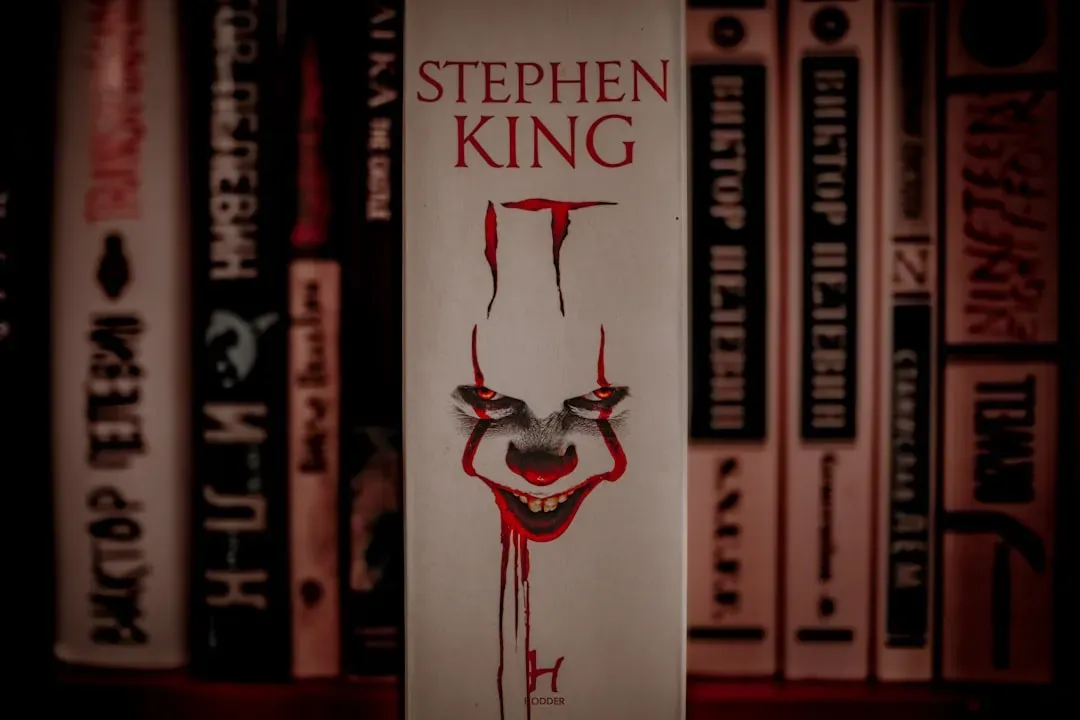
By the early 1980s, Stephen King was already a bestselling name, which created an odd problem: publishers worried the market couldn’t absorb more than one or two King books a year without saturating demand. His solution was to write several novels, including Rage, The Long Walk, and Thinner, under the name Richard Bachman, presenting them as the work of an entirely separate author. The disguise held for roughly five years, longer than most literary pseudonyms manage before slipping. The unraveling came through old fashioned detective work rather than a deliberate leak. A bookstore clerk in Washington D.C. noticed similarities between Bachman’s writing style and King’s, then found copyright records at the Library of Congress listing King as the true author. King confirmed the connection himself once the evidence became public, later joking about Bachman’s fictional death from cancer of the pseudonym, so to speak. The books, once quietly midlist titles, saw a significant sales bump after readers realized they’d been reading King all along.
Eight different authors, eight different reasons for hiding behind a name that wasn’t their own. Some wanted privacy, some wanted a fair critical hearing, and some simply wanted to see if their writing could stand without the weight of a famous name attached to it. What connects all of them is that the fiction managed to survive its author’s disguise, and in most cases, the disguise ended up becoming part of the story itself.