


Throughout history, human beings have proven one uncomfortable truth over and over again: we desperately want to believe. We want life on the moon. We want monsters in Scottish lakes. We want missing links, fairy photographs, and diaries from history’s darkest villains. Honestly, the desire to believe something extraordinary might just be baked into who we are.
What makes the greatest hoaxes so fascinating is not the tricksters themselves – it’s us, the audience. The scientists, editors, journalists, and millions of ordinary people who swallowed the impossible because it tasted so good. Some of these deceptions lasted decades. A few reshaped entire scientific fields. Let’s dive in.
1. The Piltdown Man: The Skull That Rewrote (and Un-Wrote) Human History
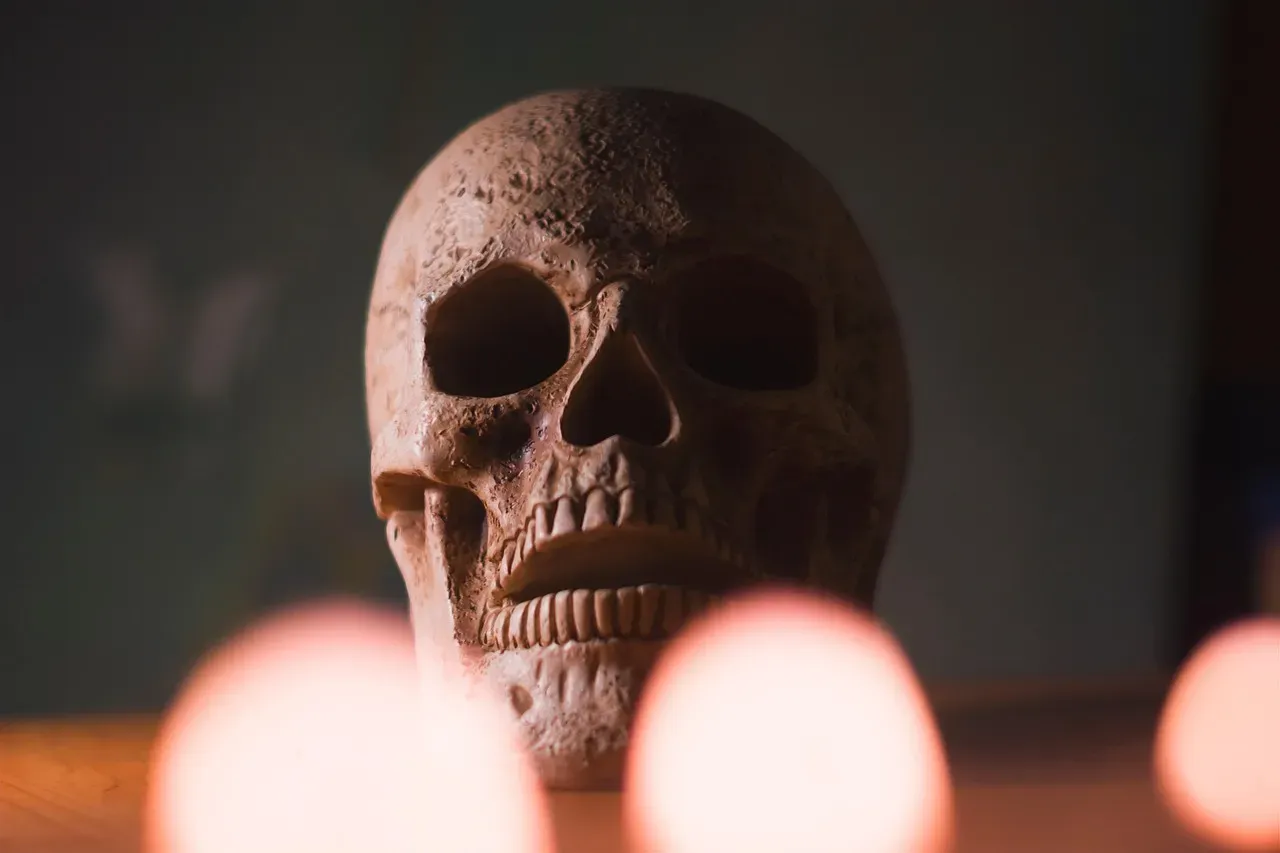
Few deceptions in science have been as audacious or as consequential as the Piltdown Man. In 1912, amateur archaeologist Charles Dawson claimed he had discovered the “missing link” between early apes and humans. The big-brained, ape-jawed Piltdown Man was hailed as a major missing link in human evolution when he was discovered in a gravel pit outside a small UK village, and the find set the pace for evolutionary research for decades, establishing the United Kingdom as an important site in human evolution.
The fossil remains were later proved to be fraudulent, despite being sufficiently convincing to generate a scholarly controversy that lasted more than 40 years. Piltdown Man turned out to be one of the most famous frauds in scientific history – a human cranium paired with an orangutan’s jaw and teeth. The sheer nerve of it still boggles the mind.
Through fluorine testing, Dr. Kenneth Oakley, a geologist at the Museum, discovered that the Piltdown remains were only 50,000 years old at most – not nearly old enough to be the missing link Dawson had claimed. In 1955, it was revealed that most of the material had been artificially stained brown to match the local gravels. An extensive scientific review in 2016 established that amateur archaeologist Charles Dawson was responsible for the fraudulent evidence. The success of the Piltdown hoax was largely due to the way the skull and the location of the “find” fulfilled the cultural beliefs, desires, and expectations of European palaeontologists, anthropologists, and archaeologists of the early twentieth century.
2. The War of the Worlds Broadcast: When a Radio Play Turned Into Chaos

Orson Welles’ realistic radio dramatization of a Martian invasion of Earth was broadcast on October 30, 1938. Welles was only 23 years old when his Mercury Theater company decided to update H.G. Wells’ 19th-century science fiction novel for national radio. The fact that a 23-year-old could bring a nation to its knees with a radio drama is remarkable, even by today’s standards.
They converted the novel into fake news bulletins describing a Martian invasion of New Jersey, which some listeners actually mistook for the real thing. Anxious calls to police, newspaper offices, and radio stations ensued, prompting many journalists to believe the programme had caused nationwide hysteria. The historical context of the 1930s – marked by economic turmoil, crime, and impending global conflict – may have heightened vulnerability to such a dramatic presentation.
Here is the thing, though: the panic may have been largely a myth itself. The notion that the War of the Worlds program sent untold thousands of people into the streets in panic is a media-driven myth that offers a deceptive message about the power radio wielded over listeners in its early days. The newspaper industry gleefully collected sporadic reports of confusion and created a frenzied narrative of “mass hysteria,” hoping to prove to advertisers and regulators that radio management was irresponsible. A hoax about a hoax. You really cannot make this up.
3. The Cardiff Giant: A Stone Man Worth His Weight in Gullibility
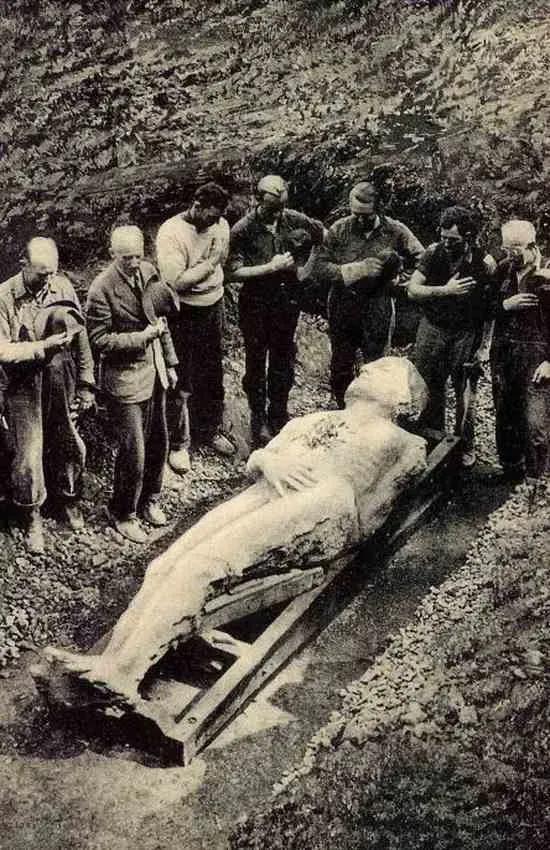
In 1869, tobacconist and atheist George Hull, after an argument regarding the passage in Genesis 6:4 stating that there were giants who once lived on Earth, devised an elaborate scheme which would come to be regarded as one of the most famous hoaxes in American history. In all, it took two years, around $3,000, almost five tonnes of gypsum, and the work of two sculptors to bring his vision to life.
Workers on a farm in Cardiff, New York, were digging a well when they encountered what appeared to be the remains of a 10-foot-tall petrified man. Dubbed the “Cardiff Giant,” the man was soon put on display by the farm’s owner, William “Stub” Newell. Newell charged admission for the crowds who flocked from all over the country to see his find, including members of the scientific community who speculated that the find was anything from an ancient sculpture to an actual petrified human.
The Cardiff Giant was an overwhelming sensation, with thousands paying 50 cents a time to view it. By the time Hull admitted to the fraud just a few months later, he and his friend had sold the majority share to a conglomerate of businessmen. P.T. Barnum even tried creating his own replica when Hull refused to sell. The lesson? Even once a hoax is exposed, someone will still find a way to profit from it.
4. The Great Moon Hoax: Life, Bat-People, and One Very Busy Newspaper
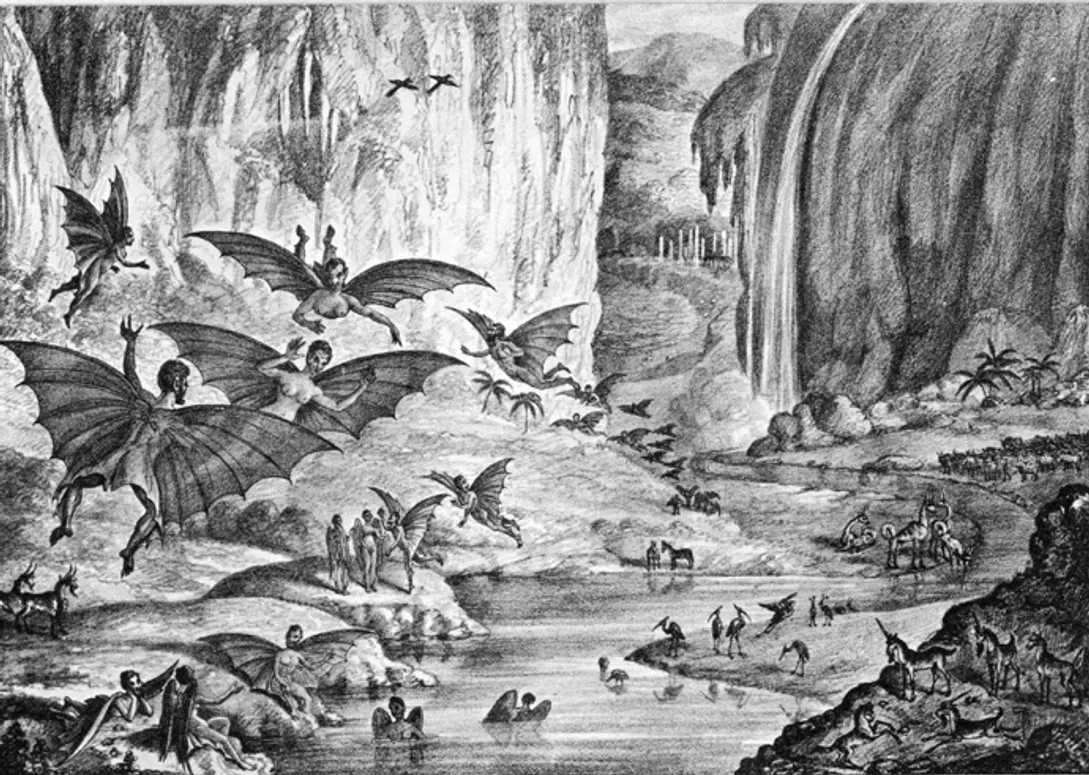
In 1835, The Sun, a New York-based newspaper, published a series of articles that claimed British astronomer Sir John Herschel had discovered life on the Moon. The series described extraordinary creatures inhabiting the lunar surface, including bat-like humanoids and unicorns. These articles, written by reporter Richard Adams Locke, were presented in a journalistic, factual tone and were made to appear as if they were direct news reports from the astronomer himself.
Readers were captivated, and circulation soared as the paper released installment after installment, each more vivid than the last. The hoax succeeded because it blended scientific language, a trusted figure, and precise details that felt plausible to a public excited by astronomy. Think about what that means: people genuinely believed there were winged humanoids on the moon because a newspaper said so.
Newspapers competed fiercely, and reprints spread the story across the United States and beyond. Few had the tools to verify astronomical claims, and many wanted to believe humanity had cosmic neighbors. Eventually, skeptics and scientists exposed the series as fiction, admitting it was crafted to entertain and sell papers. These articles were crafted by journalist Richard Adams Locke and were intended to boost newspaper sales – a goal that was spectacularly achieved.
5. The Hitler Diaries: Millions Paid for History’s Most Banal Forgery

In 1983, the German magazine Stern announced a bombshell: Hitler’s long-lost diaries had been discovered. Historians, journalists, and the public were electrified. The leather-bound volumes seemed authentic, filled with mundane musings from one of history’s most infamous men. The world leaned in. Major outlets were ready to publish.
The periodical reportedly paid $4 million for the 60 volumes, which they believed were found in the wreckage of a plane crash from 1945. Aware of how important the documents were to history, the magazine had handwriting experts from Germany, the US, and France confirm their authenticity. Within weeks, experts realized they were obvious forgeries – written with modern ink on modern paper, full of inaccuracies. The forger, Konrad Kujau, had simply copied passages from a published book of Hitler’s speeches and added his own touches.
The hoax forced several editors to resign, including those from Stern, The Sunday Times, and Newsweek. The diaries were later found to have been forged by Konrad Kujau, who was, unsurprisingly, a small-time crook. Stern paid 9.3 million German marks for the sixty-two volumes. It is hard to say which is more stunning: the audacity of the forgery, or the eagerness with which so many trusted institutions swallowed it whole.
6. The Cottingley Fairies: Paper Cutouts That Fooled the Creator of Sherlock Holmes

In 1917, two young cousins in Cottingley, England – 16-year-old Elsie Wright and 10-year-old Frances Griffiths – produced five photographs that appeared to show them interacting with fairies. The images depicted delicate, winged creatures dancing around the girls in their garden. The photographs gained credibility when spiritualist believers, including Sir Arthur Conan Doyle, championed their authenticity.
Doyle, creator of the logical detective Sherlock Holmes, was ironically captivated by the supernatural and wrote articles for The Strand Magazine presenting the photos as genuine evidence of fairy life. Let that sink in. The man who invented the most rational fictional detective of all time was completely fooled by two children with scissors, a hatpin, and some paper cutouts. Elsie was a gifted watercolorist and had made the fairy figures as paper cutouts, then staged them carefully in the grasses with hatpins before taking photographs.
Perhaps the most impressive aspect of the Cottingley Fairies is that they remained a mystery well into the 20th century, long after Doyle had passed away. It was not until the early 1980s that Geoffrey Crawley, editor of the British Journal of Photography, addressed the photos in a 10-part series of articles that carefully debunked the whole affair. Elsie ultimately admitted in a letter that the images were fabricated. The collection, including prints of the photographs and two of the cameras used by the girls, was later acquired for display, along with a nine-page letter from Elsie admitting to the hoax.
7. The BBC Spaghetti Tree Hoax: When Eight Million People Believed Pasta Grew on Branches

The spaghetti-tree hoax was a three-minute hoax report broadcast on April Fools’ Day 1957 by the BBC current-affairs programme Panorama, purportedly showing a family in southern Switzerland harvesting spaghetti from a “spaghetti tree.” The segment was produced for just £100 by a single cameraman, which makes it arguably the best return on investment in television history.
Pasta was not an everyday food in 1950s Britain, and it was known mainly from tinned spaghetti in tomato sauce and considered by many to be an exotic delicacy. An estimated eight million people watched the programme on 1 April 1957, and hundreds phoned in the following day to question the authenticity of the story or ask for more information about spaghetti cultivation and how they could grow their own spaghetti trees.
Decades later, CNN called this broadcast “the biggest hoax that any reputable news establishment ever pulled.” It’s still one of the best media pranks ever pulled – not because it fooled people, but because it showed how easy it is to make something absurd sound true if the format looks “official.” Honestly, it holds a mirror up to every era, including our own.
8. The Surgeon’s Photograph: Loch Ness and the Monster That Was a Toy Submarine

The most famous photograph allegedly showing the Loch Ness Monster was taken in 1934 by London physician Robert Kenneth Wilson. The image showed what appeared to be a long-necked creature emerging from the dark waters of Loch Ness, Scotland. For 60 years, this “Surgeon’s Photograph” remained the most compelling evidence for the monster’s existence. The photograph gained credibility because Wilson was a respected doctor who claimed to have taken it accidentally while photographing the Scottish countryside.
The image sparked decades of scientific investigation, monster-hunting expeditions, and endless debate about the creature’s identity. Various theories emerged: some claimed it was a prehistoric plesiosaur, others suggested it was a large eel or sturgeon, while skeptics argued it was floating debris or a swimming bird. By the 1990s, advancements in technology, including underwater sonar scans, failed to find any evidence of the creature’s existence.
In 1994, it was revealed that the “Surgeon’s Photograph” had been a hoax, staged by a hoaxer named Christian Spurling, who had used a toy submarine with a model of Nessie to create the illusion of a creature. According to Spurling, it was all a conspiracy masterminded by his father-in-law, Marmaduke Wetherell, who allegedly hatched the elaborate plan to get his revenge on a newspaper for ridiculing his own attempts at finding the creature. A monster of a grudge, some might say.
What All These Hoaxes Tell Us About Ourselves

Look across all eight of these stories and one thread runs through every single one. People did not get fooled simply because they were uninformed or careless. These hoaxes reveal persistent patterns in how misinformation spreads and endures. From religious artifacts to scientific discoveries, fraudsters exploit human desires to believe in the extraordinary. That desire is not stupidity. It is curiosity, hope, and wonder.
Decades of speculation have been devoted to identifying the culprits of the Piltdown hoax and their motivations, but perhaps a more important question centers on why they were successful. Dawson pulled it off with a rudimentary understanding of human anatomy and dyes, yet scientists allowed themselves to be fooled for more than 40 years. That pattern repeats across every era, from 1835 to 1983 and beyond.
The next time you encounter a story that seems too exciting, too perfectly timed, or too neat to be true, remember these eight cases. The world has been fooled by a toy submarine, a couple of paper cutouts, and a 10-foot gypsum statue. It has been fooled by modern ink sold as 1930s German stationery. It has been fooled by moonbats and spaghetti trees. Throughout all of it, one truth remains: the greatest vulnerability we have is not ignorance. It is the burning desire to believe in something bigger than ourselves. What would you have believed, if you’d lived through any one of these moments?


