Most people hear a symphony and feel something. A chill down the spine. An unexpected wave of emotion. Maybe even joy that seems to come from nowhere. But here’s the thing – what if those feelings weren’t random at all? What if they were carefully, deliberately engineered by composers who were hiding entire secret languages inside their music?
That’s not a metaphor. Esoteric art, art that conveys a message only to those educated in its interpretation, exists in every medium – and classical music is no exception. From encrypted names to Masonic rituals, from mathematical fingerprints to hidden emotional instructions, the world of classical music is riddled with layers that most concert-goers simply never see. Let’s dive in.
Musical Cryptography: The Hidden Language of Notes
Imagine sending a secret letter, not on paper, but in a melody. That’s exactly what composers have been doing for centuries. Musical cryptograms are a centuries-old music composition technique, where letters are turned into music notes for the purpose of encoding secret messages.
Musical cryptography is using the musical alphabet, notation, solfège, and other elements to encrypt messages into music. Think of it like a cipher where each note stands for a letter – a private language built right into the score.
The most common and well-known examples result from composers using musically translated versions of their own or their friends’ names as themes or motifs in their compositions. It’s almost like a composer’s signature – invisible to the untrained ear, but unmistakable to anyone who knows how to look. Honestly, once you know this trick exists, you start hearing music completely differently.
Bach’s Immortal Signature Hidden in Plain Sight
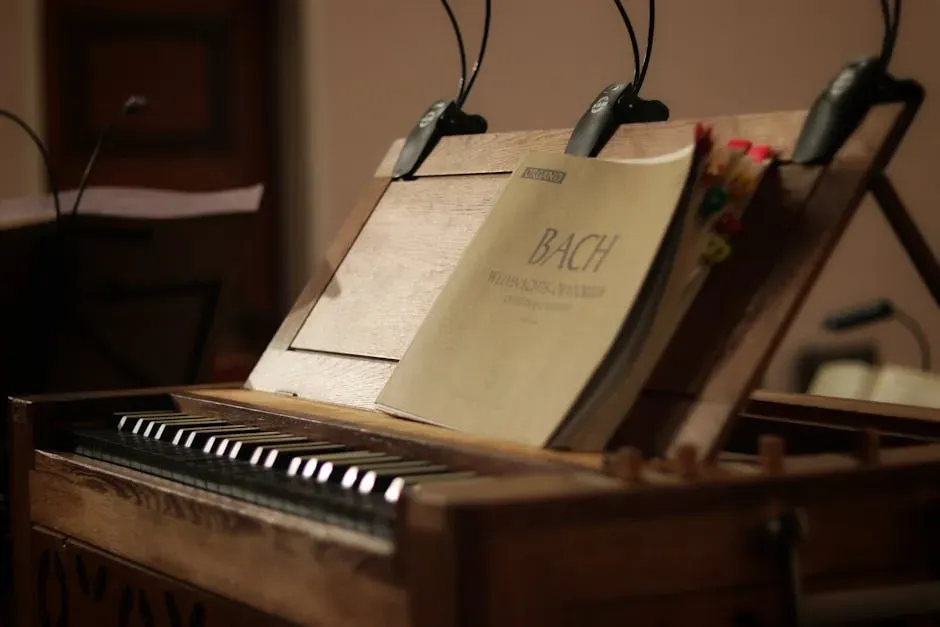
No one played the cryptogram game more brilliantly than Johann Sebastian Bach. He essentially signed his compositions with a melody. Bach used B-flat, A, C, B natural (the German H) to spell his name, and Shostakovich used D, E-flat, C, B natural to spell DSCH (again, using German H) for Dmitri Schostakowitsch.
Bach uses his name as the final fugue subject in the last Contrapunctus of The Art of Fugue and the motive also appears in the Sinfonia No. 9 in F Minor. That’s a composer writing his own name into his farewell masterpiece. Not in ink. In sound.
The progression itself – B-natural, A, C, B-flat – starts with dissonance and moves toward cathartic resolution. This philosophical and musical theme is a recurring motif across Bach’s career, and thus the run of notes acquires a doubled signatory significance. It’s both a name and a philosophy. Few composers have achieved that kind of layered meaning – before or since.
Schumann’s Love Letter Buried in a Piano Piece
Robert Schumann was a deeply romantic figure – in every sense of the word. He didn’t just write music. He hid messages inside it for the people he loved. Completed in 1835, Schumann’s Carnaval is a collection of twenty short solo piano pieces representing masked revelers at a pre-Lenten Carnival. Schumann provided the subtitle, Scènes mignonnes sur quatre notes. The four notes are encoded puzzles, returning throughout Carnaval in a series of combinations: A, E-flat, C, B; A-flat, C, B; and E-flat, C, B, A.
These motifs refer to the town of Asch, the birthplace of Schumann’s then fiancée, Ernestine von Fricken. The German word for “Carnaval” is Fasching, and Asch is a reference to Ash Wednesday. A love letter encoded in harmony. That’s something no one teaches you in a standard music appreciation class.
Shostakovich: A Name as a Political Act
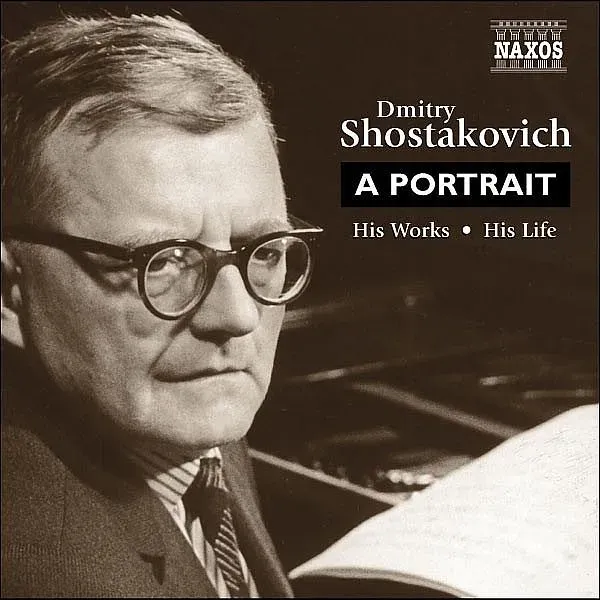
For some composers, embedding their name wasn’t just clever wordplay. It was survival. Shostakovich lived under the constant shadow of Soviet censorship, and his musical signature took on a far darker meaning. The Russian composer Dimitri Shostakovich also loved to put his own name into his music. He used the letters D-S-C-H (D, E-flat, C, B-natural) to spell it.
The motif occurs in many works including the 8th, 10th and 15th Symphonies, the Violin Concerto No. 1 in A minor, the Cello Concerto No. 1 in E-flat major, and most notably the String Quartet No. 8 in C minor, where the motive appears prominently in every single movement.
In an era when Soviet authorities monitored artistic output for ideological compliance, signing your music with your own initials was a quiet, defiant declaration of personal identity. You could suppress a composer. You couldn’t suppress a motif woven into every bar.
Mozart and the Masonic Code of the Magic Flute
Mozart’s final opera looks like a fairy tale on the surface. A hero, a princess, a villain, magic instruments. Lovely. But scratch beneath that surface and you find a labyrinth of political and spiritual symbolism. Mozart and Schikaneder were both Freemasons. They were also part of a circle of people around the enlightened Holy Roman Emperor Joseph II who were interested in Republicanism and what they called the “American Thesis.”
The key of the overture is E flat major, which acts as a kind of central key throughout the entire opera. E flat major is a key which has a special Masonic significance; one reason for this is that E flat major is written with three flats, symbolic of the Trinity, and also of a certain group of three men which is very central to the basic Masonic myth.
The Masonic initiation ceremony began with the candidate knocking three times at the door to ask admittance. This is expressed musically as a dotted figure that appears in Mozart’s opera The Magic Flute in the overture, suggesting the opening of the Masonic Master Mason’s degree. People have been trying to decode this opera for over two centuries. I think that says everything about how deeply it was constructed.
Elgar’s Enigma Variations: A Mystery Still Unsolved

Edward Elgar wrote one of the most famous musical puzzles in history and then declined to fully explain it. Cryptograms were less common in England, but Edward Elgar, who was also interested in general cryptography and puzzles, wrote an early Allegretto for his pupils the Gedge sisters using G-E-D-G-E; his Enigma Variations involves extensive use of abbreviations, friends’ initials, and cryptograms – and potentially even a broader enigma to be solved.
Partner offer
Edward Elgar’s Enigma Variations is one of the greatest musical mysteries in history. Elgar himself acknowledged that a hidden melody runs “through and over” the variations – a counter-theme that has never been definitively identified. Musicologists have debated it for well over a century.
The frustrating part? Elgar took the answer to his grave. He left clues, smiled at speculation, and never confirmed a single proposed solution. For those of us who love puzzles, this is both thrilling and maddening in equal measure.
Beethoven’s Secret Dynamic Language Hiding in His Manuscripts

This one is genuinely jaw-dropping, and it only became widely known through reporting in The Atlantic in 2024. Nicholas Kitchen, a Boston-based violinist and co-founder of the Borromeo Quartet, discovered singular, mysterious markings in the manuscript scores of Ludwig van Beethoven, which never made it into published versions of his music.
Kitchen eventually identified 23 degrees of dynamics – and counting – from fff (thunderous) to ppp (a whisper). He found four kinds of staccato, two kinds of dynamic swells, marks to indicate different ways of grouping notes together, and marks to reinforce crescendos and diminuendos.
For the past several years, Kitchen has been making discoveries in Beethoven’s manuscripts – what the Borromeos now call “special markings”: instructions from the composer that have been hiding in plain sight for two hundred years. Two hundred years. That’s how long this layer of Beethoven’s emotional instructions sat unread in the manuscripts. It’s hard to say for sure what that means for how we’ve been performing his music – but it certainly changes the picture dramatically.
Mathematical Patterns: The Hidden Architecture of Bach

Beyond spelling names, Bach embedded something even more profound in his compositions – mathematical structures so complex they’ve only recently been quantified by researchers. Physicists found that the music of Johann Sebastian Bach contains mathematical patterns that help convey information. Baroque German composer Johann Sebastian Bach produced music that is so scrupulously structured that it’s often compared to math.
By representing scores as simple networks of dots connected by lines, scientists quantified the information conveyed by hundreds of Bach’s compositions. An analysis of these musical networks published in Physical Review Research revealed that Bach’s many musical styles, such as chorales and toccatas, differed markedly in how much information they communicated.
The scientists uncovered variation in the information structure and content of Bach’s many compositional styles. Chorales, a type of hymn meant to be sung, yielded networks that were relatively sparse in information, though still more information-rich than randomly generated networks of the same size. Think about that. Even a seemingly simple hymn carried more intentional information density than pure randomness. Bach wasn’t just composing. He was programming.
The French Method and Other Cipher Systems
The techniques composers used to encode messages weren’t uniform. There were actually competing systems – a bit like different programming languages. Since note names only cover letters A to G, the problem arises as to how to cipher the rest of the alphabet. Historically there have been two main solutions, labelled the German and the French methods. In the German-speaking world, B-flat was named B and B-natural was named H.
The first instance of musical cryptography appears in music by French composer Josquin des Prez – the first superstar musician born circa 1450 – who created soggetto cavato (a subject carved out of the words).
The Solfa Cipher, invented in 2013, uses a combination of scale degrees and rhythms to represent letters of the alphabet, with the goal of generating encrypted texts which sound like relatively normal singable melodies. As such, it has been used by musicians to create longer pieces with hidden messages. The tradition is alive. Contemporary composers are still hiding things in sound – just with sharper tools.
Messiaen’s Spiritual Codes and the Language of God
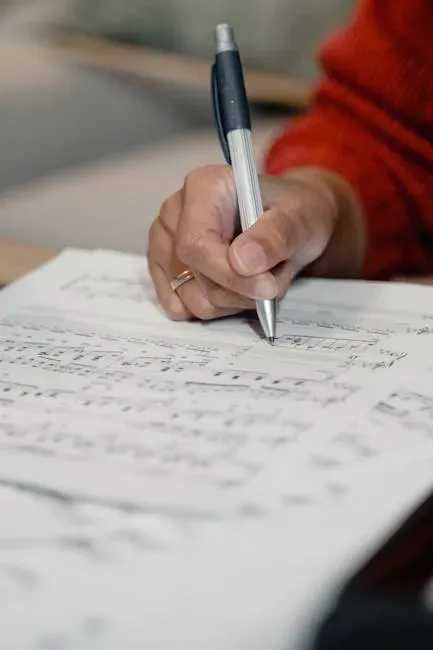
Not all hidden messages were personal signatures or political acts. For some composers, the code was theological. Olivier Messiaen, one of the 20th century’s most distinctive composers, embedded spiritual devotion directly into his musical structures. Far from an abstract intellectual exercise, Messiaen’s approach to musical cryptography was a form of spiritual devotion. By encoding phrases like Dieu est immuable (“God is unchanging”) into dense counterpoint – alongside detailed transcriptions of birdsong and other samples from nature – Messiaen hybridized his composition with his prayer.
Codes, messages, and meanings have been hidden within pieces of classical music over the centuries. Some of these messages were encoded for the fun of the puzzle, while others held deep, painful meanings.
Messiaen’s work sits at a fascinating intersection of faith, science, and sound. He wasn’t just writing music for audiences. He was, in his own mind, speaking directly to the divine – using a language that only a handful of people on earth could even begin to decipher. There’s something breathtaking about that level of private conviction embedded in public art.
Conclusion
Classical music has always been more than sound. It’s a centuries-old conversation between composers and those who know how to listen on the right frequency. From Bach’s elegant four-note signature to Beethoven’s lost dynamic language, from Schumann’s love letters in piano keys to Mozart’s Masonic overture – the codes are everywhere, waiting. Codes and symbols dot the history of classical music, and the next piece you listen to may be hiding a secret meaning, if only you had the keys to unlock it.
Most people will sit through a concert and hear beauty. Experts hear beauty plus a message written centuries ago, addressed to whoever is paying close enough attention. The real question is: now that you know the codes exist, will you ever listen to a symphony the same way again?
Partner offer
Planning a trip to Vegas?
Compare hotel rates and show tickets on VEGAS.com.