
You’ve sung these songs in the car, at weddings, at graduation parties. You know every word. You’ve convinced yourself you understand them completely. Here’s the thing – you probably don’t. Beneath the catchy choruses and driving guitar riffs of some of the most beloved anthems in rock history lie layers of meaning that most listeners have never noticed, or flat-out gotten wrong for decades.
Some of these songs are political fire disguised as celebrations. Others are personal tragedies wrapped inside a melody so warm it feels like a hug. A few are outright something darker, smuggled past your defenses while you tapped your foot. So let’s pull back the curtain on eight of the most familiar old-school anthems and discover what their creators were actually saying.
1. “American Pie” by Don McLean – A Nation’s Innocence, Crashed in a Cornfield


Most people know this song as a nostalgic, mysteriously wordy epic about music history. What many don’t realize is just how personal and grief-stricken its origins truly are. Don McLean drew inspiration for the song from his childhood experience delivering newspapers during the time of the plane crash that killed early rock and roll musicians Buddy Holly, Ritchie Valens, and The Big Bopper.
The repeated phrase “the day the music died” refers to a plane crash in 1959 that killed early rock and roll stars Buddy Holly, The Big Bopper, and Ritchie Valens, ending the era of early rock and roll. That line became so powerful it permanently entered American cultural vocabulary. Honestly, think about that. A 13-year-old boy cutting open a newspaper bundle and seeing a headline that would haunt him for the rest of his life.
The song is partly biographical and partly the story of America during the idealized 1950s and the bleaker 1960s. It was initially inspired by McLean’s memories of being a paperboy in 1959 and learning of the death of Buddy Holly. “American Pie” presents an abstract story of McLean’s life from the mid-1950s until the end of the 1960s, and at the same time it represents the evolution of popular music and politics over these years.
Amid civil rights marches, assassinations and anti-war protests, McLean penned a “eulogy for the American dream.” The Recording Industry Association of America and the National Endowment for the Arts named it one of the top five “Songs of the Century.” Did you expect that?
2. “Sympathy for the Devil” by The Rolling Stones – A Russian Novel in Rock Clothing


Let’s be real – when most people hear this track, they assume the Stones were just leaning into their bad-boy image with some Satanic theater. The truth is far more intellectually surprising. In the 2012 documentary Crossfire Hurricane, Jagger stated that his influence for the song came from Baudelaire and from the Russian author Mikhail Bulgakov’s novel The Master and Margarita, which had just appeared in English translation in 1967.
Finished shortly before Bulgakov’s death in 1940, The Master and Margarita features the Devil creating murder and mayhem in Moscow and was written as a critique of atheistic propaganda and the denial of God in the USSR. Suppressed due to its controversial themes, the book was finally published in 1967, creating a stir upon its release. That’s when Jagger was introduced to the story, after Marianne Faithfull gifted him a copy.
Far from a celebration of the demonic, the song serves as a chilling sociological critique of human history. It suggests that the “Devil” is merely a convenient personification of the collective atrocities humans commit against one another, from the religious fervour of the Crusades and the devastation of the Blitzkrieg to the chaotic violence of the Kennedy assassinations.
Originally titled “The Devil Is My Name,” the song paints civilization in almost apocalyptic strokes. It moves from the torment of Christ to the chaos of the twentieth century: the October Revolution, the Tsar’s assassination, World War II, and the tragedies of the sixties – the Kennedys, Vietnam, crushed uprisings. A rock song doing the work of a history degree. Remarkable.
3. “Fortunate Son” by Creedence Clearwater Revival – A Class War Anthem Disguised as a Singalong

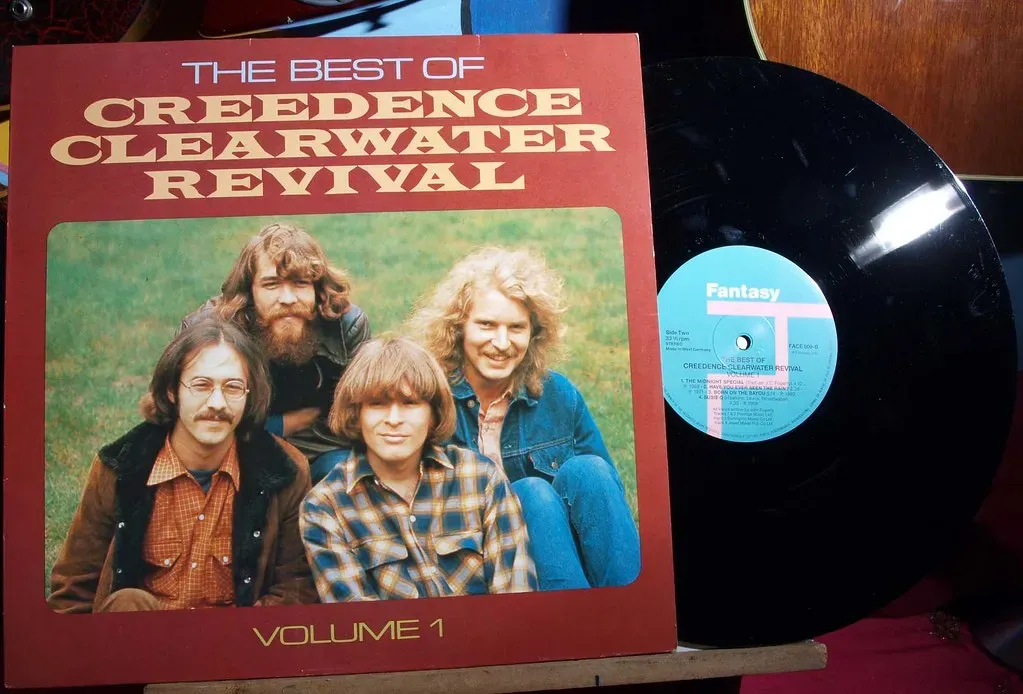
This track is frequently misinterpreted as a jingoistic military anthem. In reality, it serves as a blistering indictment of the class disparities inherent in the Vietnam-era draft. John Fogerty’s lyrics specifically target senators’ sons and the wealthy elite who utilized their political influence to avoid combat, while the working class was shipped off to fight. It is a song about systemic inequality, not patriotic fervour.
Creedence Clearwater Revival’s protest anthem takes direct aim at the privileged class who avoided military service during Vietnam while working-class kids were drafted. John Fogerty wrote the song after learning that sons of politicians and wealthy families received deferments and safe assignments while others faced combat. The “fortunate son” represents those born into privilege who escape the consequences of policies their families often supported.
4. “Hotel California” by Eagles – Not Exactly the California Dream


This song has been playing at bars, dinner parties, and road trips for nearly five decades. Most people hum along imagining warm California vibes. That impression, it turns out, is about as accurate as booking a room in the actual Hotel California. The Eagles’ most famous track isn’t about a luxury resort or even California itself. Don Henley and the band crafted this 1976 masterpiece as a critique of the excesses and spiritual emptiness they witnessed in the music industry and American culture during the 1970s.
The song is often interpreted as an allegory for the American Dream gone awry. The lyrics depict a traveler who becomes entrapped in a luxurious but nightmarish hotel, symbolizing the seductive allure and hidden cost of fame and excess, particularly in 1970s Southern California.
Partner offer

The band says the song is about excess and materialism in the U.S. “Some of the wilder interpretations of that song have been amazing,” the band has said. “It was really about the excesses of American culture and certain girls we knew.” Still, that outro guitar solo hits exactly the same. Nothing about that changes.
5. “Smells Like Teen Spirit” by Nirvana – A Parody That Accidentally Became an Anthem


I know it sounds crazy, but the song that defined a generation was also, in a way, meant to mock that generation. While it became the defining Generation X anthem, Kurt Cobain actually wrote “Smells Like Teen Spirit” as a scathing parody of the very concept of a revolutionary commercial hit. The fragmented, nonsensical lyrics were intended as a sarcastic jab at the apathy and performative “rebellion” of his peers. Cobain was reportedly stunned and frustrated when the mainstream world embraced his cynical “Hello, hello, hello, how low” as a literal rallying cry.
After its explosion, Cobain would often refuse to play “Smells Like Teen Spirit” live or intentionally butcher it, saying “Once it got into the mainstream, it was over. I’m just tired of being embarrassed by it.” The song’s success proved to be both blessing and curse for the band.
The song’s massive success broke Nirvana into the mainstream and symbolized a shift from glam rock and pop dominance to a raw, alternative aesthetic. It remains a generational anthem and one of the most important rock songs of its era. The great irony of rock history, really. The anti-anthem became the biggest anthem of all.
6. “I Don’t Like Mondays” by The Boomtown Rats – A School Shooting, Dressed in an Upbeat Piano Line


If you grew up treating this song as a cheeky soundtrack to your Monday morning grumbles, brace yourself. Many people treat this as a lighthearted anthem for anyone who hates the start of the work week. In reality, Bob Geldof wrote it after reading a news report about Brenda Ann Spencer, a 16-year-old who opened fire on an elementary school playground. When asked why she did it, she simply replied, “I don’t like Mondays. This livens up the day.” The upbeat piano melody hides a chilling exploration of a senseless tragedy.
This is perhaps the most gut-punching example on this entire list of a melody functioning as a sonic Trojan Horse. The piano is bouncy. The chorus feels almost sing-along. Yet underneath sits one of the darkest real-world inspirations for any mainstream hit. In the high-octane world of rock and roll, a catchy chorus or a driving beat can often act as a sonic Trojan Horse, effortlessly smuggling in complex meanings. We tend to listen with our pulse rather than our intellect, allowing a soaring melody or a foot-stomping rhythm to dictate the emotional vibe of a track while the actual poetry remains hidden in plain sight.
7. “Every Breath You Take” by The Police – The Most Misused Wedding Song in History


This one has been played at weddings for decades. It sounds romantic. The melody is smooth and yearning. It is, however, not even slightly a love song, and Sting himself has been very clear about that. Hacky stand-up comedians and parody artists used to joke about “Every Breath You Take” as a stalker’s anthem. The implication of those jokes is that the song was initially the kind of touching love story that would perfectly soundtrack a wedding, but those jokes accurately described the song’s intentions. Sting described the track as “a nasty little song, really rather evil” and stated, “It’s about jealousy and surveillance and ownership.” The song emerged from Sting’s mind as a response to his first marriage falling apart and the impending breakup of the band.
Think of it this way: imagine discovering halfway through your wedding reception that the song playing over the speakers is literally about obsessive surveillance and possessiveness. This sensory disconnect creates a fascinating cultural phenomenon where the public often celebrates the very things the artist is actually lampooning or grieving. From blistering political satires mistaken for jingoistic national anthems to unsettling stalker manifestos played at celebratory weddings, the history of the airwaves is littered with these lyrical optical illusions.
8. “Smoke on the Water” by Deep Purple – Rock History Forged from Real Disaster


Most rock fans know the riff. It might be the most recognizable four-note pattern ever put to guitar. Fewer people actually know what the song is literally about. Smoke on the Water is a tragic tale, that much is certain from a surface-level listen. However, casual fans of Deep Purple might not be totally aware of the song’s deeper meaning. This song is actually about a tragedy that struck the famous musician Frank Zappa. While Zappa and The Mothers of Invention were performing a set at Montreux Casino in Switzerland, the theater was set ablaze. The fire spread fast, caused by a flare gun shot by an audience member.
Deep Purple’s most famous riff commemorates a real incident during a Frank Zappa concert at the Montreux Casino in Switzerland. Someone fired a flare gun during the show, starting a fire that burned down the venue. Deep Purple watched the smoke rising over Lake Geneva from their hotel room and turned the experience into rock history.
It’s hard to say for sure, but there’s something almost poetic about the idea that the most iconic rock riff ever written came not from a studio session or a creative lightning bolt, but from a band watching a disaster unfold from their hotel window and reaching for a notepad. The song proves that sometimes the most iconic rock anthems come from the most unexpected everyday experiences. Sometimes tragedy, witnessed firsthand, is the most powerful muse of all.
Conclusion: The Songs You Think You Know
Here’s the broader truth at the heart of all of this. Classic rock anthems have soundtracked decades of road trips, parties, and late-night radio sessions. But beneath those familiar guitar riffs and sing-along choruses lie stories that might surprise you. Many of the songs you know by heart carry hidden messages, personal confessions, or meanings completely different from what you’d expect.
The greatest songwriters understood something essential about communication: people let their guard down when a melody is irresistible. The anthems of the 1980s were more than just loud guitars and great choruses. Beneath the polished production, many classic rock songs carried deeper messages that listeners didn’t always catch on the first play. Songwriters often wove personal struggles and hidden symbolism into lyrics that seemed straightforward but revealed new meaning over time.
Next time one of these songs comes on the radio, you might just hear it for the first time all over again. Which one surprised you the most? Tell us in the comments below.
Partner offer
Planning a trip to Vegas?
Compare hotel rates and show tickets on VEGAS.com.