Most inventions start with a clear problem and a determined attempt to solve it. Someone needs a faster way to separate cotton fibers, or a researcher wants to understand how radar works. The gap between what inventors intend and what actually happens, though, is where history gets genuinely interesting.
Several of the objects that have most deeply shaped civilization did so in ways no one planned, predicted, or even wanted. Some created new freedoms while destroying others. Some started as medicine and ended up reshaping culture. A few quite literally rewired how the human body lives and functions. The eight entries below trace those gaps between intention and impact.
The Cotton Gin: The Machine That Deepened Slavery
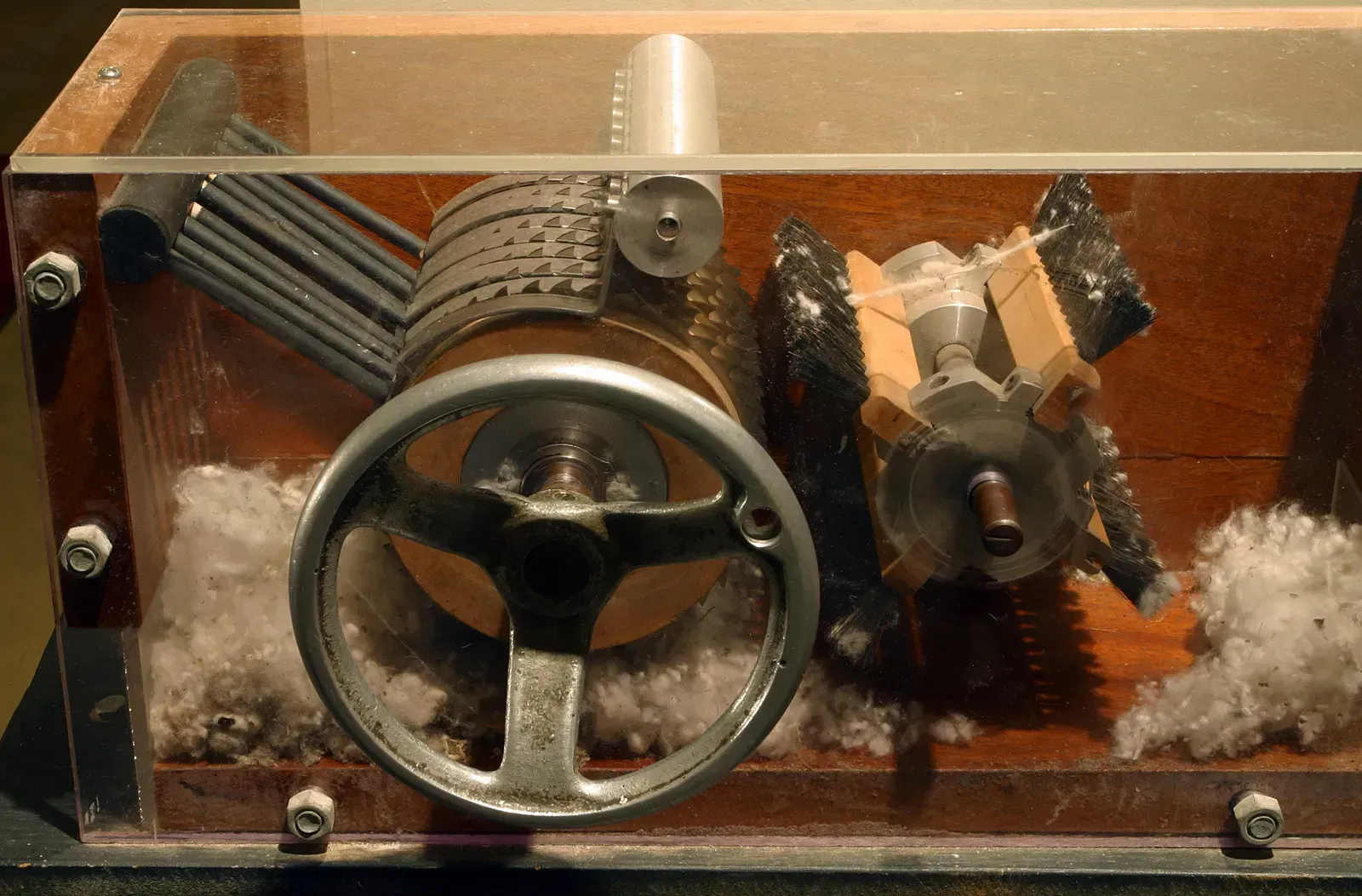
Eli Whitney had hoped his invention would reduce slavery by reducing the number of workers needed to process cotton. The logic seemed reasonable enough. Faster seed removal meant less manual labor, which many observers in the early 1790s thought might gradually make enslaved labor less economically necessary in the American South.
The most significant effect of the cotton gin, however, was the growth of slavery. While it was true that the cotton gin reduced the labor of removing seeds, it did not reduce the need for enslaved labor to grow and pick the cotton. In fact, the opposite occurred: cotton growing became so profitable for enslavers that it greatly increased their demand for both land and enslaved labor. The number of enslaved people rose in concert with the increase in cotton production, increasing from around 700,000 in 1790 to around 3.2 million in 1850. Few inventions in history carry a more sobering gap between intent and consequence.
Barbed Wire: A Farm Tool That Ended an Era and Armed a Century

On October 27, 1873, a DeKalb, Illinois, farmer named Joseph Glidden submitted an application to the U.S. Patent Office for his clever new design for a fencing wire with sharp barbs, an invention that would forever change the face of the American West. The problem he was solving was straightforward: treeless prairies made wooden fencing impossibly expensive, and without reliable fences, farming the Great Plains was nearly impossible.
Some historians have dated the end of the Old West era of American history to the invention and subsequent proliferation of barbed wire. The damage spread far beyond romantic cowboy mythology. Plains Native Americans and the bison herds they followed and hunted could no longer move freely across the now-vanishing expanses. Then, decades later, barbed wire began to be widely used as an implement of war during World War I, placed either to impede or halt the passage of soldiers, or to channel them into narrow defiles where small arms and indirect fire could be used with greater effect.
Penicillin: A Messy Lab and a Very Long Vacation
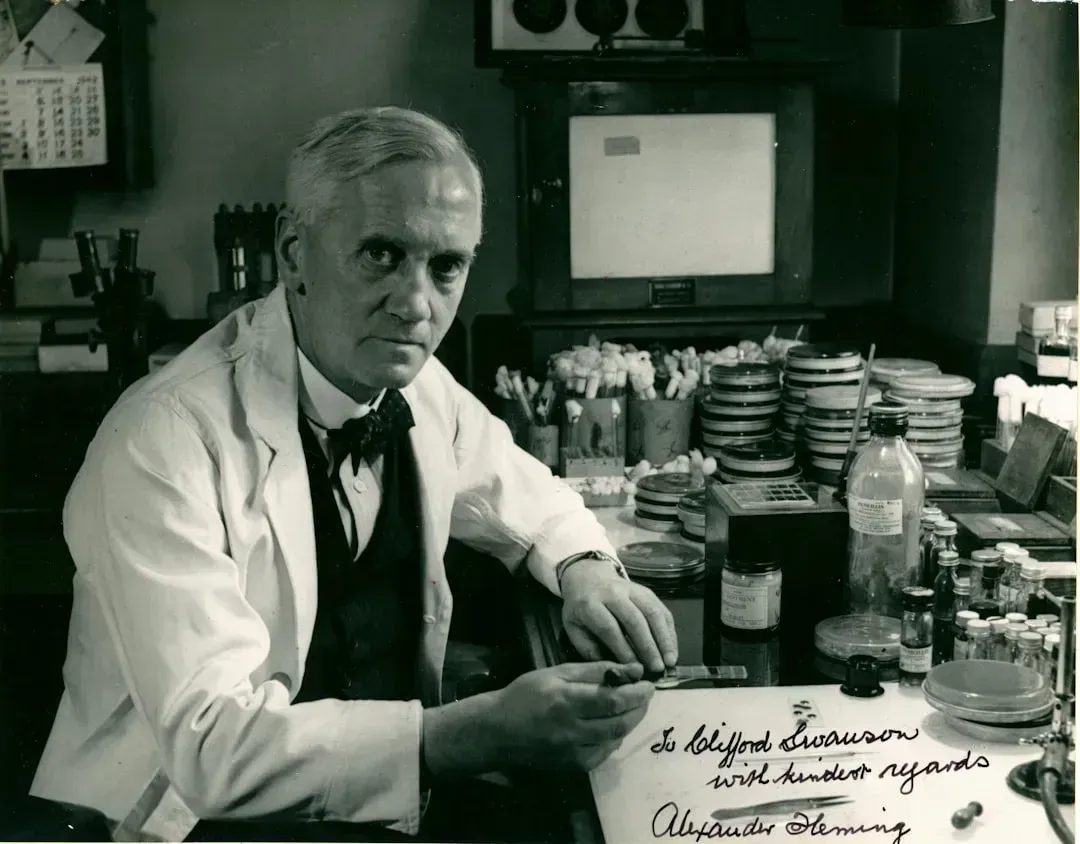
The world’s first antibiotic, which has prevented millions of deaths from infection and disease, was the accidental byproduct of a messy workspace. Alexander Fleming, a bacteriologist in London, returned from a vacation in 1928 to discover that one of the petri dishes in his lab had mold growing on it. On closer inspection, he saw that the area around the mold was free of bacteria. The discovery was real, but Fleming himself was uncertain of its practical value at the time.
He wasn’t sure if it had any practical use, as it was difficult to purify and stabilize. A decade later, chemists at Oxford University read Fleming’s paper and took up the project of turning penicillin into viable medicine. It was first tested on a patient in 1940, and widespread use began in 1942. Today, penicillin is the most commonly used antibiotic in the world. A forgotten petri dish, abandoned over a holiday, quietly became one of the most important objects in the history of medicine.
The Pacemaker: The Wrong Resistor That Saved Millions of Lives
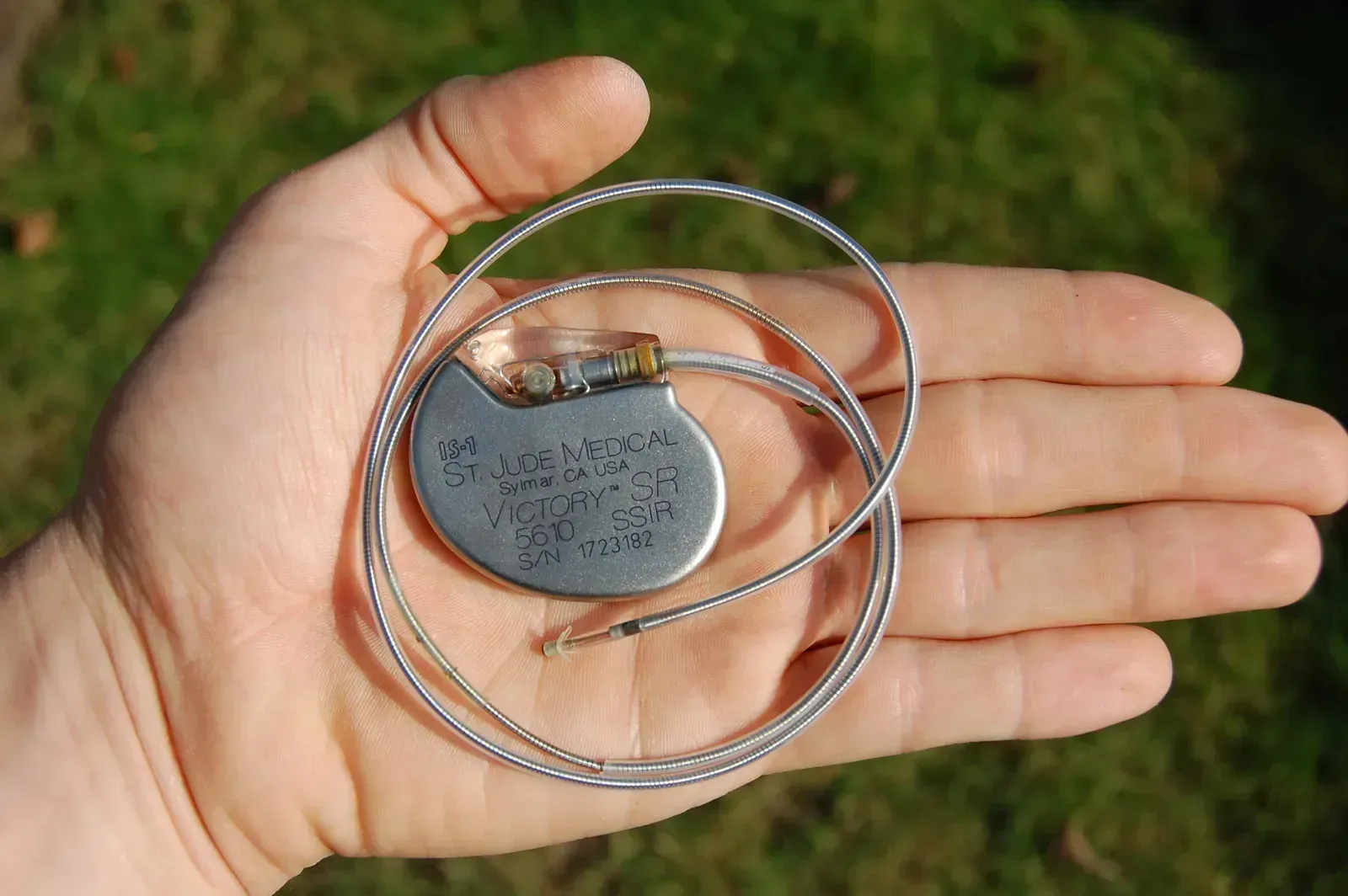
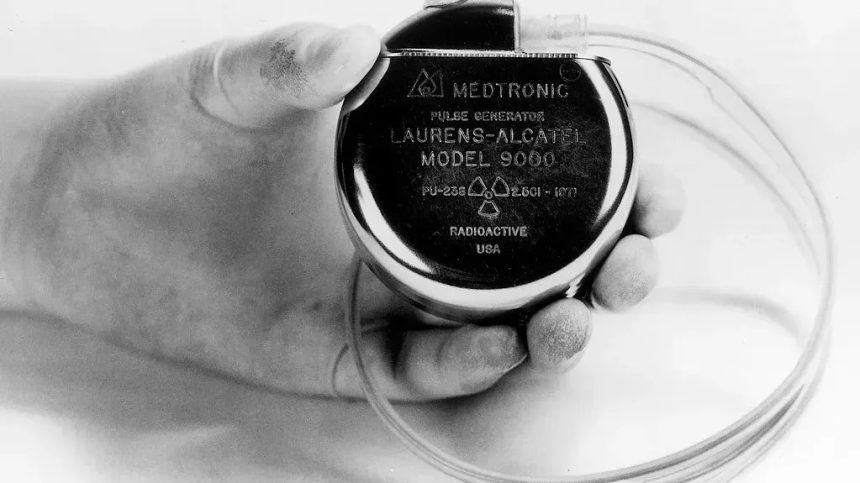
In 1956, engineer Wilson Greatbatch was attempting to build a heart rhythm recording device when he accidentally used the wrong resistor. This caused the circuit to emit electrical pulses, which mimicked the function of a heart’s natural rhythm. Greatbatch’s “mistake” led to the creation of the implantable pacemaker, a life-saving device that has kept millions of people’s hearts beating for decades.
Arne Larsson, a patient from Sweden, became the first patient to rely on a synthetic cardiac pacemaker in 1958. He outlived its inventor, the surgeon, and 26 pacemakers before passing away in 2001 at the age of 86. Today, these life-saving devices, born from his initial invention, improve the lives of over half a million patients with slow heartbeats every year. It’s a remarkable chain of events that started with a single misplaced component.
Partner offer
The Microwave Oven: Radar Technology Meets a Chocolate Bar

In the 1940s, engineer Percy Spencer was working on radar technology when he noticed that a candy bar in his pocket had melted. Curious, he tested the theory by placing popcorn kernels near a magnetron, a component of radar equipment, and watched them pop. The discovery was almost comically simple for something that would eventually alter the daily routines of hundreds of millions of households worldwide.
The microwave oven, created accidentally while testing radar equipment, changed how people cook and eat. It made meal preparation faster and more convenient for millions. The appliance also reshaped food culture in ways nobody anticipated, giving rise to entire product categories of frozen meals, microwave popcorn, and convenience food design built specifically around the technology’s unique heating properties.
The Light Bulb: It Changed Sleep More Than It Changed Light

Thomas Edison’s incandescent bulb is remembered primarily as a triumph over darkness. The deeper transformation, though, happened inside human biology rather than inside human homes. As well as initiating the introduction of electricity in homes throughout the Western world, this invention also had a rather unexpected consequence of changing people’s sleep patterns. Instead of going to bed at nightfall and sleeping in segments throughout the night separated by periods of wakefulness, people now stay up except for the seven to eight hours allotted for sleep, ideally sleeping all in one go.
The consolidated, single-block sleep pattern that most people today consider entirely natural is, in fact, a byproduct of artificial lighting. Research into historical sleep behavior suggests that two-phase sleep, with a quiet waking period in the middle of the night, was common for centuries before Edison. The bulb erased that pattern so gradually and completely that we forgot it ever existed.
Viagra: A Heart Drug That Became Something Else Entirely
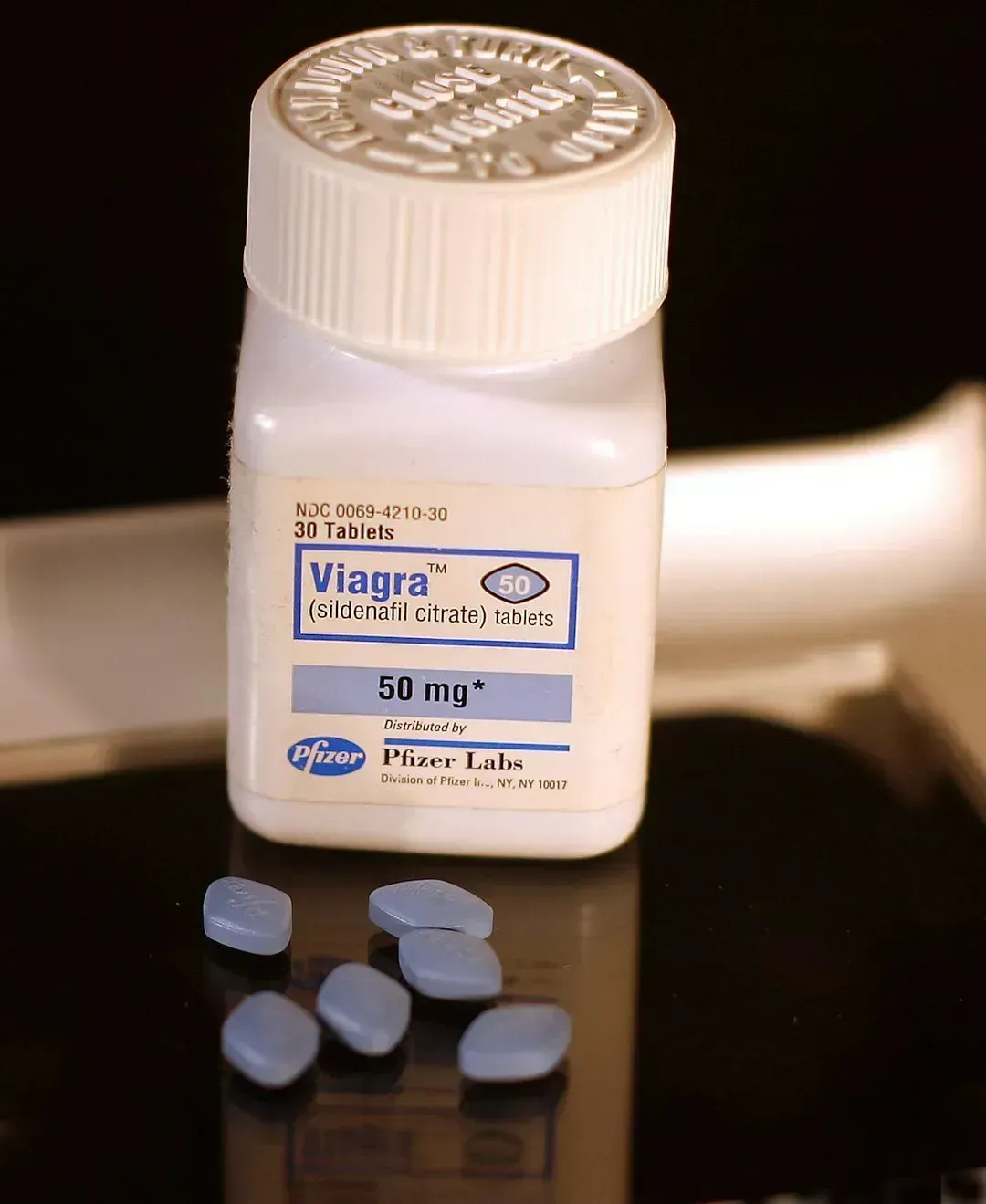
In the early 1990s, pharmaceutical company Pfizer was working hard on a drug intended to manage and treat hypertension and angina, chest pain caused by reduced blood flow to the heart. A team of researchers had set out to develop a drug that would dilate blood vessels and reduce blood pressure. The clinical trials produced disappointing results for the heart, but participants in the study were, reportedly, reluctant to return their remaining pills.
Sildenafil’s path took an unexpected turn during clinical trials when researchers noticed a surprising side effect: improved erectile function. This serendipitous discovery led to the drug’s approval by the FDA in 1998 for the treatment of erectile dysfunction, under the brand name Viagra. In 2005, the FDA approved the same compound for a heart condition called pulmonary arterial hypertension, which constricts the blood flow to the lungs and affects both men and women, circling back, in a sense, to the original cardiovascular intention.
Velcro: A Dog Walk That Launched a Global Fastener Industry
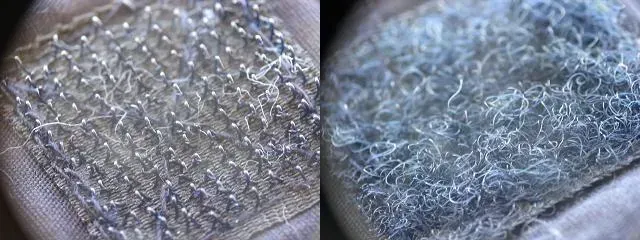
Swiss engineer George De Mestral didn’t set out to invent a fastener that would someday be ubiquitous on spacecraft. In 1941, he returned from a walk with his dog to notice that they were both covered in the tiny barbs of the cocklebur plant. On closer inspection, he saw that the burrs were shaped like tiny hooks, which snagged on the loops of his clothing and his dog’s fur. Fascinated, he began trying to create his own hook-and-loop fabric, an endeavor that would ultimately take him more than ten years.
In 1955, he patented Velcro, a name that combines the French words velours and crochet, meaning velvet and hook. Despite the moniker, De Mestral’s creation was made from nylon. It took a while for the fashion world to catch on, but NASA was an early adopter, using Velcro on space suits and shuttles. In fact, they embraced it so avidly that many people believe Velcro is a NASA invention. Today it fastens everything from children’s shoes to surgical equipment, none of which De Mestral could have imagined on that afternoon walk.
What connects all eight of these stories is not simply accident or luck. It’s the moment someone paused at an unexpected result and asked what it actually meant, rather than dismissing it as a failure. The cotton gin’s inventor never anticipated its role in entrenching slavery. The barbed wire farmer just wanted to protect his crops. Fleming left dirty dishes in a sink. None of them set out to reshape history, yet each of them did. That gap between intention and impact remains one of the most honest reminders of how unpredictable human progress actually is.
Partner offer
Planning a trip to Vegas?
Compare hotel rates and show tickets on VEGAS.com.