There’s a strange rhythm to film history. A movie opens, critics sharpen their pens, and the box office numbers come in soft. Then a decade or two passes, and suddenly that same “disaster” is sitting on a syllabus, dissected shot by shot in a darkened lecture hall. It happens more often than people assume. Some of the most influential films ever made were greeted with shrugs, sneers, or outright hostility when they first hit theaters. Here are eight examples where the initial reviews got it badly wrong, and where academic reassessment eventually caught up to what audiences now recognize as genuine craft.
1. Blade Runner (1982)


When Ridley Scott’s neo-noir opened in the summer of 1982, it landed with a thud next to the year’s other science fiction releases. The film met with mixed reviews, and ranked at number 27 on the domestic grosses of the year, a fraction of what E.T. made that same summer. Variety’s original review captured the ambivalence well, describing it as visually dazzling but narratively uneven.
Today the film sits at the center of nearly every academic conversation about neo-noir aesthetics and questions of what makes someone human. Critical reaction was mixed at the time, with most writers resistant to the film’s pace and structure, citing its lack of characterisation as a chief flaw, and yet the film endured. Almost as soon as it ran through the first projector, academics were poring over its themes, teasing out nuances that had eluded many on their first viewing. That’s about as clean a description of a film school pivot as you’ll find.
2. The Shining (1980)


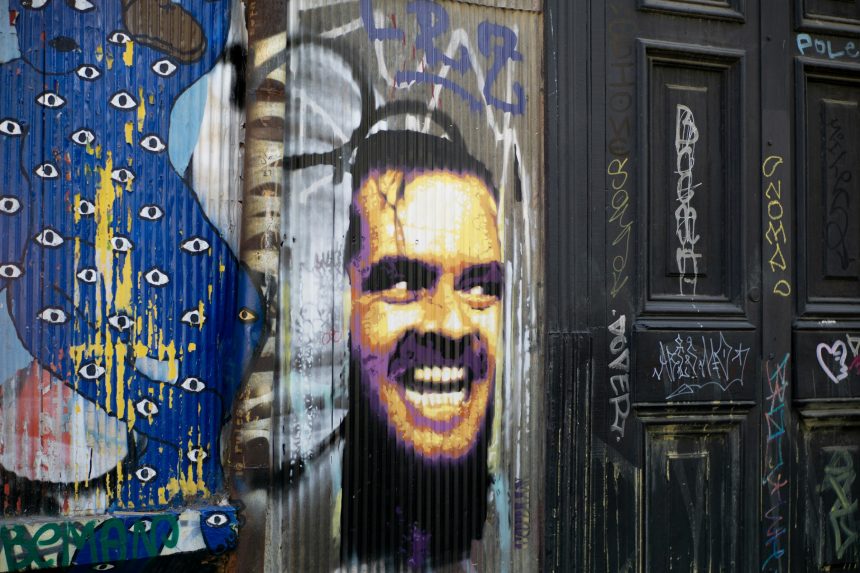
Stanley Kubrick’s adaptation of Stephen King’s novel didn’t just get mixed notices. It got outright savaged. Gene Siskel gave it two stars out of four in the Chicago Tribune and called it “a crashing disappointment,” adding that the biggest surprise was that it contained virtually no thrills. Variety was just as unkind, writing that Kubrick had teamed with a jumpy Jack Nicholson to destroy everything that made King’s novel terrifying.
The film’s punishing pace, so often cited as a flaw in 1980, is now taught as a masterclass in dread and spatial disorientation. It went on to earn two Razzie Awards at the very first ceremony in 1981. Even Roger Ebert eventually reversed course; initially dismissive of the movie, he came back around with a four-star Great Movies review decades later. Film programs now use it constantly to teach symmetry, tracking shots, and the Steadicam work that gave the Overlook Hotel its unsettling geometry.
3. Vertigo (1958)


Alfred Hitchcock’s psychological thriller is regularly named the greatest film ever made by critics’ polls, which makes its original reception almost comical in hindsight. Variety called it “too long and slow” for what was basically a psychological murder mystery, while the Los Angeles Times said the story “bogs down in a maze of detail.” Even the respected British journal Sight and Sound was unimpressed at the time.
The film’s box office performance matched the reviews: it was infamously critically panned upon its release, failing miserably at the box office, and Hitchcock publicly blamed an aging James Stewart for the film’s lack of appeal. The reversal took decades. It didn’t even make the British Film Institute’s all-time top ten list in 1962 or 1972, but climbed to fourth place by 1992. By 2012 it had displaced Citizen Kane at the top of the Sight and Sound critics’ poll, and film schools now treat its dolly zoom and color theory as foundational texts on obsession and identity.
4. Fight Club (1999)

David Fincher’s adaptation of the Chuck Palahniuk novel confused a lot of people when it opened, and confusion at the box office translated into a lukewarm critical reception. The film’s satire of consumer culture and masculinity was read by many at the time as an endorsement of the very violence it was depicting, rather than a critique of it. Fight Club received negative reviews at first, but later gained cult status and critical acclaim.
Academic interest eventually caught up with the film’s layered structure. It has since been subjected to extensive critical analysis for its social commentary about modern American life, with its themes of identity crisis, masculinity, and anti-consumerism receiving a wide range of interpretations. Scholars like Henry Giroux have written at length about its critique of consumerist culture, and the film is now a staple in courses on unreliable narration and postmodern satire.
5. 2001: A Space Odyssey (1968)

Stanley Kubrick’s science fiction epic drew a genuinely divided response when it premiered, with some walkouts reported at early screenings and several prominent critics dismissing its glacial pacing and minimal dialogue. Like Blade Runner, 2001: A Space Odyssey also met with an initially negative response, but went on to gain cult status and be identified as one of the most celebrated science fiction films of all time. Audiences expecting a conventional space adventure got something closer to a meditation on evolution and artificial intelligence instead.
The film’s reputation shifted as home video and repeat viewings allowed people to sit with its unconventional rhythm. It now anchors film school units on visual storytelling without dialogue, practical effects, and the use of sound design to build tension. Few films get cited as often in cinematography and editing courses, largely because Kubrick refused to explain anything and let the images carry the weight.
6. The Thing (1982)


John Carpenter’s claustrophobic horror film about a shapeshifting alien terrorizing an Antarctic research station opened to reviews that were almost gleefully hostile. Vincent Canby of the New York Times described the movie as “foolish, depressing,” writing that its actors were “used merely as props to be hacked, slashed, disembowelled and decapitated,” and calling it “too phony to be disgusting.” The film also had the misfortune of opening the same summer as E.T., a much gentler take on alien contact that audiences preferred.
It was released to negative reviews, with critics praising the special effects achievements but criticizing their visual repulsiveness, while others found the characters poorly realized. The film found a cult following when it was released on home video and television and has since been reappraised as one of the best science fiction and horror films ever made. Practical effects courses now study Rob Bottin’s creature work extensively, and the film’s paranoia driven structure is a common reference point for tension building in ensemble horror.
7. Heaven’s Gate (1980)


Michael Cimino’s western remains one of the most notorious production stories in Hollywood history, and the critical reception matched the chaos behind the scenes. The film premiered in November 1980 and received significant critical backlash, prompting United Artists to pull it from theaters, and even after a truncated re-cut version was released in 1981 it remained a financial failure and was lambasted by critics. It was condemned as one of the worst films ever made at the time.
The film’s collapse effectively ended the era of unchecked director autonomy in studio filmmaking, which is exactly why it gets taught today, often less for its craft and more as a case study in production economics and studio power. The 1981 re-edit has since been characterized as one of the greatest injustices of cinematic history, while later restored versions have received critical acclaim. Cinematographer Vilmos Zsigmond’s widescreen compositions are now studied on their own merits, separate from the film’s chaotic legacy, and courses on the collapse of New Hollywood almost always circle back to this title.
8. Scarface (1983)


Brian De Palma’s crime epic starring Al Pacino was greeted with distaste by many critics upon release, who found its violence excessive and its lead performance overwrought rather than compelling. The film’s operatic style, all sharp suits and blood soaked excess, read to contemporary reviewers as tasteless rather than intentional. Scarface received negative reviews at first, but later gained cult status and critical acclaim.
Decades of reassessment have repositioned the film as a study in character arc and tragic excess, with Tony Montana’s rise and fall now used in screenwriting courses as a textbook example of hubris driven plotting. Its influence on hip hop culture and fashion also gets covered in media studies programs, which treat it as a case study in how a film’s cultural afterlife can diverge sharply from its critical reception. The exaggerated performance style that critics dismissed in 1983 is now often cited as a deliberate choice suited to the film’s operatic tone.
There’s a pattern worth noticing across all eight of these films. Nearly every one of them was doing something critics hadn’t seen before, whether that was pacing, tone, structure, or subject matter, and nearly every one of them got punished for it in real time. Reassessment took years, sometimes decades, and usually arrived only once home video or streaming gave audiences the chance to sit with a film more than once. It’s a reminder that the first draft of critical opinion is rarely the last word, and that some of cinema’s most studied works spent their opening weeks being written off as failures.