


There’s a strange kind of trap that comes with writing a song too good for your own career. The track that launches you into the stratosphere is often the same one that follows you around for decades, played at every soundcheck, every wedding, every awkward encounter at a grocery store checkout line. Some artists learn to live with it. Others never quite forgive the song for what it did to them, even as royalty checks keep landing in the mail.
Lorde and “Royals”


When Lorde released “Royals” in 2013, she was sixteen years old and largely unknown outside of New Zealand. The track made her one of the biggest pop stars in the world, but she’s not a fan of the song that made her a star. That disconnect between global success and personal distaste has followed her ever since, showing up in interview after interview whenever the subject comes up.
She hasn’t been shy about the specifics of her dislike either. Lorde went as far as describing her debut hit as “disastrous,” explaining to Scotland’s Daily Record that she listens to covers of the song “in every single form except the original one I put out, and I realise that actually, it sounds horrible.” She didn’t stop there, comparing the production to something you’d hear on an old mobile phone rather than a song that essentially rewrote the pop playbook for a generation.
Madonna and “Like a Virgin”


Madonna’s relationship with her breakout single has cooled considerably since 1984. In 2009, she told reporters that just hearing “Like a Virgin” out on the town miffs the pop star. Considering the song has been her calling card for over four decades, it’s not hard to understand why constant exposure might wear thin.
Her frustration comes down mostly to context rather than the song itself. She once explained, “For some reason people think that when you go to a restaurant or you are going shopping that you want to hear one of your own songs. It’s usually ‘Like a Virgin’ and that is the one I don’t want to hear.” Given that the track marked her first ever number one hit, she’s had decades of unexpectedly running into her own voice in supermarkets and elevators, which would test anyone’s patience eventually.
Nicki Minaj and “Starships”


Nicki Minaj has two songs that most casual fans would name first if asked about her career, and neither one sits well with her. “Starships” helped catapult her into superstardom, while “Anaconda” represents the peak of her commercial success, yet she doesn’t look back fondly toward either record. That’s a fairly rare admission from an artist whose entire brand is built on confidence.
She’s been direct about it in public settings, not just in passing comments. In a Q&A with Irving Azoff at the Pollstar Live Conference in Beverly Hills, Minaj admitted to wishing she had never recorded either song, and for “Starships” especially, she’s said she hated the song and refuses to perform it onstage. For an artist so closely tied to reinvention, refusing to touch one of her biggest chart hits says quite a lot about how she views her own catalogue.
James Blunt and “You’re Beautiful”

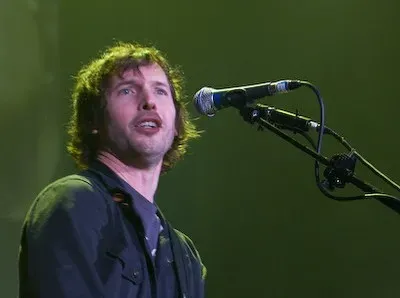
Few songs from the mid 2000s were as unavoidable as James Blunt’s breakout ballad. The song about love, loss, and eternal beauty was a monster hit for Blunt, a British army officer turned singer, and it was inescapable, with just as many people who loved it likely growing to hate it, chief among them Blunt himself. He’s since made peace with the money it brought in, but not necessarily with the song’s cultural footprint.
Blunt has been particularly candid about how the track was positioned by his label. He told Hello! in 2014, “There was one song that was force-fed down people’s throats, ‘You’re Beautiful,’ and it became annoying,” adding, “I was marketed by a record company to appeal to women during Desperate Housewives’ commercials and you lose 50 percent of the population in doing so.” It’s a rare moment of an artist openly criticizing the marketing machine that made him famous in the first place.
Sinead O’Connor and “Nothing Compares 2 U”


Sinead O’Connor’s cover of the Prince ballad turned her into an international star almost overnight, but the experience left a mark she never fully shook. She told Rolling Stone she had been put off performing the song entirely, saying, “It spoiled the song completely for me. I feel a connection with the song, but the experience was a very disturbing one. At the moment, I really don’t like the idea of singing the song.” The comment referred to a troubling personal encounter with Prince himself, which she said tainted the track for years afterward.
Decades later, she made the decision permanent rather than temporary. She announced on Facebook that the popular tune had been banished from her set list, writing, “After twenty-five years of singing it, nine months or so ago I finally ran out of anything I could use in order to bring some emotion to it.” For a singer who prized emotional honesty above all else, faking her way through the song every night was apparently no longer an option.
Thom Yorke and “Creep”


Radiohead’s relationship with their breakthrough single is one of the most well documented cases of an artist resenting their own hit. The band grew weary of “Creep,” feeling it set narrow expectations of their music, and Yorke himself said he was not happy with the lyrics, thinking they were “pretty crap.” That tension only grew as the band moved toward more experimental territory in the years that followed.
The song’s continued dominance made the resentment harder to escape rather than easier. Despite the band’s uneasy relationship with it, “Creep” remains their most well known single to date, notching up over 2.3 billion streams on Spotify and over 1.2 billion video views on YouTube. Yorke’s frustration with fans clamoring for it eventually boiled into open dismissal, and he once dismissed fans demanding to hear it as “anally retarded,” with the band playing it on less than half a dozen occasions in the years that followed.
Oasis and “Wonderwall”
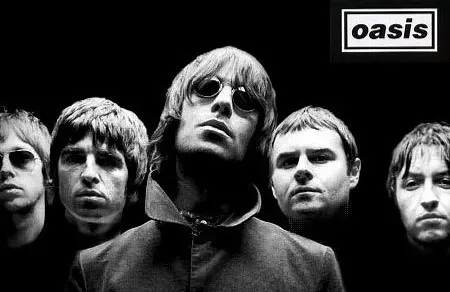
Few songs are more synonymous with 1990s Britpop than “Wonderwall,” yet both Gallagher brothers have spent years distancing themselves from it. Both Liam and Noel have been vocal about not being fans of the record that helped turn them into a household name, with Liam saying he hated it from the moment he heard it, while Noel, who wrote the song, views it as sounding unfinished. That’s a fairly blunt assessment from the man who wrote one of the best selling British rock songs of all time.
Liam’s disdain has been the more colorful of the two over the years. He once said, “I can’t ducking stand that ducking song! Every time I have to sing it I want to gag,” while promoting the album Dig Out Your Soul. Despite the frustration, the song remains a fixture at Oasis reunion shows, proof that commercial obligation often outlasts personal feeling.
Bob Geldof and “Do They Know It’s Christmas?”


Bob Geldof co-wrote one of the most successful charity singles in history, and he still can’t escape it every winter. At least one season a year, the Irish singer apologizes profusely for co-penning “Do They Know It’s Christmas?” telling the Daily Mail, “I will go to the supermarket, head to the meat counter, and it will be playing.” Given the charitable intentions behind the song, it’s an oddly self deprecating relationship for an artist to have with his own work.
The irony is that the song’s ubiquity is exactly the outcome Geldof was hoping for when it came to raising money for famine relief. It just never occurred to him he’d still be hearing it decades later every single December, whether he wants to or not. That kind of long term inescapability seems to be the common thread running through every artist on this list, no matter the decade or the genre.
Fame has a strange way of turning a career defining moment into a lifelong companion, whether the artist wants the company or not. Some of these musicians have softened over time, finding new appreciation for the songs that once frustrated them, while others remain firmly unmoved decades later. Either way, the songs aren’t going anywhere, and neither is the complicated relationship each artist has with their own success.

