Most people picture rock stars skipping class, not sitting through organic chemistry or defending a thesis. Yet a surprising number of musicians who filled arenas also filled lecture halls, earning degrees that have little to do with guitar solos and everything to do with genuine academic curiosity. Some finished their studies before fame hit, others returned decades later almost as a personal challenge to themselves, proving that a leather jacket and a graduation gown aren’t mutually exclusive.
Brian May’s decades-long path to an astrophysics PhD
Queen’s guitarist began his academic life as a physics student at Imperial College London, working on a doctorate about interplanetary dust long before “Bohemian Rhapsody” existed. Before the wild days of Queen’s arena tours and Live Aid, Brian May was a physics student at Imperial College London working toward a doctorate in astrophysics, studying how sunlight reflects off interplanetary dust and how that dust moves through the solar system. He shelved the research entirely once the band took off, and it sat unfinished for over three decades.
In 2006, already a global rock icon, he re-enrolled and picked up exactly where he’d left off. He re-registered at Imperial in 2006, three decades after he’d quit, intent on finishing what he started, working from typed-up notes he’d kept since 1974, slowly rebuilding and completing the research. He earned a PhD degree in astrophysics from Imperial College London in 2007, and was Chancellor of Liverpool John Moores University from 2008 to 2013. He later became a genuine science collaborator, not just a hobbyist with a telescope.
Dexter Holland’s PhD in molecular biology from USC
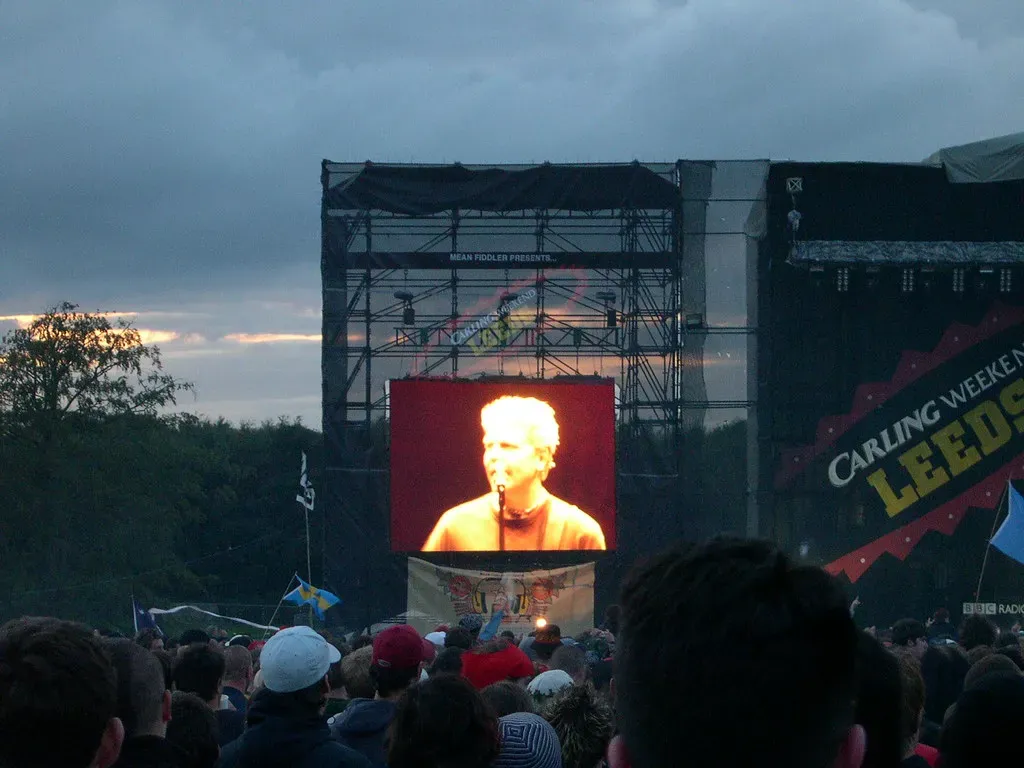
The Offspring frontman is one of the rare rock musicians with a doctorate earned entirely at one university, and it took him nearly two decades to finish it. Holland attended the University of Southern California, where he earned a B.S. in biology and an M.S. in molecular biology, then suspended his studies to focus on music when the Offspring found success in 1994, but later resumed and earned a PhD in molecular biology in May 2017. His dissertation focused on HIV genomics, a serious scientific contribution rather than a vanity project.
The overlap between his two worlds became public in an unusual way in 2024. In May 2024, legendary guitarist and fellow PhD Sir Brian May of Queen joined Holland to perform The Offspring’s hit “Gone Away” at the Starmus Festival in Slovakia. Two guitarists, two doctorates, one stage, a fitting coincidence for a list like this one.
Greg Graffin’s zoology doctorate from Cornell

Bad Religion’s founder and only constant member has spent as much time in classrooms as on stages. He obtained his BA in Biology, BS in Geology, and master’s in Geology at UCLA, before earning his PhD in Zoology from Cornell University in 2003. His dissertation research wasn’t purely biological either, it touched on belief and science, reflecting the same questioning tone found throughout his lyrics.
Graffin didn’t just collect the degree and move on. Between jaunts to Jakarta and South America to perform before thousands of punk fans, Graffin can be found lecturing undergraduate students, and the Bad Religion singer says he was always a bit of a “science nerd.” He’s continued teaching evolution courses periodically at Cornell while still touring with the band, a genuinely unusual double life.
Tom Scholz’s MIT engineering credentials behind Boston’s sound

Boston’s Tom Scholz built one of rock’s biggest debut albums using equipment he understood on a level most musicians never approach, and that’s directly tied to his education. Donald Thomas Scholz matriculated at MIT in 1965 to study mechanical engineering, performed well despite fearing he’d flunk out, and MIT offered him a scholarship for a one-year master’s in mechanical engineering. That technical training shaped everything about how Boston’s records were made.
After graduating, he didn’t head straight into music. In 1976, Tom Scholz was a 29-year-old product design engineer working at Polaroid on audio electronics and tape-recording technology, with 11 patents under his belt. He later founded Scholz Research & Development and invented the Rockman guitar amplifier, engineering knowledge translated directly into gear that shaped the sound of eighties rock.
Milo Aukerman’s biochemistry PhD that inspired an album title
The Descendents’ singer is unique on this list because his academic pursuits literally named one of punk rock’s most famous records. The first full-length Descendents album, released in 1982, was titled Milo Goes to College, as Aukerman had by then decided to leave the group to pursue a degree in biochemistry at the University of California, San Diego. The album cover, complete with buzz cut and thick glasses, became a defining image of pop-punk’s nerdier side.
Partner offer
Aukerman moved between labs and tour vans for years afterward. He holds a PhD degree in biology from UC San Diego, conducted postdoctoral research in molecular biology at the University of Wisconsin-Madison and the University of Pennsylvania, and formerly worked as a plant researcher at DuPont. He eventually left the research world behind in 2016, but the biochemist identity never really faded from his public image.
Rivers Cuomo’s late-arriving Harvard English degree
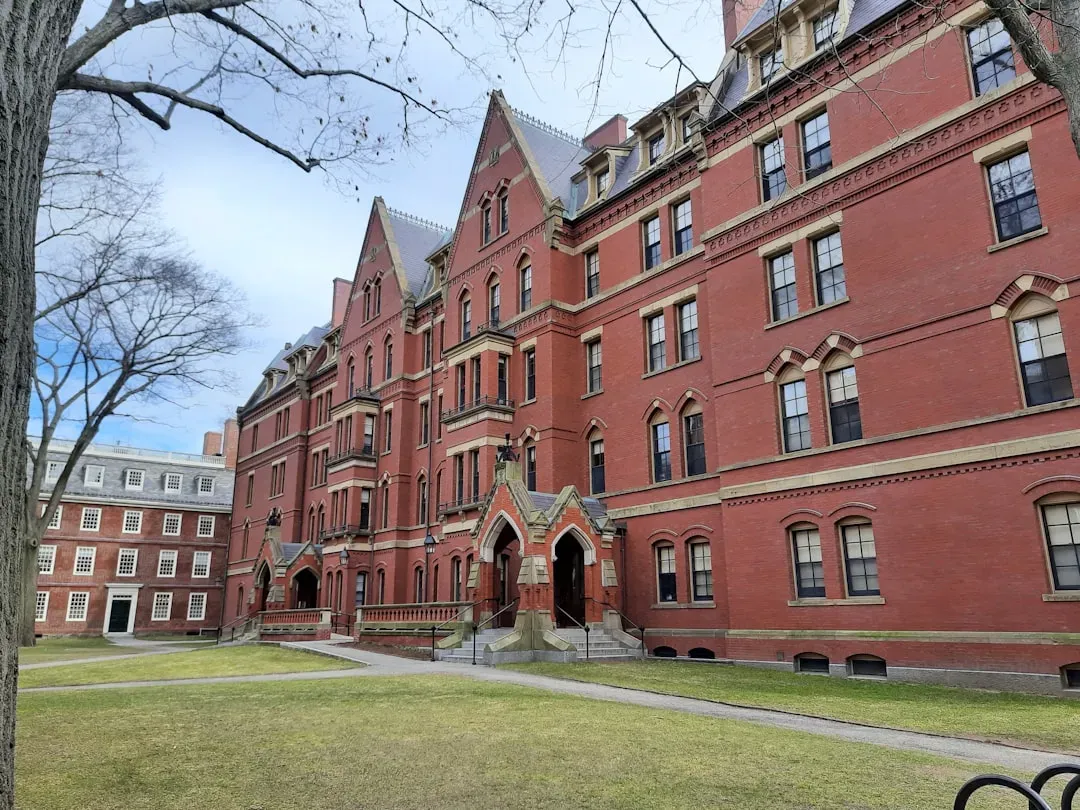
Weezer’s frontman took a genuinely unusual detour mid-career, enrolling at one of the world’s most selective universities well after his band had already released hit albums. Cuomo wanted to be more than just a musician after getting bored on tour, so he enrolled at Harvard after the band’s debut album, eventually dropped out, returned after the album Make Believe, and went on to earn his bachelor’s degree in English in 2006. It wasn’t a quick stopover either, it spanned years around ongoing touring commitments.
The choice fit his songwriting style more than people might expect. Weezer’s lyrics have always leaned literary and self-aware, and formal study in English literature at an Ivy League institution seems, in hindsight, less like a detour and more like an extension of what he was already doing on record.
Art Garfunkel’s master’s degree in mathematics education

Half of Simon & Garfunkel, Art Garfunkel pursued an academic path that had almost nothing to do with folk rock harmonies. He studied architecture as an undergraduate at Columbia University before shifting direction, eventually earning a master’s degree in mathematics education from Columbia’s Teachers College. It’s a detail that surprises most fans who know him purely for his voice on songs like “Bridge Over Troubled Water.”
Garfunkel actually taught mathematics briefly at a private school in Connecticut before Simon & Garfunkel’s success made teaching impractical. The rigor of that academic background occasionally surfaces in interviews, where he’s spoken about approaching songwriting and performance with the same structured curiosity he once brought to a classroom.
Thom Yorke’s English and fine art degree from Exeter
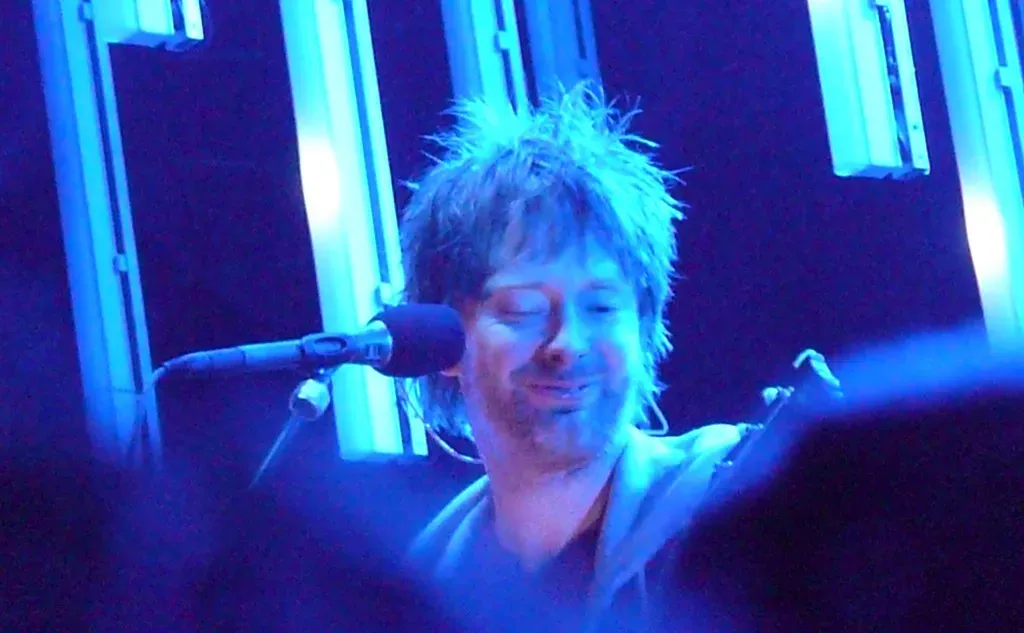
Radiohead’s Thom Yorke earned a degree in English literature and fine art from the University of Exeter, finishing his studies before the band’s early success pulled him away from any thought of a conventional career. The combination of literature and visual art tracks closely with Radiohead’s output, an act known for dense lyrics and equally deliberate visual presentation across album artwork and music videos.
Yorke has rarely spoken at length about his university years, but the influence shows up indirectly. Radiohead’s lyrical density and the band’s long-running collaboration with artist Stanley Donwood on album visuals both echo the dual interests Yorke pursued academically, even if he’s never framed his career as a direct continuation of coursework. These eight stories share a common thread: none of these musicians treated their degrees as a fallback plan or a backup career. Whether finished before fame, abandoned and revived decades later, or squeezed in between tours, each degree reflects a genuine intellectual pursuit that ran parallel to, rather than in competition with, a life on stage.
Partner offer
Planning a trip to Vegas?
Compare hotel rates and show tickets on VEGAS.com.