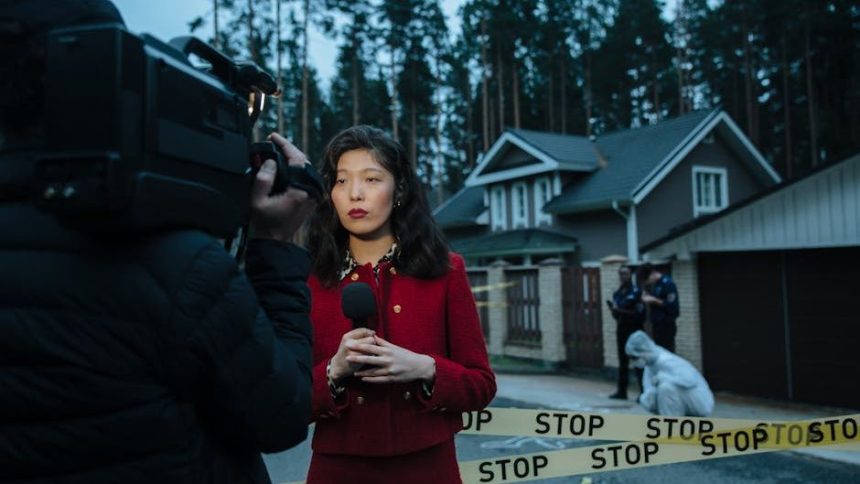
Most people assume that the moment investigators question a suspect, the truth is either told or denied outright. Reality is messier. Some suspects shift their accounts across hours, others across years, spinning new narratives each time the old one collapses under the weight of evidence. What tends to unite these cases is not just the lie itself, but the moment investigators finally peel it back.
The cases below span different crimes, different countries, and different eras. Each one features a suspect who revised their story at least once, often more, before investigators assembled enough facts to cut through the layers. Some confessions were coerced out of polygraph failures. Others unraveled through forensic data, digital timestamps, or a single recovered photograph. A few still carry unresolved questions today.
1. Chris Watts: The Grieving Husband Who Kept Revising His Confession


The Watts family murders occurred on August 13, 2018, in Frederick, Colorado. Christopher Lee Watts initially denied any knowledge of the whereabouts of his pregnant wife Shanann and their two daughters. The case drew enormous attention partly because of his extramarital affair and his constantly changing accounts. Initially, Chris Watts gave media interviews pleading for his family’s safe return, claiming he had no idea where they were. Investigators quickly became suspicious of his demeanor and the inconsistencies threading through his story.
Watts agreed to take a polygraph test but failed it badly, receiving one of the lowest possible scores. He then said he would confess only if allowed to speak to his father. After that private conversation, he admitted to strangling Shanann. He confessed to investigators but falsely claimed he had killed Shanann only after witnessing her smother their daughters, and alleged he discovered Bella’s body before catching Shanann strangling Celeste. In 2019, the story changed again. In a letter to an author, Watts admitted the killings had been premeditated rather than committed in a fit of rage, even revealing he had tried to cause Shanann to miscarry beforehand. He was ultimately sentenced to five life sentences without the possibility of parole and is now serving those sentences in a maximum-security prison in Wisconsin.
2. Jodi Arias: Three Stories, One Camera, No Escape

In 2008, Travis Alexander was found brutally murdered in his Arizona home, and his ex-girlfriend Jodi Arias became the prime suspect. Arias initially denied any involvement but later changed her story multiple times, finally claiming self-defense in the last version. Her shifting accounts were striking in their contradictions. She first denied being anywhere near the scene, then admitted she was present but claimed intruders had committed the murder, and only later settled on the self-defense narrative.
The case against her relied heavily on digital evidence, particularly photographs recovered from a digital camera found in Alexander’s washing machine. Forensic experts used data recovery tools to retrieve deleted photos taken on the day of the murder, which showed Arias and Alexander together, along with graphic images taken after his death. The timestamps on the photos directly contradicted Arias’ story and placed her at the scene during the time of the murder. Text messages and emails recovered from both their devices revealed a volatile relationship, further discrediting her defense.
3. Ian Huntley: Botany Brought Down a Caretaker’s Lies

In August 2002, the town of Soham, Cambridgeshire, was rocked by the disappearance of two ten-year-old girls, Holly Wells and Jessica Chapman. It became one of the most intense and extensive searches in British history. When the spotlight fell on local school caretaker Ian Huntley, botany provided the critical breakthrough. Huntley had presented himself as a cooperative witness, maintaining he knew nothing about the girls’ fate, but investigators never fully believed him.
Investigators discovered microscopic pollen grains and spores on Huntley’s clothing and inside his car, identical to those found at the remote location where the girls’ bodies were later discovered. In an apparent attempt to destroy forensic evidence, Huntley had tried to burn both bodies at the scene. That detail, combined with the botanical match, made his denials impossible to sustain. He was convicted at the Old Bailey in December 2003 and received two life sentences for the murders of both girls.
4. Robert Durst: Decades of Shifting Narratives and a Bathroom Admission


Robert Durst was a New York real estate heir accused of several criminal activities. He was initially arrested in 2001 for the murder of his neighbor in Galveston, Texas, but was eventually acquitted after claiming self-defense. The investigation into his life reignited in 2015 when he became a key suspect in the disappearance of his first wife, Kathie McCormack Durst. The documentary series “The Jinx: The Life and Deaths of Robert Durst” detailed his alleged criminal activities. On the same night the final episode aired, Durst was arrested for the murder of Susan Berman, his long-time friend who knew the truth about his first wife’s disappearance.
Durst had maintained for years that he knew nothing about Berman’s death and that his first wife had simply left him. Both stories progressively fell apart. In September 2020, Durst was sentenced to life in prison for the first-degree murder of Susan Berman, committed in December 2000. Shortly after, he was charged with the murder of his first wife, though that case never went to trial. What made the case particularly striking was that audio captured Durst apparently muttering a self-incriminating statement while wearing a live microphone during filming of the documentary, unaware it was still recording.
5. Scott Peterson: A Shaky Alibi, a Hidden Affair, and an Ongoing Legal Battle
Laci Peterson, who was 27 years old and eight months pregnant, disappeared on Christmas Eve in 2002. Her body was found in San Francisco Bay in April 2003. Scott Peterson was arrested and charged with first-degree murder in his wife’s death and second-degree murder in the death of their unborn son. A jury found him guilty following a six-month trial in 2004. Scott’s timeline came into question during the trial when an investigator testified that Scott appeared to be at his Modesto home later than he had claimed. At 10:08 a.m., he used his cell phone to check his voicemail, and the call bounced off a tower near his house, suggesting he was still home at that time.
Witnesses testified at trial that Scott had told them he planned to go golfing on Christmas Eve and never mentioned anything about fishing. Laci’s family and Scott’s own father testified they never knew he had even purchased a boat. In a stunning development, the Los Angeles Innocence Project joined Scott’s appellate defense team, and two decades after his conviction, the case reemerged into the spotlight. The filing caused a reexamination of Laci’s disappearance, with new eyewitness accounts, physical evidence, and never-before-tested biological evidence raising fresh questions about the conviction. The case remains legally active as of 2026, with the California courts still weighing the petition.
6. The Central Park Five: Confessions That Were Not True


Yusef Salaam was one of five boys wrongfully convicted for the brutal attack and rape of a jogger in Central Park, in one of the most notorious and highly publicized crimes in New York history. He and four other boys he barely knew falsely confessed to the crime under intense police interrogation. One of the accused later claimed that while at the station, he heard police beating up one of the other boys in the next room. Though the suspects confessed on tape, they all recanted within weeks, saying they had been intimidated, lied to, and coerced into making false confessions.
Even though physical evidence found via a rape kit pointed to a sixth, unknown suspect, all five boys were convicted and sentenced to anywhere from five to fifteen years in prison. It wasn’t until 2001 that convicted serial rapist and murderer Matias Reyes admitted to committing the assault. The physical evidence proved his claim true, although he was not prosecuted separately because the statute of limitations had passed and he was already serving a life sentence for other crimes. The Innocence Project has noted that roughly three in ten DNA exoneration cases involve false confessions, a sobering reflection of how the interrogation process itself can manufacture guilt where there is none.
7. Dennis Rader: The BTK Killer Who Outwitted Himself

Dennis Rader, known as the BTK Killer, evaded law enforcement for over thirty years. Between 1974 and 1991, he terrorized the Wichita, Kansas area with a series of brutal murders. His ability to stay hidden for so long made him one of the most infamous serial killers in American history. His downfall began in 2004 when he resurfaced after years of inactivity and started taunting police with letters, puzzles, and packages. Throughout those decades, he had lived quietly as a church president and code compliance officer, offering no reason for anyone to connect him to the crimes.
In an era of high technology, Rader thought he was being clever by sending a floppy disk to a local TV station, believing it was untraceable. Forensic data analysis extracted metadata from the disk containing the words “Christ Lutheran Church” and “Dennis,” linking it directly to Rader, who was the president of the church’s congregation. This digital evidence connected him to the BTK murders and led to his arrest in 2005. After decades of presenting himself as an ordinary citizen, Rader ultimately confessed in open court to ten counts of murder, detailing each killing with chilling precision.
8. David McCallum: A False Confession, 29 Years, and the Truth DNA Finally Told

David McCallum falsely confessed to the 1985 kidnapping and murder of 20-year-old Nathan Blenner, who was found shot dead in a Brooklyn park after being abducted in his car. At the time, David was just 16 years old, and despite the complete absence of evidence connecting him to the crime, he and his friend Willie Stuckey were convicted and sentenced to 25 years in prison based on their coerced false confessions implicating each other. Both boys maintained for years that the confessions had been fed to them by police under pressure, but for a long time, no one was listening.
After spending over 29 years in prison, including being denied parole for “failure to express remorse,” David was exonerated when DNA testing of cigarette butts found in the victim’s car did not match him or Willie. A Conviction Integrity Unit determined that the confessions were clearly false, based on facts likely supplied by police, and that prosecutors had withheld evidence of other suspects from David’s trial attorney. False confessions occur more often than most people realize, leading to wrongful convictions, ruined lives, and miscarriages of justice. In high-pressure police interrogations, suspects may confess to crimes they didn’t commit out of fear, exhaustion, coercion, or psychological manipulation. McCallum’s case stands as one of the starkest examples of how a changed story, in this case changed back toward the truth only after decades, can determine the course of an entire life.
Across these eight cases, one pattern repeats: investigators rarely accept a story at face value, and the tools available to catch deception keep improving. Forensic botany, digital metadata, polygraph results, DNA databases, and careful reconstruction of timelines have all played roles in peeling back fabricated accounts. What changes most is the speed at which the truth surfaces. Some suspects unravel within hours. Others hold on for thirty years before the evidence finally catches up.