Some episodes fade quietly into rerun rotation, remembered fondly but rarely argued about. Others do the opposite. They lodge themselves in the cultural conversation and refuse to leave, sparking forum threads, anniversary essays, and dinner-table arguments long after the credits rolled. What follows is a look at eight of those episodes, the ones that split rooms in half and, in several cases, still do.
1. Lost, “The End”

When Lost wrapped its six-season run on May 23, 2010, ABC delivered a finale that reunited Jack Shephard and the Oceanic 815 survivors in a hazy afterlife setting, closing the emotional arc of the show even as it left many of the island’s mysteries unresolved. Because the ending focused so much on character resolution, leaving the show very far from its intriguing starting point with a lot of the island’s mysteries unsolved, like why no babies could be born on the island. Critics and viewers split almost immediately, and that split never fully closed.
Few TV finales have sparked as much debate as Lost’s, and the final episode aired on May 23, 2010, and left fans sharply divided over its ambiguity. Even now, well over a decade on, people are still asking what happened to the survivors of Oceanic Flight 815, and if they were really dead this whole time. The show’s own cast members admit the conversation hasn’t stopped, with actor Daniel Dae Kim noting he still gets approached by fans wanting to talk through the ending years after it aired.
2. Game of Thrones, “The Bells”

Airing in May 2019 as the penultimate episode of the final season, “The Bells” showed Daenerys Targaryen turning her dragon on the surrendering city of King’s Landing, incinerating civilians after the bells signaling surrender had already rung. It was an episode viewers were going to be discussing and processing for a long time, one that felt bitterly true to the series but also unearned given how the final season built to it. The scale of the backlash was immediate and loud.
The episode drew strong negative reactions from fans online over the actions of Daenerys Targaryen and Jaime Lannister, and a fan petition demanding the season be remade gathered hundreds of thousands of signatures within days. Even the people who made the episode later acknowledged the divide head-on. Director Miguel Sapochnik has said the divided reaction and backlash hasn’t changed how he approaches storytelling, adding that having a fanbase large and passionate enough to argue over the show is itself a sign of success.
3. The Sopranos, “Made in America”

David Chase closed out The Sopranos in June 2007 with a diner scene that cut abruptly to black mid-conversation, leaving Tony Soprano’s fate unresolved on screen. No gunshot, no confirmation, just silence and a blank frame. Viewers spent the following days convinced their cable had cut out, then spent the following years arguing about whether Tony died in that booth or simply kept living his complicated life offscreen.
The ambiguity was clearly intentional rather than accidental, and Chase has resisted giving a tidy answer over the years, which has only fueled more theorizing rather than less. Film students, critics, and casual fans alike still dissect the editing choices, the cat that stares at a photo of Christopher, and the ominous man in the Members Only jacket sitting near Tony. It remains one of the most analyzed final scenes in American television, largely because the show refused to hand viewers a period at the end of the sentence.
4. How I Met Your Mother, “Last Forever”

After nine seasons spent building toward the reveal of the mother, played by Cristin Milioti, the 2014 series finale killed her off and steered Ted Mosby back toward Robin, the woman the show had spent years insisting he’d moved past. Many longtime viewers felt betrayed, arguing the twist undid seasons of character growth for a nostalgic reset that didn’t earn its emotional weight.
The backlash was strong enough that it became a template for how not to end a beloved sitcom, frequently cited alongside other finales as a cautionary example in discussions about payoff versus subversion. Defenders argue the ending reflects a more honest, bittersweet view of love and loss than a tidy happy ending would have. That disagreement, tidy versus honest, is essentially the entire debate in miniature, and it hasn’t really been settled.
Partner offer
5. Dexter, “Remember the Monsters?”

Dexter’s original series finale in 2013 sent its serial-killer protagonist sailing into a hurricane, only to reveal him alive and working as a lumberjack in the Pacific Northwest, having faked his death and abandoned his son. The ending was widely panned as tonally bizarre for a show built on tension and body counts, landing on lists of the most disappointing finales in television history.
The reaction was severe enough that it shaped the show’s own future. Showtime later revived the series with Dexter: New Blood in 2021, largely as an attempt to give fans a more satisfying send-off, which itself became a new point of contention when that follow-up ended with Dexter’s death. The original lumberjack ending is still referenced as shorthand for a finale that lost its nerve, even by people who otherwise loved the series.
6. Seinfeld, “The Finale”
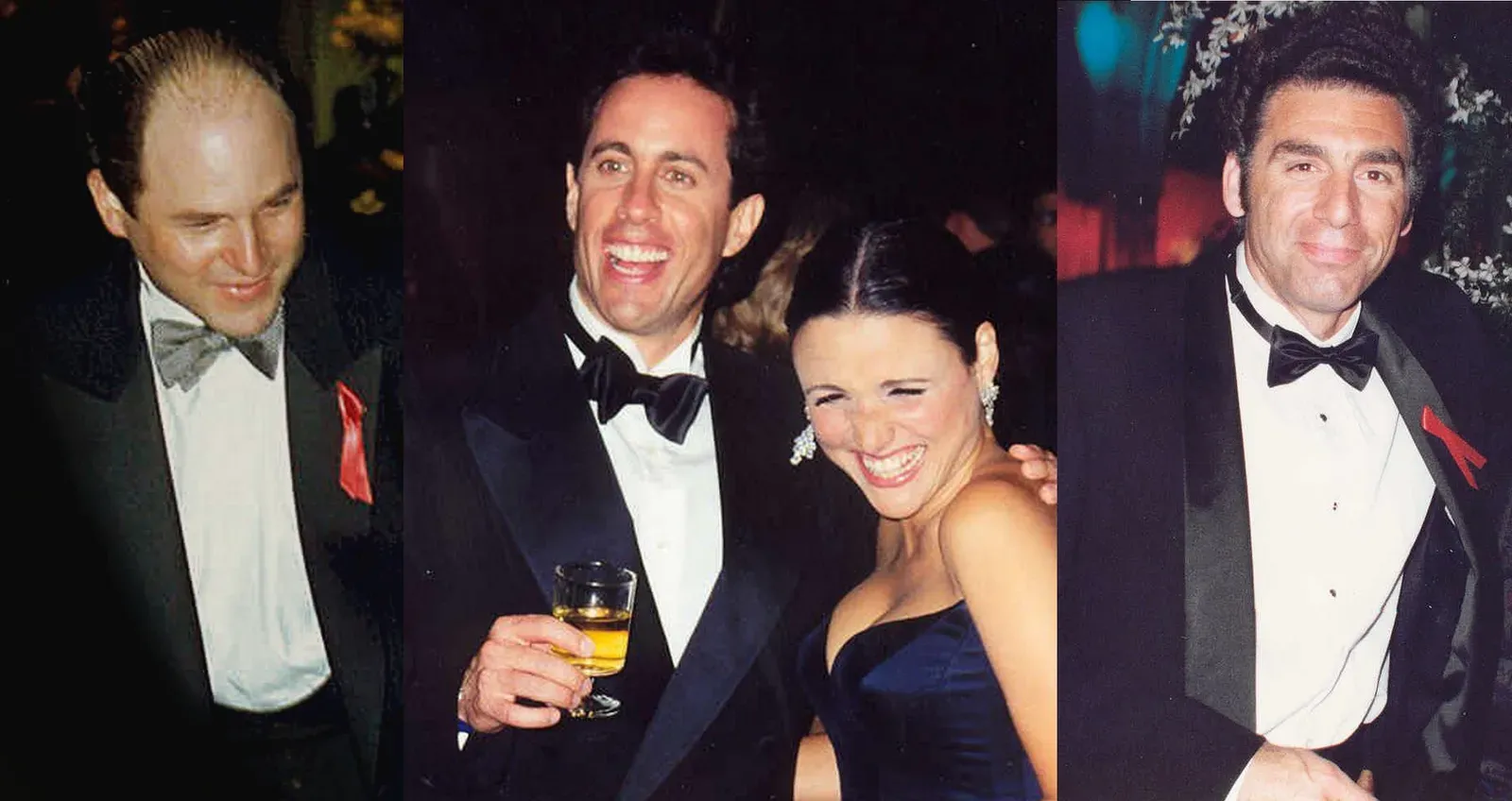
Seinfeld ended its run in 1998 by putting Jerry, Elaine, George, and Kramer on trial for failing to help a carjacking victim, then convicting them and sending them to prison, a sharp departure from the show’s usual plotless, low-stakes comedy. Rather than a warm sendoff, the finale doubled down on the characters’ selfishness, and audiences weren’t universally on board with the tonal shift.
Critics at the time called it a letdown, arguing it felt more like a clip-show victory lap for supporting characters than a satisfying close for the leads. Over the years opinion has softened somewhat, with some critics reassessing it as a fittingly cynical bookend to a show that never pretended its characters were good people. Larry David, who wrote the episode, has never really apologized for the choice, and the split between people who see it as brave and people who see it as smug persists.
7. St. Elsewhere, “The Last One”

This 1988 medical drama finale is a quieter entry on this list but arguably the most consequential. The final scene revealed that the entire series had existed inside the imagination of an autistic boy named Tommy Westphall, staring into a snow globe.
What makes this episode endlessly discussed isn’t just the twist itself, but the ripple effect it created. Television writers and fans later constructed the so-called Tommy Westphall Universe, a sprawling theory linking St. Elsewhere to dozens of other shows through character and actor crossovers, implying that a huge portion of scripted American TV technically takes place inside that boy’s head. It’s a strange, niche debate, but it has stayed alive in critical circles for decades precisely because it raises real questions about how seriously fictional universes should be taken.
8. Battlestar Galactica, “Daybreak, Part 2”

Battlestar Galactica ended its reimagined run in 2009 by revealing that the survivors had landed on prehistoric Earth, choosing to abandon their technology entirely and start over as a primitive society, later folding in a heavily religious framing involving angels and a guiding hand behind events. For a show praised throughout its run for grounded, morally complex science fiction, the sudden turn toward mysticism struck many longtime fans as a betrayal of the show’s own internal logic.
The debate has never fully resolved because it touches on a real creative tension: how much a science fiction show owes its audience in terms of concrete explanation versus thematic resonance. Some critics still defend the ending as a bold, spiritually coherent capstone to the show’s themes about cycles of violence and rebirth. Others maintain it undercut years of careful world-building with a shrug and a wink toward the divine, and that argument keeps resurfacing whenever the show comes up in best-of lists.
What ties these eight together isn’t genre or network or even the era they aired in. It’s the fact that each one asked something of its audience beyond simple entertainment, whether that was tolerance for ambiguity, patience with a difficult character choice, or trust that the writers knew where they were going. Some viewers gave that trust freely. Others didn’t, and the argument between those two camps is often more interesting, and more lasting, than the episodes themselves.Partner offer
Planning a trip to Vegas?
Compare hotel rates and show tickets on VEGAS.com.