Album art has always walked a strange line between artistic statement and commercial product, and every so often that line snaps. Some covers were pulled after retailers balked, others were softened at the last minute to avoid outrage, and a few became more famous for being banned than for the music inside. Here are nine cases where the image fans first saw was not the one the artist originally intended.
What ties these stories together is not just controversy for its own sake, but the tug of war between creative intent and commercial reality. Labels, retailers, and sometimes tragic circumstance forced last minute changes, and the results still fascinate collectors decades later.
1. The Beatles, Yesterday and Today

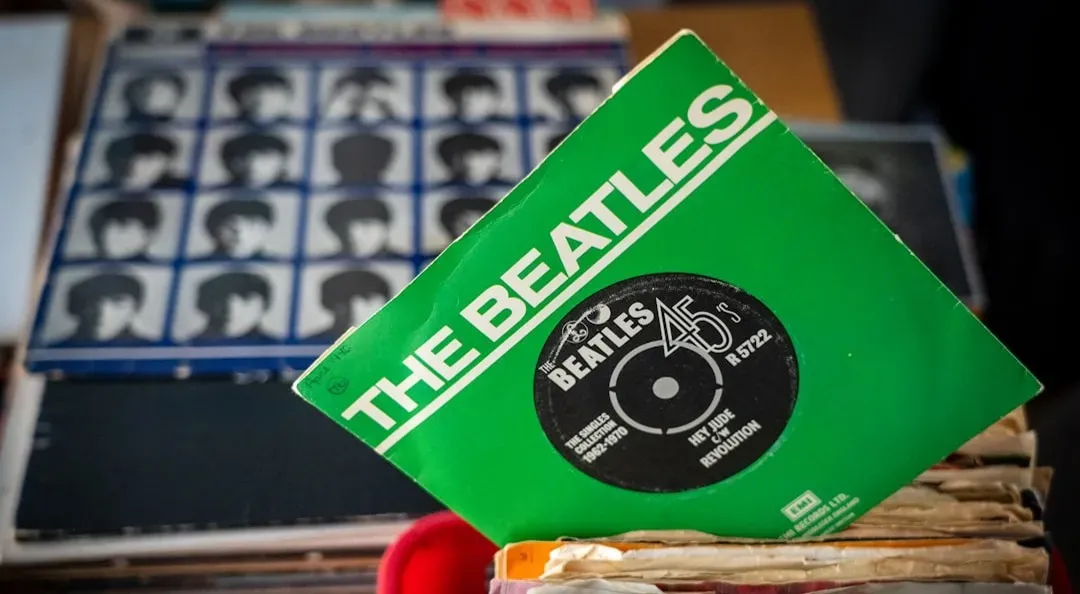
The most infamous swap in album cover history involves the Beatles looking cheerful while draped in raw meat and mutilated baby dolls. The original cover featured the “squeaky clean” Fab Four sporting butcher’s coats surrounded by raw meat and doll parts, and it was quickly met with outrage before being changed to a generic shot Capitol had on hand. The photographer, Robert Whitaker, intended it as pop art commentary, though the band later gave conflicting explanations for what it actually meant.
The fallout was staggering for its time. The initial response to the cover from an estimated 60,000 advance copies was so negative that Capitol recalled all 750,000 manufactured copies for repackaging with a more conventional photograph. Original “butcher” sleeves now sell for enormous sums, with a first state Butcher cover, previously owned and autographed by Ringo Starr, selling at auction in 2015 for 25,600 dollars.
2. Poison, Open Up and Say… Ahh!

Poison’s 1988 album was meant to open with a grinning cartoon demon, and that idea did not sit well with a chunk of America. The original version of Poison’s Open Up and Say… Ahh! featured a demon, which caused a ruckus among church groups. Concerns about the imagery being satanic or inappropriate for younger buyers pushed the label toward a compromise rather than a full replacement.
Instead of scrapping the artwork entirely, the band trimmed it down. The band released an edited version of the cover showing only the demon’s eyes and forehead. It is a small change compared to some entries on this list, but it shows how sensitive record stores were to anything hinting at devil imagery during the height of the eighties “Satanic Panic” era.
3. Jane’s Addiction, Ritual de lo Habitual

Perry Farrell has never shied away from provocative imagery, and his artwork for Jane’s Addiction’s 1990 album proved that in dramatic fashion. The original cover, drawn by singer Perry Farrell, featured three naked clay figures. Farrell created the piece himself, based on a papier mâché sculpture depicting a ménage à trois, which many retailers considered too explicit to display openly.
Rather than caving quietly, Farrell turned the censorship into a statement. When the image was considered risqué, Farrell released a “clean” version, stark white with the First Amendment printed on it to remind buyers of the freedom of speech. The move became a small piece of protest art in its own right, turning a forced compromise into commentary on censorship itself.
4. Kanye West, My Beautiful Dark Twisted Fantasy

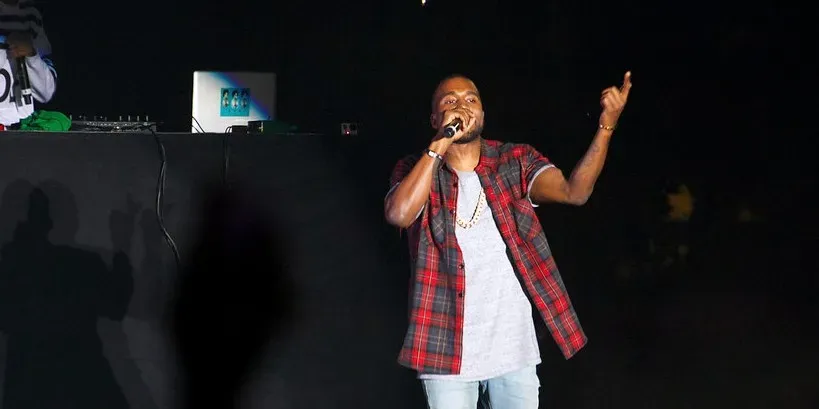
Kanye West’s 2010 album arrived with a painting by artist George Condo that proved far too explicit for mainstream retail. The notorious image shows West nude on a couch, straddled by an armless winged female figure with a polka-dot tail. According to Condo, the shock value was not accidental. West reportedly asked specifically for an image provocative enough to be rejected by retailers as a publicity stunt, telling Condo he wanted a phoenix, and the strategy worked as the painting was refused by outlets including Walmart and Apple’s iTunes Music Store.
West made his frustration public rather than accepting the change quietly. The cover art, designed by Condo, depicts a nude Kanye, bottle in hand, appearing to have intercourse with a winged female figure with a polka-dot tail, and West wrote on Twitter, “They don’t want me chilling on the couch with my phoenix!” Walmart pushed back on the framing though. Walmart, for its part, denied rejecting anything and put out a statement saying it was thrilled to have the album in stores. The final retail version used a simpler alternate cover, while the explicit painting appeared as a pixelated design on censored releases.
5. David Bowie, Diamond Dogs

Bowie’s 1974 concept album cast him as a half man, half dog hybrid, painted by Belgian artist Guy Peellaert. David Bowie posed as a man dog creature with its genitalia exposed on the original cover, and the artwork was changed with the genitalia removed. The image fit the album’s dystopian themes perfectly, drawing on Diamond Dogs’ post apocalyptic vision, but its anatomical detail made label executives nervous almost immediately.
RCA quietly airbrushed the offending area before wide distribution, though uncensored pressings slipped out in some markets before the correction was made. Those early copies are now considered valuable collector’s items, much like other entries on this list, proving that censorship often boosts rather than kills interest in the forbidden version.
6. The Black Crowes, Amorica
For their 1994 album, the Black Crowes chose an image with unmistakable political and sexual undertones. The original cover of the Black Crowes’ third album was an American flag bikini bottom, with pubic hair exposed. The photo was pulled from a 1976 issue of Hustler magazine, which only added to the controversy once people learned its source.
The label’s solution was minimal but effective. The band’s label blacked out most of the body, leaving a triangle of bikini, and instead of seeming lewd, the Crowes ended up looking oddly patriotic. The censored version became the widely distributed pressing, while the uncut original circulates among collectors who track down early copies.
7. Guns N’ Roses, Appetite for Destruction

Guns N’ Roses wanted their 1987 debut to carry genuine shock value, and the original commissioned painting delivered exactly that. If you bought the debut upon its release in July 1987, your copy would feature a painting by artist Robert Williams depicting a woman who has been sexually assaulted by a humanoid robot, while another mechanical figure looms overhead, apparently about to extract vengeance on the attacker. The label had allowed it to ship briefly before backlash from retailers made continued distribution untenable.
The band did not want to lose the imagery entirely, so a compromise emerged. The controversial painting was moved to the inner sleeve, and the cover itself was replaced with a now iconic cross and skull design featuring the five band members’ faces. It remains one of the most famous “bait and switch” covers in rock history, since many fans never realize the album’s true original front image without digging into its release history.
8. Bon Jovi, Slippery When Wet

Bon Jovi’s breakout 1986 album almost shipped with a very different visual identity. The album originally was to feature a busty woman in a yellow shirt wet from rain, with the title written across it. Accounts differ on exactly why the change happened. Some think the label feared stores would not sell it, deeming the cover sexist, while others say Jon Bon Jovi himself scrapped the design after the record company added a bright pink border he disliked.
Whatever the real reason, the fix turned out to be inspired. Instead, the cover was changed before the album’s release to an image of a wet garbage bag with the words “Slippery When Wet” written on it. Interestingly, the Japanese edition of the album still features the original artwork, making it a sought after variant for collectors who want to see the image that almost defined the record.
9. Lynyrd Skynyrd, Street Survivors

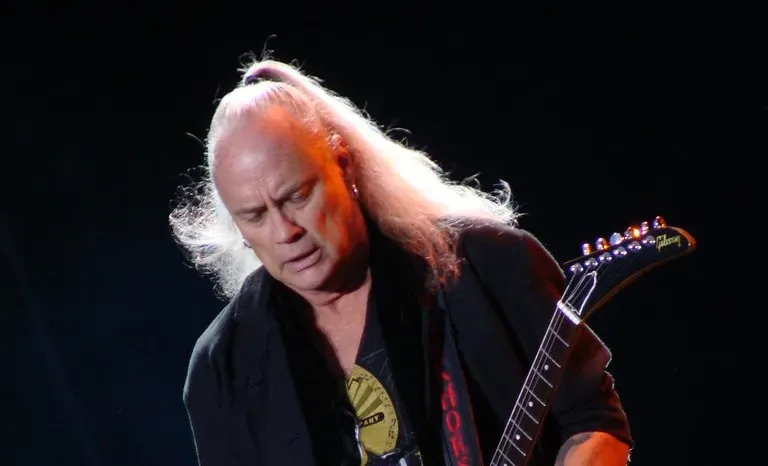
This entry is less about censorship and more about tragic timing. Lynyrd Skynyrd’s fifth studio album was released on October 17, 1977, and three days later the band’s airplane crashed in Mississippi killing three members including leader Ronnie Van Zant, which made the cover photo of the band standing in front of a backdrop of flames seem in exceptionally poor taste. What had been a striking piece of rock imagery suddenly read as an unbearable premonition.
Out of respect, the label acted quickly to change what fans would see on shelves. The band didn’t change the Street Survivors title, which was problematic in its own way, but they did substitute a different photo of the band with a plain black background. It stands as one of the few covers on this list altered not because of moral outrage or legal pressure, but because real world tragedy made the original artwork impossible to look at the same way.
Looking across these nine stories, a pattern emerges. Nudity, violence, and religious imagery triggered most of the panic, while occasionally, as with Lynyrd Skynyrd, plain misfortune forced a rethink no one could have predicted. What is striking is how often the “banned” version became more valuable and more talked about than whatever replaced it. Censorship, intentional or not, has a strange way of turning a rejected image into the thing everyone wants to see.
These stories also remind us that album covers were never just packaging. They were arguments between artists chasing a vision and labels chasing a sale, and sometimes between the culture of the moment and whatever an artist was trying to say. Decades later, the banned versions still spark curiosity precisely because they were never supposed to be seen.