



Some albums become so massive, so unavoidable, that owning a copy stops feeling like a choice and starts feeling like a rite of passage. They sit in CD towers, get inherited on vinyl from parents, or linger in digital libraries as a handful of favorited tracks surrounded by songs nobody quite remembers. The strange part is how rarely these records get played front to back, even by the people who swear they love them. This isn’t really about bad albums. It’s about the gap between cultural ownership and actual listening habits, a gap that streaming data and decades of sales certifications have quietly documented. Here are nine records that hit that particular sweet spot of universal presence and surprisingly thin full-length engagement.
1. Fleetwood Mac, Rumours

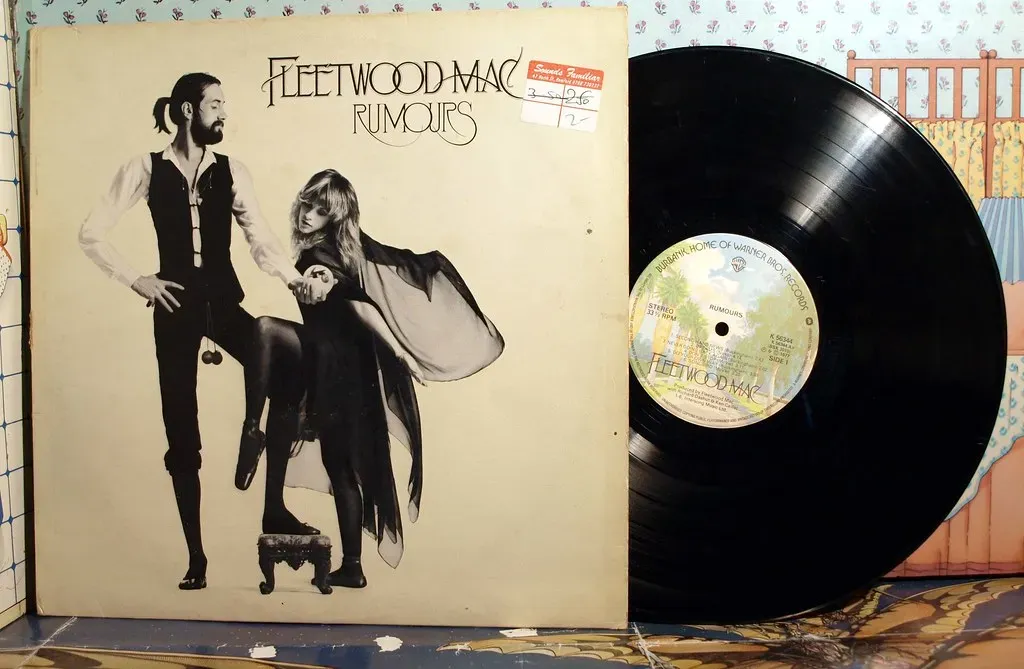
Rumours is one of those records that seems to exist in every household that owns any music at all. Fleetwood Mac’s Rumours was certified 12x Platinum by the RIAA, representing 12,000,000 units. More recent tallies push that even higher, with the album now sitting among the RIAA’s all time top sellers.
Most listeners know Dreams, Go Your Own Way, and Don’t Stop by heart, largely because classic rock radio never stopped playing them. But tracks like Oh Daddy or The Chain’s slower stretches get skipped constantly, even though the album generated Top Ten singles such as Go Your Own Way, Dreams, Don’t Stop and You Make Loving Fun, which is exactly why casual owners rarely venture past those four songs.
2. Michael Jackson, Thriller


Thriller might be the most owned album in American history, and for good reason. It holds roughly 34 million certified units according to RIAA tracking, a number that reflects both its original run and decades of catalog sales layered on top. Everyone has a copy somewhere, whether on vinyl, CD, or as a default streaming playlist.
Yet most people’s actual relationship with Thriller is built on five or six songs: the title track, Beat It, Billie Jean, Wanna Be Startin’ Somethin’, and maybe P.Y.T. The back half, including tracks like The Lady in My Life, rarely gets a spin outside of dedicated fans doing a full album run. It’s a record people know intimately in fragments rather than as a complete listening experience.
3. Pink Floyd, Dark Side of the Moon


Dark Side of the Moon occupies a weird cultural space. It’s simultaneously one of the most celebrated concept albums ever made and one of the most commonly half listened to. The album has sold around 15 million certified units in the United States, and it has spent a staggering number of weeks on the Billboard charts since 1973. Part of the issue is that Dark Side of the Moon was designed as a continuous, immersive experience, not a collection of standalone singles. That’s exactly why casual owners often play Money or Time and then drift off before reaching the quieter, more demanding sections like The Great Gig in the Sky in full context. The album rewards patience that a lot of listeners simply don’t have time for anymore.
4. Boston, Boston


Boston’s self titled debut is the kind of album that ends up on classic rock shelves almost by default. Boston’s self-titled 1976 release began dominating FM radio stations almost immediately upon its release and was certified Platinum within three months, the first of its 17 million sold. That’s an enormous number for a debut record from a band many casual fans couldn’t otherwise describe in detail.
More Than a Feeling gets endless airplay, and Foreplay/Long Time shows up on classic rock compilations constantly. But the deeper cuts, tracks that leaned into the band’s guitar layered studio perfectionism, rarely get requested or streamed on their own. Most owners know this album as “that one song” plus a vague sense that the rest is probably good too.
5. Meat Loaf, Bat Out of Hell


Bat Out of Hell is a theatrical, over the top rock opera that somehow became a fixture in millions of collections. The RIAA credits the album with roughly 14 million certified units, an impressive figure for a record built around sprawling, multi part songs rather than radio friendly three minute singles.
The title track and Paradise by the Dashboard Light get pulled out constantly, especially the latter’s baseball commentary bit, which has taken on a life of its own separate from the album. But songs like All Revved Up with No Place to Go or Heaven Can Wait rarely make it into rotation, even for people who consider themselves fans. The album’s ambition is part of what makes it beloved and part of why full listens are rare.
6. Alanis Morissette, Jagged Little Pill


Jagged Little Pill has been certified for roughly 16 million units, making it one of the defining rock records of the 1990s. It arrived at a moment when confessional, angry, unpolished songwriting suddenly had mainstream commercial appeal, and millions of people bought in.
You’ve Oughta Know, Ironic, and Hand in My Pocket became inescapable radio staples, and they remain the entry point for most people who own the album. Deeper tracks like Right Through You or the hidden closer Your House get far less attention, partly because the record’s emotional intensity is easier to absorb in bursts than in one long sitting. It’s an album many people feel they know well while having actually heard maybe half of it start to finish.
7. Hootie and the Blowfish, Cracked Rear View

Cracked Rear View might be the most underrated entry on this list in terms of sheer scale. The RIAA lists Cracked Rear View at around 21 million certified units, putting it in the same territory as some of the biggest rock records ever released. That’s a staggering number for a debut album from a South Carolina bar band. Hold My Hand, Let Her Cry, and Only Wanna Be with You turned the band into a mid 90s phenomenon, and those three songs are what most people associate with the record entirely. The rest of the album, while solid, rarely gets discussed or streamed with the same enthusiasm, leaving a huge percentage of owners with an incomplete picture of what’s actually on it.
8. Shania Twain, Come On Over


Come On Over is a genuine commercial phenomenon, and the numbers back that up impressively. Come On Over is the best-selling studio album by a solo female artist, the best-selling country album, and one of the best-selling albums of all time, having sold over 40 million copies worldwide, and it was certified 20 times platinum by the RIAA in 2004. Few albums in any genre have reached that level of global saturation.
The album produced multiple hit songs, including three number one singles, and those songs, particularly Man! I Feel Like a Woman!, That Don’t Impress Me Much, and You’re Still the One, dominate how the record is remembered. With 16 tracks total, casual listeners tend to gravitate toward the same five or six radio staples, leaving a substantial chunk of the album rarely explored outside of dedicated country music fans.
9. Adele, 21

21 is the most recent album on this list, but it’s already achieved the kind of ubiquity that took older records decades to build. The RIAA has certified the album at roughly 14 million units, an enormous figure for a record released in the streaming era rather than the CD boom years.
Rolling in the Deep and Someone Like You became inescapable, turning Adele into a global star practically overnight. But songs like Rumour Has It or the more understated ballads deeper in the tracklist get comparatively little attention, even from listeners who consider 21 a personal favorite. It’s a record people feel emotionally connected to, mostly through two or three songs that carried the entire cultural moment.
These nine records share a common thread. They became massive not because every song demanded attention, but because a handful of tracks were strong enough to carry an entire era of radio, retail sales, and cultural memory. Owning one of these albums says something about a listener’s taste and timing. Actually sitting through the whole thing, start to finish, says something different, and it’s rarer than most people would admit.

