There’s something quietly infuriating about the American literary canon. The same names show up on every high school syllabus, the same titles get pressed into students’ hands decade after decade, and meanwhile, dozens of extraordinary novels collect dust in the margins of literary history. Over the past three decades, literary historians have studied many novels that early 20th-century critics deemed unworthy, but their work has too often gone unnoticed by the general public.
When we think of classics, the same dozen names tend to show up again and again. Some of the richest, most soul-stirring works are the ones that didn’t make it into high school syllabi or Netflix adaptations. This list is a small act of rebellion against that pattern. Let’s dive in.
1. Stoner by John Williams (1965)
Here’s a book that almost didn’t survive its own publication. Stoner is a 1965 novel by the American writer John Williams. Published on April 23, 1965 by Viking Press, the novel received little attention on first release, but saw a surge of popularity and critical praise since its republication in the 2000s. It’s the kind of story that shouldn’t work on paper: a Missouri farm boy becomes an English professor and lives a quiet, largely disappointing life. That’s it. That’s the plot.
Stoner only sold 2,000 copies on its initial release and was more or less forgotten, though a literary critic would write an occasional essay full of praise, especially after its return to print in 2003. The New Yorker later called it “the greatest American novel you’ve never heard of.” Honestly, that might still be true for most readers today.
The book has been championed by authors such as Julian Barnes, Ian McEwan, Bret Easton Ellis, and John McGahern. John Williams’s luminous and deeply moving novel is a work of quiet perfection. William Stoner emerges from it not only as an archetypal American, but as an unlikely existential hero, standing, like a figure in a painting by Edward Hopper, in stark relief against an unforgiving world. Few novels have ever managed to make ordinary failure feel this devastating or this beautiful.
2. The Dollmaker by Harriette Arnow (1954)
In a 1971 commentary, the novelist and critic Joyce Carol Oates called The Dollmaker “our most unpretentious American masterpiece.” Most readers of the book would agree with her, and through the years appreciation for the work has grown, though proper recognition has never been given Harriette Arnow. That observation from Oates says everything, really. When one of the greatest living American writers calls something a masterpiece and still nobody knows it, something has gone very wrong.
The Dollmaker is a poignant novel that explores the struggles of the Nevels family, an Appalachian clan who migrates from rural Kentucky to industrial Detroit during World War II. The story centers around Gertie Nevels, a determined mother who dreams of owning a farm, only to find her aspirations thwarted by her husband’s decision to seek employment in the booming war economy. As the family adjusts to life in Detroit, they encounter cultural displacement and economic hardship, facing the harsh realities of urban life that starkly contrast their pastoral roots.
The Dollmaker was nominated for a Pulitzer Prize but lost out to William Faulkner’s A Fable in 1954. In 1984, the novel was made into a television film starring Jane Fonda. Arnow is an important writer who is often overlooked because of her regionalist approach to universal experience. That regionalism is not a limitation. It’s the whole point.
3. True Grit by Charles Portis (1968)
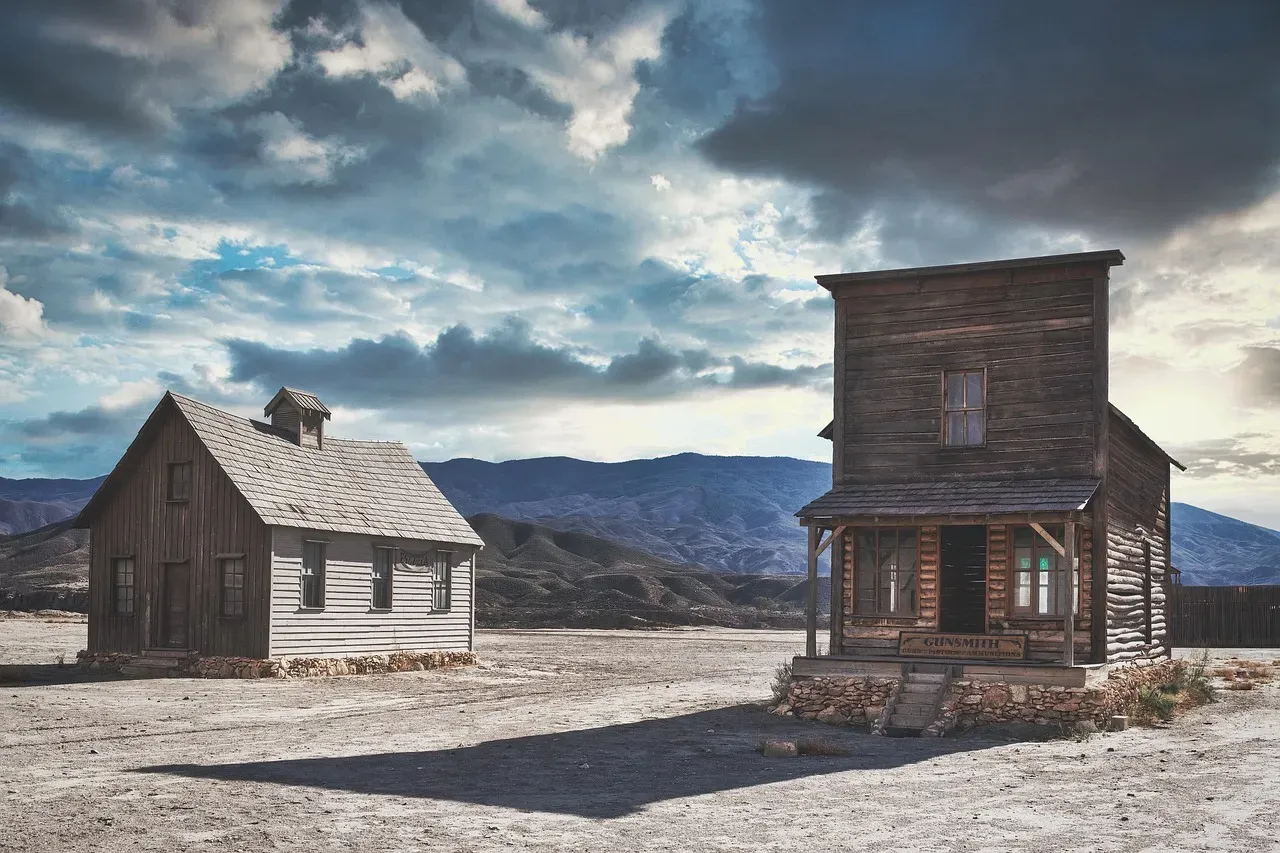
Most people know True Grit from one of its two film adaptations. Far fewer have actually read the novel, which is a genuine shame. There was less consensus in the “classics to add” category, but a number of readers wrote that this 1968 western deserves serious consideration. It’s the rare American novel that manages to be wickedly funny, deeply moral, and genuinely suspenseful all at once, without ever breaking a sweat about it.
The story follows 14-year-old Mattie Ross as she tracks down her father’s murderer through hostile frontier territory. The prose is so precise it almost reads like legal testimony. Recommending it, you often get a quizzical look, but it truly is one of the great American novels for its portrayal of the American West, the American mindset and for the characters, especially Mattie Ross, who is a heroine for the ages.
I think part of what holds True Grit back from canonical status is the western genre itself. Literary gatekeepers have always been suspicious of genre fiction, no matter how brilliantly it’s executed. Portis wrote one of the tightest, most morally complex American novels of the 20th century, and it still gets shelved under “western” rather than “literature.” The injustice is almost funny.
4. Paco’s Story by Larry Heinemann (1986)
This one has a particularly painful backstory. The thing this novel is best remembered for? Being the book chosen over Toni Morrison’s Beloved for the 1987 National Book Award, a decision that rightly shocked the literary world. The comparison is brutal and entirely unfair to Heinemann, whose novel is genuinely powerful in its own right.
Both novels deal with a huge, tragic fact of American history, Vietnam in one case, slavery in the other. Both reveal, through discontinuous narratives, the terrible consequences of those events, the ways in which they prevent ordinary people from living ordinary lives. Both are ghost stories of sorts, invoking the spirits of the dead to lend their narratives a heightened, even surreal dimension: Paco’s Story is narrated by the hero’s comrades in arms, who died during a devastating firefight.
Paco’s Story follows a Vietnam veteran who is the sole survivor of a massacre, haunted by his dead platoon mates as he tries to rebuild a life in a small American town. The narrative voice is unlike almost anything else in American fiction. It deserves to be taught alongside Tim O’Brien’s The Things They Carried, not forgotten in a drawer because Morrison’s masterpiece deserved the award more.
5. The Man Who Cried I Am by John A. Williams (1967)
Honestly, the absence of this novel from any standard American literature curriculum is baffling. The Man Who Cried I Am is a look at 30 years of American history through the eyes of a dying black American writer living in Europe who reflects on his life and on his troubled marriage to a Dutch woman. That bare description doesn’t begin to capture its ferocity or its scope.
The full variety of early American novels is now at our fingertips: novels by women, African Americans, and white men forgotten not because of their race or gender but often because of the radicalism of their art. The novels that form a sort of alternate canon give us an angrier, more socially conscious, and more modern America than can be glimpsed in Cooper, Hawthorne, Melville, and Twain. Williams belongs firmly in that alternate canon.
The novel contains a harrowing fictional document called “The King Alfred Plan,” a government conspiracy to contain Black Americans in the event of a civil uprising. It reads, even today, like a live wire. Its true cultural worth was not recognized upon its publication, and in some ways it still hasn’t been. That’s not a failure of the book. That’s a failure of the culture.
6. A Confederacy of Dunces by John Kennedy Toole (posthumous, 1980)
Few literary origin stories are as heartbreaking as this one. Toole wrote his comic masterpiece in the 1960s, failed to get it published, and took his own life in 1969 at the age of 31. His mother spent 11 years trying to get the manuscript into print. There are quite a number of books that have been generously lathered with Pulitzers, National Book Awards, and National Book Critics’ Circle Awards that no one ever reads or talks about anymore. A Confederacy of Dunces went the other direction: it won the Pulitzer Prize in 1981 and still gets read, but it hasn’t quite earned the canonical gravity it deserves.
The novel centers on Ignatius J. Reilly, a bloated, medieval-obsessed layabout prowling the streets of New Orleans with a contempt for modernity so total it loops back around to being oddly heroic. It is one of the funniest books ever written by an American. Full stop. As does Huckleberry Finn for the nineteenth century, this comic novel captures all the racial, social, moral, and sexual tensions of the twentieth century.
The problem, I think, is that it’s too funny. The literary world has always been slightly suspicious of genuine comedy, as if laughter is somehow a lesser form of truth-telling. Toole proved that wrong. It’s just a shame he wasn’t alive to see it.
7. Butcher’s Crossing by John Williams (1960)
Yes, two John Williams novels on this list. The man is that good and that overlooked. While Stoner gets occasional moments of rediscovery, Butcher’s Crossing remains nearly invisible. John Williams wrote three first-rate novels: Stoner, Augustus, and Butcher’s Crossing. Of the three, Butcher’s Crossing is the one that reads most like a forgotten classic of American literature rather than an academic rediscovery.
Set in the 1870s, the novel follows a Harvard-educated young man who joins a buffalo hunting expedition into the Colorado wilderness. It is a brutal, gorgeous meditation on violence, idealism, and the destruction of the American frontier. Think Moby-Dick, but on land, with fewer footnotes and considerably more blood. Williams didn’t write much compared with some novelists, but everything he did was exceedingly fine. It’s a shame that he’s not more often read today, but it’s great that at least two of his novels have found their way back into print.
The western genre strikes again as a barrier to canonical recognition. There is something deeply ironic about a novel that literally depicts the slaughter of the American frontier being itself slaughtered by the gatekeeping of the literary establishment. According to JSTOR Daily’s Grant Shreve, as the concept of the Great American Novel grew, concrete criteria developed: it must encompass the entire nation and not be too consumed with a particular region, it must be democratic in spirit and form, and its author must have been born in the United States or have adopted the country as their own. Butcher’s Crossing meets every single one of those criteria.
8. Deliverance by James Dickey (1970)

Most people think they know Deliverance from the film. They’re wrong, or at least they’re missing most of the story. The film’s lurid popular history has overshadowed the craftsmanship of Dickey’s taut, meticulous novel. Critics tend to cite disapprovingly its graphic and perhaps hyper-masculine content. Nevertheless, Deliverance is a unique portrait of Southern identity in the crux of history.
Four suburban men take a canoe trip through a river that is about to be flooded by a dam. What happens is brutal, terrifying, and genuinely unforgettable. The novel is not just a survival thriller. It’s a devastating examination of masculinity, nature, and the violence at the heart of the American self-image. Dickey was primarily a poet, and it shows in every line of prose.
The film, released in 1972, essentially buried the book under a layer of cultural shorthand. Say “Deliverance” to someone and they think of one infamous scene, not one of the most formally controlled and emotionally complex American novels of the postwar era. That’s the strange paradox of adaptation: sometimes success destroys the source. The film’s lurid popular history has overshadowed the craftsmanship of Dickey’s taut, meticulous novel.
9. A Lesson Before Dying by Ernest J. Gaines (1993)

Ernest J. Gaines is one of the great unsung giants of American fiction. Scholars read his novels every year and use them in classes often, constantly stunned by entire worlds recreated in one isolated rural setting, and how an opera of love and hate and revenge is played out in the fields and small houses and dusty roads. That is not a small achievement. That is exactly what literature is supposed to do.
A Lesson Before Dying tells the story of a Black man wrongly convicted of murder in 1940s Louisiana and the schoolteacher tasked with helping him die with dignity. It is a novel about what it means to be a man in a society designed to make that impossible. It won the PEN/Faulkner Award and was praised for its emotional depth. It was also a finalist for the Pulitzer Prize in 1994.
Gaines lived in Louisiana for most of his life and wrote about the same stretch of land across nearly his entire career. An important writer who is often overlooked because of a regionalist approach to universal experience. That description, originally written about Harriette Arnow, fits Gaines just as perfectly. Regional in setting, universal in meaning, and still not fully claimed by the canon that should have welcomed him decades ago.
The Books That Got Away
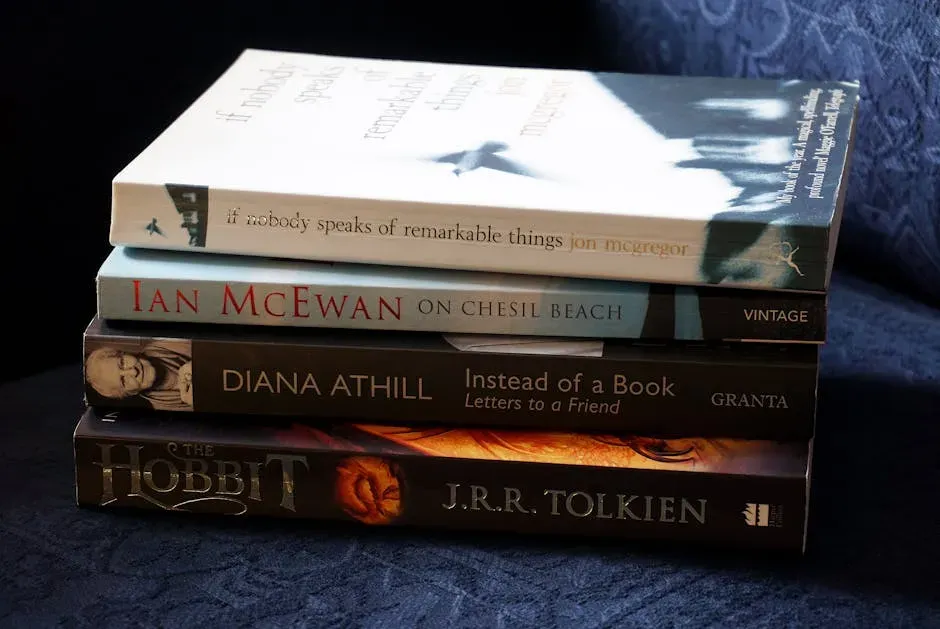
There’s a pattern running through every novel on this list. Some were too regional. Some were too genre-adjacent. Some were too angry, too quiet, or simply too unlucky to land in the right cultural moment. It’s hard to tell, as a reader on the ground, which books will stand the test of time. It can even be hard to tell once time has gone by, because novels and novelists go in and out of fashion, like wide-leg pants, or fringe. Fashion is the enemy of greatness, more often than not.
Classic literature has a shiny halo, putting it on a pedestal that, while no doubt deserving, is not confined to literature written hundreds of years ago. It can be difficult to remember that once upon a time, the classics were current, and more so that our current reads could be future classics. The books on this list are not waiting rooms for canonical status. They have already earned it.
The real question isn’t why these novels aren’t classics yet. The question is what we’re going to do about it. Every reader has the power to build a personal canon that looks nothing like the official one, and honestly, that personal canon is often more alive, more surprising, and more true. So which of these nine would you start with?