Every few years, a film arrives that leaves the industry quietly wondering the same thing: how did this ever get approved? The question isn’t about artistic failure alone. Some of these productions drained studios to the bone, ended careers, and reshaped how Hollywood managed risk for decades after. The greenlight process is notoriously imperfect. When talking about major studios, tens and hundreds of millions of dollars are at stake, so they often greenlight projects while a script is still in development. The results, when everything goes wrong simultaneously, can be spectacular – and not in a good way. These nine films are the ones the industry still brings up, still studies, and still uses as cautionary benchmarks.
Heaven’s Gate (1980)


Few films have left a crater quite as deep as this one. Michael Cimino had an expensive and ambitious vision for the film, pushing it nearly four times over its planned budget. Director Cimino, riding the goodwill of his Oscar-winning “The Deer Hunter,” was given enormous creative freedom by United Artists – and then systematically burned through it. He demanded multiple takes of each scene and shot over one million feet of film, which caused production to fall behind schedule and go over budget by 400 percent.
The film was a significant financial failure, earning just $3.5 million domestically against its $44 million budget, grossing that same amount in its opening weekend and closing after the second week. Cimino’s reputation plummeted and Transamerica sold off the rest of United Artists, effectively ending the studio. The collapse was so total that it permanently altered Hollywood’s relationship with director-driven projects. Its failure contributed to the end of the era of director-driven films in Hollywood, leading to more cautious studio control over productions.
Waterworld (1995)


The production of “Waterworld” became its own kind of disaster movie. According to Hollywood legend and lore, Kevin Costner was enjoying $4,500 per night accommodations after shooting, while the production also endured terrible weather, numerous jellyfish stings, and stuntman Laird Hamilton was lost at sea after his wave runner ran out of gas, drifting into open water for hours. The on-set tension between Costner and director Kevin Reynolds only compounded an already troubled shoot.
The total costs for Waterworld exceeded $300 million and it was perceived as a disaster at the time, despite grossing $264 million worldwide. The film did eventually break even through ancillary revenue streams, but the spectacle of its troubled production made it a lightning rod for Hollywood excess. A single technical mishap on the “Waterworld” set triggered weeks of delays and ballooned costs. It remains a textbook example of a production where no one seemed willing – or able – to hit the brakes.
Battlefield Earth (2000)


It’s rare that a film becomes a cultural punchline so quickly and so thoroughly. “Battlefield Earth” was a passion project of John Travolta, based on the novel by Scientology founder L. Ron Hubbard, and from the outside, warning signs were visible long before cameras rolled. The film bombed so spectacularly that it not only killed its own franchise but destroyed any hope of future sequels. Critics didn’t just dislike it – they treated it as something of a marvel in cinematic failure.
The film swept the Razzie Awards the year of its release, winning in nearly every major category, and it remains a fixture on worst-films-ever lists decades later. The studio, Franchise Pictures, faced a lawsuit from investors who argued the budget had been deliberately inflated. Movies are like houses of cards – if you pull out a single one, the whole thing can fall down. With “Battlefield Earth,” nearly every card fell at once: the script, the casting, the direction, and the marketing.
John Carter (2012)


“John Carter” is, in purely financial terms, one of the most catastrophic decisions in modern Hollywood history. Disney’s 2012 foray into science fiction is remembered for a less than stellar reason: a March 2025 analysis calculated the loss at a staggering $255 million, accounting for production costs, worldwide earnings, and other related expenses. Responsible for leaving the studio with a significant shortfall, the repercussions of the box office failure also led to the resignation of studio boss Rich Ross.
Disney entrusted the sci-fi epic to Andrew Stanton, who had directed animated projects like the masterpiece “Wall-E” but hadn’t made any full-length Hollywood live-action films, and his lack of experience in this medium might have been why “John Carter” had extensive and costly reshoots. Unbeknownst to the filmmakers, Disney was already engaged in discussions to buy Lucasfilm, resulting in Disney not putting enough effort into John Carter’s publicity. The result was a film that felt orphaned before it even opened.
The Lone Ranger (2013)

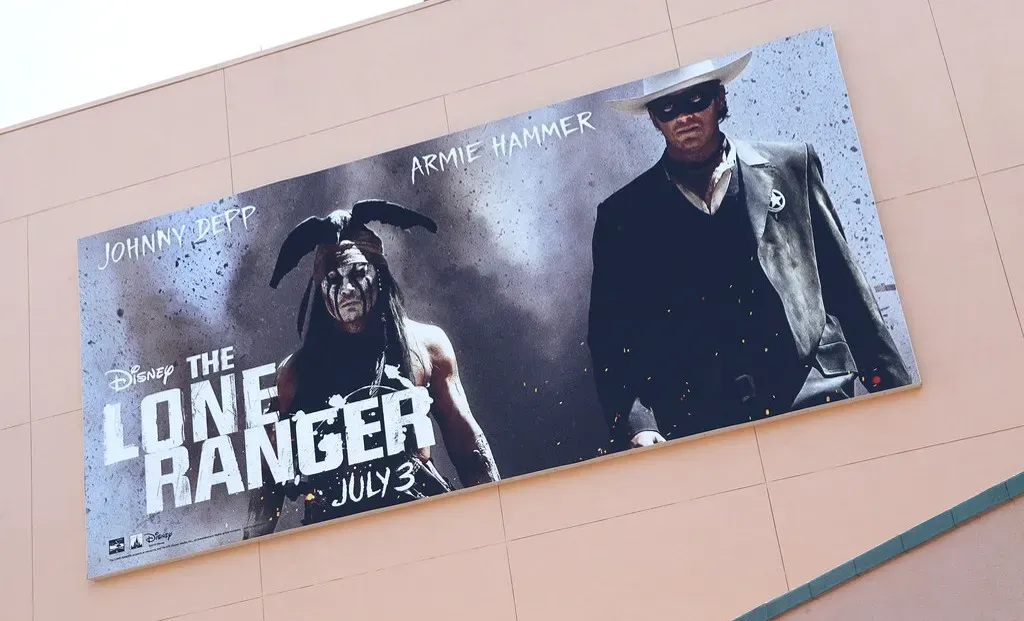
Fresh off the success of the “Pirates of the Caribbean” franchise, Disney and producer Jerry Bruckheimer bet big on a Western revival. The film was lambasted for its bloated length and overreliance on action while also being accused of whitewashing by casting Johnny Depp as a Native American, and it cost roughly $400 million to produce and market while ending up making only $260 million at the worldwide box office. That gap was devastating.
Partner offer

Westerns hadn’t been popular for decades, people were getting tired of Johnny Depp, and that’s not even touching on the negative publicity he received for playing a Native American – add it all together, and it’s no wonder the film lost Disney anywhere between $221 and $263 million. The box office flop certainly didn’t help matters for Disney, arriving just a year after the John Carter disaster. The studio had now failed spectacularly with the genre twice in as many years, a fact that didn’t go unnoticed inside the industry.
Mortal Engines (2018)
“Mortal Engines” had ingredients that looked compelling on paper: a Peter Jackson production credit, a vivid and original world, and a massive budget to bring it all to life. The film was an attempt to ride the wave of success generated by movies based on popular young adult novels, but the wave it was trying to ride had mostly faded by 2018, and it flopped due to audiences’ unfamiliarity with the source material, a crowded release window, and a massive budget it was unable to recoup.
The setting, where gigantic city-like vehicles go to war, was striking, but there wasn’t enough to keep audiences engaged, and it released only weeks before two major box office hits – Aquaman and Mary Poppins Returns – going on to cost Universal anywhere between $133 and $249 million, spelling the end for this burgeoning YA franchise. It’s the kind of miscalculation that makes studio executives revise their whole approach to adapting lesser-known source material.
Batman and Robin (1997)

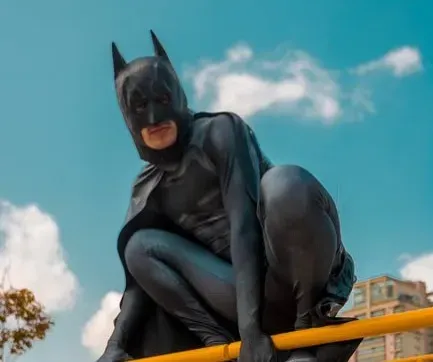
By the mid-1990s, the Batman franchise was a reliable moneymaker, and Warner Bros. kept pushing it forward without seriously questioning whether the creative direction made sense. “Batman and Robin” became the film that broke the entire series. Director Joel Schumacher doubled down on the campy aesthetic of “Batman Forever,” but this time audiences weren’t forgiving. The film was savaged by critics and disappointed commercially, despite having George Clooney, Arnold Schwarzenegger, and Uma Thurman in the cast.
The film bombed so hard it had to cancel the sequel. The Batman franchise went dormant for nearly eight years as a direct result, requiring Christopher Nolan’s complete reinvention with “Batman Begins” in 2005 to restore any audience trust. In hindsight, multiple insiders within Warner Bros. have acknowledged that the tone of the film was a misread of what audiences actually wanted – and a sequel to “Forever” probably should never have been approved without a serious creative reset.
Green Lantern (2011)


Warner Bros. attempted to launch a DC superhero cinematic universe with “Green Lantern,” and the results were dire enough to delay that ambition by several years. The film starred Ryan Reynolds as Hal Jordan, a test pilot who becomes a member of an intergalactic police force, but the combination of an underdeveloped script, heavy CGI reliance, and a muddled tone left critics and audiences cold. Reynolds himself has since been openly candid about the film’s failure, and the studio spent close to $200 million on a production that simply didn’t work.
Green Lantern is firmly among the epic failures that left studios reeling. The film earned a Rotten Tomatoes score well below fifty percent and grossed roughly $220 million worldwide against production and marketing costs that made profitability effectively impossible. It’s one of those projects where industry observers widely agree the script wasn’t ready – and the film proved it. No one in Hollywood sets out to make a bad movie; it’s just so difficult to make any movie, let alone a great one.
The Mummy (2017)


Universal Pictures had a grand plan: launch a shared monster universe, dubbed the Dark Universe, with Tom Cruise headlining a reimagined “The Mummy.” The concept wasn’t inherently flawed, but the execution revealed a studio that had gotten so far ahead of itself building franchise architecture that it neglected to make a coherent film first. The Mummy was among the misguided reboots that studios had to pull the plug on despite big investments and star power. It was a franchise starter that needed a solid foundation, and it simply didn’t have one.
The film grossed around $410 million worldwide, which sounds reasonable, but against its enormous production and marketing costs it was a financial disappointment – and critically, it killed the Dark Universe before a second film could even begin development. Disaster rarely erupts from a single catastrophic event; more often, it’s a slow-motion collapse – a domino effect where one miscalculation triggers a chain reaction of failures. Universal’s attempt to build an interconnected monster franchise from a single underwhelming entry was exactly that kind of domino effect, and every planned sequel quietly disappeared.
The pattern across these nine films is genuinely instructive. Most weren’t greenlit by reckless people. They were approved by experienced executives who had data, precedent, and talented collaborators on their side. What undid them – hubris, rushed development, franchise overreach, market misreads – were problems that good scripts and clear-eyed planning might have caught. The gap between a film that gets made and a film that should have been made is often smaller than Hollywood would like to admit.Partner offer
Planning a trip to Vegas?
Compare hotel rates and show tickets on VEGAS.com.