


Newspapers have shrunk, folded, or gone entirely digital, yet a handful of comic strips have somehow outlasted the very medium that gave them life. Some of these strips are still drawn today, decades after their creators passed away, kept alive by successors who inherited both the artwork and the responsibility of keeping beloved characters believable. Looking at how these strips have endured says something about American pop culture itself, about what readers keep coming back to, panel after panel, decade after decade.
1. Blondie

Chic Young launched Blondie in 1930, and the strip has never really stopped since. The strip chronicles the daily lives of titular character Blondie Boopadoop, a former flapper turned housewife, her husband Dagwood Bumstead, a former heir who’s always late for work, and their two teenage children, Alexander and Cookie. What makes Blondie remarkable isn’t just its age but how it has quietly modernized while keeping its core cast frozen in time.
Though the characters themselves haven’t aged a day, their lingo and accessories have shifted over the years to get with the times, including the slow modernization of their kitchen, the addition of cell phones, and references to Facebook, modern music, and current TV shows. That balancing act between nostalgia and relevance is a big part of why Blondie has stayed in daily rotation for well over ninety years.
2. Gasoline Alley

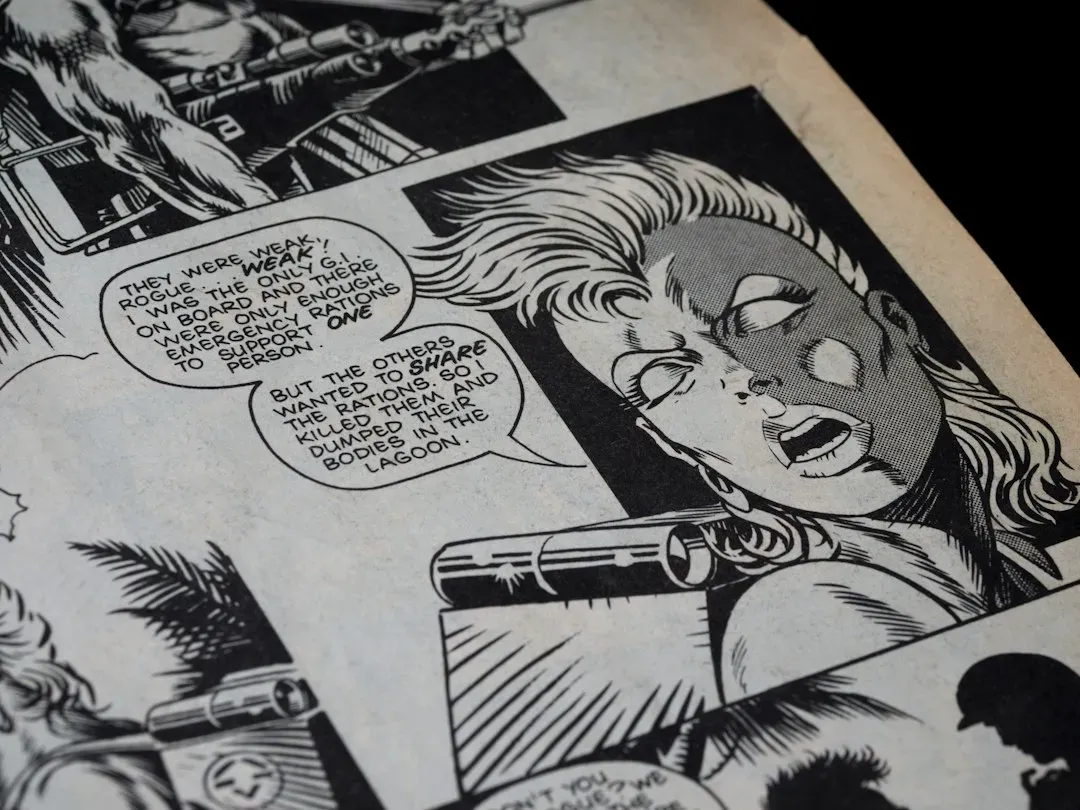
Frank King’s Gasoline Alley debuted in 1918 and did something no strip before it had really attempted: it let its characters grow old in real time. King introduced real-time continuity to comic strips by depicting his characters aging over generations. That single creative choice turned a simple strip about car enthusiasts into something closer to a multigenerational family saga.
Skeezix grew into a child and then a teen and eventually enlisted during World War II, and Walt also aged, married, had more children and then grandchildren. The strip is still running today under cartoonist Jim Scancarelli, and as of a recent count, Walt Wallet is now well over a century old, 124 as of February 2024, while Skeezix has become a centenarian. As one writer summed it up, Scancarelli explains the character’s implausible longevity with a wink, noting simply that “Walt has good genes.”
3. Beetle Bailey

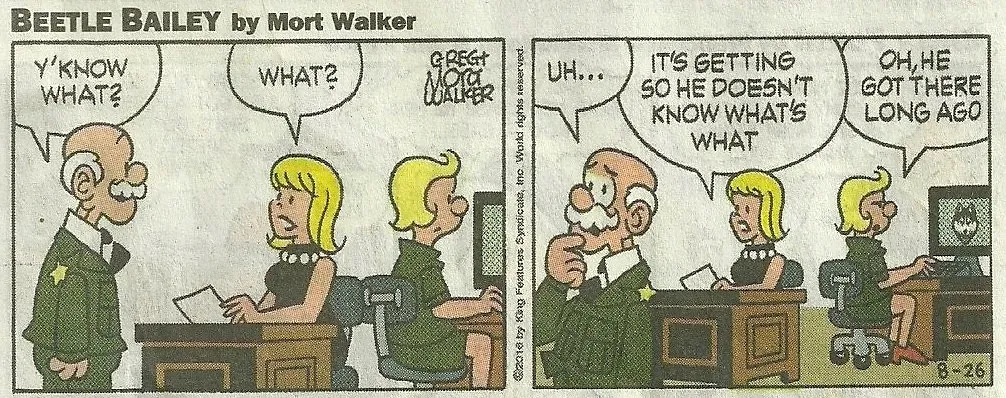
Mort Walker introduced Beetle Bailey in 1950, and it’s become one of the most recognizable military-themed strips in newspaper history. The comic strip chronicles the titular character’s antics at Camp Swampy, which is broadly based on the real-life Camp Crowder in Missouri, where Walker was once stationed. What’s unusual is how personally attached Walker stayed to the strip for nearly seven decades.
Mort Walker was the illustrator for the strip for 68 years, from its inception in 1950 up to his death in 2018, making Beetle Bailey one of the oldest comic strips that was still being produced by its original creator. Since then, his sons Brian, Greg, and Neal Walker are keeping the strip alive following Mort’s death. By 2016, the strip’s reach was already enormous, as it was being syndicated by King Features in 1,800 papers in the United States and the rest of the world.
4. Dick Tracy

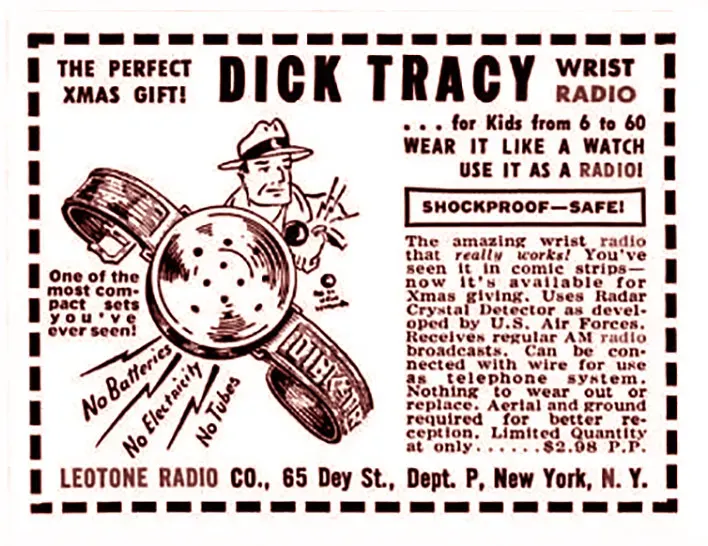
Chester Gould created Dick Tracy in 1931, and the hard-nosed detective became a cultural fixture almost immediately. The square-jawed police detective and his outlandish villains were an instant hit, though journalists would criticize the degree of violence in the strip for decades. Gould stayed at the drawing board for a remarkably long stretch, since Dick Tracy was created by Chester Gould, who wrote and drew the strip until 1977.
The strip’s gadgetry left a real mark on technology culture, as Tracy was so famous, in fact, that his “2-Way Wrist Radio” helped inspire the invention of the cell phone. Even now, Tracy hasn’t fully retired from crimefighting, and the detective continues to fight crime on Earth and occasionally makes a cameo in other comic strips, as he did at Blondie and Dagwood’s 75th anniversary party in 2005.
5. Prince Valiant


Hal Foster’s Prince Valiant is unlike most strips on this list because it never relied on gags or punchlines. Prince Valiant in the Days of King Arthur is an American comic strip created by Hal Foster in 1937. The strip took an unusual visual approach from the start, since it featured Foster’s dexterous, detailed artwork, and Foster eschewed word balloons, preferring to have narration and dialogue in captions.
Partner offer

Nearly ninety years in, the strip is still going, and it is an epic adventure that has told a continuous story during its entire history, with the full stretch of that story now totaling more than 4,600 Sunday strips, appearing weekly in more than 300 American newspapers. Foster stepped away from the art chores decades ago, but it still continues today by other creators since the 1970s.
6. Alley Oop

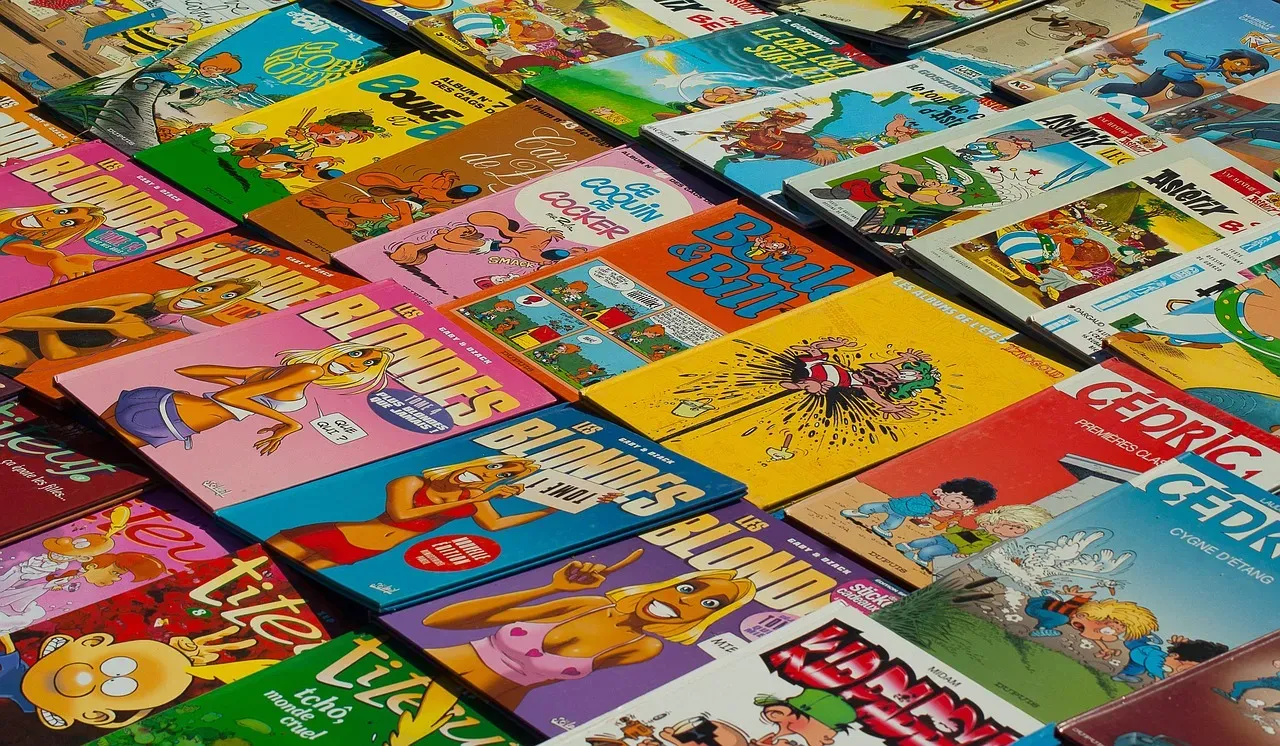
V. T. Hamlin’s Alley Oop has quietly outlasted most of its contemporaries since debuting in 1932, blending prehistoric caveman comedy with, eventually, time travel plots that let the character bounce between eras. It’s the kind of strip that rarely makes headlines yet has remained a fixture on comics pages for close to a century, a testament to how a simple, sturdy premise can carry a feature far longer than flashier competitors. Even devoted comics readers sometimes overlook it, which is part of its low-key charm.
One longtime comics writer admitted as much, noting “I had literally never heard of it until I started this article; still, I assume there must be diehard Alley Oop fans out there somewhere.” That obscurity relative to Blondie or Dick Tracy hasn’t stopped the strip from continuing in syndication, a quiet survivor among louder, more famous peers.
7. Hi and Lois

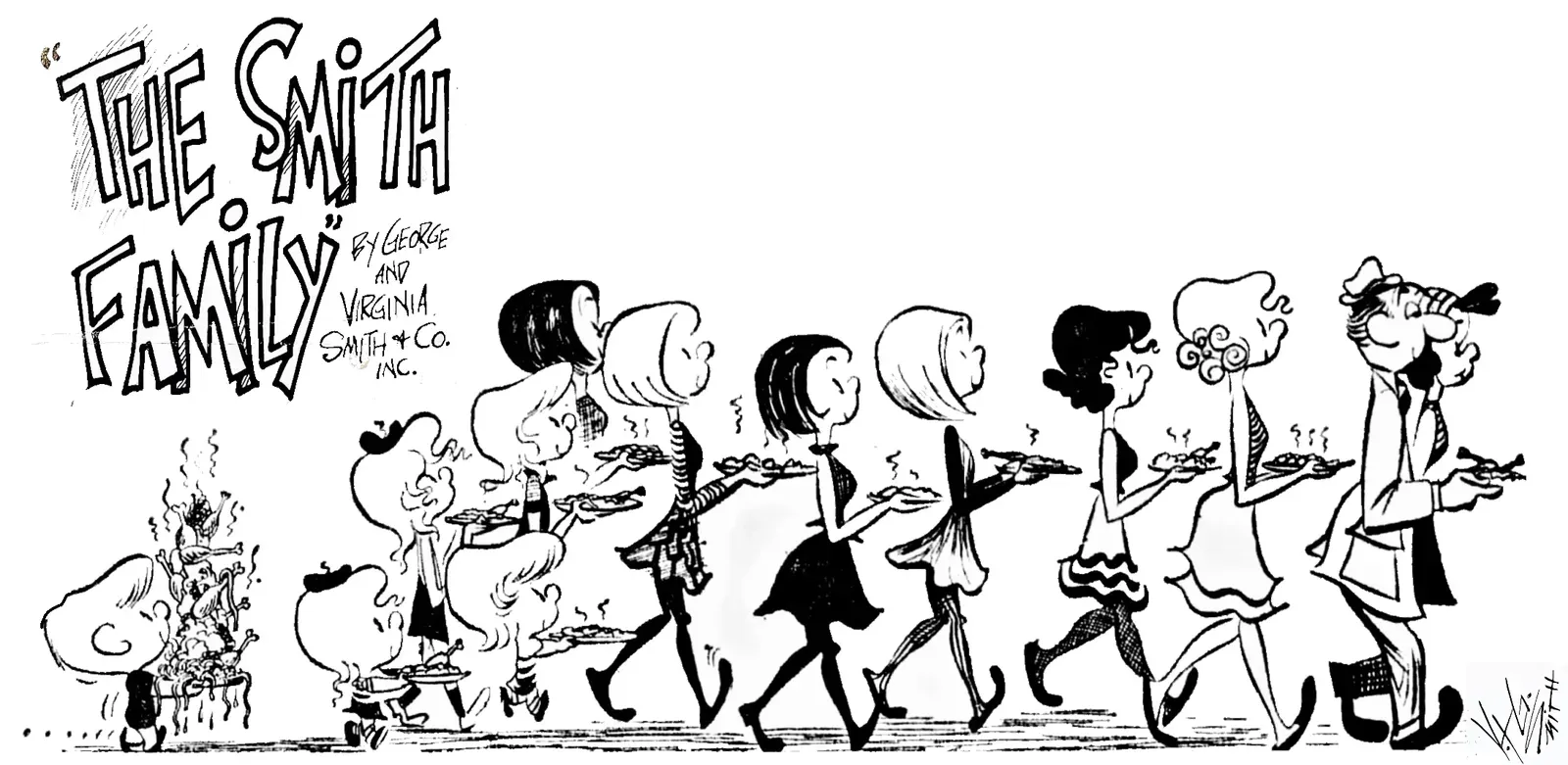
Mort Walker didn’t stop at Beetle Bailey. Hi and Lois began life in 1954 as a spinoff of creator Mort Walker’s Beetle Bailey strip, with the titular Lois Flagston being Beetle’s sister, married to Hiram, or “Hi.” Drawn by Dik Browne for decades, the strip settled into suburban family life as its main subject, tracking a household through changing decades of American domesticity.
The strip adjusted with the times more than once, since in 1980, Lois took up a career in real estate to mirror the trend of stay-at-home moms moving into the workforce. Even small creative choices drew scrutiny in its early years, as editors once told Browne and Walker that there could be no belly buttons drawn in the strip, so Browne responded by including in the next strip a box of navel oranges that were dimpled.
8. Popeye (Thimble Theatre)

![8. Popeye (Thimble Theatre) ([1], Public domain)](https://nvmwebsites-budwg5g9avh3epea.z03.azurefd.net/lasvegasnews/d3a685171b5f463442350f48cdfda70d.webp)
Thimble Theatre started in 1919 as an ensemble strip before a certain squinty-eyed sailor stole the show a decade later and eventually gave the feature its more familiar name, Popeye. The strip has run continuously since its debut, continuous since 1919, making it roughly 102 years old by recent counts. Few characters have made the leap from newsprint to broader pop culture as completely as Popeye did, spinning off into animated shorts, merchandise, and eventually feature films.
What’s kept the strip alive across generations is largely its blend of slapstick humor and oddball supporting characters, a formula that proved durable enough to survive multiple changes in artistic hands. It remains one of the clearest examples of a comic strip character outgrowing the strip that created him, while the source material itself kept chugging along in syndication.
9. Barney Google and Snuffy Smith

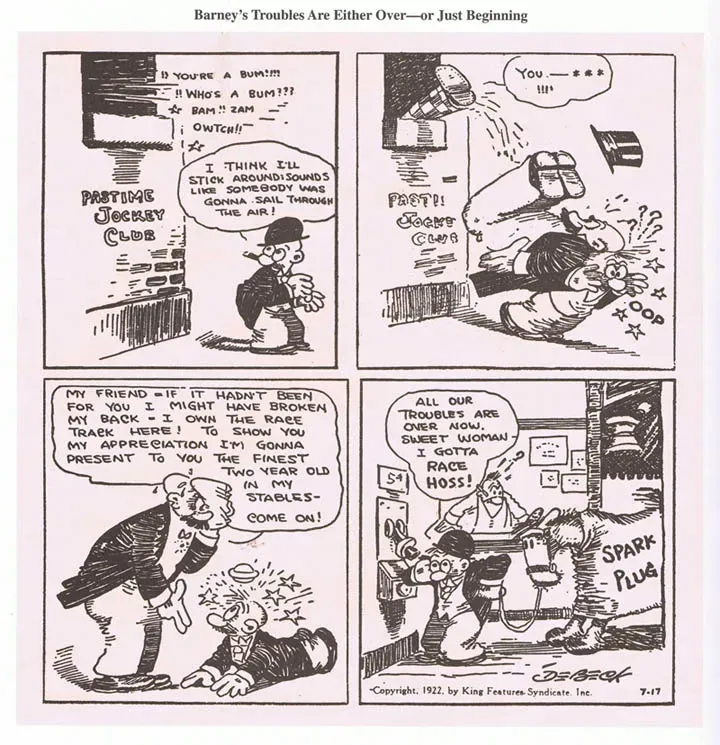
Billy DeBeck’s creation started as Barney Google in 1919 before evolving into the rural comedy centered on Snuffy Smith that most modern readers would recognize. Barney Google and Snuffy Smith has run continuous since 1919, putting its total run at roughly 102 years. The strip’s hillbilly humor and backwoods setting gave it a distinct identity separate from the urban and suburban strips that dominated much of the funny pages.
Despite changing hands multiple times over the decades, the strip has maintained its rural comedic voice, a rare feat given how many long-running strips eventually drift toward blander, more generic humor to stay broadly appealing. Its survival into the 2020s places it among the small handful of strips that have crossed the century mark rather than merely the half-century one.
Taken together, these nine strips reveal a pattern worth noting. The ones that lasted longest generally did one of two things well: they either let their characters age and evolve in ways readers could track over a lifetime, or they built such flexible, low-stakes premises that new writers and artists could keep the machine running long after the original creator was gone. Either approach demanded a kind of institutional patience that’s increasingly rare in a media landscape built for quick turnover, which makes strips like Gasoline Alley and Prince Valiant feel almost like accidental time capsules, still delivering new panels to readers nearly a century after their first appearance.Partner offer
Planning a trip to Vegas?
Compare hotel rates and show tickets on VEGAS.com.


