
What if your favorite song was hiding something – a secret message buried so deep that you’d only find it by flipping the whole track on its head? The idea sounds like the stuff of conspiracy forums and late-night YouTube rabbit holes. Yet the reality is far more fascinating, and sometimes far more absurd, than the legends suggest.
Backmasking is a recording technique in which a message is recorded backward onto a track that is meant to be played forward. It is a deliberate process, whereas a message found through phonetic reversal may be unintentional. Some artists did it for laughs. Others did it as art. A few found themselves dragged into courtrooms over it. The history of backwards messages in music is equal parts creative genius, moral panic, and human psychology gone wild. Let’s dive in.
1. The Beatles – “Rain” (1966): Where It All Began

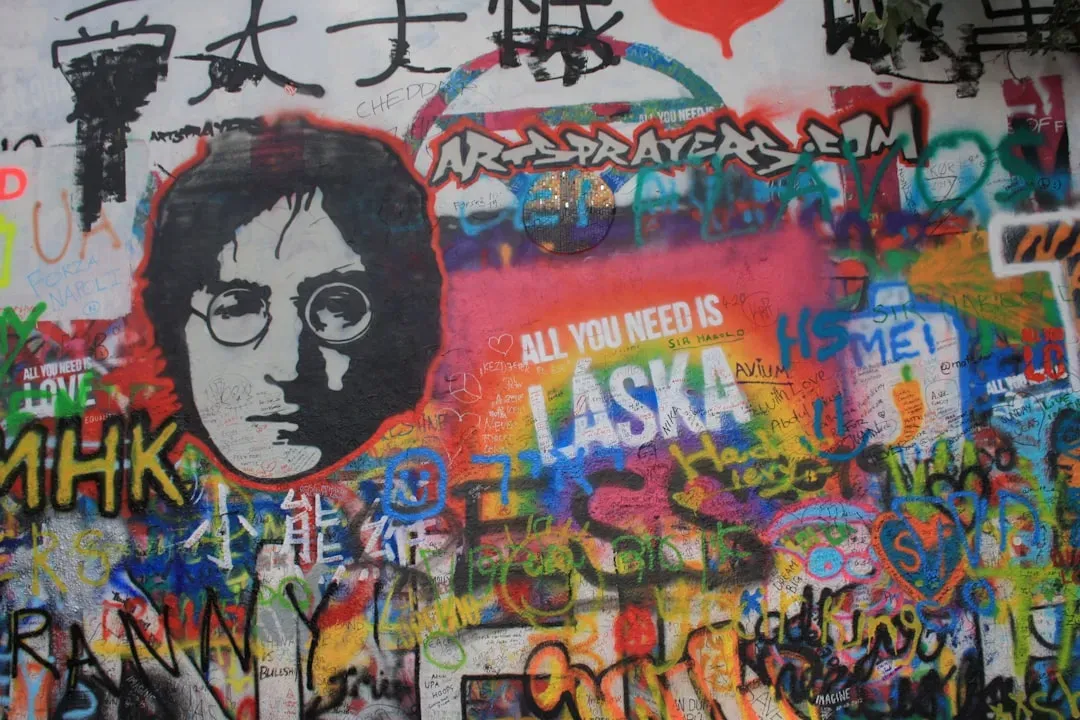
Here’s a surprising truth: the entire backmasking craze that would consume decades of moral outrage traces back to one very stoned evening in 1966. Singer John Lennon and producer George Martin both claimed that they had discovered the backwards recording technique during the recording of 1966’s Revolver, specifically the album tracks “Tomorrow Never Knows” and “I’m Only Sleeping” and the single “Rain.” Lennon stated that, while under the influence of marijuana, he accidentally played “Rain” in reverse and enjoyed the sound. After sharing the results with the other Beatles, the effect was used on tape loops and the guitar solo on “Tomorrow Never Knows” and later on Lennon’s vocals in the coda of “Rain.”
One of the earliest examples of backmasking can be found in The Beatles’ 1966 album “Revolver.” In the song “Rain,” a portion of the vocals was deliberately recorded backward, adding an otherworldly quality to the track. This experimentation laid the groundwork for future artists to explore the possibilities of backmasking in their own music. Honestly, the fact that one of the most controversial phenomena in music history was born from a happy accident is both charming and completely on-brand for the Beatles.
2. The Beatles – “Revolution 9” (1968): “Turn Me On, Dead Man”


The Beatles’ White Album contained an avant-garde track titled “Revolution 9.” The track contained lots of effects and noise, and was noteworthy for how odd it was. In 1969, as the rumors of Paul McCartney’s death were spreading, Revolution 9 became an important piece of evidence to those claiming Paul was dead. A caller to a Detroit radio show explained possible evidence of Paul’s death, and convinced disc jockey Russ Gibb to play Revolution 9 in reverse.
The repeated phrase “number nine” became “turn me on dead man” when played backwards. Listeners called in to the phone lines to voice their opinions, which further spread the rumors. When played in reverse many claim to hear other clues such as the sound of a car crash and someone screaming “Let me out.” The “Paul is dead” conspiracy became one of the most enduring myths in pop culture history, all sparked by a reversed loop on a track most people found nearly unlistenable. Despite being the band’s most unpopular recording, it made history as the longest track The Beatles ever officially recorded at eight minutes and twenty-two seconds.
3. Led Zeppelin – “Stairway to Heaven” (1971): The Most Infamous Backmasking Accusation

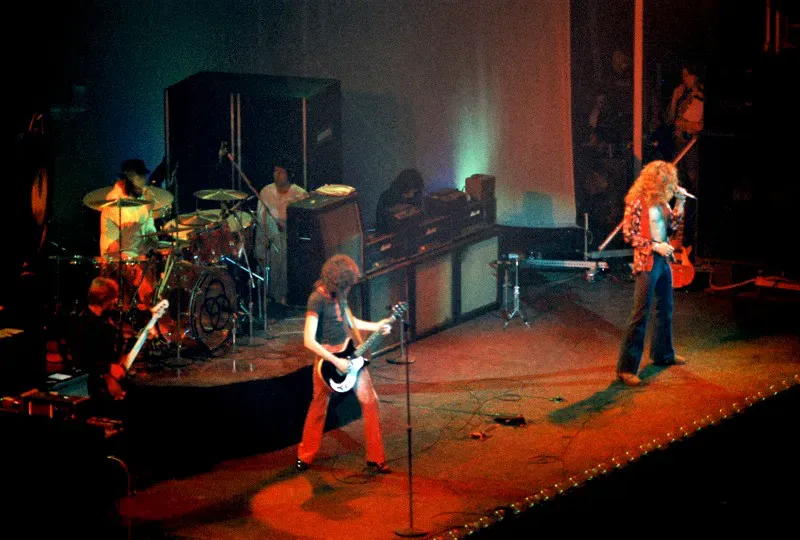
Stairway to Heaven might be rock’s most infamous backmasking tale. It all started in 1981 when Christian DJ Michael Mills began playing the track backwards on his radio show, claiming he’d uncovered something truly sinister lurking beneath those iconic chords. The supposed reversed section falls during the line about a “bustle in your hedgerow,” and many swore they could hear references to Satan buried in the guitar and vocals.
James Walker, president of Christian research group Watchman Fellowship, states that “You could take a Christian hymn, and if you played it backwards long enough at different speeds, you could make that hymn say anything you want to”; Led Zeppelin publicist BP Fallon concurs, saying “Play anything backwards, and you’ll find something.” That really says everything. Audio engineer Evan Olcott says that messages by artists including Queen and Led Zeppelin are coincidental phonetic reversals, in which the spoken or sung phonemes form new combinations of words when listened to backwards. In other words, your brain is doing the heavy lifting here, not Jimmy Page.
4. Queen – “Another One Bites the Dust” (1980): The Marijuana Mystery


In the early 1980s, Queen was accused of hiding a reversed message in their song “Another One Bites the Dust.” Christian evangelists claimed that when played in reverse the lyrics “another one bites the dust” become “It’s fun to smoke marijuana.” Some believed since the song had other strange effects on it, it was possible the band had purposely used backmasking to hide the pro-marijuana message.
A spokesperson for Hollywood Records denied that the song contained a hidden message. The message is widely considered to be unintended. Many cite this song as an example of phonetic reversal, where a word when reversed, sounds like another word. Let’s be real – if Freddie Mercury wanted to endorse marijuana use, he probably wouldn’t have gone to the trouble of hiding it backwards in a song. The man was never exactly shy about self-expression.
5. Pink Floyd – “Empty Spaces” (1979): The Congratulatory Easter Egg

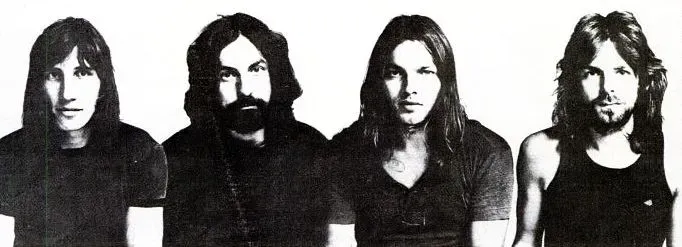
Unlike most entries on this list, Pink Floyd’s hidden message was fully intentional – and genuinely funny. Here’s one that’s actually intentional. When reversed, a voice in “Empty Spaces” clearly says, “Congratulations. You have just discovered the secret message.” It’s a playful Easter egg from the band, poking fun at conspiracy seekers and fans obsessed with decoding hidden meanings behind their iconic album The Wall.
Here, listeners are greeted with a message that’s as puzzling as it is amusing: “Congratulations. You have just discovered the secret message. Please send your answer to Old Pink, care of the Funny Farm, Chalfont…Roger! Carolyne’s on the phone!” On the surface, it’s a playful nod to their fans, a hidden easter egg in the vinyl era’s digital treasure hunt. The mention of “Old Pink” and “Funny Farm” could be an inside joke, referencing band dynamics or perhaps an allusion to their former bandmate Syd Barrett’s struggles. Smart, layered, and surprisingly touching when you know the context.
6. Slayer – “Hell Awaits” (1985): A Deliberate Descent Into Darkness


While Pink Floyd used backmasking for a bit of a laugh, Slayer cranked the dial to eleven and created what might be the most deliberately sinister reversed message in heavy metal history. No accidents or misinterpretations here – these thrash legends knew exactly what they were doing. Drop the needle on Slayer’s 1985 album and you’re immediately thrust into a minute of unsettling sonic murk. Play that intro backwards, though, and something truly chilling emerges – a demonic voice repeating “Join us” a whopping 45 times, building in volume like a gathering horde until it culminates with an ominous “Welcome back.”
The band’s vocalist, Tom Araya, said that they used it just “solely for effect.” So much for secret satanic recruitment. What makes it so creepy, though, is that the track already has dark thrash tones and lyrics that centre around falling deeper and deeper into the pits of hell, so it’s not like they were masking their message, per se. Slayer essentially hid a devil’s whisper inside a song that was already screaming about the devil. Subtle it is not.
7. Judas Priest – “Better by You, Better Than Me” (1978): The Courtroom Case That Shook Music

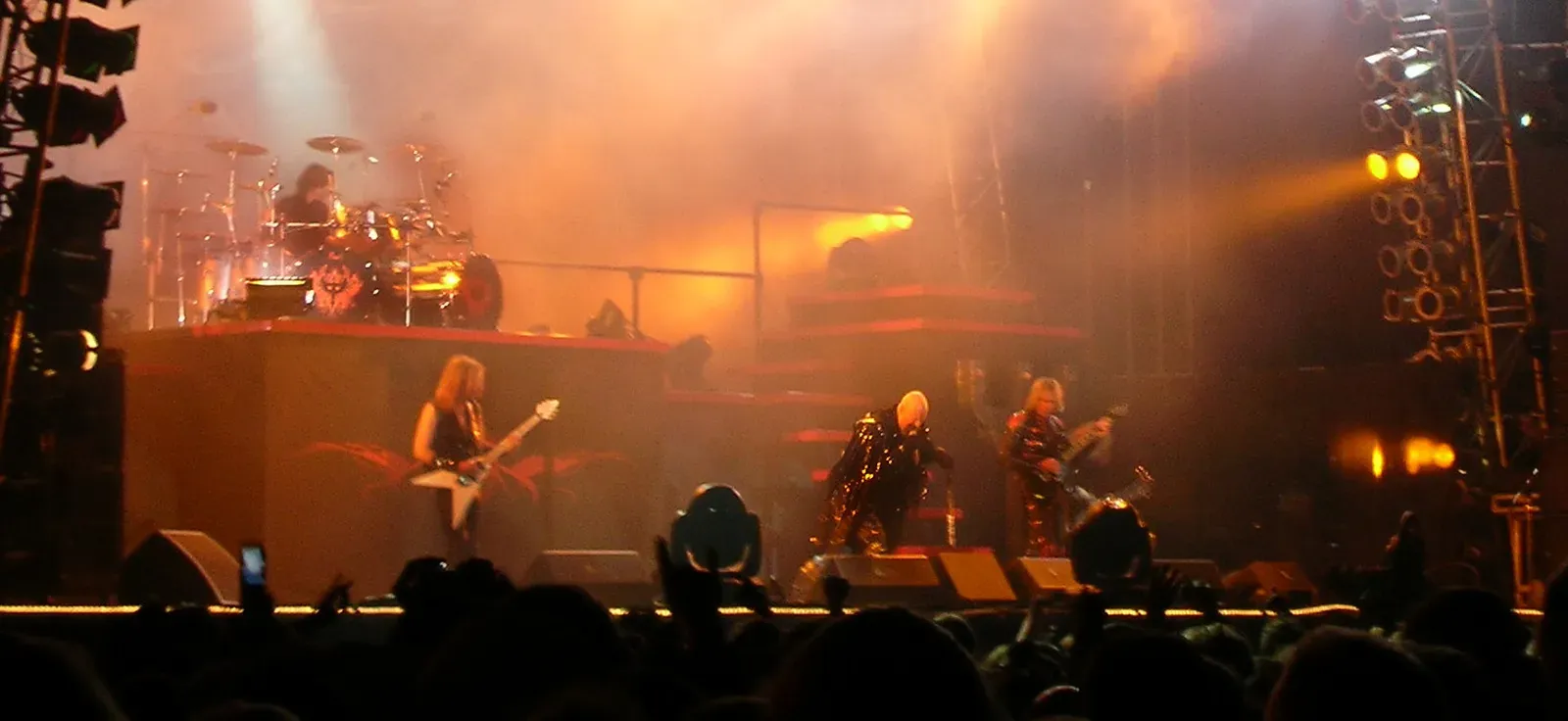
On December 23rd, 1985, two teenagers in Sparks, Nevada, shot themselves, one of whom succeeded in killing himself, the other living long enough to blame the episode on heavy metal music. The parents of these unfortunate teenagers became convinced that backmasking in the music of the heavy metal band Judas Priest was to blame. In a multi-million dollar lawsuit, the families of these teenagers asserted in a Nevada courtroom that subliminal messages were placed into Judas Priest’s music that forced the teens to attempt suicide.
The lawsuit claimed that the 1978 Judas Priest album Stained Class contained hidden messages, including the forward subliminal words “Do it” in the song “Better by You, Better than Me.” The case was dismissed by the judge for insufficient evidence of Judas Priest’s placement of subliminal messages on the record, and the judge’s ruling stated that “The scientific research presented does not establish that subliminal stimuli, even if perceived, may precipitate conduct of this magnitude. There exist other factors which explain the conduct of the deceased independent of the subliminal stimuli.” Judas Priest members commented that if they wanted to insert subliminal commands in their music, messages leading to the deaths of their fans would be counterproductive, and they would prefer to insert the command “Buy more of our records.”
8. ELO – “Secret Messages” (1983): The Ultimate Trolling of a Moral Panic


If Pink Floyd’s Easter egg was witty, Electric Light Orchestra’s entire album response was a masterclass in artistic trolling. Secret Messages, as its title suggests, is littered with hidden messages in the form of backmasking, some obvious and others less so. This was Jeff Lynne’s second tongue-in-cheek response to allegations of hidden Satanic messages in earlier Electric Light Orchestra LPs by Christian fundamentalists, which led to American congressional hearings in the early 1980s.
The band had been previously accused of hiding satanic messages in earlier albums, so they decided to plant several messages as a joke in response. A few of the messages: “Welcome to the show. Hup two three four. Time after time. Plant a tree. Look out there’s danger ahead.” Additionally, earlier copies of this album also included a spoof warning sticker which includes the message “this recording contains secret backwards messages.” In the inner page of the booklet there is a Morse Code message which reads ELO! The whole project is a love letter to absurdity.
9. Missy Elliott – “Work It” (2002): Backmasking Owned Out Loud


Most backmasking stories are about artists being accused of hiding something. Missy Elliott flipped the script entirely and made the reversed message the actual point of the song. When the gibberish is played in reverse, it says “I put my thing down flip it and reverse it.” Missy sampled the previous line of the chorus and reversed it. In the same song at around 2:08 Missy says “Listen up close while I take you backwards” followed by the reversed message “Watch the way Missy like to take it backwards.”
This is backmasking used not as conspiracy bait or moral provocation, but as pure creative swagger. She literally tells you she’s reversing the track, then does it, then hides confirmation of what she did inside the reversal itself. It’s a kind of sonic riddle that rewards the curious listener. Artists have used backmasking for artistic, comedic, and satiric effect, on both analogue and digital recordings. It has also been used to censor words or phrases for clean releases of explicit songs. Missy’s version was something more rare: a genuine creative statement hiding in plain backwards sight.
The Psychology Behind What We Hear

Here’s the thing that makes backmasking so endlessly debatable: our brains are almost too good at finding patterns. Pareidolia is defined as the psychological phenomenon where the brain sees a familiar pattern, such as a language or an image, where no pattern exists. The Rorschach inkblot test takes advantage of this phenomenon when mentally evaluating people based on the images they see in the random patterns of ink. When it comes to pareidolia with sounds, a listener could falsely perceive words that are not intentionally inserted in order to make sense of what is being heard when a song is played forward or backwards.
Eric Borgos of audio reversal website talkbackwards.com states that “Mathematically, if you listen long enough, eventually you’ll find a pattern”, while Jeff Milner recounts, “Most people, when I show them the site, say that they’re not able to hear anything, until, of course, I show them the reverse lyrics.” That last observation is key. Once you’re told what to hear, you hear it. It’s the audio version of not being able to unsee something. Academic scholars and law enforcement disproved these conspiracies in the 1990s, and today the idea of backmasking-induced satanic mind control is considered a wacky legend of the past.
The Legislative Fallout: When Governments Got Involved

Since at least the early 1980s, Christian groups in the United States alleged that backmasking was being used by prominent rock musicians for Satanic purposes, leading to record-burning protests and proposed anti-backmasking legislation by state and federal governments during the 1980s, as part of the Satanic panic movement of the time. It seems almost impossible now, but governments were genuinely debating whether reversing a vinyl record was a public health crisis.
Legislation passed by California in 1983 stated that distribution of records with undeclared backmasking was an invasion of privacy, and distributors could be fined. A 1983 Arkansas law declared that records with backmasking must include a warning sticker: “Warning: This record contains backward masking which may be perceptible at a subliminal level when the record is played forward.” However, this bill was denied by Governor Bill Clinton and returned to the state senate. The cultural anxiety around rock music in the 1980s was so extreme that it required actual politicians to weigh in. It’s hard to say for sure, but one imagines they had better things to do.
Backmasking remains one of the strangest intersections of art, psychology, and social panic that popular music has ever produced. Some messages were genuinely intentional – creative jokes, artistic statements, or clever provocations. Others were pure coincidence, shaped into meaning by minds determined to find something scandalous. The total number of known artists that have used backmasking to put messages in their music is somewhere around seventy-five – and yet the vast majority of the outrage was directed at messages that simply weren’t there.
The next time a song sounds strange played forward, maybe don’t flip it around. Or maybe do. What would you hear – a hidden message, or just your own imagination filling the silence?