We trust textbooks. From the moment a teacher places one in your hands, it carries a kind of quiet authority – the weight of settled knowledge, handed down by experts, checked and rechecked. That authority is, honestly, part of what makes learning work. Without it, every classroom would dissolve into endless debate about the basics.
The problem? That trust has sometimes been catastrophically misplaced. A misplaced decimal point, a lazy translation, an oversimplified diagram – and suddenly an entire generation learns something that simply is not true. What follows are nine times a textbook error wormed its way into how we think, feel, and believe. Some of these will surprise you. A couple might genuinely unsettle you. Let’s dive in.
1. The Spinach Iron Legend That Fooled Generations

Here is the story most of us heard at some point: a German scientist in the 1800s misplaced a decimal point in a food analysis, making spinach appear to contain roughly ten times more iron than it actually does. It appears to date soon after 1870 when Dr. E. von Wolff published food analyses showing spinach to be exceptionally rich in iron, a figure that was repeated in many generations of textbooks. That exaggerated number quietly snowballed from one textbook into the next, decade after decade, and eventually a cartoon sailor started squeezing open tin cans for his superpower snack.
The reality is even stranger. The legend of spinach as a rich source of iron was already circulating in the 1860s, more than thirty years before the supposed decimal error. Furthermore, there is no clear evidence that a decimal error occurred at all, and the overestimation is more likely the result of methodological errors and a mix-up between data from dry and fresh spinach. So the story about the misprint is itself a kind of myth, built on top of an earlier myth. There is only an academic urban legend, and by “debunking” it, we are creating a new shared delusion. Layers on layers.
2. The Martian Canals That Were Never There

Few misprints have fired the human imagination quite like this one. During the planet’s “great opposition” of 1877, Italian astronomer Giovanni Schiaparelli observed a dense network of linear structures on the surface of Mars, which he called canali in Italian, meaning “channels,” but the term was mistranslated into English as “canals.” That single word swap changed everything. The Italian “canali” were translated into English as “canals,” which are artificial water courses, as opposed to “channels,” which are natural ones, and surely a more suitable translation.
During the 1894 opposition, the idea that Schiaparelli’s canali were really irrigation canals made by intelligent beings was first hinted at, and then adopted as the only intelligible explanation, by American astronomer Percival Lowell and a few others. Lowell built an entire observatory in Flagstaff, Arizona, and published three books championing the idea of a dying Martian civilization. The last popular speculations about canals were finally put to rest during the spaceflight era beginning in the 1960s, when visiting spacecraft such as Mariner 4 photographed the surface with much higher resolution than Earth-based telescopes, confirming that there are no structures resembling “canals.” One mistranslated word. Decades of science fiction, policy thinking, and public fascination.
3. The Atom That Textbooks Called Indivisible

For generations, chemistry students everywhere opened their textbooks to a comfortingly simple picture of reality: the atom was the smallest thing there was. Early chemistry textbooks taught that atoms were indivisible, the smallest building blocks of matter. This idea persisted even after scientists discovered electrons, protons, neutrons, and eventually quarks. Think about that for a moment. The corrected science was already out there, proven and published, and the old claim kept getting printed anyway.
This is not a minor footnote. The belief in atomic indivisibility shaped how people thought about chemistry, matter, and the fundamental structure of the universe. The stubbornness of this misprint shows how tough it is to update core scientific concepts in educational materials. It is a bit like a map that still shows a country that no longer exists – technically wrong, widely distributed, and quietly misleading thousands of students per year.
4. The Brain That Could Never Heal Itself

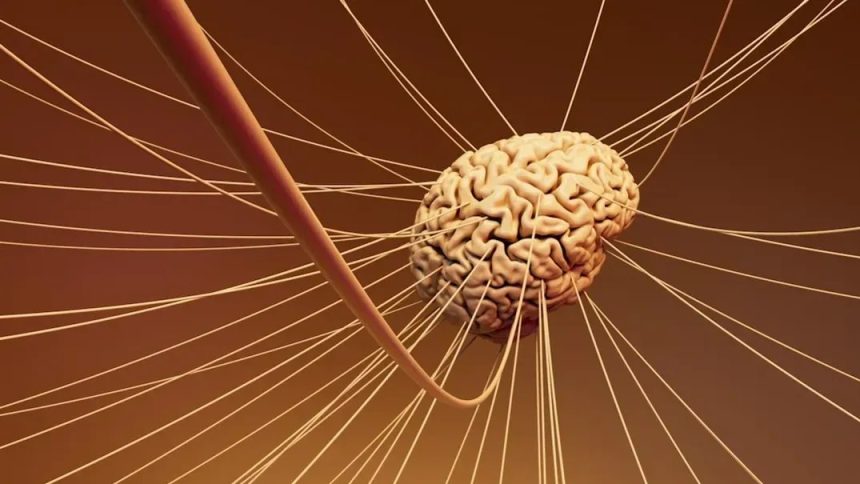
For most of the 20th century, biology students learned that neurons, once damaged, could never regenerate. This grim pronouncement discouraged research into brain repair and recovery. Imagine being a young neuroscientist, full of curiosity, told on day one that the brain is essentially a one-way street to decline. How many research paths were quietly abandoned because the textbook said so?
Studies since the 1990s have shown that neurogenesis, the birth of new neurons, does happen in parts of the adult brain, such as the hippocampus. This discovery has transformed neuroscience, fueling hope for treatments for injuries and diseases once thought irreversible. The field of brain recovery research is flourishing today precisely because scientists started questioning what the textbook declared settled. Outdated textbook claims can slow down scientific breakthroughs and medical advances. In this case, years of potential progress may have been quietly shelved.
5. Gravity as a “Pulling Force”
Open almost any school physics textbook and you will find gravity described as a force that pulls things together. It is a clean, intuitive image. It is also, strictly speaking, not quite right. Physics textbooks often describe gravity as a “pulling force,” something that yanks objects toward one another. Since Einstein’s general relativity, scientists have understood gravity as the curvature of spacetime – masses bend space, and objects follow those curves. These are not the same thing, and the difference matters enormously as you move deeper into physics.
Partner offer
This nuanced understanding rarely makes it into schoolbooks, where the force metaphor is easier to grasp. The over-simplified explanation can leave students with big gaps when they encounter more advanced physics, making general relativity seem even more alien than it already is. Honestly, I think this one is almost forgivable – it is genuinely hard to explain curved spacetime to a twelve-year-old. Still, the downstream effects on how people conceptualize the universe are real and lasting.
6. The 206 Bones That Are Not Always 206

Every biology student has drummed it into memory: the human body has 206 bones. It appears on classroom posters, in quizzes, in medical entrance exams. It is treated as a simple, clean, unassailable fact. At birth, humans have around 270 bones, many of which fuse together as we grow. Even adults can have a different number of bones due to tiny variations, sometimes extra ribs or small bones in the hands and feet.
Yet, the number 206 appears as an unquestioned fact in countless textbooks and classroom posters. The truth is that 206 is a useful average, not a universal constant. It is the kind of simplification that makes teaching easier while quietly teaching something imprecise. To be fair, it is a reasonable shorthand. To be accurate, the human skeleton is more variable than the textbook version of it suggests – and that variability actually matters for things like forensic identification and clinical diagnosis.
7. The Indiana Legislature That Nearly Redefined Pi
This one reads like a prank, but it really happened. In one of the quirkiest tales in math history, the Indiana state legislature nearly passed a bill in 1897 declaring that pi equals 3.2. This wasn’t just a typo in a schoolbook – it was almost a law. The error stemmed from a misunderstanding by an amateur mathematician, and though the bill never became law, it was taken seriously enough to reach the state senate. Let that sink in. There was a real moment when American lawmakers came very close to legislating the value of a mathematical constant.
While this particular error was caught before it reached print in any official textbook, it illustrates something profound about the relationship between authority and fact. When a claim is endorsed by an institution, whether a government or a publisher, people stop questioning it. The bill was only stopped at the last moment because a mathematics professor happened to be present in the gallery that day. It’s hard to say for sure what would have happened to physics and engineering education in Indiana if it had passed, but the imagination recoils at the thought.
8. The Eskimo Snow Words That Linguists Invented
You have almost certainly heard it. Eskimos have fifty, or a hundred, or two hundred words for snow, depending on who is telling the story. It became one of those facts that appears in textbooks, TED talks, and dinner party conversations alike. This claim made its way into textbooks thanks to early 20th-century linguists who exaggerated the richness of Inuit language. The tale was used to bolster theories about linguistic relativity, the idea that language shapes how we think.
Real research shows Inuit languages have several words for different types of snow, not the countless ones often claimed. Linguist Laura Martin traced how this myth gained traction, especially after it was cited uncritically in academic and popular works. The original grain of truth, that Inuit languages do have multiple terms for snow-related concepts, got inflated through careless citation into something almost mythological. Even though it has been debunked, the story continues to pop up in classrooms and trivia nights. It is a powerful example of how a catchy misprint can outlast the facts.
9. Newton’s First Law, Described Wrong in Twelve Textbooks at Once

This is perhaps the most quietly alarming entry on this list, because it involves not one rogue publication but a systematic failure across an entire tier of education. A physicist at North Carolina State University found problems when he scoured 12 science textbooks. John L. Hubisz discovered mistakes that included inaccurately describing Newton’s first law of motion and basic scientific theory. Newton’s first law is foundational. It is literally where classical mechanics begins. Getting it wrong is a bit like a cookbook misprinting the definition of heat.
Twelve of the most popular science textbooks used at middle schools nationwide were found riddled with errors. Researchers compiled 500 pages of errors, ranging from maps showing the equator passing through the southern United States to a photo of singer Linda Ronstadt labeled as a silicon crystal. These were not fringe publications. These were the books sitting on desks in classrooms across the country. The textbook adoption process can be dictated by a few large states, books can take years to complete and are typically in schools for a decade or longer, and the quirky nature of approval means that sometimes outright falsehoods are presented as facts. The system, by its very design, allows errors to persist long after they have been identified.
Taken together, these nine cases tell a single uncomfortable story. The problem is not that humans make mistakes. That part is normal, even necessary. The real issue is what happens when a mistake gets laminated between hard covers and handed to a child as truth. Textbooks carry authority that newspapers, websites, and even teachers do not fully share, and that authority makes errors especially sticky. The next time you read something and feel the quiet certainty that comes from a printed page, it might be worth pausing for just a moment. Even the most trusted source in the room was written by someone who could, against all intentions, have gotten it wrong.
Which of these nine surprised you the most? Let us know in the comments below.
Partner offer
Planning a trip to Vegas?
Compare hotel rates and show tickets on VEGAS.com.