Most people picture a calculator as something plastic, battery-powered, and decidedly modern. The reality is that human beings have been building sophisticated computing devices for thousands of years, long before electricity was even a concept. Some of these tools were so cleverly engineered that their underlying logic still shows up in the machines we use today.
What’s striking isn’t just that these devices existed. It’s how much they could actually do. Several of them handled operations that, by modern assumptions, shouldn’t have been possible without microchips or at least a printing press. Here are six ancient calculators that deserve far more credit than they typically receive.
The Abacus: More Than Just Beads on a Frame
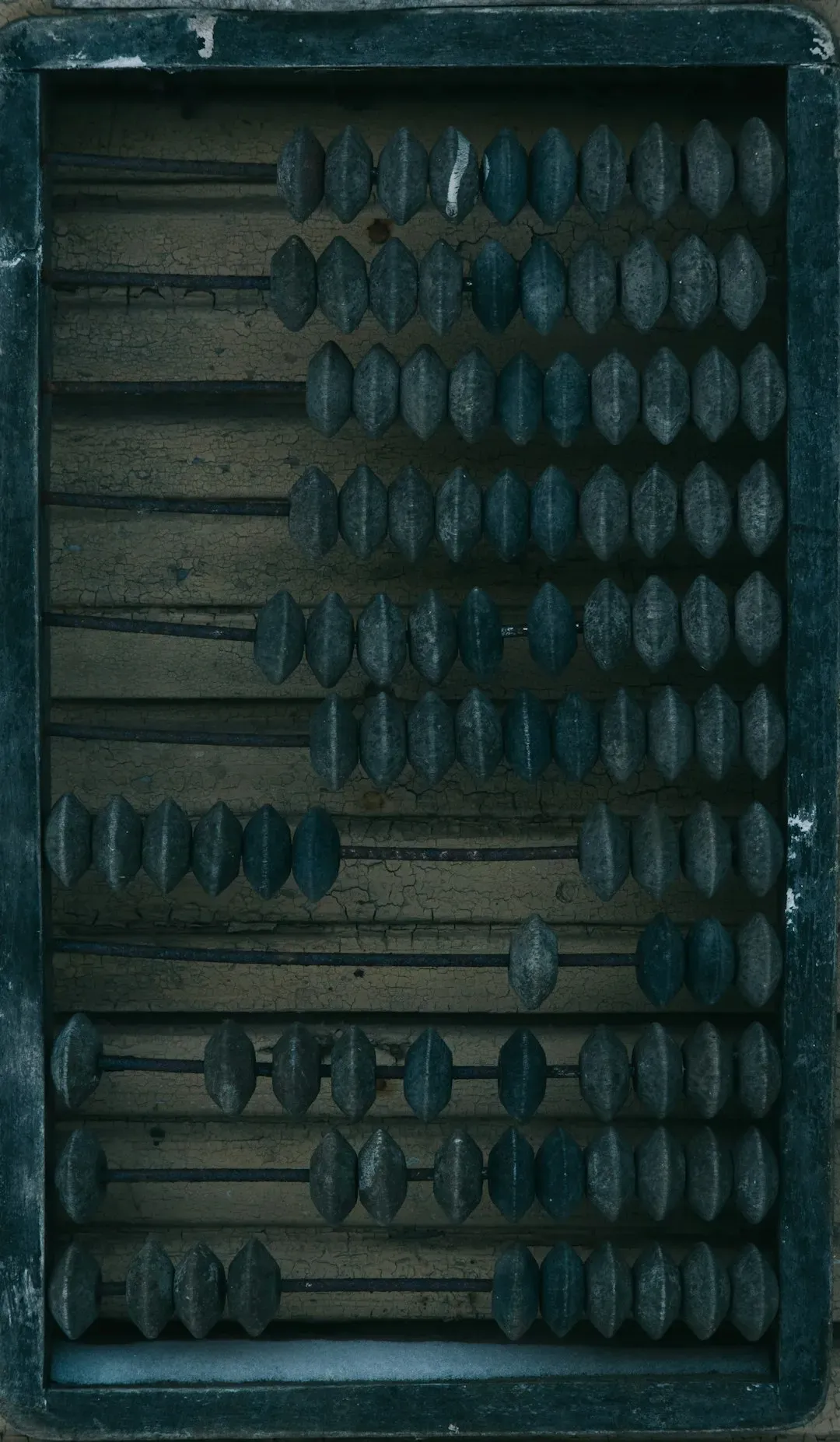
Abacus-like devices are first attested from ancient Mesopotamia around 2700 B.C., and the tool spread through the ancient Near East, Europe, China, and Russia, centuries before the adoption of the written Arabic numeral system. That’s a remarkably long run for any technology. Its staying power wasn’t accidental.
The abacus can be used to perform the mathematical functions of multiplication, division, addition, subtraction, square root, and cube root. That’s a wider range of operations than most people assume. In the ancient world, abacuses were a practical calculating tool, widely used in Europe as late as the 17th century, but fell out of use with the rise of decimal notation and algorithmic methods.
The Antikythera Mechanism: A Gear-Driven Computer from Ancient Greece
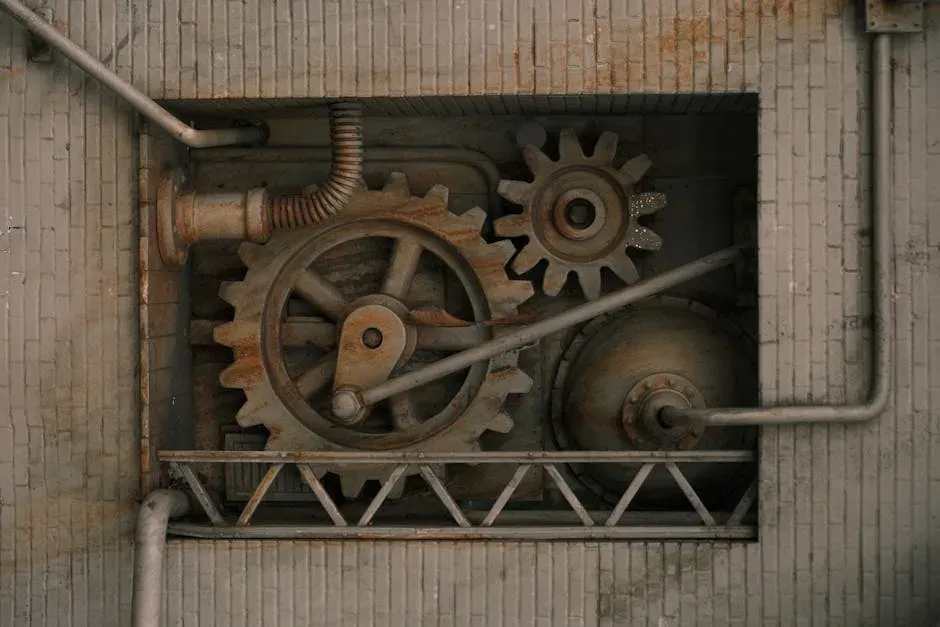
The bronze astronomical calculator was about the size of a shoebox, with dials on its exterior and an intricate system of 30 bronze gear wheels inside. It was recovered from a shipwreck off the Greek island of Antikythera around 1900 and has been astonishing researchers ever since. It is the first known geared mechanism and contains the oldest existing set of scientific scales, and the level of technology associated with this device is considered to be of an extremely high level – its sophistication would not be equalled until the fourteenth century C.E.
It calculated the ecliptic longitudes of the Moon, Sun and planets; the phase of the Moon; the Age of the Moon; the synodic phases of the planets; the excluded days of the Metonic Calendar; eclipses – possibilities, times, characteristics, years and seasons; the heliacal risings and settings of prominent stars and constellations; and the Olympiad cycle. It is the first known device that mechanized the predictions of scientific theories – the first steps to the mechanization of mathematics and science.
The Inca Yupana: A Fibonacci-Based Computing Tablet

Peruvian researcher Andrés Chirinos deciphered the riddle of the yupana, which he calls a “pre-Hispanic calculator,” as being capable of adding, subtracting, multiplying, and dividing. The device functioned as the active computing companion to the more famous quipu. Mathematical operations were previously carried out on the yupanas, which could be made of carved stone or clay, had boxes or compartments that corresponded to the decimal units, and were counted or marked with the help of small stones or grains of corn or quinoa.
Partner offer
One type of yupana resembles a 5×4 chessboard and follows the Fibonacci sequence (1, 2, 3, 5) to make simple calculations such as addition, subtraction, multiplication, and division. While researchers are still unsure about the exact uses of yupanas, it is known that they were considered a mathematical aid to ensure fair trading, and are believed to have been used for accounting purposes, more specifically by the government to control the supply and storage of resources used to build infrastructure.
Napier’s Bones: The Portable Multiplication Engine of the 1600s
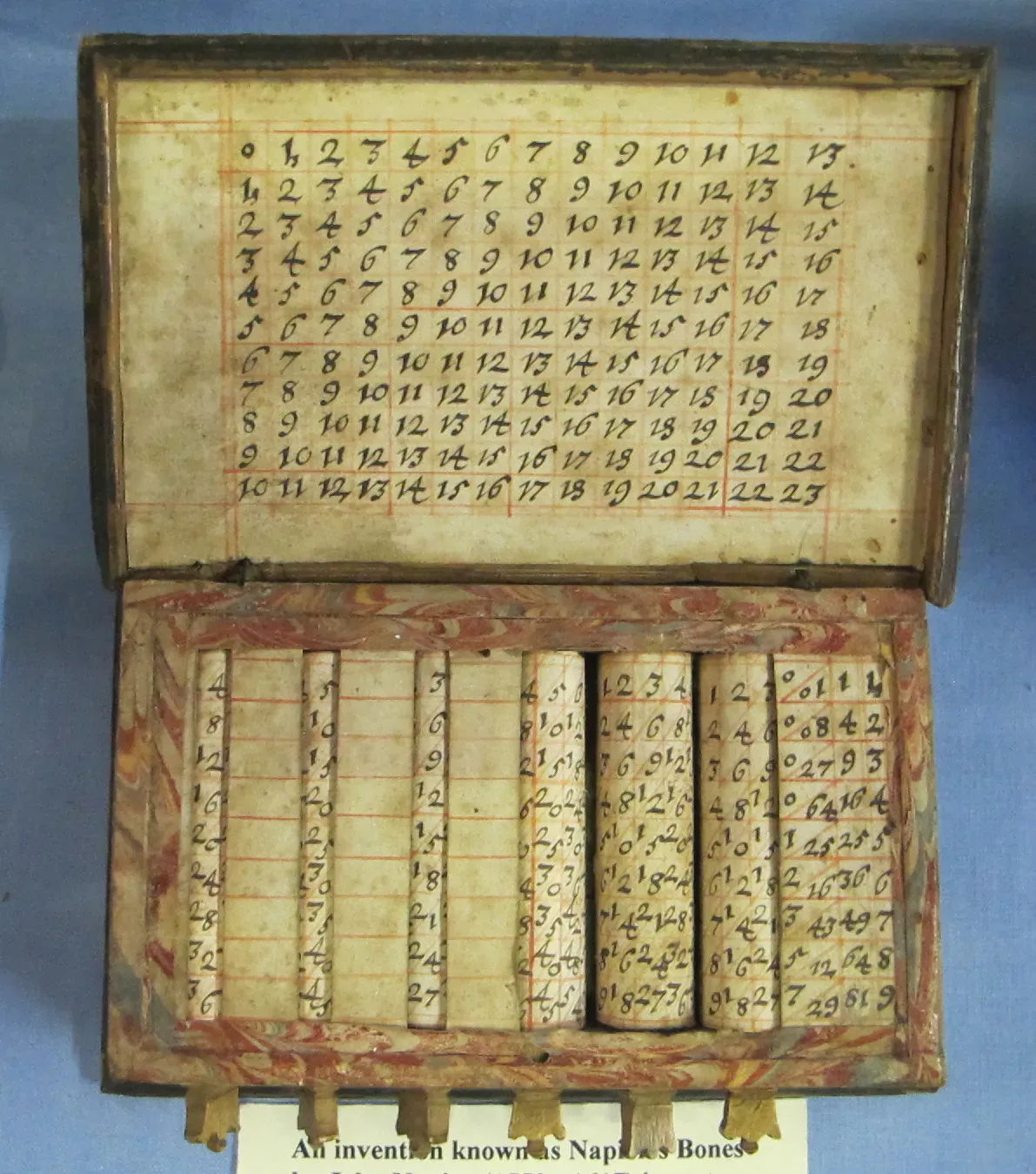
John Napier developed a manual calculating device known as Napier’s bones – not actual bones, but rather a set of rods inscribed with numbers that could be used to perform multiplication and division. Published posthumously in 1617, the tool was deceptively simple in appearance but powerful in practice. Using the multiplication tables embedded in the rods, multiplication could be reduced to addition operations and division to subtractions, and advanced use of the rods can even extract square roots.
Because Napier’s bones largely eliminated the mental arithmetic required by large calculations, they became a popular tool in a society where few were educated enough to perform complex arithmetic. Napier also created a device using rods, called Napier’s bones, to perform arithmetical calculations, and these rods were widely used by accountants and bookkeepers. The reach of this device extended well beyond the academic world.
The Inca Quipu: A Knotted Data System That Ran an Empire
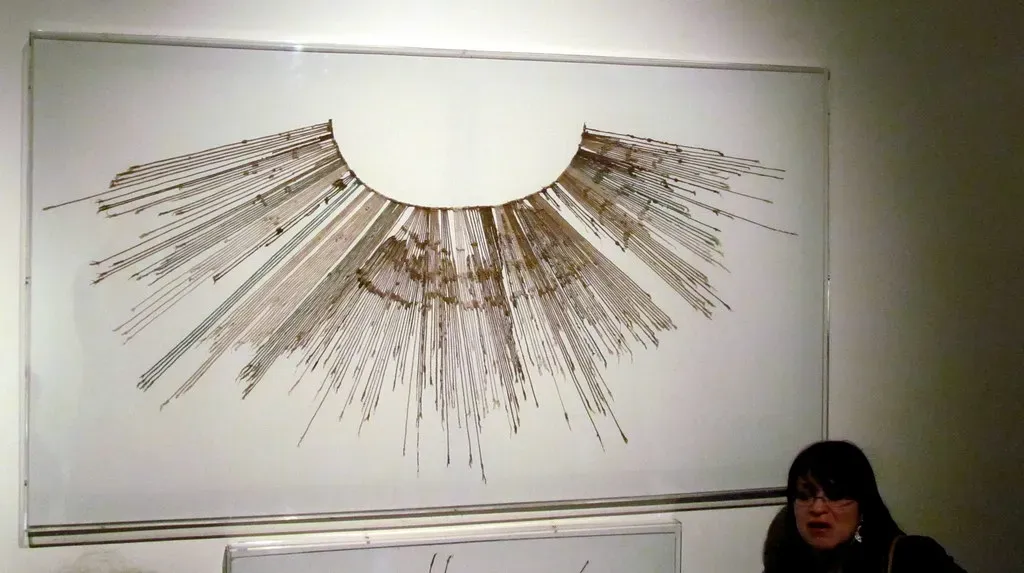
The quipu, fashioned from knotted cords, was historically used by various cultures in the central Andes of South America, most prominently by the Inca Empire, and contained categorized information based on dimensions like color, order, and number – with the Inca using knots tied in a decimal positional system to store numbers and other values. The scale of the system was genuinely impressive. Quipus have been found with as many as 2,000 pendants and six levels of subsidiaries.
Quipucamayocs, the knot makers and keepers who served as Inca record keepers, supplied colonial administrators with a variety and quantity of information pertaining to censuses, tribute, ritual and calendrical organization, and genealogies. Although one of its functions is related to mathematics, it was also used to store information related to census, product amount, and food kept in state warehouses. A civilization running on fiber and knots managed more logistical complexity than many modern organizations.
The Slide Rule: An Analog Computer That Sent Rockets to Space
Napier dramatically advanced the understanding of number relationships in 1614 with his invention of logarithms, which are the foundation on which the slide rule is built, and his early concept of simplifying mathematical calculations through logarithms makes possible the slide rule as we know it today. The slide rule evolved through the work of several mathematicians over the following decades. The slide rule is a mechanical analog computer used mainly for multiplication and division, and also for scientific functions such as roots, logarithms, and trigonometry.
Galileo’s design of the sector as a mathematical tool can be seen as the moment when calculation aids ceased to be based upon counting and instead exploited the deeper relationships among numbers – and his invention was still in use as a navigation aid in the 20th century, 300 years later. Engineers used slide rules to design bridges, aircraft, and early spacecraft, relying entirely on the logarithmic relationships baked into a strip of wood or metal. Napier’s bones were a simple yet effective tool that made complex calculations more accessible, and Napier’s work laid the groundwork for the slide rule, which would become a fundamental tool for engineers and scientists for centuries to come.
Partner offer
Planning a trip to Vegas?
Compare hotel rates and show tickets on VEGAS.com.