
Throughout history, science has moved forward not through smooth agreement, but through heated debates and bitter rejection. The greatest breakthroughs often met fierce resistance before gaining acceptance. Revolutionary ideas that challenged conventional wisdom were dismissed, ridiculed, and sometimes violently opposed by the very communities meant to evaluate them. These stories remind us that scientific progress requires not just brilliant insights, but also the courage to defend them against overwhelming skepticism.
Continental Drift and the Moving Continents
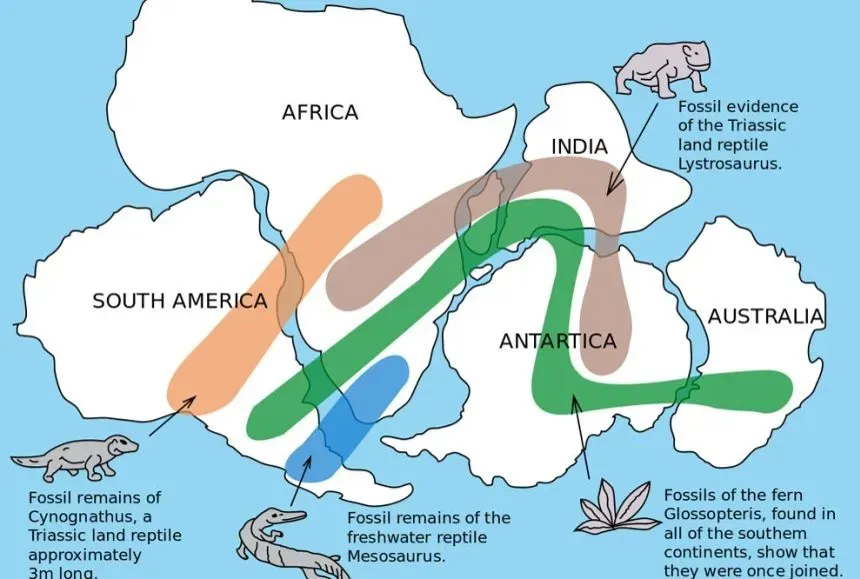
In 1910, German meteorologist Alfred Wegener noticed something peculiar when examining world maps closely – the coastlines of Africa and South America appeared shaped as though they had once been connected. While he was not the first person to make this observation, the idea that the two continents may have once been one continent stuck in Wegener’s mind, eventually leading to him delivering a lecture on “continental displacement” in 1912. The theory of continental drift is most associated with the scientist Alfred Wegener. In the early 20th century, Wegener published a paper explaining his theory that the continental landmasses were “drifting” across the Earth, sometimes plowing through oceans and into each other. He called this movement continental drift. Wegener was convinced that all of Earth’s continents were once part of an enormous, single landmass called Pangaea.
Most of the scientific community dismissed Wegener’s theory, which he continued to try to prove for the rest of his life. The theory was largely rejected for many years, with evidence in its favor considered insufficient, and Wegener did not live to see his hypothesis triumph. Scientists did not accept Wegener’s theory of continental drift. One of the elements lacking in the theory was the mechanism for how it works – why did the continents drift and what patterns did they follow? It wasn’t until the 1960s, with advancements in the understanding of seafloor spreading and plate tectonics, that the ideas underpinning Wegener’s theory gained acceptance. Wegener’s theory of continental drift remained controversial and was not widely accepted until Harry Hammond Hess and Robert Sinclair Dietz introduced the theory of seafloor spreading in the early 1960s. In 1962, Harry Hess completed Wegener’s theory by discovering the force that caused the continents to shift. Today, Pangea and continental drift are widely accepted by the scientific community.
Heliocentrism and the Sun-Centered Universe

It was not until the 16th century that a mathematical model of a heliocentric system was presented by the Renaissance mathematician, astronomer, and Catholic cleric, Nicolaus Copernicus, leading to the Copernican Revolution. In the following century, Johannes Kepler introduced elliptical orbits, and Galileo Galilei presented supporting observations made using a telescope. Copernicus published a theory of planetary motion in 1543 that directly contradicted the accepted notion that the Earth was the center of the universe, and was widely derided at the time. In the early 17th century, Galileo used a telescope to observe the movement of celestial bodies, which both confirmed Copernicus’ suspicion that the Earth orbited the sun, and raised the ire of the Catholic Church and the Inquisition, which led to Galileo being placed under house arrest for the rest of his life, and his book being banned.
Galileo’s opinions were met with opposition within the Catholic Church, and in 1616 the Inquisition declared heliocentrism to be both scientifically indefensible and heretical. Responding to mounting controversy, the Roman Inquisition tried Galileo in 1633 and found him “vehemently suspect of heresy”, sentencing him to house arrest. At this point, heliocentric books were banned and Galileo was ordered to abstain from holding, teaching or defending heliocentric ideas after the trial. In the mid-18th century the Church’s opposition began to fade. In 1758 the Catholic Church dropped the general prohibition of books advocating heliocentrism from the Index of Forbidden Books. Galileo’s “Dialogues on the Two World Systems” would be officially removed from the church’s Index of Forbidden Books in 1835, along with Copernicus’ “On the Revolutions of the Celestial Spheres.” Eventually, the heliocentric model became universally accepted as observations confirmed what Copernicus and Galileo had proposed centuries earlier.
Germ Theory of Disease

Louis Pasteur (1822-1895), a French chemist and microbiologist, and Robert Koch (1843-1910), a German physician and microbiologist, are credited with the discovery of the germ theory in the 1860s-1880s. Regarded as the most important discovery in the history of medicine, the germ theory challenged the medical profession to reevaluate how disease was thought about, offered possibilities for both the prevention and treatment of disease, as well as the discovery and implementation of new technologies to combat disease. However, before Pasteur and Koch received credit for the breakthrough, another physician made similar observations and faced devastating consequences.
Investigating further, Semmelweis made the connection between puerperal fever and examinations of delivering women by doctors, and further realized that these physicians had usually come directly from autopsies. Asserting that puerperal fever was a contagious disease and that matter from autopsies was implicated in its spread, Semmelweis made doctors wash their hands with chlorinated lime water before examining pregnant women. He then documented a sudden reduction in the mortality rate from 18% to 2.2% over a period of a year. Despite this evidence, he and his theories were rejected by most of the contemporary medical establishment. Despite his research, Semmelweis’s observations conflicted with the established scientific and medical opinions of the time and his ideas were rejected by the medical community. He could offer no theoretical explanation for his findings of reduced mortality due to hand-washing, and some doctors were offended at the suggestion that they should wash their hands and mocked him for it. His findings earned widespread acceptance only years after his death, when Louis Pasteur confirmed the germ theory of disease, giving Semmelweis’ observations a theoretical and scientific explanation, and Joseph Lister, acting on Pasteur’s research, practised and operated using hygienic methods with great success.
Partner offer
Atomic Theory
In 1808 John Dalton published A New System of Chemical Philosophy, which described principles such as the uniqueness of atoms of the same element, relative atomic masses, and the rules of chemical combination, which taken together comprise the tablets of modern chemistry. Because atoms could not be seen, Dalton could not base his theory on direct observation, and this was a major stumbling block for many scientists. Nevertheless atomic theory was useful, whether proven or not. His proposal that matter consisted of indivisible particles with specific weights seemed almost fantastical to many contemporaries.
Dalton’s atomic theory was accepted immediately by many researchers (Thomas Thomson, William Hyde Wollaston), but there was considerable opposition (Humphrey Davy) before everyone accepted the role of atoms in matter. This was found to be controversial and, in fact, delayed the acceptance of Dalton’s atomic theory for many years. Acceptance grew slowly over the next hundred years as the concept of the atom became useful for explaining a variety of things from molecular structure in organic chemistry to the spacing and movement of molecules in gas physics. By 1905 there were still some holdouts, including Marcellin Berthelot and the founding father of physical chemistry, Wilhelm Ostwald, but most chemists had accepted the existence of atoms. Once and for all the particulate nature of matter had been demonstrated in an unequivocal manner. A final crowning validation came in 1926 when Perrin received the Nobel Prize in Physics for his work.
Mendel’s Laws of Inheritance

Gregor Mendel probably never imagined that his experiments in a vegetable garden would change science forever. Living in a Austrian monastery as a monk, Mendel noticed that when he controlled the pollination of the pea plants, the resulting peas would often have the same characteristics as the plants they were derived from. When combined his observations with the fact that children often had the same characteristics as their parents, Mendel’s vegetable experiments led him to develop the basic theory on which genetics would be based: Mendel’s Laws of Inheritance. His work laid the foundation for understanding heredity and biological variation.
Unfortunately for Mendel, the theory that would revolutionize our understanding of how life develops was ignored by his contemporary scientists almost entirely, despite Mendel attempting to contact and convince many of the luminaries of his day. It would take several decades for Mendel’s theories to be taken seriously. The scientific community simply was not ready to accept that inheritance followed mathematical patterns. Only after his death did researchers rediscover his work and recognize its profound implications. Today, Mendelian genetics forms the cornerstone of modern biology, validating the insights of a humble monk whose patience with pea plants revealed fundamental laws of nature.
Dark Matter
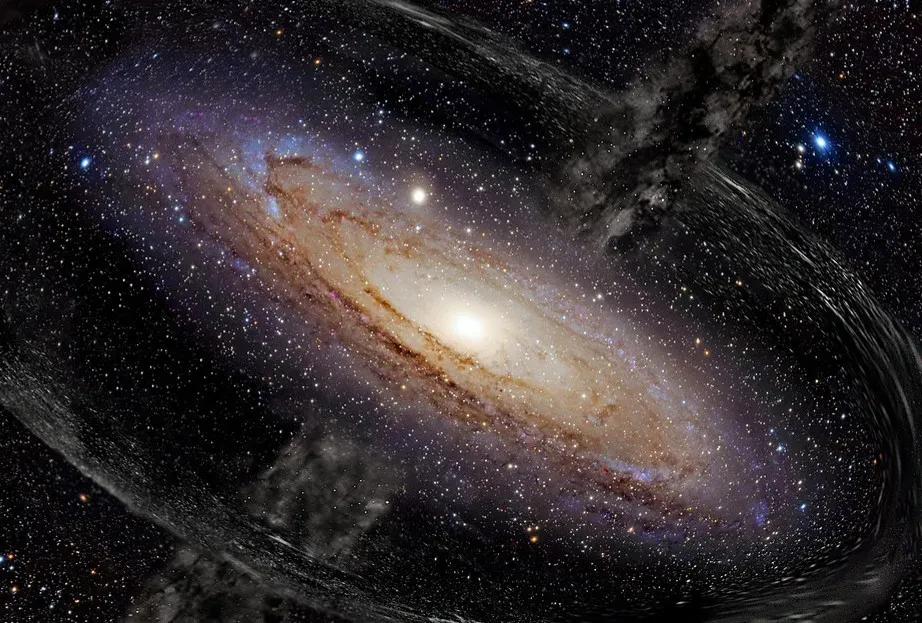
Fritz Zwicky was a Swiss astronomer who would make many important discoveries in his field, most of which were ignored for decades. Zwicky was also what could charitably be called a “difficult person,” one who had no problem venting his contempt for other researchers and the scientific establishment. Zwicky’s eccentric nature and hostile personality made it easy for his contemporaries to dismiss him as a crank, which resulted in much of his work being ignored and dismissed. His proposal in the early thirties that invisible matter existed throughout the universe seemed utterly absurd to most astronomers.
It took 40 years for his most important discovery, dark matter, to be “rediscovered,” at which point the scientific community realized his idea explained much about the behavior of the universe that had been unable to be accounted for without Zwicky’s theories. Modern cosmology now estimates that dark matter constitutes roughly five times more mass than ordinary matter in the universe. Zwicky’s vindication came too late for him to witness the full acceptance of his radical ideas. His story serves as a powerful reminder that personality and presentation can sometimes overshadow brilliant insights, yet truth has a way of prevailing when the evidence becomes overwhelming.
These six theories share a common thread. Each challenged the prevailing orthodoxy of its time. Each faced ridicule, rejection, or outright persecution. Each was ultimately vindicated by accumulating evidence. They teach us that scientific consensus, while important, is not infallible. Progress requires both rigorous skepticism and openness to ideas that seem impossible. The history of science is not a steady march toward truth, but a stumbling journey filled with detours, wrong turns, and the occasional revolutionary leap that changes everything we thought we knew.
Partner offer
Planning a trip to Vegas?
Compare hotel rates and show tickets on VEGAS.com.