Retirement is supposed to be the reward. After decades of early mornings, long commutes, and endless to-do lists, you finally get to choose where you live based on what matters to you. But here’s the thing – many people choose their retirement destination based on weather, golf courses, or low taxes, without ever seriously looking at local crime data. And that oversight can cost you far more than money.
The numbers coming out of 2025 and early 2026 tell a surprisingly complicated story. National crime statistics improved significantly in 2024, with violent crime falling roughly 4 percent year-over-year, murders declining about 15 percent, and property crime dropping around 8 percent overall. Sounds reassuring, right? Not so fast. The improvement is not uniform across all states. Several high-crime locations continued deteriorating against the national trend in 2024, suggesting that the gap between the safest and most dangerous places may actually be widening. Here are 5 retirement towns you need to research very carefully before you pack those moving boxes.
1. Albuquerque, New Mexico – The Desert Dream With a Dark Side
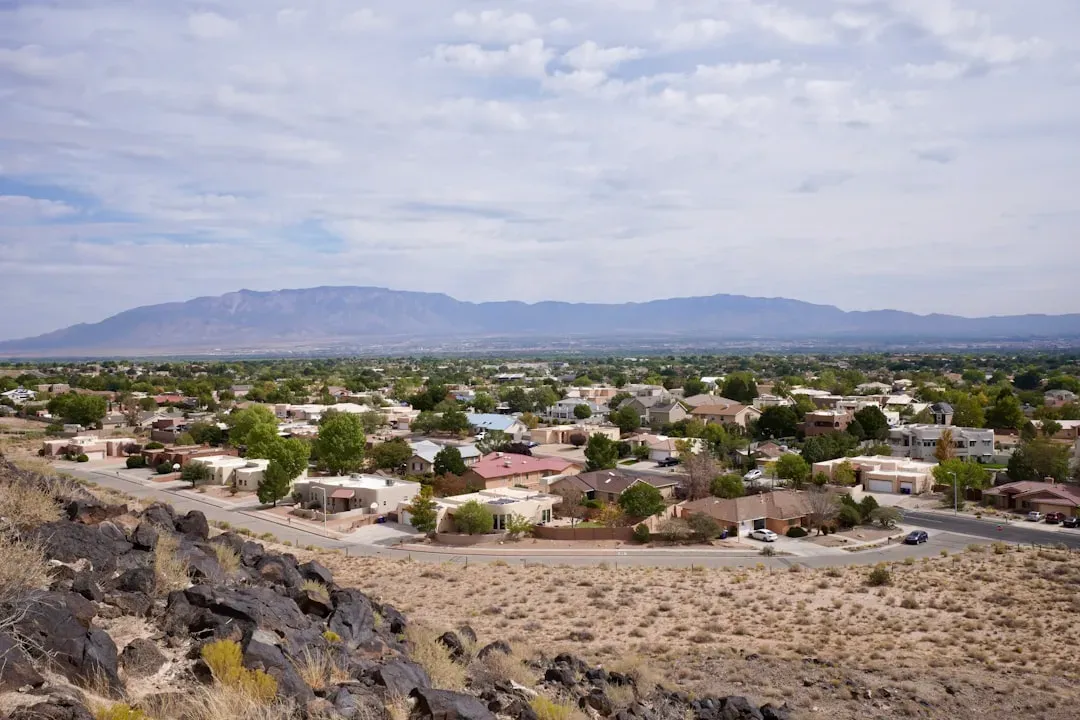
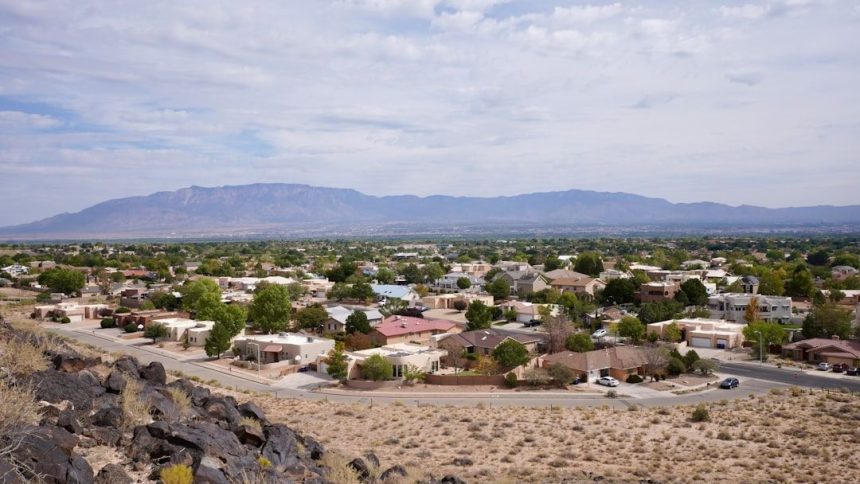
Albuquerque is undeniably beautiful. The high desert, the art scene, the affordable cost of living – it checks a lot of boxes for retirees on a fixed income. But the crime picture demands a serious, honest look before you sign any lease or mortgage.
The overall crime rate in Albuquerque is 171 percent higher than the national average. Violent crime there is 246 percent above the national level, while property crime runs 156 percent higher than the national average. Let that sink in for a moment. That is not a minor statistical blip – that is a fundamentally different risk environment than most American cities.
For residents and visitors, the odds of becoming a victim illustrate the real-life risk. In Albuquerque, there is approximately a 1 in 74 chance of being a victim of violent crime, and about a 1 in 20 chance of experiencing property crime. Honestly, those are numbers that would give any retiree – or anyone, really – serious pause.
CrimeGrade assigns Albuquerque a D- grade for crime, indicating that the rate of crime is much higher than that of the average U.S. city. Albuquerque ranks in the 9th percentile for safety, meaning it is safer than only about 9 percent of cities. There are some bright spots at the neighborhood level, and early 2025 data from the Albuquerque Police Department did show homicides falling 28 percent and robberies down 19 percent compared to the first quarter of 2024, with other serious offenses like aggravated assaults and shootings also declining by double-digit percentages. Still, New Mexico overall ranks last in studies of best retirement states, struggling with the highest crime rate in the country and the second-lowest quality-of-life score, with retirees facing challenges in both healthcare access and community safety.
2. Memphis, Tennessee – Still Carrying the Weight of History

Memphis has soul – literally. The music, the food, the Mississippi River, the deep cultural roots. For a certain kind of retiree, it absolutely sings. The cost of living is low, and the city has genuine character. However, the crime statistics have long made Memphis one of the most cited cautionary tales in retirement planning discussions.
A WSMV analysis of FBI data found that Memphis recorded the highest rate of violent crime in the country, coming in at 2,501 instances of violent crime for every 100,000 people. Property crime rates in the city sit at 5,279 per 100,000, and violent crime at 2,431 per 100,000 – both ranking among the worst in the country.
Memphis did record a significant decline in violent crime in 2025, marking one of the city’s most meaningful public safety improvements in recent years. According to year-end data from the Memphis Police Department, Memphis saw a 27 percent decrease in overall Part I crimes, including a 26 percent drop in murders, a 22 percent reduction in aggravated assaults, and a 31 percent decline in robberies. That progress is real and should be acknowledged.
The city also recorded fewer than 200 homicides in 2025, marking the first time Memphis has reached that milestone since 2019. Progress, yes. But let’s be real – even with those dramatic improvements, Memphis still enters 2026 carrying one of the heaviest crime histories of any major American city. For retirees, especially those living alone or on predictable routines, that baseline still matters enormously.
3. Stockton, California – Sun, Scenery, and Stubborn Crime Numbers

California retirement dreams are alive and well – the weather alone is hard to argue with. Stockton sits in the Central Valley with relative affordability compared to coastal California, which draws retirees who want sunshine without San Francisco prices. The reality on the ground, though, is considerably more complicated.
Stockton is consistently among the high crime rate cities in California, with FBI UCR analysis placing the combined crime rate at approximately 43 per 1,000 residents. The San Joaquin Valley, which includes Stockton’s county, had the highest regional violent crime rate in California in 2024 at 603 per 100,000 residents. That regional figure is more than a quarter above the California state average, which is already not a low bar.
Stockton recorded 2,804 violent crimes and 7,534 property crimes in 2023. The city’s struggles are rooted in socioeconomic disparity and insufficient resources for underserved communities. Efforts aimed at community engagement, youth outreach, and bolstering local policing are underway, but crime remains a significant concern for residents and policymakers alike.
Retirees who dream of California may wish to reconsider in light of the state’s overall failing grade for senior safety. California ranked worst in the nation for traffic safety and received a poor score for senior crime safety as well. I think the bigger issue here is the gap between what California promises in brochures and what certain cities actually deliver. Stockton is one of the starkest examples of that gap.
4. Anchorage, Alaska – The Last Frontier’s Troubling Crime Reality

Alaska is breathtaking in a way that very few places on earth can match. For a certain adventurous retiree, Anchorage’s rugged beauty, wildlife access, and wide-open spaces represent the dream. It’s hard to blame anyone for being drawn to it. However, the crime statistics attached to Anchorage and the broader state of Alaska are impossible to ignore.
For violent crime specifically, Alaska leads all states at 7.24 violent crimes per 1,000 residents. Alaska’s statewide violent crime rate is the highest in the country, and this reflects violence concentrated in specific rural communities and urban neighborhoods in Anchorage and Fairbanks. That is not a fringe data point – it is the dominant finding across multiple major crime research organizations for 2025 and 2026.
Anchorage reported 2,469 violent crimes and 6,560 property crimes in 2023. Despite its remote location, Anchorage experiences significant urban challenges including domestic violence, substance abuse, and underfunded social services, which all contribute to its unexpectedly high crime rates.
Anchorage and Alaska more broadly have long exceeded national averages for reported rape. Challenges include remote geography, limitations in law enforcement coverage, and significant delays in legal processing. A recent investigation found that many felony cases take five to ten years to resolve in Anchorage, despite state laws mandating quicker trials. For a retiree considering a move, that justice gap is a deeply troubling signal about the overall safety ecosystem in the city.
5. High-Crime Retirement States: Florida, California, and Arizona

It would be unfair to pin this entire conversation on single cities without zooming out to address the elephant in the retirement room. The three most popular retirement destination states in America consistently rank at or near the bottom of senior safety assessments. That is not a coincidence worth brushing aside.
Florida, California, and Arizona – all top retirement destinations – ranked as the three least safe states for seniors. Extreme heat and severe weather hurt several states’ scores, with Arizona, Kentucky, and Hawaii ranking worst for weather safety. Seniors ranked low crime as the most critical factor in feeling safe, followed by access to healthcare, weather safety, and traffic safety. Yet the states they most commonly move to fail precisely on that top concern.
Florida, Nevada, and Georgia ranked among the highest-crime areas for seniors, resulting in the lowest possible scores in senior safety crime assessments. Florida, in particular, presents a fascinating paradox. The tax advantages are real. The healthcare infrastructure in some areas is excellent. The retirement communities are world-class. Yet Florida ranks as one of the least safe states for retirees, despite being a long-time retirement hot spot.
According to FBI data, crime against America’s seniors has risen exponentially over the past decade. Violent crime rates against seniors specifically increased by 331 percent between 2013 and 2023 alone. That is a generational shift in risk that most retirement guides simply do not talk about enough. For context, the U.S. violent crime rate currently sits at approximately 4.43 incidents per 1,000 people nationally, while the property crime rate is 22.89 per 1,000 – figures that should anchor every retiree’s research process.
The takeaway here isn’t that you should never move to these states or cities. It’s that choosing a retirement destination purely on lifestyle appeal, without deeply researching the specific neighborhood and local crime trends, is a genuine risk that many retirees only recognize after they have already unpacked their boxes. Safety is invisible when it is there, and absolutely all-consuming when it isn’t. Do your research, go beyond the brochure, and check the actual data. What would you have done differently if you had seen these numbers first?