Most travelers pick their flights based on price or convenience. Rarely do they stop to think about what happens when the skies turn angry. Storm season in the United States is a beast of a different kind, and the airports that bear the brunt of it can turn your travel day into a multiday nightmare. Some of these hubs have earned a reputation so bad that even seasoned flyers dread routing through them when clouds start forming on the horizon.
The data is clear, the patterns are consistent, and the airports keep showing up on the same lists year after year. So before you book your next trip, you might want to keep reading. You’ll thank yourself later.
Why Weather Is the Single Biggest Enemy of Air Travel
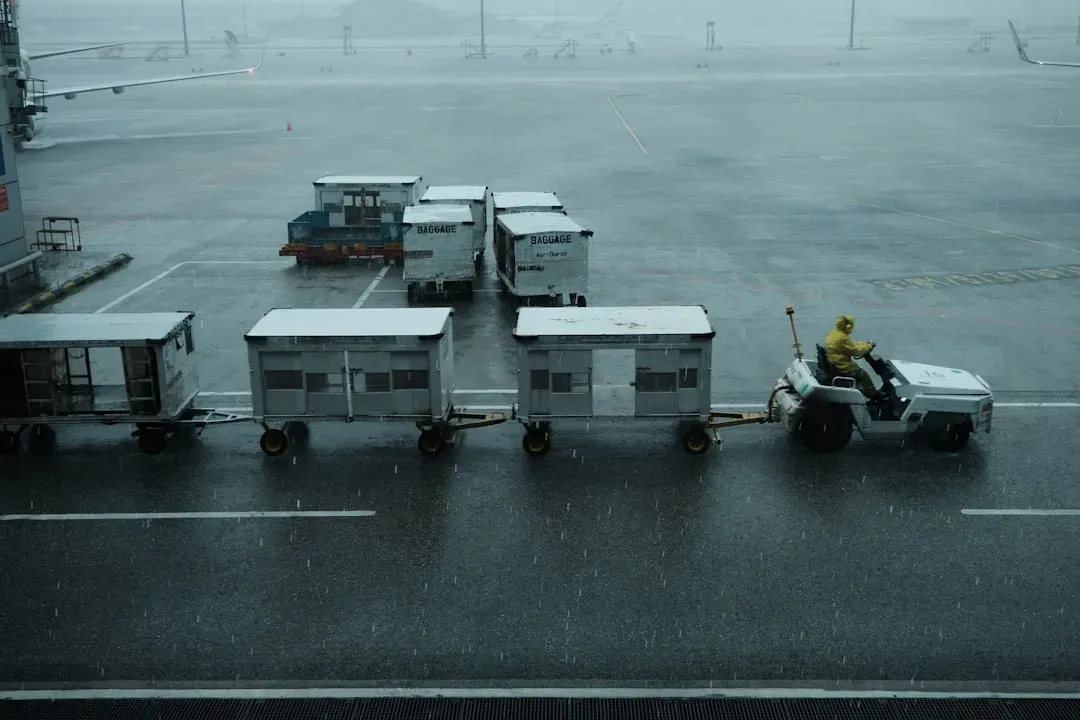
The largest cause of air traffic delay in the National Airspace System is weather. According to the FAA, weather caused more than nearly three quarters of all system-impacting delays of greater than 15 minutes over the six years from June 2017 to May 2023. That is not a minor footnote. That’s a dominant, structural problem baked into how American aviation operates.
According to the FAA, winter weather can have a major impact on air travel because of de-icing requirements, reduced runway capacity, and safety-related ground stops. Snow and ice slow aircraft turnaround times, while strong winds and poor visibility can force air traffic control to reduce the number of planes allowed to land or depart.
Here’s the thing: it’s not just the airport experiencing the storm that suffers. Because many of the most affected airports, such as Chicago, Atlanta, and New York, serve as major connecting hubs, even localized weather issues can trigger nationwide disruptions as missed connections and aircraft shortages cascade through airline schedules. One storm in the Midwest can unravel flights in Florida and California within hours.
The Scale of the Problem: Nationwide Disruption in Real Numbers
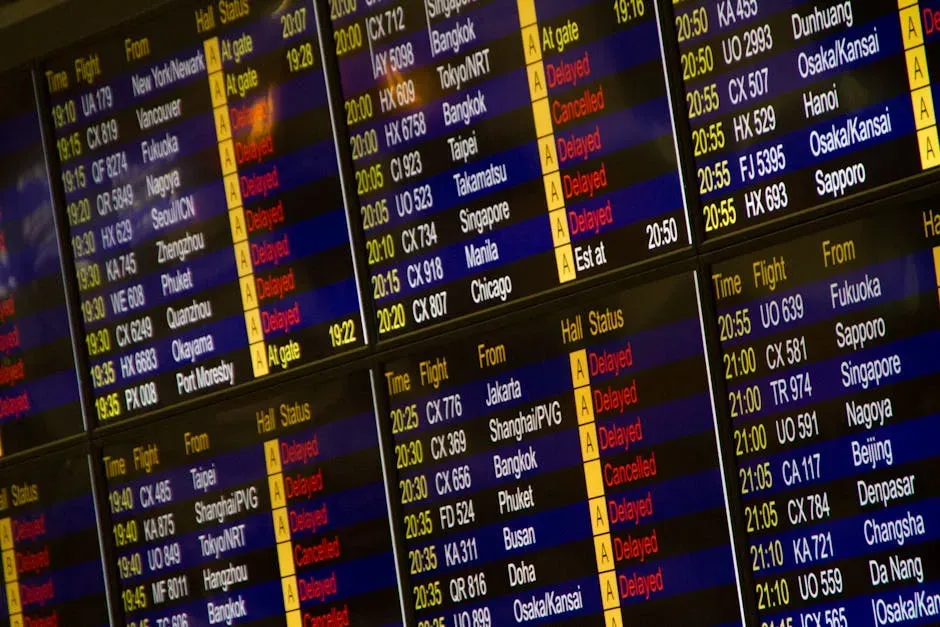
Nearly 1 in 4 flights across the U.S. run late or are canceled, according to data from July 2024 to June 2025. Think about that for a second. You are essentially walking into every flight with a roughly one-in-four chance of things going sideways.
In 2024, flight delays were on the rise, increasing from roughly just over a quarter of flights delayed in 2023 to nearly three in ten in 2024. However, there is a silver lining, as the number of cancelled flights actually dropped by a small margin, resulting in thousands fewer cancellations.
A powerful winter storm sweeping across parts of the United States in mid-March 2026 continued to disrupt air travel, forcing airlines to cancel or delay thousands of flights as snow, ice, and strong winds battered key aviation hubs. FlightAware data showed that more than 3,000 flights within, into, or out of the United States were canceled, while more than 4,000 U.S.-related flights were delayed. That’s how fast a single storm can tear through the system.
Airport #1: Newark Liberty International (EWR) – The Perennial Problem Child
Honestly, Newark might be the most frustrating airport in America during storm season, and the numbers back that up relentlessly. San Francisco International topped the delay list overall, but Newark Liberty International had the highest cancellation rate among major U.S. airports at nearly three percent for 2024, a figure that has barely budged despite years of scrutiny.
Newark continues to battle heavy congestion and unpredictable winter weather, with more than a third of December flights projected to face delays or cancellations. That’s during a single month. The FAA estimates the combined disruptions at LaGuardia and Newark created nearly 3 million passenger-delay hours in 2024. United has asked authorities to seek a remedy to the situation, and Port Authority engineers have studied a future runway that will mitigate crosswind impacts. Completion, however, is projected to be around 2035, meaning Newark will likely stay one of the most weather-delayed fields in America for years to come.
When the Weather Channel analyzed a decade of data, almost two-thirds of delayed flights into Newark were caused by weather: snowstorms, summer storms, and often wind. Two of Newark’s three runways run southwest to northeast, which means common west to northwest crosswinds can create serious headaches for pilots attempting to land. That’s a structural design issue you simply cannot fix with better scheduling.
Airport #2: Chicago O’Hare International (ORD) – The Windy City Lives Up to Its Name
Chicago O’Hare is one of the world’s busiest airports. It’s also one of the most reliably chaotic places to be when a storm rolls through the Midwest. O’Hare has the highest raw number of weather-delayed flights of any U.S. airport. On average, weather delays roughly 28,000 flights into O’Hare each year. Blame goes to snow and ice, since Chicago sees about 28 snowy days annually on average, along with frequent thunderstorms, wind, and fog.
On average, the Windy City experiences 28 days of snowfall per year, while O’Hare has more thunderstorms than any other large airport in the Northeast corridor, with roughly 38 days annually. Summer is no picnic either. The storm threat is essentially year-round.
Nearly 1,300 flights to and from Chicago O’Hare had been delayed and more than 280 had been canceled during a Thanksgiving 2025 storm event, according to FlightAware data. The airport received 8.4 inches of snow on that Saturday, making it the snowiest November day in Chicago’s recorded history according to the National Weather Service. A record-breaking snow day during the busiest travel week of the year. Classic O’Hare.
Chicago’s reputation for winter travel chaos holds true, with nearly a third of December flights projected to be delayed. Snowstorms and freezing winds off Lake Michigan can bring even O’Hare’s well-oiled operations to a crawl.
Airport #3: John F. Kennedy International (JFK) – New York’s Stormy Gateway
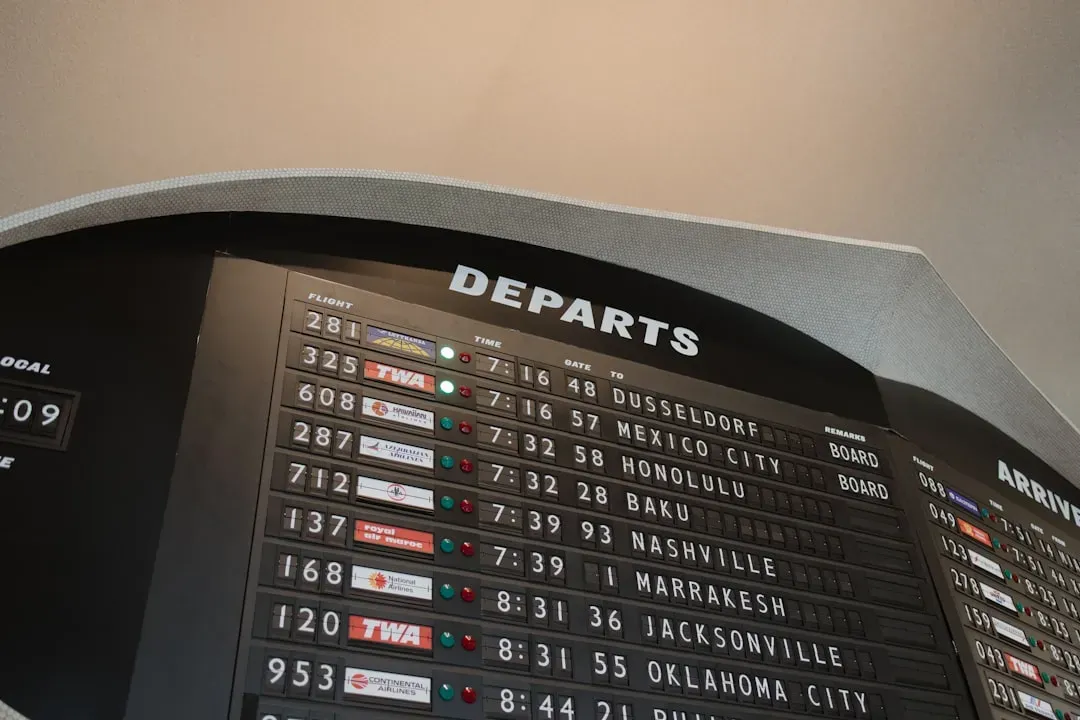
JFK is iconic. It’s also, by many metrics, one of the worst airports in the country when bad weather arrives. JFK, one of the busiest airports in the United States, had nearly half of its flights depart late in 2024. With a high volume of international and domestic flights, JFK continues to struggle with congestion and operational delays.
When you look at both the percentage of flights arriving late and the average number of minutes late for longer delays, the worst U.S. airport overall is John F. Kennedy International. An analysis of summer flights found that nearly 62 percent of flights did not arrive on time, and delayed flights were held up by more than 100 minutes on average.
During the December 2025 winter storm, JFK Airport topped FlightAware’s Misery Map list, with dozens of delays and cancellations in just the first few hours of the morning. The Federal Aviation Administration said that flights arriving at the airport had been delayed by an average of two hours and 37 minutes. Two and a half hours. Per flight. And that was just the average.
The New York Metro Cluster: A Triple Threat in a Single Region
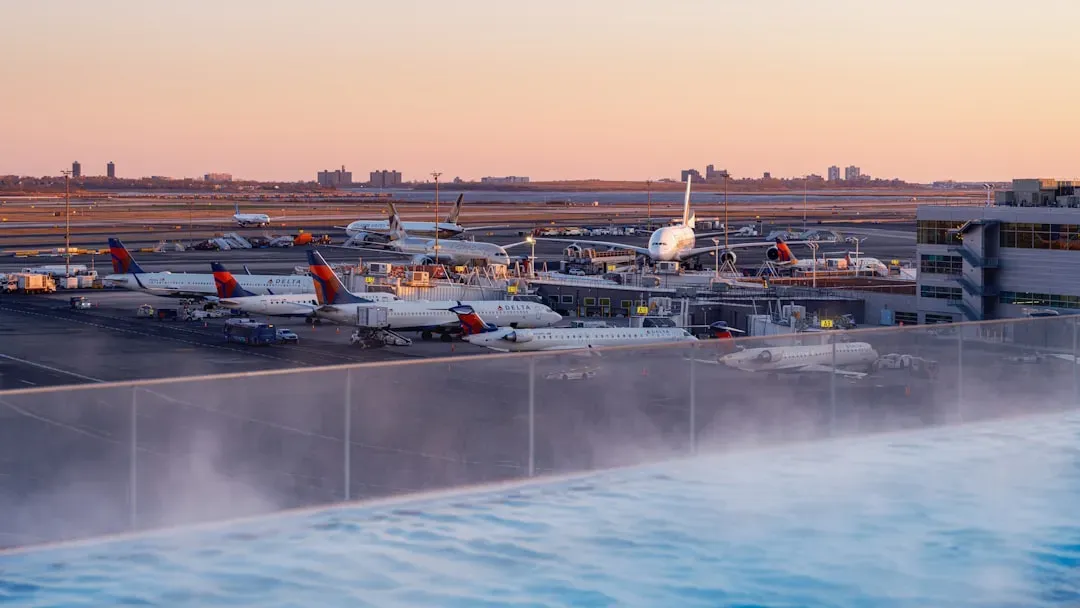
Here’s something that makes the New York situation uniquely dangerous for travelers. It’s not just JFK or Newark. It’s all three New York-area airports at once, because storms don’t respect airport boundaries.
New York’s three major metropolitan airports were among the hardest hit during the December 2025 storm. Flights to John F. Kennedy International saw an average of two-hour delays, while ground delays were in place at LaGuardia and Newark Liberty International airports moving into midday.
Weather-related delays compared to total delays at Newark, LaGuardia, and Kennedy airports show a consistent, seasonal pattern. The type of weather causing air traffic delays differs over the year and also depends on the geographic area, with combined total delays and weather delays tracking closely throughout the calendar year at all three New York area airports. What hits one typically hits all three.
Miami International (MIA): Florida’s Hidden Storm Trap

People book flights through Miami thinking that the warm weather will protect them from the chaos. It does not. Miami saw significant challenges in 2024, ranking among the worst airports for delays and cancellations. With a large number of flights to Latin America and the Caribbean, operational challenges and seasonal weather often add to the disruption.
Florida dominates the delay rankings overall, with five airports making the top ten for highest delay percentages. That’s five airports in a single state. Research revealed that Florida is home to three of the worst airports in the United States in terms of flight disruptions. Although Miami Fort Lauderdale Airport is not among the top ten worst performing airports, it still has a notably higher rate of canceled or delayed flights compared to the national average.
Miami’s warmth won’t spare travelers from delays, with about 29 percent of flights expected to depart late during peak seasons. Sky-high tourism and tight runway scheduling are likely to cause backups despite the mild weather. Hurricane season runs from June through November, and that window lines up almost perfectly with peak summer travel. That’s not a coincidence. That’s a scheduling trap.
How Storms Cascade Into Nationwide Chaos
One thing most travelers fundamentally misunderstand is how a storm at one hub airport quickly spirals into a national crisis. If a busy jet route becomes blocked by intense thunderstorms, traffic will reroute into the neighboring airspace, which can become overcrowded if the flow is not managed. In these cases, a planning team consisting of FAA personnel at the Air Traffic Control System Command Center coordinates with centers, select terminals, airlines, and general aviation organizations.
Airports with the most weather delays also tend to operate close to capacity for large parts of the day. System-impacting weather, combined with excess demand, means that delayed flights may have to wait hours to land or depart. The system has almost zero slack. When a storm hits a maxed-out hub, there’s nowhere to absorb the overflow.
Disruptions concentrate in major hub airports across the Midwest, Northeast, Southeast, and the South, where winter weather slows departures and arrivals. Even airports not directly experiencing severe weather conditions are affected as aircraft and crews arrive late from storm-impacted regions, compounding disruptions throughout airports across the United States.
What the Latest 2025 and 2026 Data Actually Shows
The data from the most recent stretch of travel history only reinforces what frequent flyers have long suspected. On one severe weather day in March 2026, the total verified disruption count reached over 300 cancellations and nearly 2,000 delays across the national network, with Chicago O’Hare compounding the problem through its own separate rolling operational crisis.
Data from July 2024 to June 2025 shows that more than one in four flights from New Jersey airports are delayed or canceled. Despite recent upgrades, Newark Liberty International continues to be one of the most delay-prone airports in the country. It’s no surprise that travelers from New Jersey record the highest average travel delay claim amount in the country.
Washington Reagan National currently tops both problem lists as well, with the highest delay rate and the highest cancellation rate in the country, making it the least reliable major airport overall for the first half of 2025. The landscape isn’t improving. In many ways, it’s getting worse.
Smart Strategies to Actually Protect Your Trip
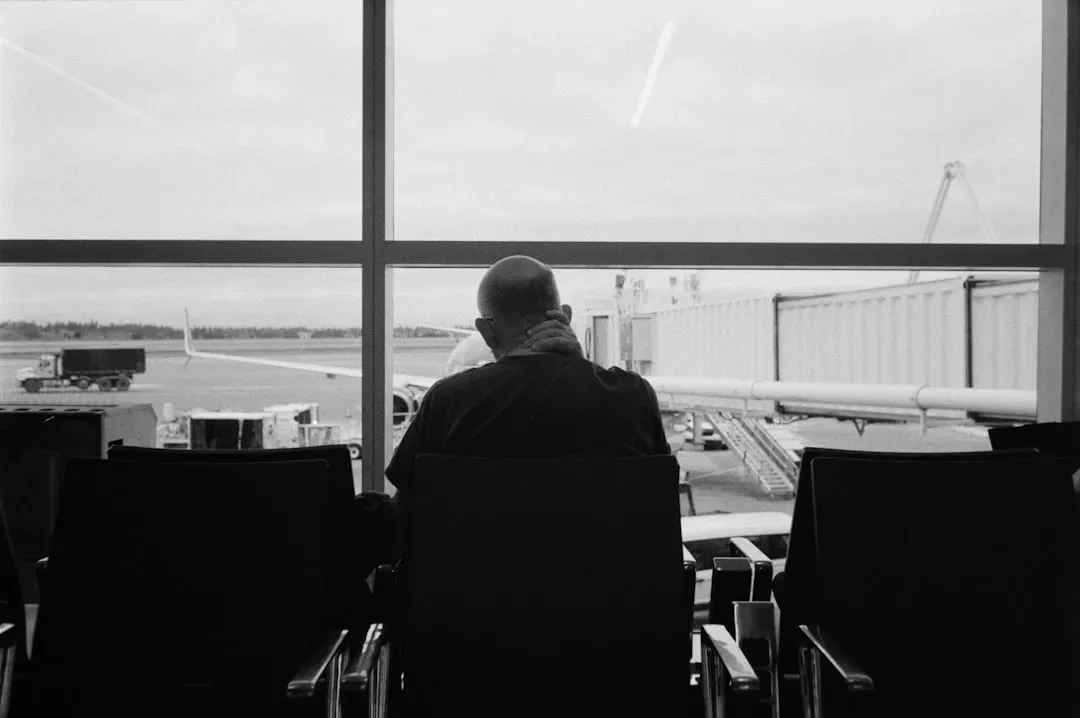
Let’s be real. You can’t always avoid these airports entirely. But you can make smarter choices that dramatically reduce your risk of getting stranded.
Morning departures are statistically less likely to be delayed. Book the first flight of the day whenever possible. If something goes wrong, you have the rest of the day to recover. An afternoon or evening flight during storm season through a notorious hub is basically a gamble.
Ground delay programs are used by the FAA to temporarily hold aircraft at their departure airports to reduce the number of flights going into an impacted area. Knowing this matters, because a delay notice from your origin airport might actually save you from a worse situation at a connecting hub. Disruptions can lead to missed connections, unplanned overnight stays, and hundreds of dollars in unexpected out-of-pocket costs. Travel insurance is no longer optional during storm season. It’s the cost of doing business.
The Bottom Line: Plan Around the Pattern, Not Against It

The three airports that consistently show up at the top of every storm-season misery index are Newark Liberty International, Chicago O’Hare, and John F. Kennedy International. The data from 2024, 2025, and into 2026 confirms this pattern is not going away anytime soon.
Despite the percentage of delayed flights being somewhat better than other entries on worst-airport lists, O’Hare has the highest raw number of delayed flights in total. Thanks to its staggeringly high volume of traffic, O’Hare is still saved from being ranked worst overall by percentage. Winter presents the crux of the issue, as brutal snow and ice derail operations with diversions, runway shutdowns, and operational pauses.
If the time needed for pre-departure planning is added to airborne time intervals, predictions of convective weather impacts on airspace capacity are needed four to eight hours in advance to influence long-haul flights and two to six hours in advance to influence shorter ones. The system is doing its best. Sometimes its best isn’t enough.
Storm season is not a hypothetical. It’s a schedule. Plan accordingly, build in buffer time, and if you can route around Newark, JFK, or O’Hare on the worst weather days of the year, do it. Your sanity will thank you. What do you think, would you still risk flying through these airports during peak storm season? Let us know in the comments.