There’s something almost primal about the way Americans respond to a high-profile trial. The courtroom becomes a theater, the lawyers become characters, and the verdict lands like a plot twist no screenwriter could have scripted better. Some cases fade from the news cycle within a week. Others become embedded in cultural memory for decades, reshaping how we talk about race, fame, justice, and truth.
The five cases below are not just legal proceedings. They are moments when the entire country stopped, argued, wept, and questioned. Each one left a permanent mark. Let’s dive in.
1. The O.J. Simpson Trial (1995): The Trial That Changed Television Forever
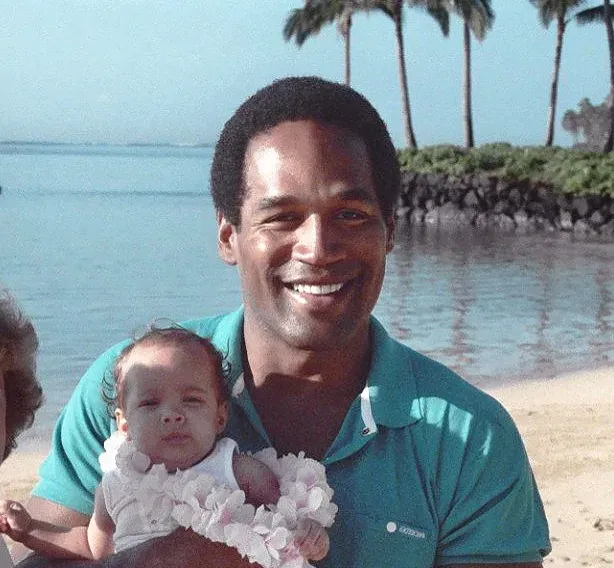
The People of the State of California v. Orenthal James Simpson was a criminal trial in which former NFL player and actor O.J. Simpson was tried and acquitted for the murders of his ex-wife Nicole Brown Simpson and her friend Ron Goldman, who were stabbed to death outside Brown’s condominium in Los Angeles on June 12, 1994. It is honestly hard to overstate just how completely this case consumed the country. Before a single witness took the stand, roughly 95 million people had already watched a white Ford Bronco inch down a Los Angeles freeway in real time.
Simpson’s ensuing trial in 1995 drew astonishing audience interest, with an unprecedented 150 million people tuning in on October 3 to watch the stunning verdict delivered live on television. Belief in Simpson’s innocence or guilt was divided largely along racial lines, with a majority of African Americans in support of Simpson and most white Americans believing in his guilt. The trial was televised using a single remotely-operated camera by Court TV, and in part by other cable and network news outlets, for 134 days. The ripple effects were enormous. The extraordinary attention the case generated helped launch the careers of a generation of household media stars, and the wall-to-wall coverage of Simpson’s legal showdown delivered a hefty viewership boost to outlets such as CNN and Court TV, helping to cement cable’s role as a destination for live news.
2. The Casey Anthony Trial (2011): The Verdict America Could Not Accept
If there is one verdict in modern American legal history that left viewers genuinely stunned, it is this one. Through all the damning accusations and incriminating evidence, Casey Anthony was arguably the most hated woman in America. Casey’s trial played out over seven weeks in the summer of 2011. Relying largely on circumstantial evidence, the prosecution alleged Casey wished to free herself from parental responsibilities and murdered her daughter by administering chloroform and applying duct tape to her nose and mouth.
Casey’s defense team, led by Jose Baez, chiefly focused on challenging the prosecution’s evidence, calling much of it “fantasy forensics.” The defense stated that Caylee had drowned accidentally in the family’s swimming pool and that George had disposed of the body. After almost six weeks of testimony and 400 pieces of evidence presented in court, the jury of seven women and five men took less than 11 hours to reach a verdict of not guilty. The country’s interest in every update on the case was voracious; by the time it concluded, it had yielded record ratings for some networks. To this day, people remain visibly upset when this case comes up in conversation. That says everything.
3. The George Zimmerman Trial (2013): Race, Justice, and a Nation Divided
Walking back from a 7-Eleven to the Sanford, Florida townhouse of his father’s fiancée on a dark and rainy February evening in 2012, Trayvon Martin aroused the suspicions of neighborhood watch leader George Zimmerman, setting in motion a chain of events that led to Martin’s death and one of the most intensely followed trials of the twenty-first century – a trial that provoked arguments about America’s gun culture and racial profiling. Zimmerman’s trial received intensive media coverage. The prosecution argued that Martin’s death resulted from Zimmerman’s profiling of him as a criminal and trying to take the law into his own hands. The defense argued that the evidence corroborated Zimmerman’s version of the event – namely, that he fired his weapon because Martin was attacking him and that he felt that his life was threatened.
After 16 hours of deliberations over the course of two days, on July 13, 2013, a six-person jury rendered a not guilty verdict on both charges, including manslaughter. The backlash was swift and lasting. Zimmerman’s subsequent acquittal in 2013 raised significant outrage and led to national protests against racial injustice, ultimately contributing to the formation of the Black Lives Matter movement. The Zimmerman trial had profound and lasting implications beyond the legal sphere. The case catalyzed the modern civil rights movement, notably leading to the Black Lives Matter movement. Founded in 2013, BLM emerged as a response to the perceived systemic racism and violence against African Americans, particularly in the context of law enforcement and the criminal justice system. Few trials in American history triggered a social movement of that magnitude.
4. The Johnny Depp v. Amber Heard Trial (2022): Hollywood Drama Meets the Courtroom
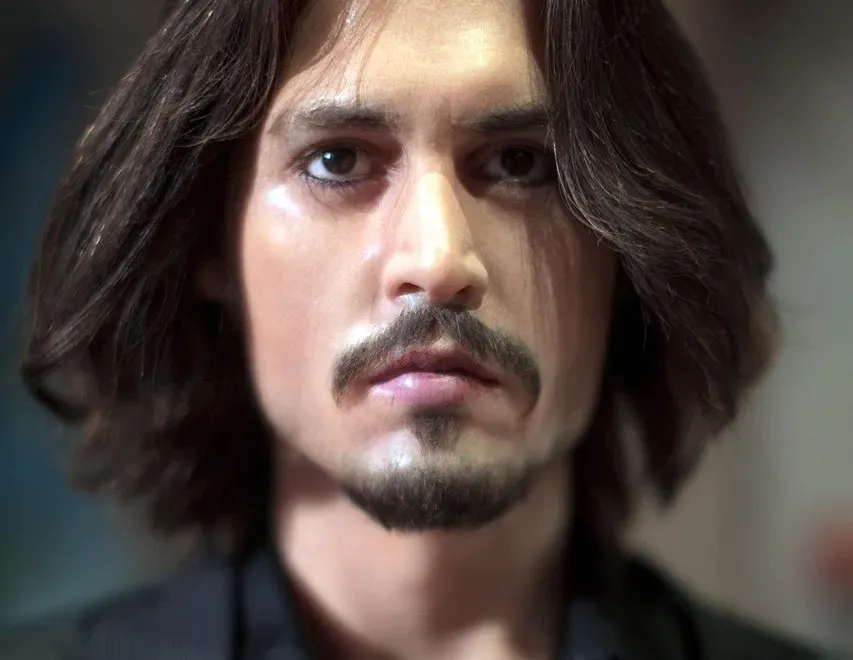
I think it is fair to say that no one quite predicted a defamation case between two actors would become the most-watched courtroom spectacle of the social media era. The trial was held in Fairfax County, Virginia, from April 11 to June 1, 2022, and ruled on allegations of defamation between formerly married American actors Johnny Depp and Amber Heard. Depp filed a complaint of defamation against Heard claiming $50 million in damages; Heard filed counterclaims against Depp claiming $100 million in damages. The Depp v. Heard lawsuit was the center of public attention with thousands of tweets daily regarding the lawsuits, clips of testimony obtaining over 27 million views on TikTok, and general public conversation over the six-week trial and jury deliberation.
A jury found both Amber Heard and Johnny Depp liable for defamation in their lawsuits against each other. The jury awarded significantly more damages to Depp, a legal win for the actor. The jury awarded Depp $10 million in compensatory damages and $5 million in punitive damages. The jury awarded Heard $2 million in compensatory damages and no money for punitive damages. The trial renewed debates around topics relating to domestic violence, domestic violence against men, the #MeToo movement, and women’s rights, although some commentators were skeptical of the trial’s long-term implications. In December 2022, both parties reached a settlement and dropped their appeals, with Depp’s lawyers stating that Depp would receive $1 million from Heard.
5. The Opioid Crisis Trials (2022–2025): Corporate America Faces a Reckoning

Not every trial that captivates the public involves a celebrity or a single dramatic defendant. Sometimes, the most consequential courtroom battles involve corporations, billion-dollar settlements, and a death toll so staggering it is difficult to comprehend. Here’s the thing about the opioid trials – they unfolded over years, not weeks, and they forced America to confront how pharmaceutical companies contributed to one of the worst public health disasters in the country’s history. In 2022, four U.S. companies – Johnson and Johnson, AmerisourceBergen, Cardinal Health, and McKesson – agreed to pay a combined $26 billion to settle numerous lawsuits alleging their businesses contributed to the opioid crisis.
In 2025, all 50 states as well as the District of Columbia and U.S. territories approved a $7.4 billion settlement with Purdue Pharma over the company’s improper marketing of opioids. These were not trials with a single shocking verdict moment. They were slow-burning legal battles that stretched across multiple years and involved entire states, communities, and generations of families affected by addiction. The 2020s have seen a wave of court cases against companies that helped fuel the opioid crisis, and the sheer scale of the settlements reflects just how serious the accountability became. Unlike the celebrity trials on this list, the opioid proceedings did not trend on TikTok. Yet the human weight behind them arguably surpasses all the others combined.
Looking back at these five cases, a pattern becomes hard to ignore. Each one held up a mirror to something uncomfortable about American society – whether that was racial inequality, the fragility of celebrity, the limits of forensic evidence, the power of social media to shape a verdict, or the reach of corporate greed. Trials attract us because they promise resolution, a verdict, a closing of the chapter. Honestly though, most of these cases never really closed. They just transformed into something else entirely. Which one do you think left the deepest mark on American culture?