Think about the last time you sat in a classroom, watched a child learn through play, or heard someone say “growth mindset” in a staff meeting. Chances are, the ideas behind those moments were shaped by a handful of remarkable individuals who refused to accept the status quo. Education, as we know it today, did not simply evolve on its own. It was pushed, pulled, and fundamentally reimagined by thinkers who were often misunderstood, even ridiculed, in their own time.
Honestly, it is surprising how few people know the names behind the ideas that govern how millions of children are taught every single day. From a Brazilian philosopher imprisoned for his beliefs to an Italian doctor who opened a school in a Roman slum, these five thinkers left marks on that are nearly impossible to overstate. Let’s dive in.
1. John Dewey: The Father of Learning by Doing
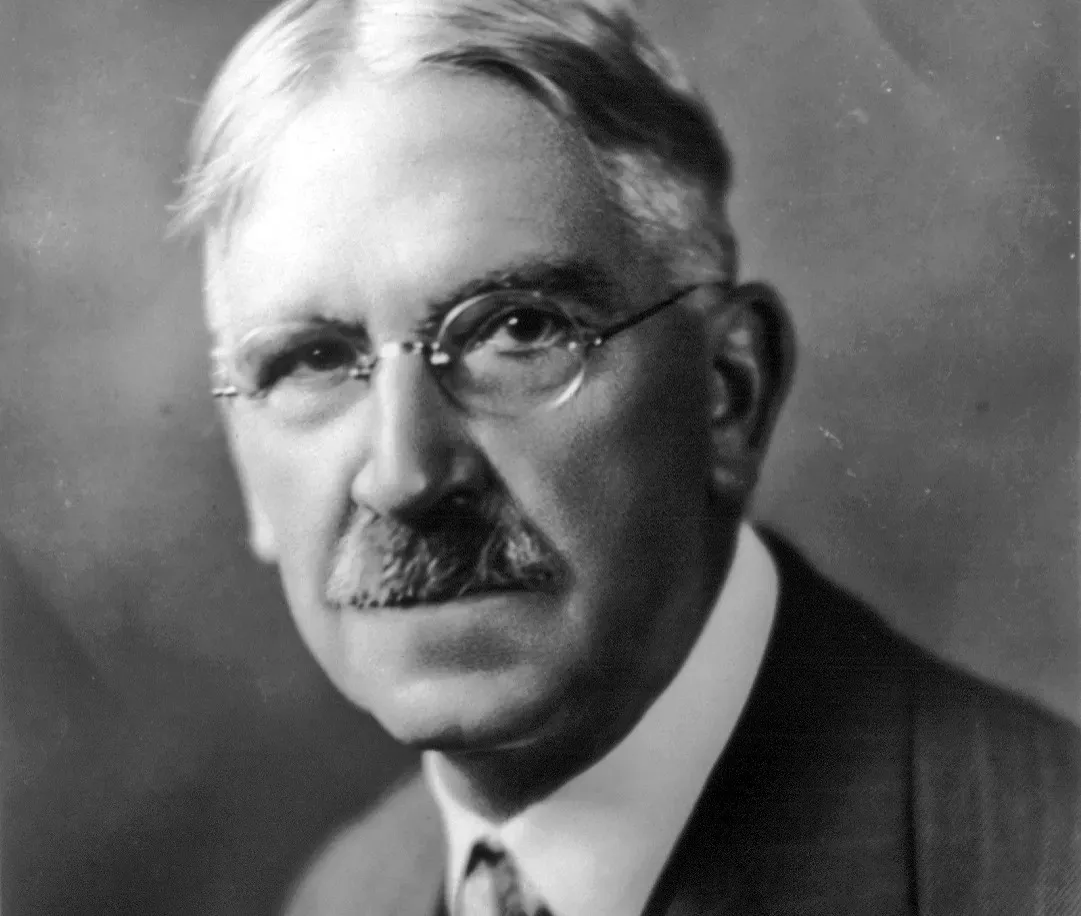
When we speak of , student-centered, inquiry-based, and real-world focused, we are, knowingly or not, invoking the legacy of John Dewey, an American philosopher, psychologist, and reformer who reshaped how generations of children around the world would learn. His concept of instrumentalism in education stressed learning by doing, directly opposing authoritarian teaching methods and rote learning. Think of it like the difference between reading a recipe and actually cooking the meal. Dewey believed the cooking was the whole point.
He saw the purpose of education as the cultivation of thoughtful, critically reflective, socially engaged individuals rather than passive recipients of established knowledge, and he rejected the rote-learning approach driven by predetermined curriculum which was the standard teaching method at the time. Dewey’s ideas went on to influence many other experiential models, including Problem-Based Learning, a method widely used in education today that incorporates his ideas about learning through active inquiry. His fingerprints are everywhere, even if few teachers realize it.
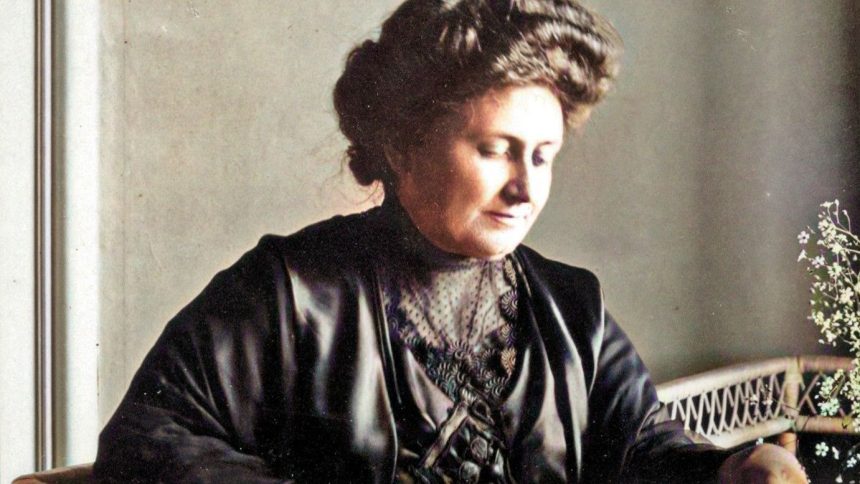
2. Maria Montessori: The Woman Who Redesigned the Classroom
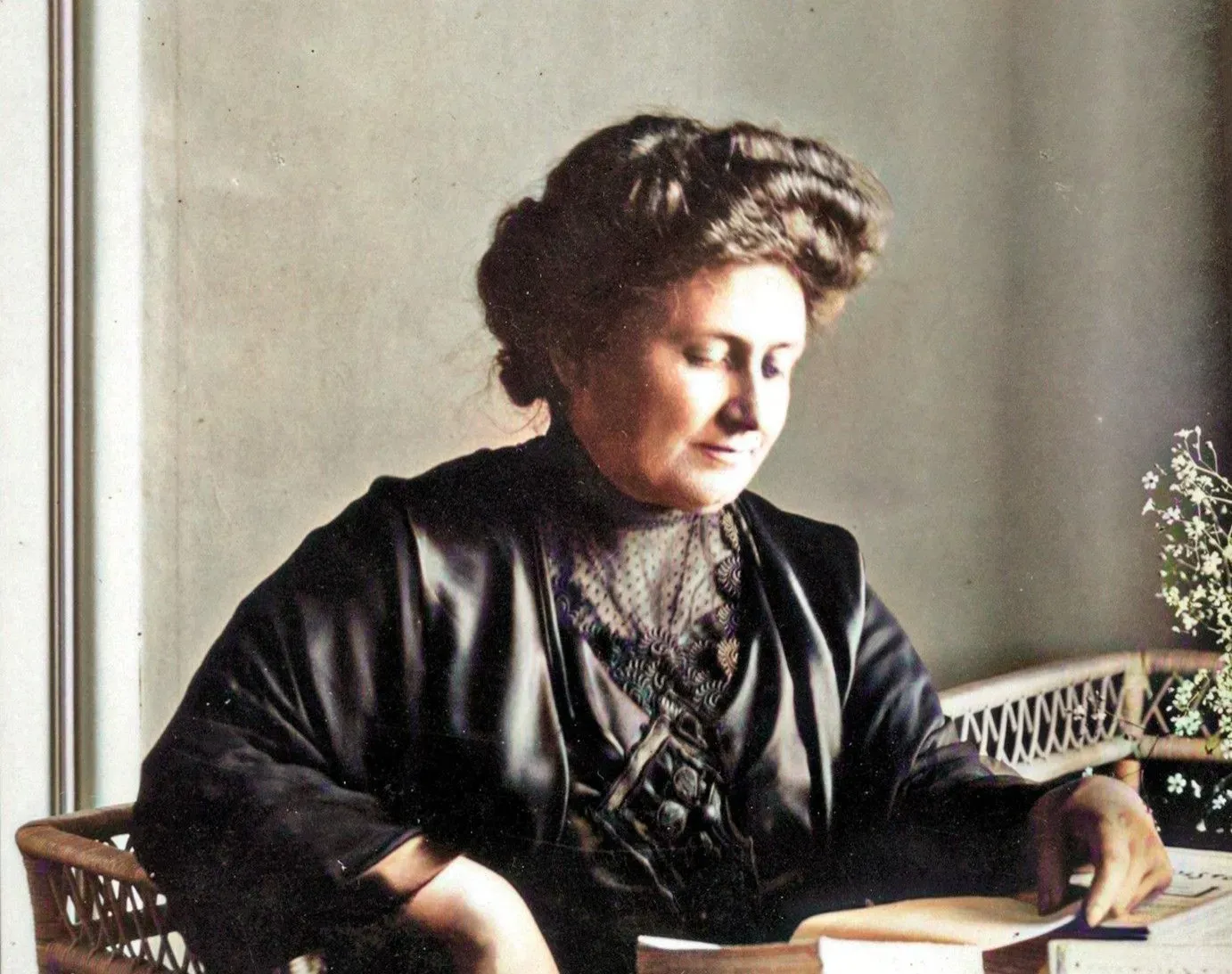
Maria Montessori was an Italian physician and educator best known for her philosophy of education, the Montessori method, and her writing on scientific pedagogy. Her career took a defining turn in 1907 when she opened the Casa dei Bambini in a working-class neighborhood in Rome, which became the testing ground for her revolutionary ideas and the birthplace of the Montessori method, where she worked with children from underserved families using her medical background to observe their natural behaviors with scientific precision. What she found there would change the entire concept of what a classroom could look like.
Many elements of have been adapted from Montessori’s theories, and she is credited with the development of the open classroom, individualized education, manipulative learning materials, teaching toys, and programmed instruction. Today, there are over 20,000 Montessori schools worldwide, serving children from infancy to adolescence. It is no surprise that many leaders, creatives, and entrepreneurs credit their Montessori education for shaping the way they think, with visionaries like Google founders Larry Page and Sergey Brin exemplifying how Montessori’s approach has left its mark on innovators in every field.
3. Paulo Freire: The Revolutionary Who Challenged the System
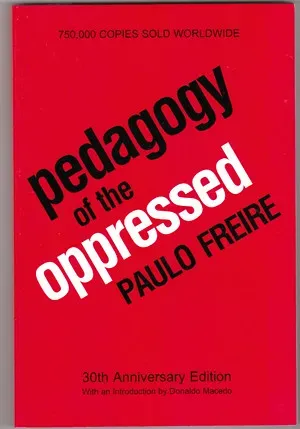
Born in 1921 in Recife, Brazil, Freire grew up experiencing poverty firsthand, an experience that permanently shaped his understanding of education and its relationship to power. His landmark work, Pedagogy of the Oppressed, written between 1967 and 1968, did not merely propose new teaching methods. It fundamentally challenged what education is for. The book is now considered one of the foundational texts of critical pedagogy, read in teacher education programs across the world and banned in others. That last detail tells you everything you need to know about how threatening his ideas were to those in power.
Partner offer
Freire is most widely known in education circles for his critique of what he called the banking model of education. In his view, conventional schooling treats students as passive receptacles into which teachers deposit pre-packaged knowledge. The teacher chooses what the learner is to know and transmits this knowledge without active participation from the learner. Students memorize and repeat; they do not think, question, or create. His success was so threatening to the existing order that after the military coup in Brazil in 1964, Freire was imprisoned for 70 days and subsequently exiled for nearly two decades, during which he worked with UNESCO and the Chilean Institute of Agrarian Reform, carrying his ideas far beyond Latin America.
4. Howard Gardner: The Man Who Multiplied Intelligence

Howard Gardner came along and started asking some tough questions about how the human brain actually learns. His research resulted in the Theory of Multiple Intelligences, which posits the idea that different people have different brains that best learn in different ways. Before Gardner, intelligence was largely measured through a narrow lens. It is a bit like judging a fish by its ability to climb a tree and then declaring every other animal unintelligent because they climb differently. Gardner’s theory broadened the field of how individuals display their intelligence by including linguistic, logical-mathematical, musical, bodily-kinesthetic, spatial, interpersonal, and intrapersonal intelligences.
Gardner’s theory of multiple intelligences redefined educators’ views of how students learn and should be assessed. Through his influence, there has been a greater emphasis placed on performance testing, and educators have become more conscious of the need for diversification of instructional strategies to match the different learning styles and strengths of students. Gardner’s work has thrown into question the idea of a single one-size-fits-all approach to education, though educators still struggle to fully transform his theories into practical classroom change. That gap between theory and practice remains one of the most interesting tensions in modern schooling.
5. Carol Dweck: The Psychologist Who Rewired How We Think About Effort

Carol Dweck is a professor of psychology known for her work on the mindset psychological trait. She argues that some people have a fixed mindset and consider success to be based on ability, while others have a growth mindset and believe success is based on hard work and learning. It sounds almost too simple, right? Let’s be real, the idea that believing you can improve actually helps you improve feels obvious once you hear it. Yet it took a Stanford psychologist and decades of rigorous research to make the educational world actually listen.
In the pursuit of optimizing individual potential, the growth mindset emphasizes the importance of a developing mindset, viewing failures as opportunities for learning, and creating a supportive learning environment. Carol Dweck’s foundational research helps explain how education systems narrowly focused on performance metrics can cultivate fixed, rather than growth, mindsets, encouraging compliance and performance management rather than deep learning, experimentation, and intellectual growth. Her practical advice to educators is to praise children’s efforts rather than their abilities from a young age, a shift that sounds small but has rippled through classrooms and parenting practices across the globe.
It is hard to look at this group of five thinkers and not feel a little humbled. Each of them, in their own way, asked a question that most people were too comfortable to ask: what if we are doing this all wrong? They were ignored, exiled, ridiculed, and sometimes jailed. Their reward, in many cases, was that the ideas they fought for eventually became so widespread that we forgot someone had to fight for them in the first place. What does that tell us about how education changes? Perhaps more importantly, what does it tell us about what still needs changing?
What do you think? Are there other thinkers who deserve a spot on this list? Let us know in the comments.
Partner offer
Planning a trip to Vegas?
Compare hotel rates and show tickets on VEGAS.com.