There’s a version of history that moves fast: breaking news, viral posts, protest chants that travel the globe in hours. Then there’s a slower version, the one that moves through paint on canvas, where an artist working alone in a studio somehow senses what the world is about to become. The two versions intersect more often than most people realize.
Long before journalists framed the narrative of any given era, painters were already doing it. Some of these works were ignored at the time, others were censored outright. Yet looking back, the prescience is hard to dismiss. Here are eleven paintings that read the room decades before the room existed.
1. Francisco Goya – The Third of May 1808 (1814)
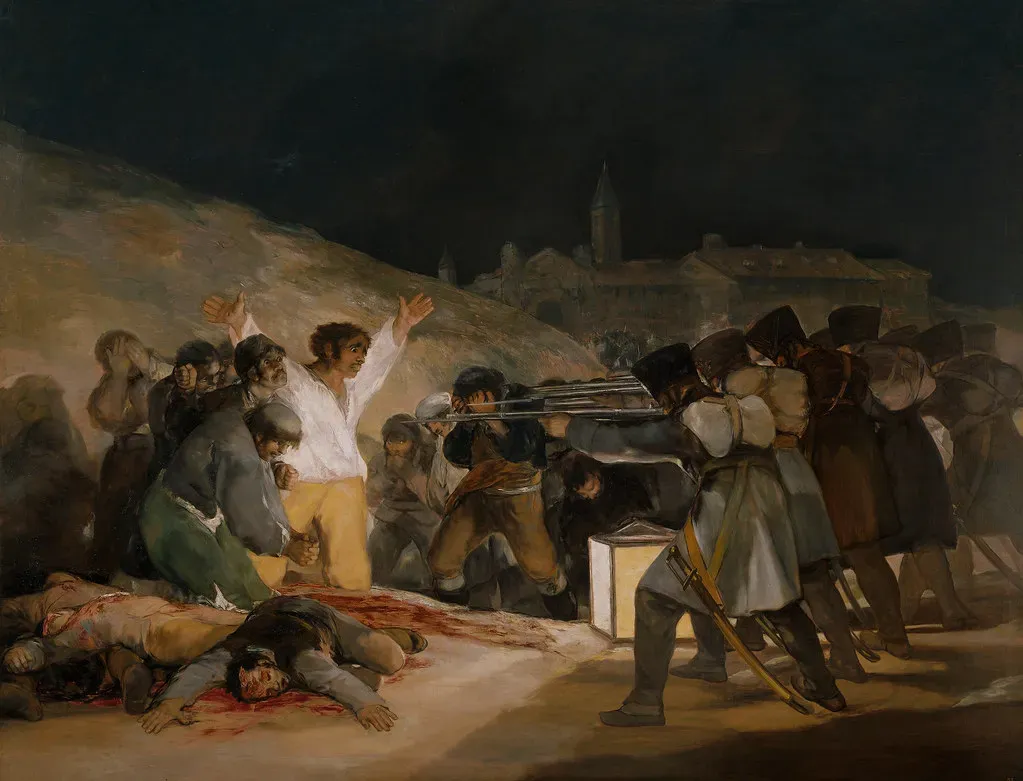
Painted six years after the event it depicts, Goya’s masterpiece captured something the official accounts of war almost never show: the humanity of the person about to be killed. The painting is a powerful anti-fascist statement that depicts the horrors of war and the suffering of innocent civilians. Long before photojournalism made civilian casualties unavoidable to look at, Goya forced the viewer to stare directly into that fact.
The white shirt glowing in lantern light, the outstretched arms echoing a crucifixion, the faceless line of soldiers, all of it stripped war of its pageantry. When the world has been flung into conflict, art has flown the flag about injustice. This is art that has made a difference. Goya’s canvas did this more than a century before anti-war movements organized at scale, and the image still resonates in protest art today.
2. Eugène Delacroix – Liberty Leading the People (1830)
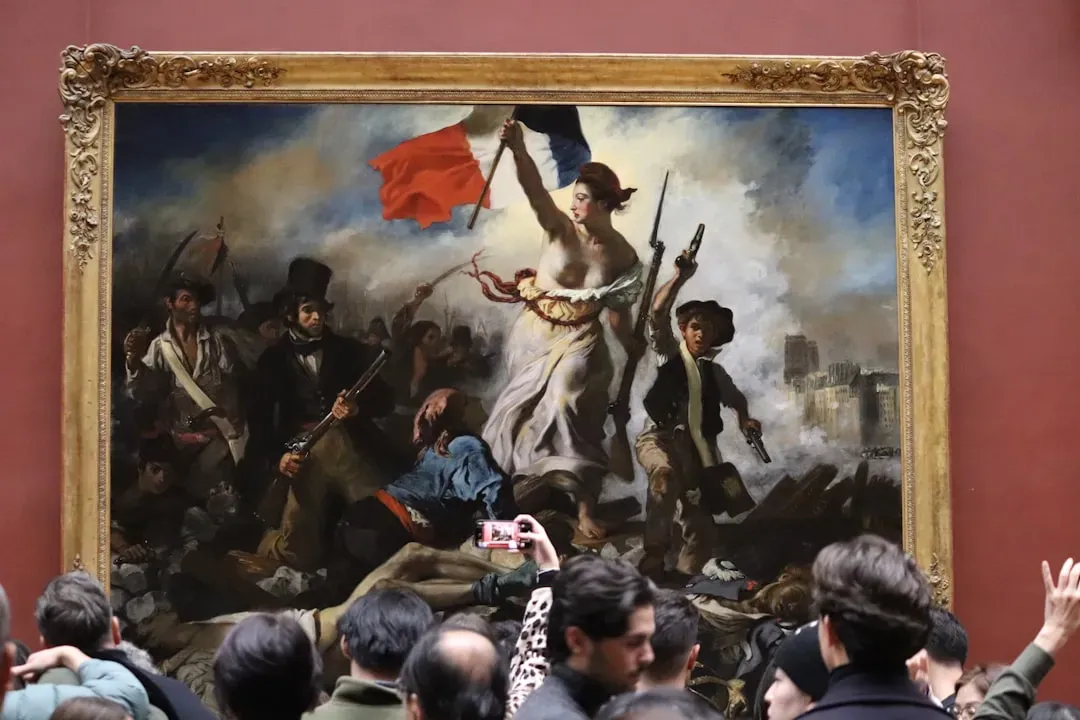
Eugène Delacroix’s Liberty Leading the People captures the spirit of revolution with its triumphant portrayal of the July Revolution in France. The painting shows Liberty, personified as a woman, leading a diverse group of revolutionaries forward with the French flag in one hand and a rifle in the other. What made this image radical for its time was not just its subject matter, but the suggestion embedded in the composition: that ordinary people from different walks of life could act together.
More than just a patriotic image, Liberty Leading the People became a symbol of freedom and democracy across Europe. Its influence spread far beyond its original context, inspiring future democratic movements and becoming a lasting representation of the people’s power to rise against tyranny. The painting essentially invented a visual grammar for revolution that activist imagery has drawn on ever since.
3. Jacques-Louis David – The Death of Marat (1793)
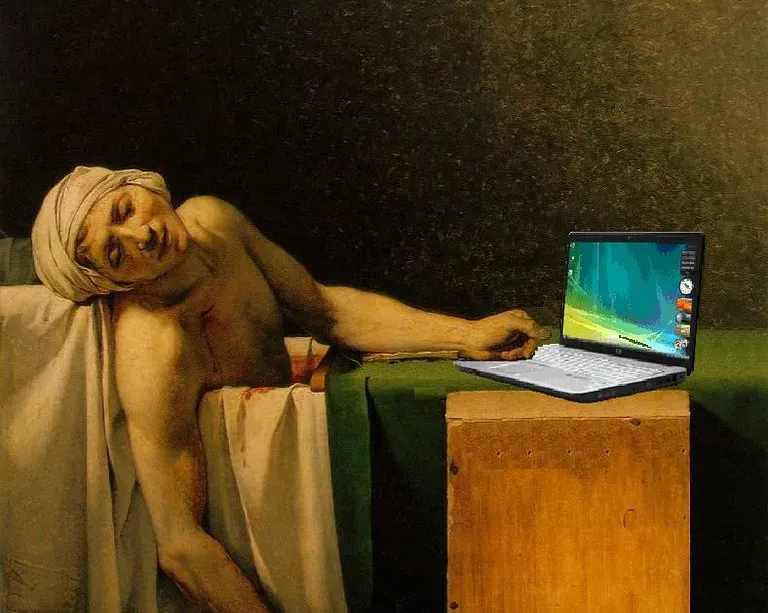
Jacques-Louis David’s The Death of Marat immortalizes the murdered French revolutionary leader Jean-Paul Marat. Painted during the height of the French Revolution, the work portrays Marat as a martyr, emphasizing his sacrifice for the cause. The stark realism and dramatic lighting give the painting an emotional intensity that resonated deeply with its audience.
By combining propaganda with masterful artistry, David turned Marat into an enduring symbol of revolutionary ideals. This artwork demonstrates how art can be a powerful tool for political messaging, shaping public sentiment and reinforcing ideological movements. In an era without mass media, David understood exactly how to manufacture a martyr, a technique political movements would rediscover again and again in the centuries that followed.
4. Pablo Picasso – Guernica (1937)
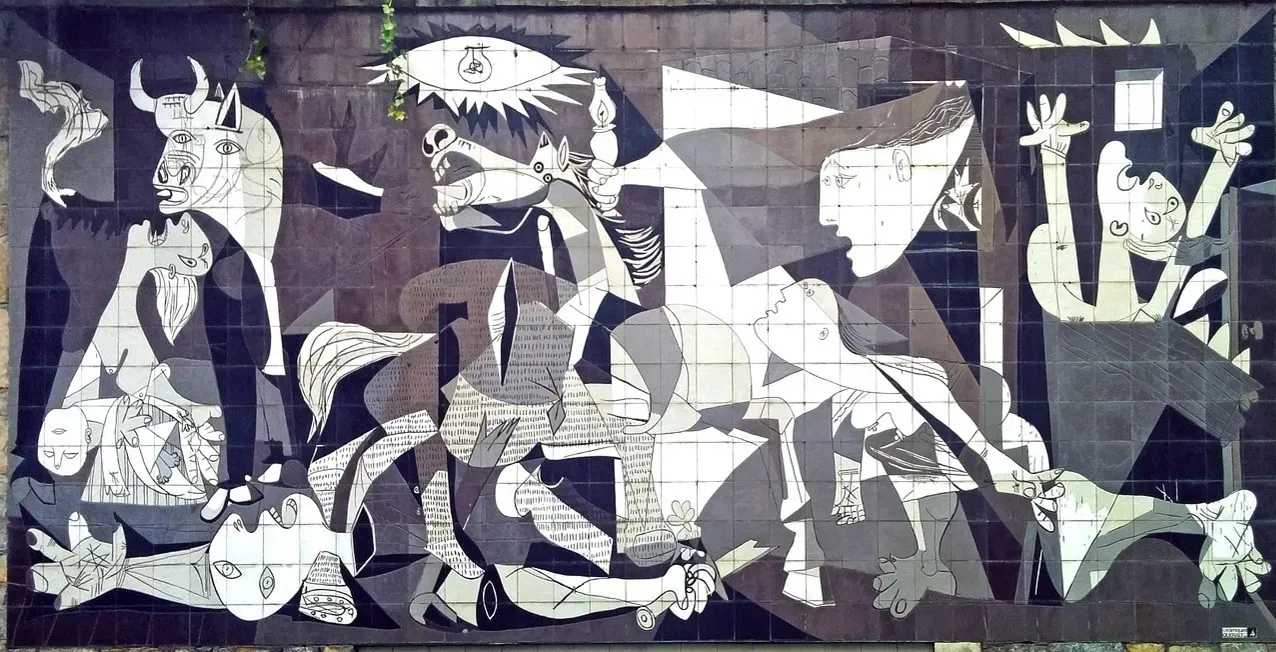
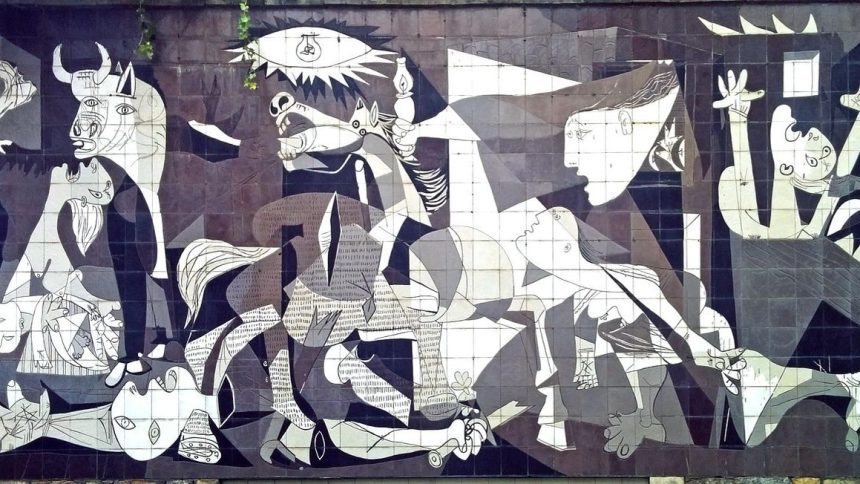
Painted in response to the Nazi bombing of the town of Guernica during the Spanish Civil War, this mural uses a monochromatic palette and distorted figures to evoke chaos, fear, and anguish. At over 11 feet tall and 25 feet wide, Guernica visually overwhelms viewers with its depiction of human and animal figures twisted in pain. The choice to strip color from such a violent scene turned it into something almost archaeological, a document of collective trauma rather than a moment of spectacle.
Picasso’s paintings raised awareness about the horrors of war and the dangers of fascism, but also stirred emotions and galvanised action among those who encountered them. In an era before social media and instant global communication, Picasso’s art played a crucial role in shaping public opinion and mobilising support for political causes. First displayed at the 1937 Paris World’s Fair, Guernica not only called attention to the horrors of fascism but also became a universal symbol of peace, referenced in countless demonstrations and peace initiatives ever since.
5. Diego Rivera – Man at the Crossroads (1934)
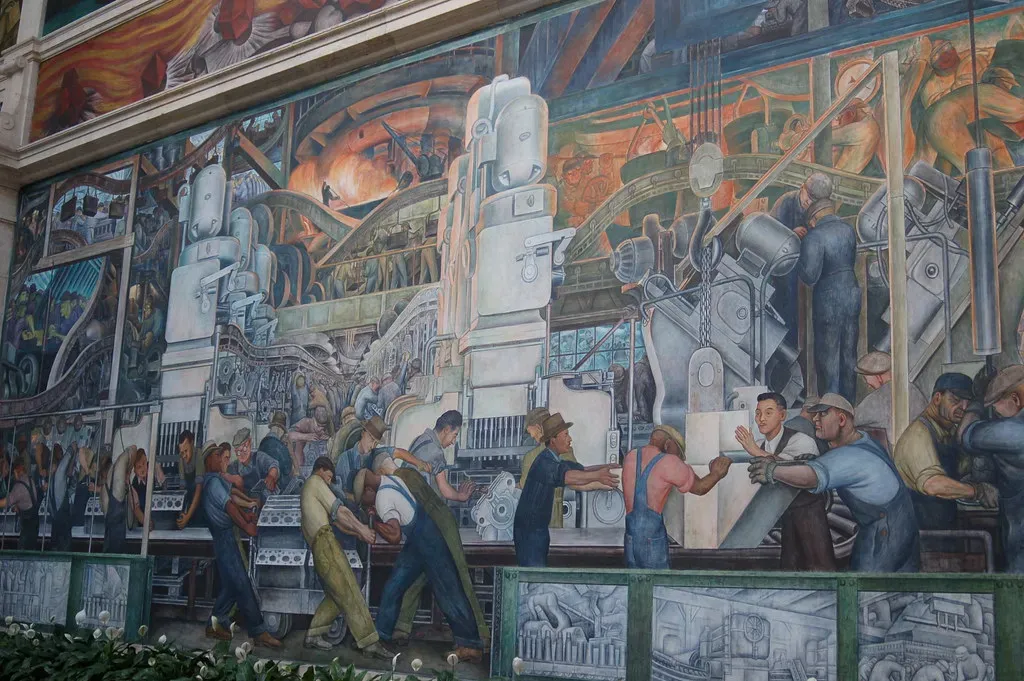
Diego Rivera’s mural Man at the Crossroads captures the ideological battle between socialism and capitalism, painted during a period when such discussions were stifled by fear and censorship. Rivera’s work, originally commissioned for New York’s Rockefeller Center but destroyed for its political content, presents humanity at a turning point, with technology, science, and industry on one side, and poverty, war, and oppression on the other.
Rivera’s large frescoes helped establish the mural movement in Mexico and around the world. A member of the Communist Party, Rivera painted murals that criticized the ruling class, the Catholic church, and capitalism. Between 1922 and 1953, Rivera painted murals in Mexico, including Mexico City and Cuernavaca, and in the U.S., where he painted large-scale murals in San Francisco, Detroit, and New York. The fact that Rockefeller had the mural destroyed rather than displayed is, in a way, its most eloquent review.
6. Édouard Manet – The Execution of Emperor Maximilian (1868–69)
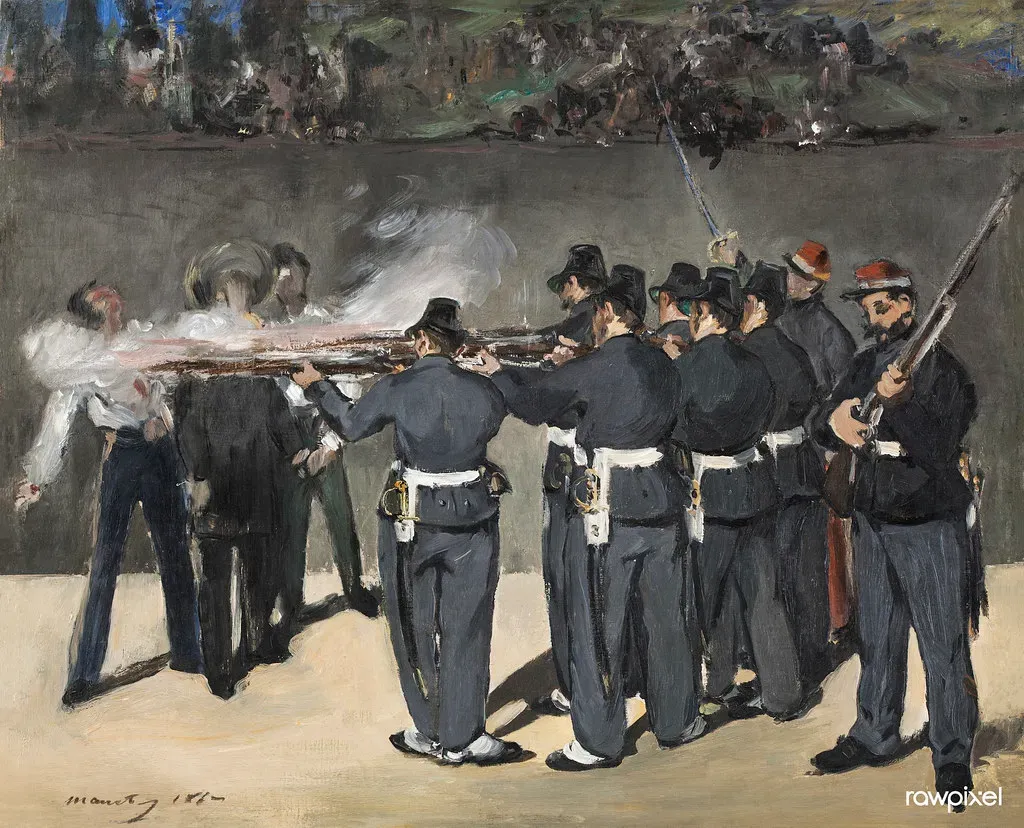
Édouard Manet’s The Execution of Emperor Maximilian stands as a powerful condemnation of imperialism and foreign intervention. Manet’s stark, almost journalistic, portrayal of Maximilian’s firing squad was controversial in its day, prompting authorities to confiscate some versions of the painting. The scene is unsparing, showing the emperor’s dignified yet doomed final moments, surrounded by Mexican soldiers.
Partner offer
Manet’s work questioned the morality and human cost of colonial adventures, anticipating the anti-colonial movements that would reshape the 20th century. The painting resonates with today’s debates on intervention and regime change, highlighting how art can spark conversations that the mainstream media may hesitate to begin. By capturing the injustice of imperial violence, Manet’s painting helped lay the groundwork for later critiques of colonialism in art and politics.
7. Frida Kahlo – Self-Portrait with Cropped Hair (1940)

Directly challenging gender norms, Self-Portrait with Cropped Hair shows the artist in a men’s suit with a traditionally male haircut. At the time of this painting, women traditionally presented with long hair and wearing a dress or skirt. In Mexico, a woman’s long hair was a sign of beauty and womanhood. Kahlo made a point of showing all of this being cut away, deliberately and without apology.
Self-Portrait with Cropped Hair reflects Kahlo’s rebellion against gender-normative roles, while powerfully restating her personal and professional autonomy. She was in many ways ahead of her time regarding her sexuality. She was forthcoming about her attraction to either sex. In a time when gender fluidity and non-binary identities were rarely discussed, Kahlo’s image predicted the rise of feminist and LGBTQ+ movements. Her unapologetic self-presentation challenges viewers to rethink what it means to be feminine or masculine.
8. Jacob Lawrence – The Migration Series (1940–41)
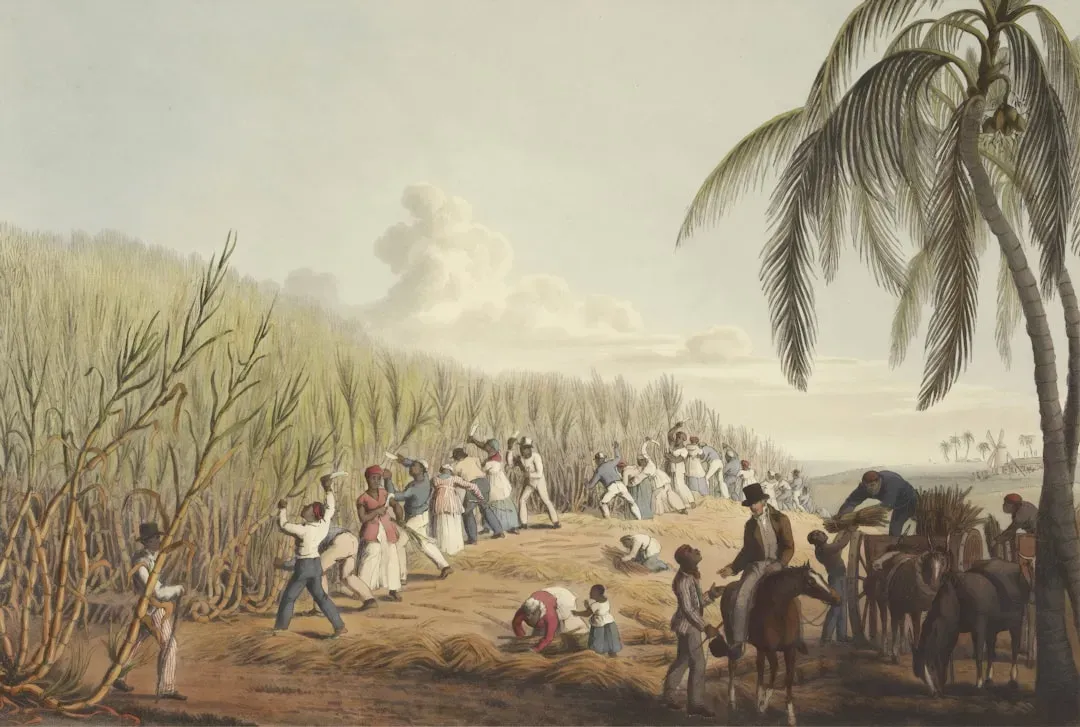
Jacob Lawrence’s Migration Series, a sequence of 60 paintings, depicts the mass movement of African Americans from the rural South to the urban North between World War I and World War II, a development that had received little previous public attention. Lured by job opportunities and enabled by a newly accessible railway system, the migrants were also fleeing the racial discrimination and violence propagated by oppressive Jim Crow laws.
More than 6 million African-Americans migrated to the North between 1910 and 1970. Migration abated only when living conditions in the South began to improve with Civil Rights advances. Lawrence’s project radically reimagined history painting for modern times, and dared to elevate the story of a marginalized group to the level of high art, for all people to remember and behold forever. The series was completed years before the Civil Rights movement reached its public crescendo, yet it named all the tensions that would eventually boil over.
9. Jean-Michel Basquiat – Untitled (1982)
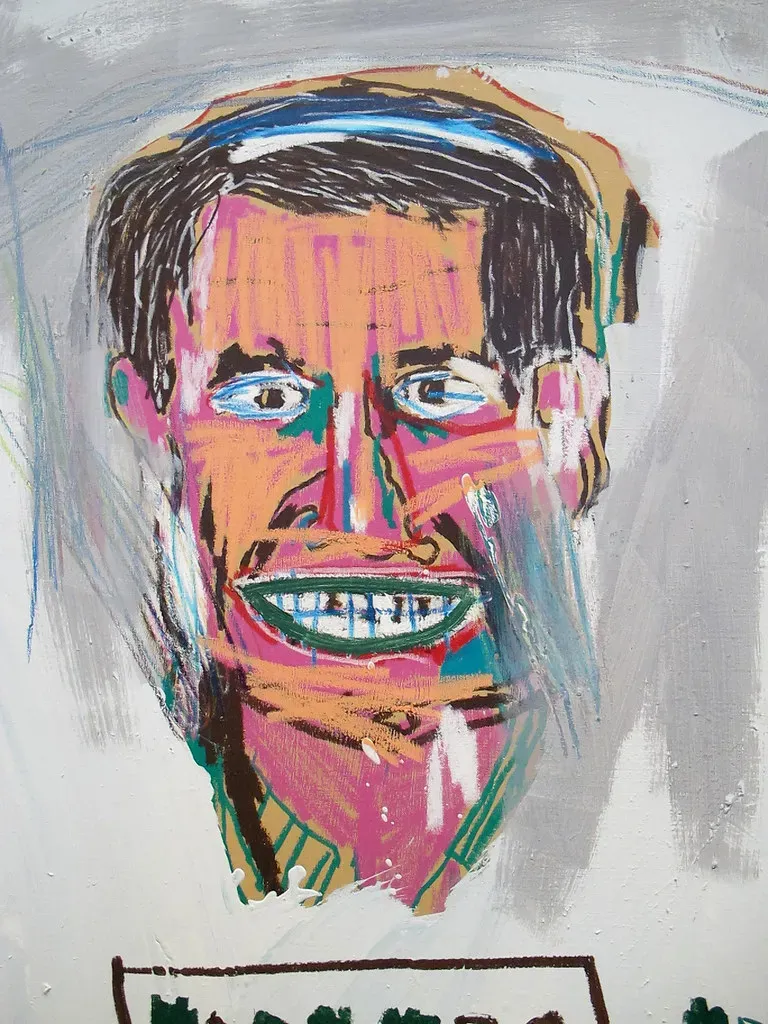
Jean-Michel Basquiat’s political art frequently homed in on themes of race and identity. The artist would often layer his paintings with fragmented and disjointed words, symbols and images that reflected his own experiences as a Black artist who was all too familiar with oppression in the Black community. His canvases looked chaotic on the surface, but every choice was deliberate.
Combining graffiti, text, and expressive imagery, Basquiat critiques the whitewashing of history and the marginalization of Black voices, long before the rise of movements like Black Lives Matter. His painting is both a celebration and a protest, offering a complex view of identity, power, and resistance. Basquiat’s work predicted the explosion of interest in re-examining history and demanding justice for marginalized communities.
10. Gustave Courbet – The Stonebreakers (1849)

Gustave Courbet was given a disapproving critical reception due to the activist message highlighting harsh working conditions in France. He created a sensation at the 1850–51 Paris Salon with his painting of his hometown of Franche-Comté, which challenged convention with scenes of daily life in an emphatically realistic style on large canvases usually reserved for history paintings. The audacity was in the scale: working-class subjects rendered with the same gravity reserved for kings and gods.
His now lost The Stonebreakers and A Burial at Ornans were derided by critics, as his art criticized the social hierarchy through his harsh depictions of rural life. The Great Depression was the first time in US history that a widespread movement of artists began to address politics. They actively found ways to influence society through exhibition and distribution of their work. Artists organized exhibitions around social and political themes such as poverty, lack of affordable housing, anti-lynching, anti-fascism, and workers’ strikes. Courbet lit the torch that later artists carried.
11. Keith Haring – Untitled (AIDS Series, 1985)
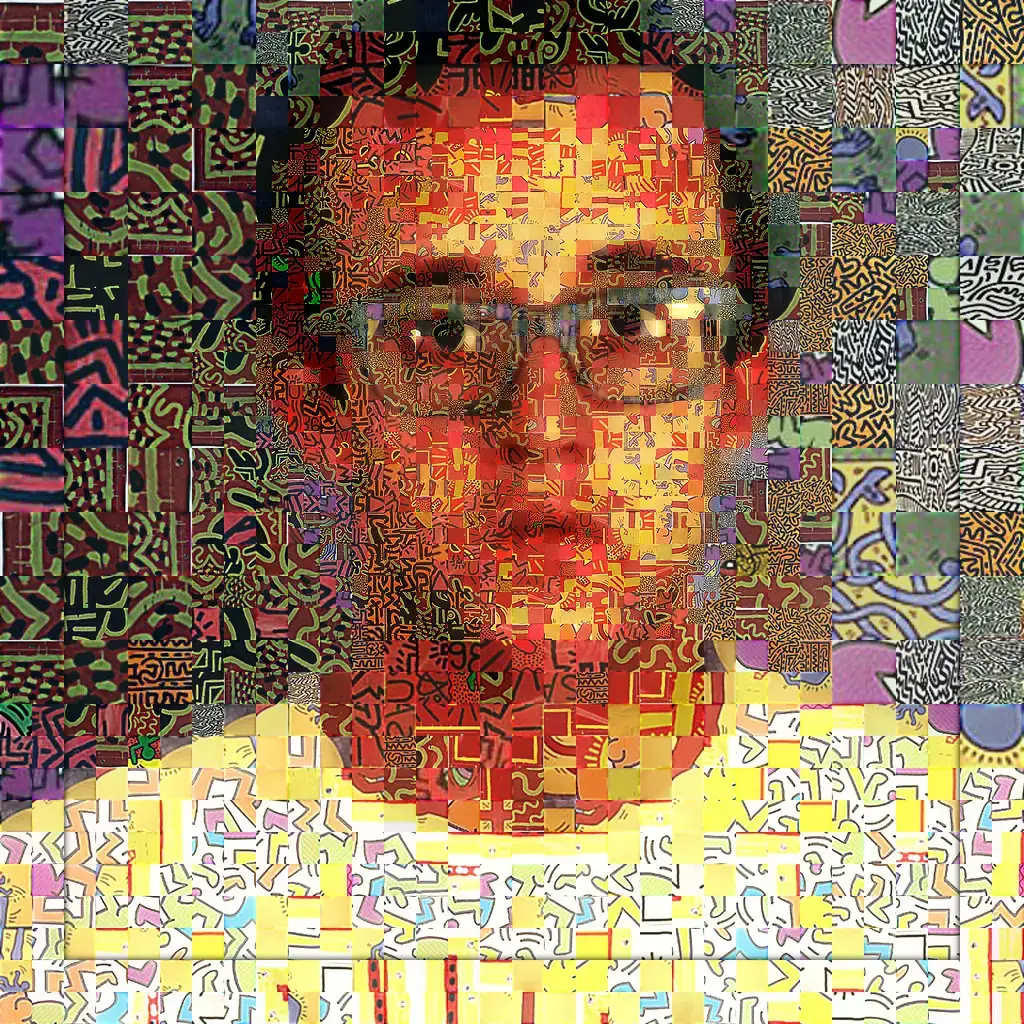
Haring’s trademark murals of figures and symbols proved particularly powerful tools of social activism, used to advocate for AIDS awareness and anti-crack and anti-apartheid themes. Using simple, cartoon-like figures and urgent text, Haring’s work made the invisible epidemic impossible to ignore. His art empowered the LGBTQ+ community and allies to demand action and speak out against stigma, foreshadowing the awareness campaigns and policy changes that would come years later.
The 1983 screen print Fertility Suite Untitled 4 was created by Haring to highlight the prevalence of HIV among pregnant women in Africa. This powerful tribute highlights the horrors faced by pregnant women living with HIV/AIDS, who faced debilitating illness, social isolation, and certain death within years. Haring’s imagery remains a symbol of activism, courage, and the impact that art can have in fighting public health crises. At a time when official channels avoided the topic, his paintings refused to.
What connects these eleven works is something simpler than prophecy: each artist was paying closer attention than the institutions around them. Throughout the history of social movements and social revolt, art has always reacted against oppression, violence, injustice, and inequalities. Addressing socio-political issues and challenging the traditional boundaries and hierarchies imposed by those in power, art can open up space for the marginalized to be seen and heard. The canvas absorbed what the newspaper couldn’t yet print. That’s not mysticism. That’s what happens when someone looks honestly at the world and refuses to look away.
Partner offer
Planning a trip to Vegas?
Compare hotel rates and show tickets on VEGAS.com.