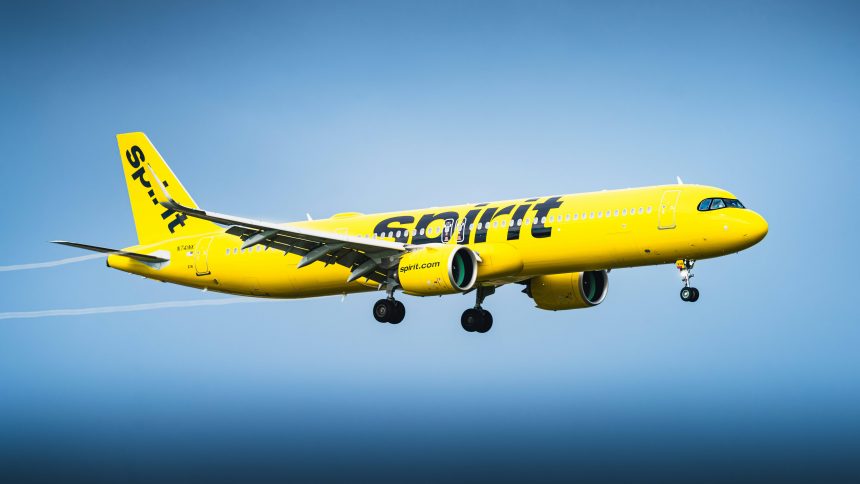
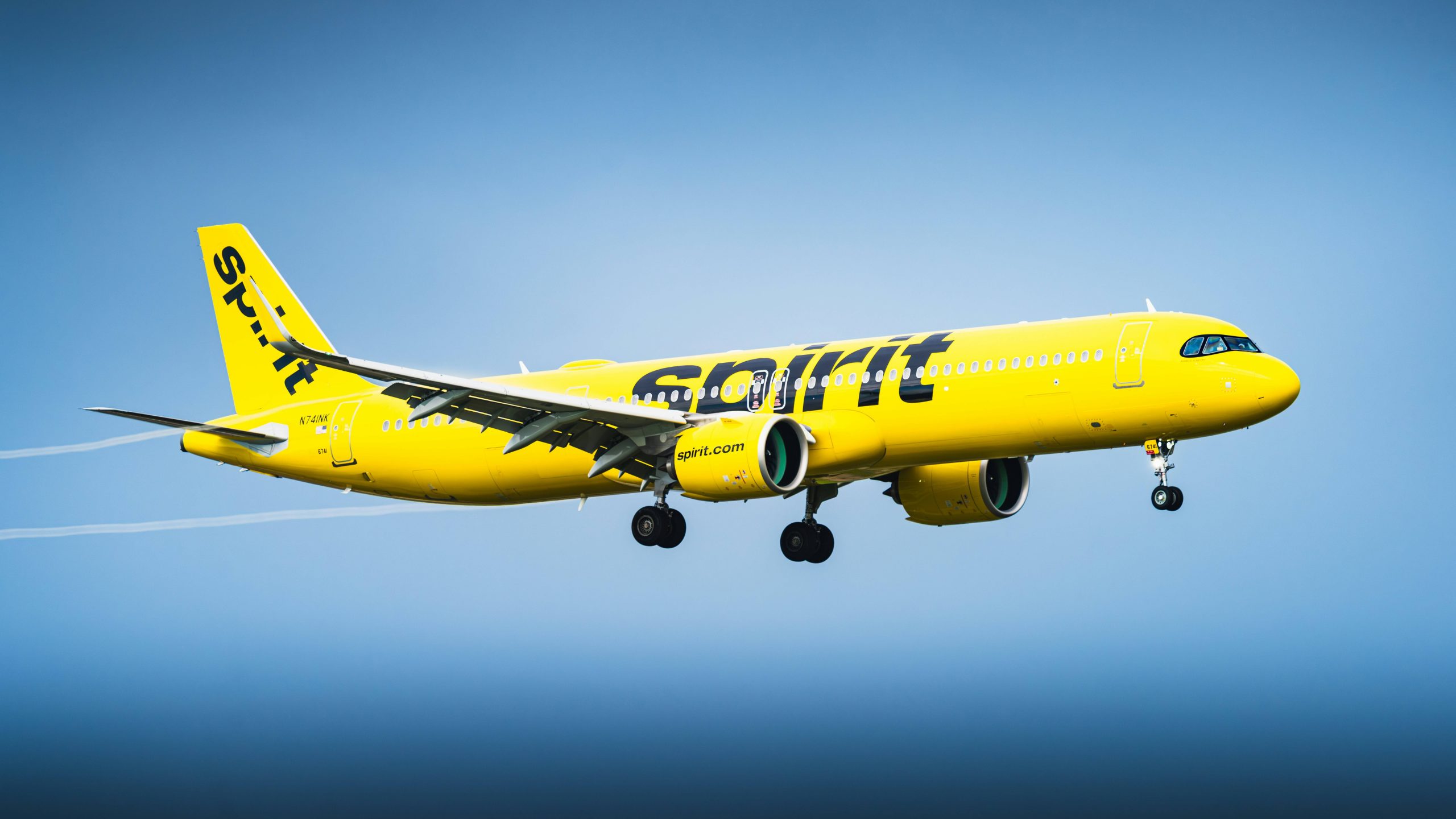
Spirit Airlines leaves Las Vegas, ends operations after 34 years – Image for illustrative purposes only (Image credits: Unsplash)
Las Vegas – Travelers who relied on Spirit Airlines’ signature yellow planes for bargain fares to and from Harry Reid International Airport faced an abrupt change on Saturday. The ultra-low-cost carrier announced it had gone out of business after 34 years and begun an orderly wind-down of operations, effective immediately.[1][2] All flights stood canceled, leaving passengers to seek refunds without assistance for rebooking.
The Announcement and Its Immediate Effects
Spirit Airlines issued the statement on its website, marking the end of a model that reshaped budget air travel. The company expressed pride in its contributions over the decades. “We are proud of the impact of our ultra-low-cost model on the industry over the last 34 years and had hoped to serve our guests for many years to come,” the announcement stated.[1]
Customer service lines went dark as the wind-down took hold. Officials at Reid Airport confirmed the ticket counter operated normally into Friday, but the carrier’s diminished role meant limited disruption at the hub.[2] Rival airlines stood ready to fill any gaps left by the exit.
A Legacy of Service in Las Vegas Skies
For 34 years, Spirit Airlines connected Las Vegas to destinations across the U.S. with its no-frills approach. The carrier once ranked as the second-busiest at Harry Reid, offering hundreds of daily flights. Over time, financial pressures forced repeated cuts, transforming its presence from expansive to skeletal.
In the first quarter of 2026 alone, Spirit carried 419,917 passengers to and from Las Vegas, securing its spot as the eighth-busiest airline at the airport.[2] Busiest routes included frequent service to Southern California hubs like John Wayne Airport in Santa Ana and Hollywood-Burbank Airport, alongside Los Angeles, Houston, and Reno.
Drastic Reductions Preceded the Final Curtain
Spirit’s footprint in Las Vegas had shrunk dramatically even before the shutdown. A year earlier, the airline ran 221 daily flights to 36 destinations from Reid. By early 2026, that number fell to about 70 flights per day across just 10 routes – all served by competitors such as Southwest Airlines.[2]
Earlier moves included furloughs of nearly 400 Las Vegas-based flight attendants in late 2025 and the elimination of multiple routes from the market. These steps reflected broader efforts to stem losses amid rising costs and capacity adjustments. Every destination on Spirit’s remaining schedule maintained alternative service, softening the blow to connectivity.
Financial Woes Seal the Fate
Persistent unprofitability plagued Spirit since 2019, with over $2.5 billion in losses since early 2020. The carrier filed for Chapter 11 bankruptcy twice – first in November 2024 and again in August 2025 – grappling with $8.1 billion in debt.[1] Soaring jet fuel prices, fueled by the war in Iran, compounded the strain.
Aviation analyst Mike Boyd highlighted deeper issues. “The fact that Spirit has lost money consistently for the last five years or more, and despite that the airline has already parked over 100 airplanes and despite that Spirit’s operating strategy is lost in space, and despite the fact that it’s in Chapter 11 for the second time in two years,” he noted.[2] Hopes for a $500 million federal bailout faded, leaving roughly 17,000 jobs nationwide in jeopardy.[1]
Spirit really does not have a young fleet… Just about all the ‘neo’ Airbus units are being returned to lessors.
Mike Boyd, Boyd Group International
What Lies Ahead for Local Travelers and the Airport
While the shutdown rippled through budget-conscious circles, Las Vegas travelers encountered minimal immediate chaos at Reid. Competitors absorbed capacity on affected routes, preserving access to key markets. Still, the loss marked the end of an era for those who prized Spirit’s deep discounts.
Airport officials anticipated smooth transitions, with no long-term gaps in service. The episode underscored vulnerabilities in the ultra-low-cost sector amid high fuel costs and consolidation. For Las Vegas, a tourism powerhouse dependent on affordable access, the shift prompted questions about fare pressures in a less competitive landscape.[2]