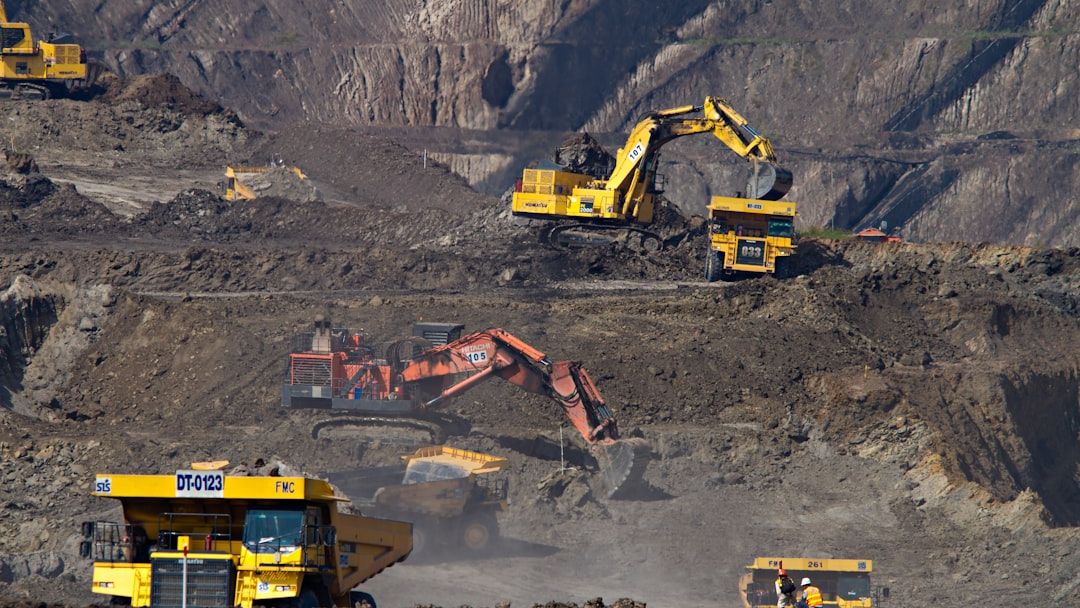
‘It will surprise most people’: Mining association CEO says the industry benefits B.C.’s urban communities – Image for illustrative purposes only (Image credits: Unsplash)
Residents in Metro Vancouver and Vancouver Island often overlook the rural mines dotting British Columbia’s vast interior, yet those operations underpinned $3.5 billion in economic activity for urban centers in 2024. This substantial contribution emerged from a detailed analysis by the Mining Association of B.C., which underscored how the province’s resource sector sustains city-based jobs and growth. The findings arrived amid broader economic pressures, offering a reminder of mining’s far-reaching ripple effects.
Quantifying the Hidden Connections
The association’s report detailed the flow of wealth from 18 active mines scattered across remote regions. In total, these sites generated widespread economic activity, with a notable portion landing directly in urban hubs. Metro Vancouver and Vancouver Island captured the lion’s share of indirect benefits through supply chains, services, and professional roles.
Specifically, 22 percent of the jobs supported by existing mines – totaling around 16,000 positions – reside in these urban areas. Such figures highlight a dependency that urban dwellers rarely consider in daily life. The analysis aimed to bridge that perceptual gap, showing how rural extraction translates into tangible city prosperity.
Industry Leader Spotlights City Gains
Michael Goehring, CEO of the Mining Association of B.C., presented the data during his seventh annual address to the Greater Vancouver Board of Trade. He stressed the distance many urban British Columbians feel from the sector. “I think the mining sector is very distant to most people living in urban British Columbia,” Goehring said.
Goehring pushed for greater awareness, noting that city residents stand to gain proportionally from industry growth. He emphasized the need for locals to recognize these ties. “It’s important that British Columbians, folks who live in Metro Vancouver, understand and know that,” he added.
Prospects of a Coming Expansion
Goehring projected even larger urban windfalls from new projects. A single additional mine could inject $1.6 billion into the Lower Mainland’s GDP while creating thousands of jobs. These estimates reflect the sector’s potential to counter recent economic slowdowns.
“One new mine in the province will generate, I think, $1.6 billion in GDP in the Lower Mainland and several thousand jobs,” Goehring stated. “I think it will surprise most people.” Such developments promise to amplify existing patterns, linking rural innovation to urban vitality.
Regulatory Roadblocks and Reconciliation Efforts
Despite optimism, Goehring urged the provincial government to accelerate mine permitting and resolve uncertainties tied to the Declaration on the Rights of Indigenous Peoples Act (DRIPA). Legal challenges invoking DRIPA have mounted, including recent cross-border actions by U.S. Indigenous groups against projects like Skeena Resources’ Eskay Creek revitalization in northwest B.C.
These disputes have sparked concerns over a potential “sovereignty crisis,” as noted by Conservative critic Scott McInnis. Goehring described the uncertainty as unsettling, especially for early-stage developers. He advocated increased funding for First Nations capacity-building to foster trust and streamline reviews.
“I don’t think anybody disagrees with the concept of reconciliation. It’s not about that. It’s about how it’s being done,” Goehring remarked. Major companies, he noted, maintain long-standing partnerships with First Nations predating DRIPA.
Key Urban Mining Impacts:
- $3.5 billion economic contribution to Metro Vancouver and Vancouver Island in 2024
- 16,000 jobs (22% of total supported positions) in urban areas
- Potential $1.6 billion GDP boost per new mine in the Lower Mainland
- Thousands of additional jobs from expansions
As B.C. positions mining as vital for economic sovereignty in a global market, resolving these tensions will determine whether urban benefits continue to flow unchecked. Investors favor regions with predictability, and stakeholders from First Nations to city workers await clearer paths forward. The sector’s future hinges on balancing growth with reconciliation, ensuring rural mines keep powering urban lives.