In Approving Alabama Gerrymander, the Roberts Court Shows Its Naked Political Bias – Image for illustrative purposes only (Image credits: upload.wikimedia.org)
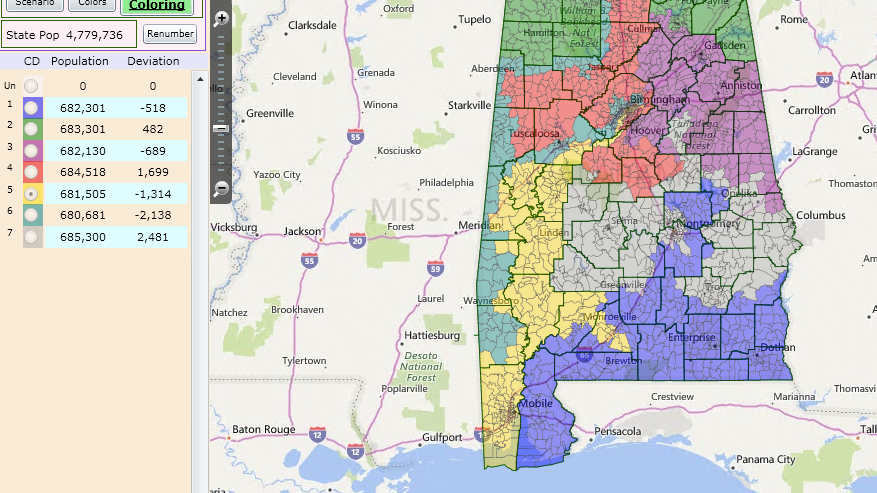
The Supreme Court’s recent 6-3 order has allowed Alabama to move forward with a congressional map that contains only one majority-Black district ahead of the 2026 midterm elections. The decision follows closely on the heels of the court’s ruling in Louisiana v. Callais and reverses earlier lower-court findings that had required the state to create a second such district. For Black voters in Alabama, who make up roughly 27 percent of the population, the outcome means continued limits on their ability to elect preferred candidates in most of the state’s seven House seats.
Why the Ruling Matters for the Coming Election Cycle
This intervention arrives at a critical point in the redistricting calendar. Alabama’s Republican-controlled legislature had already drawn a map with just one majority-Black district after the 2020 census, prompting years of litigation. The latest order effectively locks that configuration in place for the primaries and general election next year, even as mail voting has begun in some areas.
Stakeholders across the state now face a compressed timeline. Democratic candidates and civil-rights groups that had relied on prior court orders must adjust strategies quickly, while Republican leaders gain certainty for their own planning. The change also sets the stage for potential further adjustments before the 2028 cycle if the legislature chooses to pursue an even more restrictive map.
Key Developments in the Alabama Litigation
The dispute traces back to the 2020 census and the state’s initial refusal to create two majority-Black districts. In 2023 the Supreme Court, in Allen v. Milligan, directed Alabama to add a second such district. A three-judge federal panel later found that the state’s revised plan still violated the Voting Rights Act and involved intentional racial discrimination.
After the Callais decision weakened certain Voting Rights Act protections, Alabama moved to eliminate both majority-Black districts. The Supreme Court’s one-paragraph emergency order set aside the lower court’s detailed findings without a full hearing on the constitutional claims. Justice Sonia Sotomayor’s dissent noted that the Callais ruling had not addressed intentional-discrimination standards under the Fourteenth Amendment.
Practical Consequences for Voters and Representation
Under the approved map, Black voters will have a realistic chance to elect their preferred candidate in only one of seven districts. The remaining seats are drawn in ways that favor Republican candidates, including one district that is only 40 percent Black and historically leans heavily toward one party.
This configuration affects not only electoral outcomes but also the day-to-day work of representation. Constituents in areas with large Black populations will have fewer members of Congress who share their demographic background and policy priorities. Community organizations that track voting access are already preparing for the possibility of reduced turnout in districts where influence appears diminished.
Effects Across the South and Future Outlook
Alabama’s experience is part of a wider pattern. In recent weeks Tennessee eliminated its sole majority-Black district, and Louisiana, South Carolina, and Mississippi are considering similar steps. The Callais precedent has given Republican-led legislatures greater latitude to redraw lines before the next round of elections.
Legal experts note that the Supreme Court’s use of its emergency docket to resolve these disputes has accelerated the pace of change. While the justices have previously cited the need to avoid last-minute confusion under the Purcell principle, the Alabama order came just days before the state’s primary. Observers expect additional challenges in lower courts, though the window for meaningful relief before November 2026 remains narrow.
The decision leaves open questions about how states will balance competing legal standards in the years ahead. Redistricting commissions, state legislatures, and advocacy groups will continue to test the boundaries of the court’s recent guidance as they prepare for the 2028 cycle and beyond.