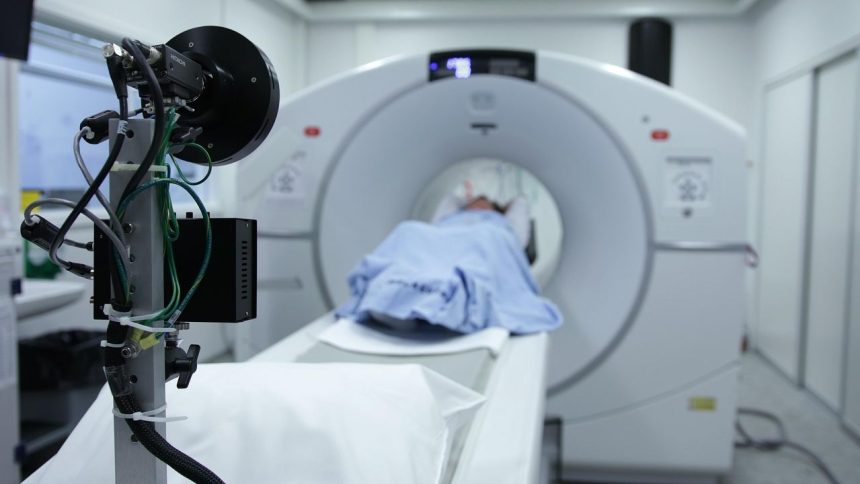

When Minutes Matter, What Is AI’s Role? – Image for illustrative purposes only (Image credits: Pixabay)
In emergency medicine, delays in interpreting scans can shift the course of treatment for patients facing stroke, trauma, or internal bleeding. Artificial intelligence now processes medical images as they are acquired and highlights findings that require immediate review. This capability, advanced by platforms such as the one developed by Aidoc, targets the narrow window when rapid decisions determine outcomes.
Speeding Detection Without Replacing Judgment
Traditional image review depends on radiologists who may already be managing high volumes of cases. An AI system that examines every scan in the background can surface critical patterns within seconds of acquisition. Clinicians still make the final call, yet they receive an earlier alert that narrows the search for subtle but dangerous abnormalities.
The technology does not claim perfect accuracy. It functions as an additional layer that reduces the chance a time-sensitive finding slips through during peak hours or overnight shifts. Hospitals using such tools report that the alerts integrate directly into existing workflows rather than creating new steps.
Improving Consistency Across Busy Departments
Diagnostic quality can vary with fatigue, experience level, or sheer caseload. AI applies the same analytical criteria to every image, regardless of the hour or the number of studies waiting. This uniformity helps maintain standards even when staffing is stretched thin.
Partner offer
Facilities that have adopted the approach note fewer instances of overlooked findings that later require urgent intervention. The system flags only those cases meeting predefined urgency thresholds, leaving routine studies for standard review.
Extending Specialized Insight to More Settings
Not every hospital maintains round-the-clock subspecialty coverage. Real-time AI analysis can surface findings that might otherwise wait for an on-call expert. Smaller centers or those in rural areas gain access to a level of scrutiny previously limited to large academic institutions.
Access gains matter most for conditions where minutes translate directly into tissue damage or loss of function. The platform processes data locally or through secure connections, preserving patient privacy while delivering the alert to the treating team.
| Aspect | Traditional Process | AI-Assisted Process |
|---|---|---|
| Initial Review Time | Minutes to hours depending on queue | Seconds after image acquisition |
| Consistency | Varies with workload and fatigue | Uniform criteria applied to every case |
| Alert Delivery | Relies on radiologist availability | Direct notification to care team |
Questions remain about long-term integration, liability frameworks, and the precise impact on overall error rates. Early deployments show the technology functions best when paired with clear protocols that keep human oversight central. As more institutions test these systems, the focus stays on measurable improvements in the moments that matter most for patient survival and recovery.
Partner offer
Planning a trip to Vegas?
Compare hotel rates and show tickets on VEGAS.com.