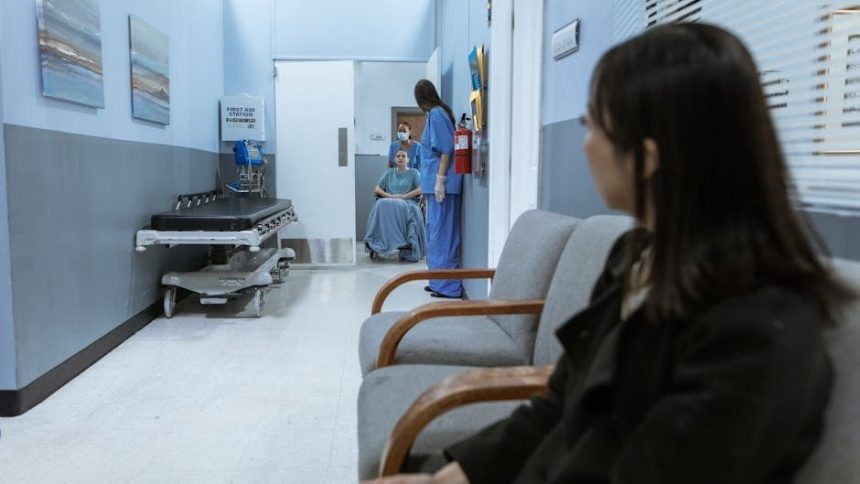

Seniors are dying in hospital beds waiting for long-term care as B.C. waitlists span years – Image for illustrative purposes only (Image credits: Pexels)
Families in British Columbia are watching elderly relatives spend their final months or years confined to hospital beds because long-term care spaces remain out of reach. One daughter described how her mother, after recovering from an acute episode, could not return home or access promised support programs and instead waited in a facility until her condition worsened beyond recovery. The experience highlights a system where projected shortfalls continue to grow even as construction projects stall.
A Family’s Prolonged Ordeal
Laura Kyle’s mother, Barbara Donaldson, entered hospital care in February 2025 after complications from Parkinson’s disease. She spent seven months moving between Victoria General Hospital and the Gorge Road Health Centre before her death in September. Officials with the Vancouver Island Health Authority informed the family that a public long-term care bed could take up to two years, and earlier options for home-based support had been eliminated one by one.
Kyle and her husband had begun exploring private options and were preparing to borrow against their home when Donaldson reached the top of a private facility’s list. Arrangements were complete for a move the following week, yet staff found her slumped and incoherent on the scheduled day. She was transferred to palliative care two days later and died shortly afterward.
Scale of the Backlog
Official figures released during budget debates show 7,829 seniors currently on long-term care waitlists across the province. Average waits vary by region: 345 days on Vancouver Island, 315 days in Vancouver Coastal Health, and 376 days in Northern Health. Maximum recorded waits reach 1,861 days in one area and 2,825 days in another.
Conservative seniors critic Brennan Day noted that some seniors now face three to four years on average, with extreme cases stretching to eight years. He pointed out that these patients occupy acute-care beds, which in turn lengthens emergency department wait times for others who need them.
Projects on Hold and Government Response
The province has placed contracts for seven new long-term care homes on hold in communities including Delta, Abbotsford, Campbell River, Kelowna, Chilliwack, Squamish and Fort St. John. Health Minister Josie Osborne acknowledged that current construction costs have become unsustainable yet emphasized that 37 projects approved since 2017 have delivered or are delivering 3,397 net new beds.
Osborne stated that the government continues to prioritize keeping seniors at home where possible while recognizing that some individuals require facility-based care. She described the existing numbers as less than ideal but maintained that officials are working to match services to need.
Projected Shortfalls and Broader Needs
Seniors advocate Dan Levitt estimates the current shortfall at roughly 2,000 beds and projects that figure will exceed 16,000 within ten years. He noted that prolonged hospital stays often lead to deconditioning, making seniors less able to manage once a bed finally becomes available.
Levitt called for a comprehensive plan that includes not only new long-term care infrastructure but also expanded assisted living, affordable supportive housing, and stronger community services. Without these additions, he warned, the gap between demand and supply will widen as the population ages.
What Remains Unresolved
Precise counts of seniors who die while on waitlists or while occupying hospital beds are not publicly tracked, leaving the full human toll difficult to measure. Stories continue to surface weekly, yet the combination of stalled projects and rising demand suggests the pressure on families and hospitals will persist in the years ahead.