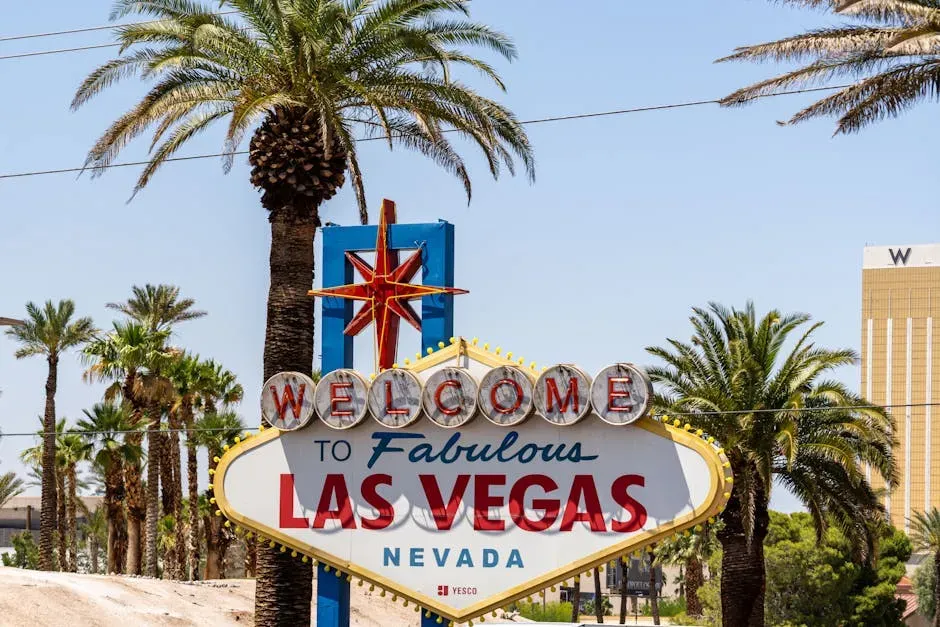
Las Vegas has always been a city built on reinvention. Neon signs gave way to LED megascreens. Buffets evolved into celebrity chef restaurants. Now, the Strip’s next transformation is quieter, faster, and coded in machine learning. Across hotels, casinos, bars, and restaurants, artificial intelligence and robotics are moving from novelty into everyday operations, raising real questions about what hospitality looks like when the front desk doesn’t need a lunch break.
The money flowing into this shift is staggering. The global AI market in hospitality hit $20.5 billion in 2025, growing at roughly a fifth more each year. The hospitality robotics sector alone is projected to jump from $512 million in 2024 to $2.6 billion by 2034, driven by a compound annual growth rate of nearly one fifth. These aren’t projections built on optimism. They reflect actual deployments already happening across the world’s most visited entertainment corridor.
Las Vegas Becomes a Testing Ground for Hospitality Tech
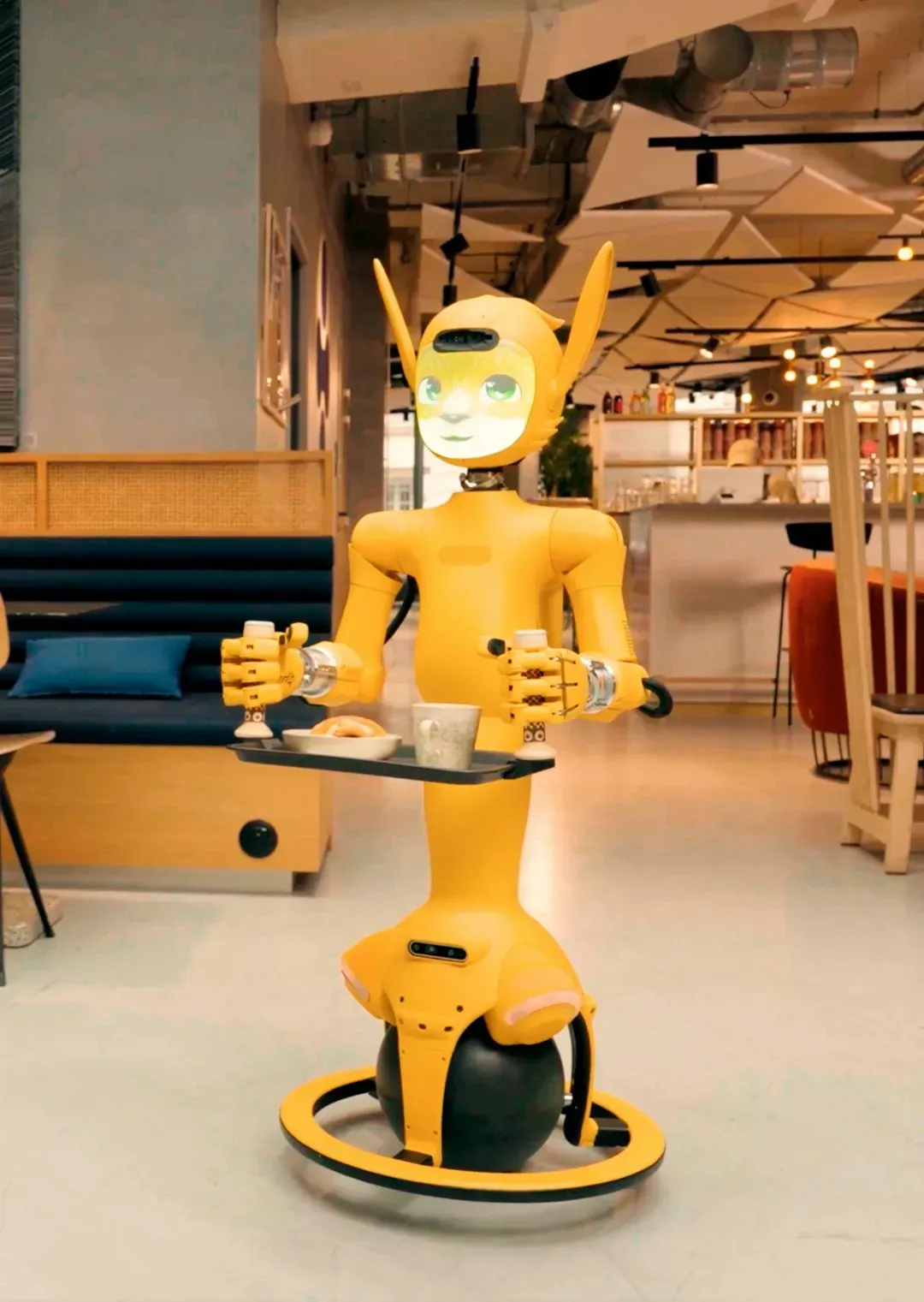
If tech companies get their wish, robots will be cleaning floors and making deliveries, conferences will take place with real-time translation into dozens of languages, and stays in Las Vegas will be more personalized than ever. That vision is already taking shape. Las Vegas-based Richtech Robotics has managed to break into the city’s hospitality industry, with its Matradee robots now delivering food throughout properties at Boyd Gaming venues including the Orleans, Aliante, and Suncoast hotels.
Planet Hollywood and the Venetian have the Tipsy Robot, where a giant robotic arm serves as a mixologist, while at the Sphere, five humanoid robots named Aura serve as greeters and guides. Hospitality professors at UNLV note that Las Vegas is “really fertile ground” to test these products, and that automation can pick up the slack during rush hours and periods with a skeletal staff. The Strip has become, in effect, the world’s largest sandbox for hospitality technology.
The Robot Concierge Is Already Clocked In
Hilton’s robot “Connie,” powered by IBM Watson, greets travelers, handles local recommendations, and has resulted in faster response times and richer guest feedback. Meanwhile, Caesars is taking a different approach to AI-driven service. Caesars Entertainment uses an AI text messaging concierge called Ivy, which can make dining, spa, and entertainment reservations, request room service and maintenance, and locate lost items after checkout, though guests still have the option to opt out.
The experience of arriving at a hotel late at night and finding no one available is becoming a thing of the past, with AI-powered chatbots and virtual assistants now providing instant, accurate, and personalized responses around the clock. These systems can handle complex requests, provide local recommendations based on guest preferences and weather conditions, process room service orders, schedule wake-up calls, and even detect when a guest needs human intervention for more sensitive issues. The old model of a single overworked front desk agent covering the overnight shift looks increasingly outdated by comparison.
An AI Hotel From the Ground Up

A new property opening near Allegiant Stadium in Las Vegas, called Otonomus Hotel, positions itself as the first “AI hotel.” For guests at Otonomus, the customization starts before check-in with a gamified questionnaire and continues as the hotel’s “O Brain” system collects data throughout their stay, remembering details like preferred coffee order, room temperature, and which direction the windows should face. The system doesn’t reset between visits either. Guests interact with the AI through the hotel’s app, and if they return a month or a year later, what the system learned during the previous stay is put to work again.
There’s a significant staffing implication buried inside that model. The 300-unit property plans to operate with around 30 human workers. Compare that to a traditional full-service hotel of comparable size, which might employ several hundred. The hotel’s AI system builds a digital profile for each guest, collecting data from bookings and previous stays to predict personal preferences, and plays a key role in booking, check-in, and room customization, adapting to guests’ habits over time. It’s a compelling proof of concept, though how it holds up under real guest volume remains to be seen.
Robots Behind the Bar
The Tipsy Robot, with locations in the Miracle Mile Shops at Planet Hollywood Resort and Casino and The Venetian, blends cutting-edge technology with traditional hospitality in a concept that pushes the boundaries of entertainment. Instead of human bartenders, sleek robotic arms stand ready to craft drinks with mechanical precision, and these are KUKA robots, a technology with a deep history in industrial applications. Robot bartenders are spreading well beyond Las Vegas, too. Robot bartenders can serve over 250 drinks an hour, rely on precise sensors and safety features, and while expensive upfront, these systems typically pay for themselves within about 18 months through increased efficiency.
The Texas Rangers’ Globe Life Field added Richtech’s ADAM robot, marking a significant step forward in modern stadium hospitality. These robots can mix and serve drinks with precision, are programmed with a wide range of cocktail recipes, and can customize drinks based on guests’ preferences, while also adding an element of entertainment and novelty through their movements and precise pouring. The novelty factor is real and measurable. Crowds gather to watch robotic arms perform what amounts to mechanical theater, and in Las Vegas, spectacle has always been part of the transaction.
The Labor Shortage That Pushed It All Forward
Automation didn’t arrive in a vacuum. The hospitality industry was already struggling with a workforce crisis well before robots became a serious operational option. As of early 2025, nearly two thirds of surveyed hotels reported facing continued labor shortages, with about one in eleven saying they were “severely understaffed.” The number of employees who left the hospitality industry in 2024 was more than double the national average quit rate. Those two data points together paint a picture of an industry constantly treading water.
Partner offer
As of mid-2024, there were tens of thousands of open hospitality jobs that employers couldn’t fill according to the American Hotel and Lodging Association, while nationwide job openings at over eight million far exceeded the pool of unemployed workers at around six and a half million. Rising labor costs have also squeezed business margins, with U.S. hotel labor costs jumping roughly a fifth compared to pre-pandemic levels, contributing to significant profit pressure. That financial pressure accelerated exactly the kind of automation investments that are now visibly reshaping the Strip.
Which Jobs Are Actually at Risk
The job displacement conversation has moved past hypothetical. A report from RCG Economics warns that between now and the end of next year, somewhere between four fifths and nearly all of Las Vegas hospitality jobs could be at risk due to AI and automation, with front desk and accounting clerks, housekeeping dispatchers, and up to half of all food service workers facing similar threats by 2030. The risks aren’t evenly spread, though. Customer service representatives face an extremely high chance of being replaced, while reservations agents and call center operators face an even higher risk, and data entry personnel are also highly vulnerable.
Between 77,000 and 92,000 of Las Vegas’s 300,000 hospitality jobs could be at risk by 2035, according to economists studying the trend. The disruption also falls unevenly across gender lines, with the Kenan Institute of Private Enterprise reporting that eight out of ten women occupy jobs highly exposed to AI automation, compared to six out of ten men. Higher-end properties tend to preserve human contact as a premium service feature, while lower-cost hotels are adopting automation more aggressively to maintain margins. That split is shaping up to be one of the defining fault lines in hospitality’s near future.
What Unions and Workers Are Doing About It
Workers on the Strip aren’t waiting passively for the situation to resolve itself. In its latest contract, the Culinary Union secured a safety net for workers, winning $2,000 in severance pay for each year worked if a job is eliminated by technology or AI, as well as the option to transfer to a different department within the company. Union representatives acknowledged they had to “develop new language” that protected workers from both today’s technology and technology not yet known to exist. It’s an unusual challenge, negotiating contract language around threats that haven’t fully materialized yet.
In 2024, thousands of hotel workers in major North American cities went on strike for higher pay and better conditions, a clear sign that labor tensions remain even as employers boost compensation. Faculty at UNLV’s hospitality department note that unions now have to be “much more deliberate” in their negotiations for job security, and that the types of casino union jobs at risk could look drastically different within a few years. The real negotiation isn’t just about wages anymore. It’s about what percentage of the workforce survives the automation wave at all.
The Human Touch Isn’t Going Away Completely

For all the data pointing toward displacement, the other side of the ledger still matters. According to an Oracle survey of over 5,000 consumers, nearly three quarters of guests welcome technology that speeds up service and adds convenience during their stay, especially in busy hotels and resorts. Still, acceptance of efficiency is different from preferring a fully automated experience. When service errors occur, customers still tend to prefer human employees to handle them. That gap between convenience and crisis hasn’t closed.
Industry experts note that the biggest concern with AI integration remains taking away the relationship created with guests, and that technology should serve as a supplement rather than a replacement, citing examples like the Henn Na Hotel in Japan that tried an exclusively robotic model but found the technology too faulty and has since switched to a hybrid approach. The hotels that succeed won’t simply be the ones that cut staff. Hospitality is still, at its core, a people business, and guests will always value human interaction on some level. That principle is unlikely to disappear even as the technology gets more sophisticated, faster, and cheaper to deploy.
What the Numbers Mean Long Term
According to the World Travel and Tourism Council, the travel and tourism sector could be short more than 43 million jobs by 2035, even as it generates tens of millions of new roles, because demand for workers will persistently outstrip supply. The WTTC also notes that the sector’s potential is being hindered by too few people joining and too few staying, and that some employers are already turning to AI tools to help plug unfilled job roles and increase productivity. There’s a genuine irony in that picture. Automation is accelerating partly because not enough humans want these jobs.
Between 2018 and 2024, the majority of tech investments in the global travel and mobility sectors were made in artificial intelligence and machine learning, making up nearly two thirds of the total investment share. As technology continues to transform hospitality roles, hotels must invest in training programs that help staff adapt to new tools and develop the digital literacy and soft skills that complement rather than compete with automation. The workers who thrive in the next decade of hospitality won’t necessarily be those who resist the machines. They’ll be the ones who learn how to work alongside them, filling the spaces that algorithms still can’t navigate.
The Strip has always told us something about where American culture is heading. Right now, it’s telling us that the future of service work is a negotiation between efficiency and humanity, and that negotiation is just getting started.
Partner offer
Planning a trip to Vegas?
Compare hotel rates and show tickets on VEGAS.com.