Every film buff has a favorite line they can recite on command, the kind of dialogue that gets quoted at parties long after the plot details fade. What most people never stop to consider is how many of those unforgettable moments were never written down at all. They happened in the split second between “action” and “cut,” born from nerves, mistakes, or an actor simply feeling the scene differently than the page suggested.
Screenwriters spend months polishing dialogue, yet some of cinema’s most quoted lines slipped past every draft. A shark that would not work properly, a director who missed a pop culture reference, an actor rattled by a near miss with a real taxi. These are the stories behind nine lines that became legendary despite never appearing in a single script page.
1. “You’re gonna need a bigger boat” – Jaws (1975)

Roy Scheider’s deadpan line after the shark’s first full appearance in Jaws has become one of the most quoted moments in film history, yet it was never part of Carl Gottlieb’s screenplay. According to Carl Gottlieb, one of the film’s screenwriters, this quote was nowhere in the actual script. The phrase actually started as an inside joke about the production’s cramped equipment barge.
Writer Carl Gottlieb explained that came about during rewrites of the film and reflected their real life problem of having too small of a boat to carry all the necessary equipment while shooting in the ocean, saying Zanuck and Brown were very stingy producers, so everyone kept telling them, You’re gonna need a bigger boat. In fact, You’re gonna need a bigger boat became such a common catchphrase around the set that Scheider would start improvising the quote into various scenes throughout the film, considering every other rendition of the phrase was cut from the film. The one take that stuck happened to land at exactly the right dramatic beat, and film history was made almost by accident.
2. “Here’s Johnny!” – The Shining (1980)
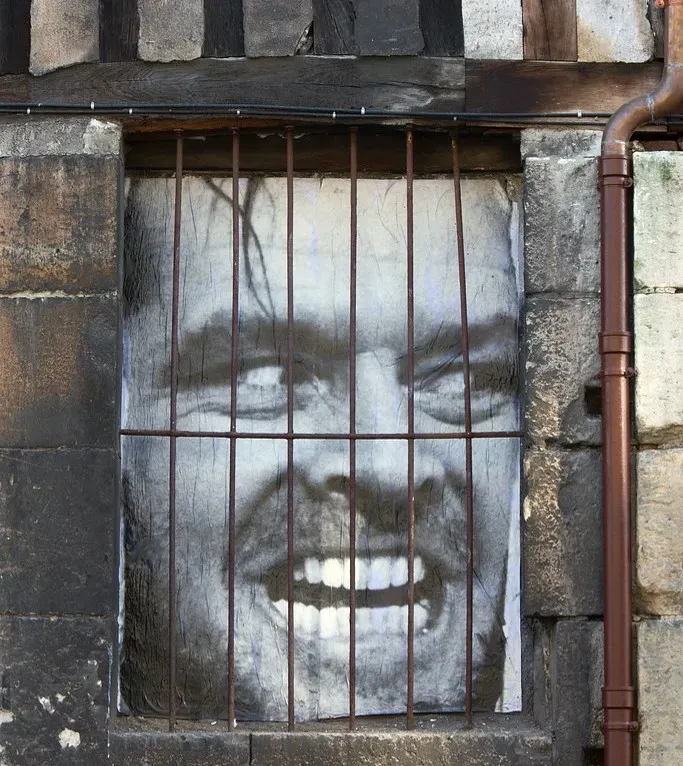
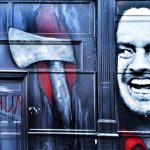
Stanley Kubrick was famous for exhaustive control over every line and camera angle, which makes the origin of this line even more surprising. The quip wasn’t in the script, rather, Nicholson improvised it while filming, and Kubrick liked it enough to keep it in the film. Jack Nicholson pulled the phrase from a source that had nothing to do with horror.
Nicholson borrowed the line from Johnny Carson’s Tonight Show, where Ed McMahon would introduce the show’s guests, ending with, And here’s Johnny. The twist is that Kubrick, who had been living abroad for years, reportedly did not even catch the reference. What’s wild is that Kubrick didn’t even get the reference, having lived in England for years, he hadn’t watched The Tonight Show and didn’t know it was a catchphrase. The line stayed in anyway, becoming one of horror’s most chilling ad-libs.
3. “You talking to me?” – Taxi Driver (1976)
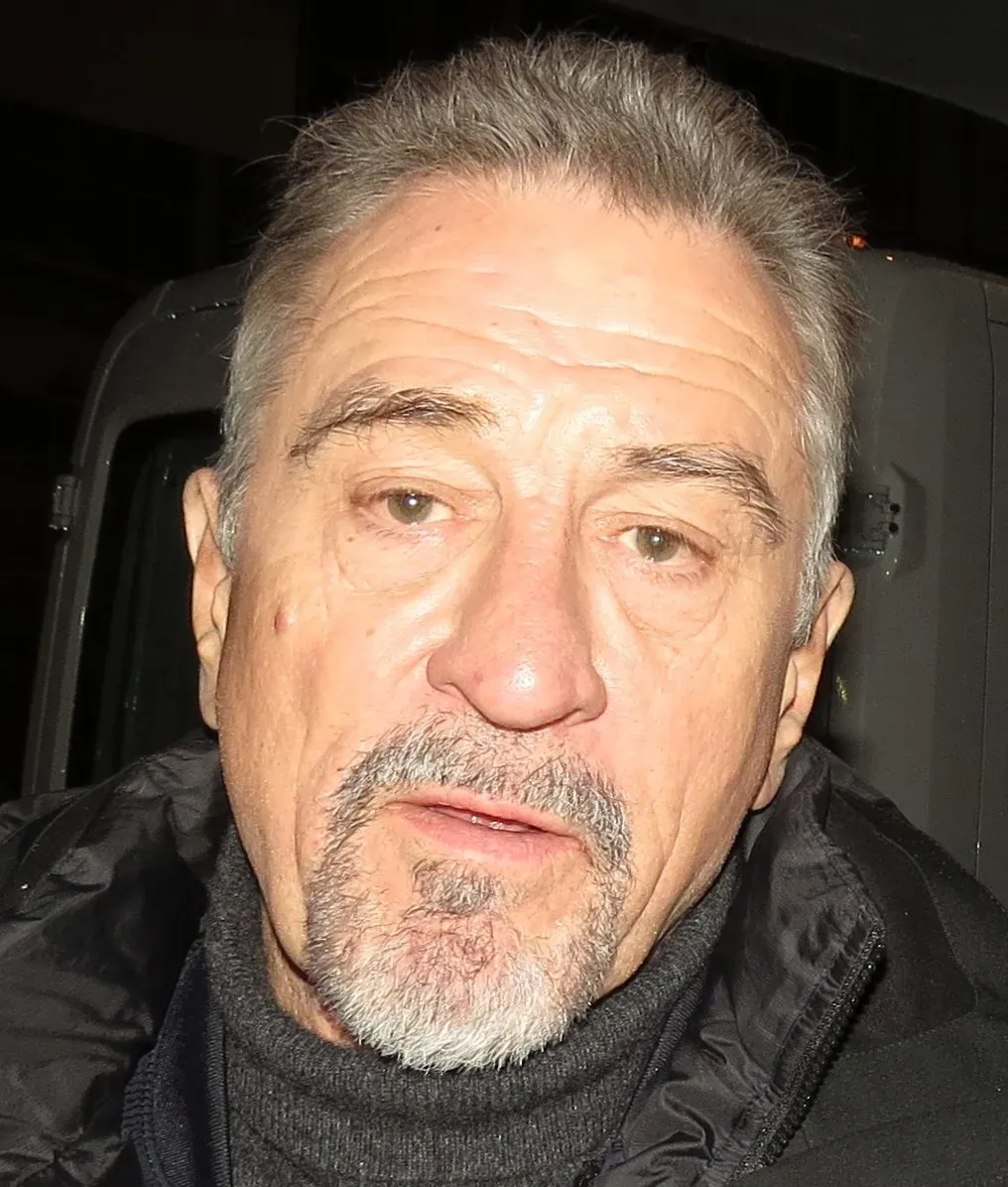
Travis Bickle’s mirror monologue is one of the most analyzed scenes in American cinema, and it turns out the original script barely described it at all. Paul Schrader’s script of Taxi Driver didn’t have the iconic dialogue You talking to me, that part simply read, Travis talks to himself in that mirror. Robert De Niro built the entire sequence from scratch on set with Martin Scorsese guiding him from just off camera.
Decades later, De Niro confirmed the moment came together spontaneously rather than from any written draft. De Niro revealed that those exact words weren’t written in the script, he improvised them on set that day, and confirmed, I came up with it. The scene’s inspirations reportedly ranged from acting exercises to a moment De Niro witnessed at a Bruce Springsteen concert, blended together into dialogue that now defines the film.
4. “I’m walking here!” – Midnight Cowboy (1969)
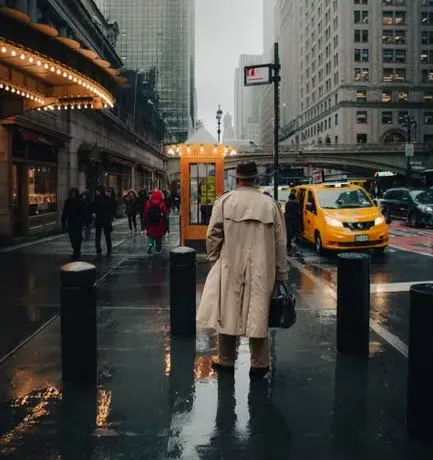
This one came from a genuinely dangerous moment rather than a creative choice. Dustin Hoffman and Jon Voight were filming a street crossing scene without the budget for enough extras to control traffic, and a real taxi nearly hit them. According to Dustin Hoffman and others, the moment where Joe Buck and Ratso Rizzo nearly get run over by a New York City cab and Rizzo shouts, I’m walking here, was totally improvised and never supposed to happen.
Rather than break character and shout about the production, Hoffman stayed in the moment. It doesn’t appear in the final screenplay, and both lead actors claim it was improvised. Director John Schlesinger loved the raw energy of the exchange so much that he kept working the reaction into the finished cut, and it now ranks among the American Film Institute’s most memorable movie lines.
5. “I know” – The Empire Strikes Back (1980)
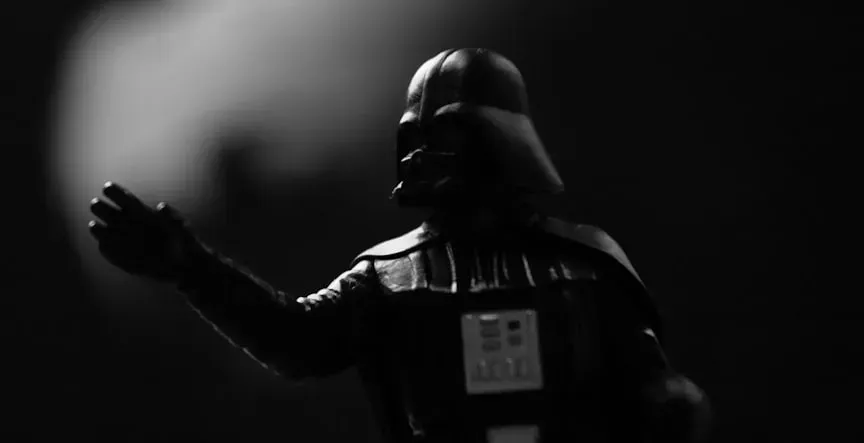
George Lucas’s script called for Han Solo to respond to Princess Leia’s declaration of love with a matching line, but Harrison Ford felt it did not suit his character. Ford has long been credited with swapping the expected romantic reply for a shorter, cockier response that fit Han’s swagger far better than a straightforward confession ever could. The change has become one of the most quoted exchanges in the entire Star Wars saga.
Director Irvin Kershner reportedly welcomed the adjustment because it preserved Han’s roguish personality even in a vulnerable moment. What could have been a forgettable romantic beat turned into a defining piece of characterization, proof that sometimes trimming a line down works better than following the page word for word.
6. “Attica! Attica!” – Dog Day Afternoon (1975)
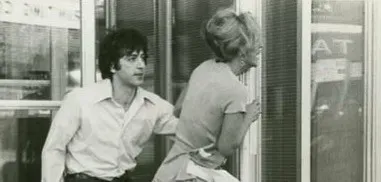
Al Pacino’s bank robber whipping a crowd into a frenzy by chanting the name of the 1971 Attica prison uprising is one of the most electric moments of 1970s cinema. The moment is widely reported as an on set improvisation rather than a scripted beat, growing out of Pacino’s instinct to feed off the real bystanders gathered outside the filming location. Director Sidney Lumet let the cameras keep rolling as the crowd’s genuine energy fed back into Pacino’s performance.
The result feels less like a written movie scene and more like an actual riot captured on film, which is exactly the effect the improvisation created. It remains one of the clearest examples of how unscripted spontaneity can outperform even the most carefully constructed dialogue.
7. “Toga! Toga!” – Animal House (1978)
The chant that launched a thousand college parties did not originate on any script page handed to the cast. Accounts from the production describe the phrase growing organically among the cast during the toga party sequence, with the energy of the moment carrying the improvised chant into the final cut. It became such a cultural phenomenon that toga parties themselves surged in popularity on campuses well beyond the film’s release.
What makes the moment notable is how a single unplanned outburst turned into shorthand for an entire style of comedy. The scene’s loose, chaotic feel owes a great deal to the cast simply playing off each other rather than following rigid blocking and dialogue.
8. “60% of the time, it works every time” – Anchorman: The Legend of Ron Burgundy (2004)

Anchorman was built around heavy improvisation, with director Adam McKay reportedly letting the cast run multiple takes off script to see what stuck. This particular nonsensical boast, delivered with total conviction, is remembered as one of the film’s purest improvised gems rather than something written into Will Ferrell and McKay’s original draft. The absurd confidence of the delivery is what sold the joke far more than the words themselves.
The film’s willingness to let actors wander from the page became something of a signature for the comedy that followed it in the mid 2000s. Lines like this one are part of why Anchorman still gets quoted regularly on set visits and comedy retrospectives today.
9. “Here’s looking at you, kid” – Casablanca (1942)
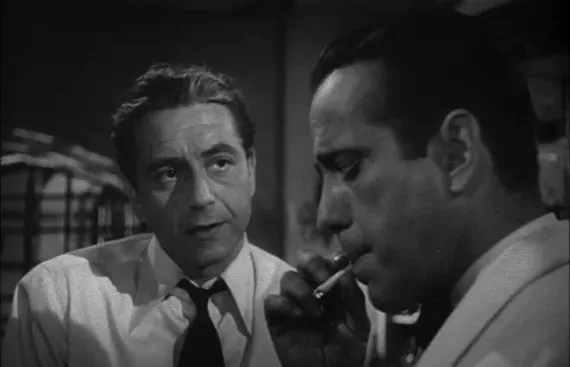
Humphrey Bogart’s farewell line to Ingrid Bergman is consistently ranked among the greatest in film history, and its origin story is one of the oldest examples on this list. According to accounts from the production, Bogart used the phrase informally while teaching Bergman how to play poker between takes, and it eventually found its way into the finished dialogue. The line’s warmth and simplicity stood out enough that it was worked into the script multiple times across the film.
Nearly eighty years later, the phrase still carries the same easy, understated charm that made it memorable in the first place. It is a reminder that some of the best movie dialogue comes from small, human moments on set rather than a writer’s room.
These nine moments share a common thread: none of them were planned to become iconic. They happened because directors were willing to keep the camera rolling a little longer, or because an actor trusted an instinct over a printed page. That willingness to leave room for accident is part of what separates a good scene from one people quote for decades afterward.