There’s something quietly remarkable about a story that almost never gets told. Some of the most beloved books in literary history spent years collecting dust, stuffed in drawers, rejected by dozens of publishers, or mourned as lost by the authors who wrote them. The gap between a manuscript being abandoned and finally reaching readers can span years, sometimes decades. Yet when those books eventually found their audience, they didn’t just sell well – they changed literature permanently. Here are six extraordinary stories of manuscripts that were given up on, only to become some of the most celebrated books ever written.
A Confederacy of Dunces: The Pulitzer Prize No One Expected
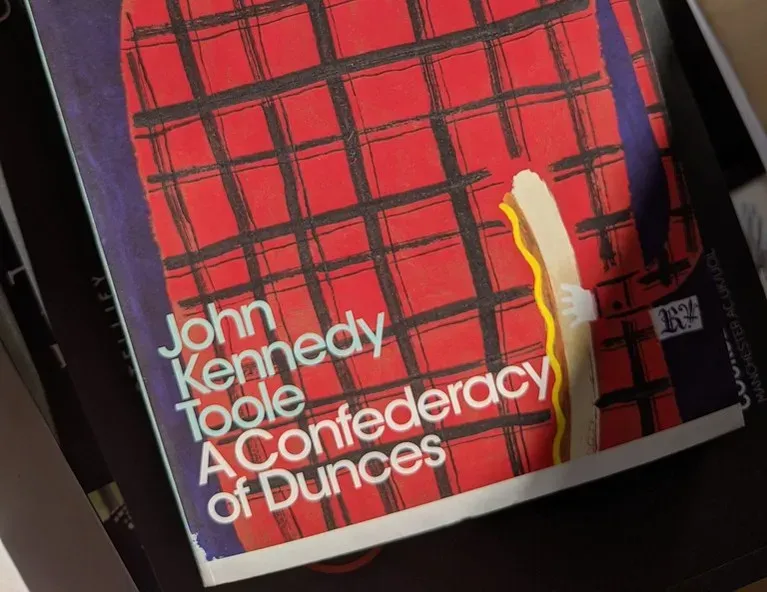
John Kennedy Toole struggled for years to find a publisher for his novel, worked on revisions under the guidance of legendary editor Robert Gottlieb at Simon & Schuster, but abandoned the manuscript as he descended into mental illness. In 1969, frustrated at his failure to interest a publisher, he committed suicide. The manuscript may have vanished entirely from literary history, except for the fierce determination of one person.
The book would never have been published if Toole’s mother had not found a smeared carbon copy of the manuscript left in the house following Toole’s 1969 death at 31. A Confederacy of Dunces was published by Louisiana State University Press in 1980, and Walker Percy provided the foreword. At his recommendation, Toole’s first draft of the book was published with minimal copy-editing, and no significant revisions. The book eventually sold more than 1.5 million copies, in 18 languages. In 2019, the PBS show The Great American Read ranked A Confederacy of Dunces the 58th most loved book in America.
The Help: Five Years of Writing, Three Years of Rejection

Kathryn Stockett drew inspiration for The Help from her own experiences growing up in Jackson, Mississippi. It took Stockett five years to complete writing the novel. What followed publication was an even longer road. The Help was rejected by 60 literary agents over a span of three years before finally being accepted for publication. By any reasonable standard, this was a manuscript that the industry had given up on.
Stockett herself wrote: “In the end, I received 60 rejections for The Help. But letter number 61 was the one that accepted me. After my five years of writing and three and a half years of rejection, an agent named Susan Ramer took pity on me.” As of 2025, The Help has sold 15 million copies, has been published in 39 languages, and spent more than 100 weeks on The New York Times Best Seller list. The novel was adapted into a critically acclaimed film released in 2011, featuring an ensemble cast and earning nominations for several major awards.
Zen and the Art of Motorcycle Maintenance: 121 Doors Slammed Shut

Robert M. Pirsig’s philosophical novel, “Zen and the Art of Motorcycle Maintenance,” holds the record for one of the most-rejected bestsellers, turned down by 121 publishers before being released in 1974. The book sat in a kind of limbo for years, passed from publisher to publisher and met with near-universal skepticism. It was, by all practical measures, a manuscript without a future.
Pirsig’s editor James Landis wrote before the book’s publication: “The book is brilliant beyond belief. It is probably a work of genius and will, I’ll wager, attain classic status.” He was right; it sold millions of copies and continues to be a literary touchstone for many. After five years and 121 rejections, Zen and the Art of Motorcycle Maintenance was published in 1974. Few books have made the journey from that degree of abandonment to that level of cultural impact.
The Master and Margarita: Suppressed by an Entire Government

Mikhail Bulgakov’s “The Master and Margarita” was suppressed by Soviet authorities during the author’s lifetime, surviving only in secret, handwritten copies passed among friends. Bulgakov died in 1940, never seeing his masterpiece published. It wasn’t until 1966, more than two decades later, that a censored version was finally published, sparking international acclaim. This was not simply a manuscript rejected by a publisher – it was a story actively silenced by state power.
The novel’s fantastical plot, combining a visit from the Devil to Moscow with a retelling of the trial of Jesus, captivated readers with its bold satire and imaginative storytelling. “The Master and Margarita” is now regarded as one of the greatest novels of the 20th century, translated into dozens of languages and adapted for stage, film, and television. Its themes of good and evil, freedom, and the power of art remain as relevant and compelling as ever.
The Publishing Industry and the Odds Against Great Books

The stories above are remarkable precisely because they are not isolated cases. Within the book publishing industry, it is agreed that the odds of an author getting their work published stand between 1% and 2%. Despite this low number, more than 95% of manuscripts received by publishers and agents are below the level of standard required. Even strong manuscripts can be discarded for reasons that have nothing to do with literary quality.
Even if a manuscript is of a high standard, it can still be rejected if it does not fit what the publisher or agent is looking for in general, or at that moment in time. Publishers and agents look for well-written manuscripts that are interesting, unique, and are not imitations of other titles within a genre. If a publisher or agent represents a certain genre or niche of publication, they will be less likely to consider a manuscript that falls outside of their specialty. This structural bias helps explain why so many extraordinary works very nearly vanished.
Shuggie Bain and the Booker Prize Against the Odds

The bumpiest of all recent roads might have been the one travelled by Douglas Stuart’s debut novel Shuggie Bain, which won the Booker Prize in 2020. Following its win, part of the story around the book was that it had been rejected more than 40 times. Stuart’s deeply personal story of a boy growing up in 1980s Glasgow was turned away repeatedly by major publishing houses before a small press took the chance.
Shuggie Bain was rejected by 32 publishers in the US and 12 in the UK. Perhaps the reason a smaller publisher could make a success of such a novel was to do with how publishing was changing. Larger publishers were finding that they could not publish based on an editor’s enthusiasm alone. Stuart’s story represents an ongoing pattern in publishing – that commercially cautious decisions continue to push remarkable manuscripts toward the edges, only for the reading public to prove those decisions wrong.