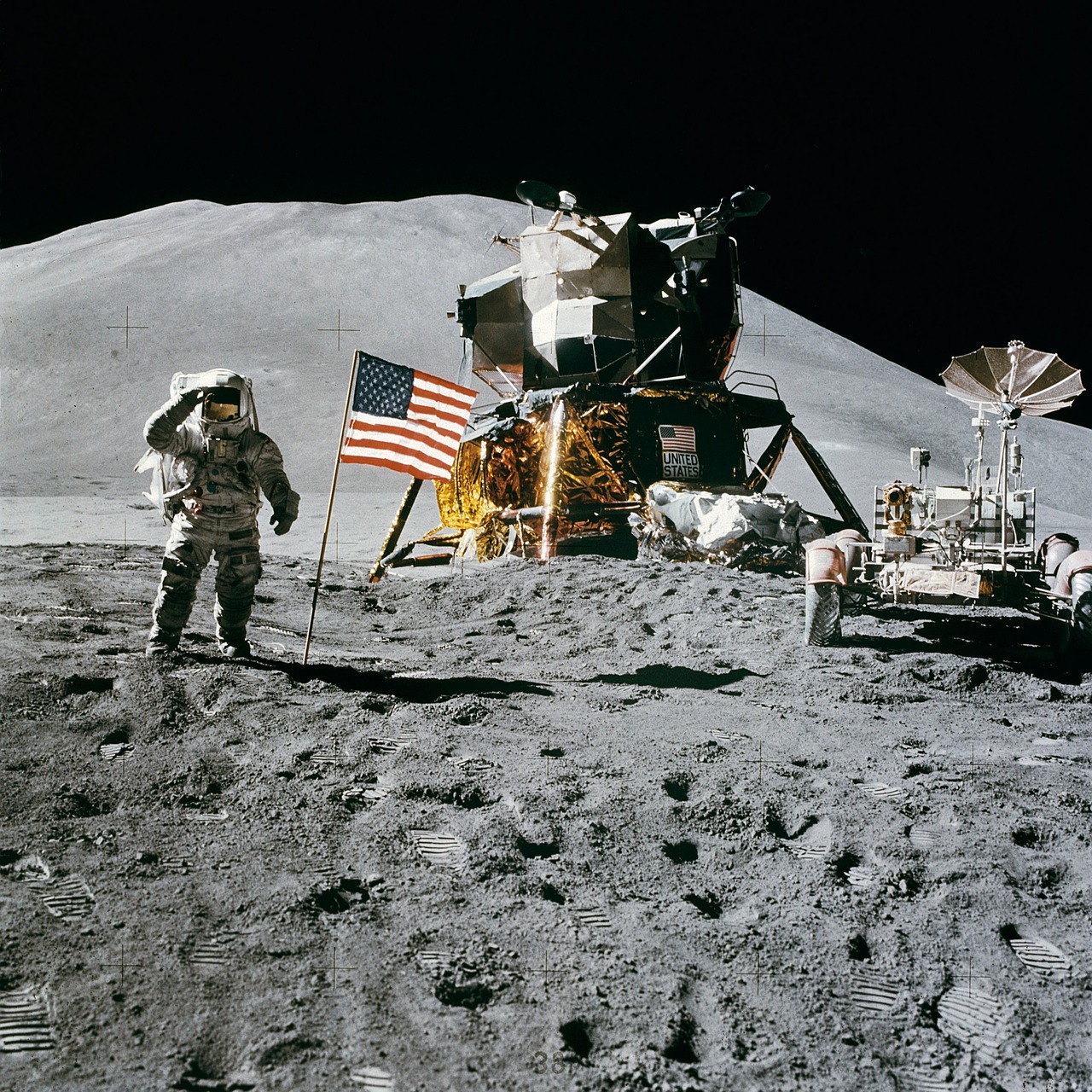

The Electric Moment of Liftoff (Image Credits: Pixabay)
NASA’s Artemis II mission lifted off successfully, sending four astronauts on a historic journey around the Moon – the first crewed deep-space flight since the Apollo era. The event captivated millions, evoking the raw power and human ambition that once defined America’s space program. Observers from around the world felt the thrill, underscoring a timeless fascination with venturing beyond Earth.[1][2]
The Electric Moment of Liftoff
A BBC science editor, Rebecca Morelle, voiced the widespread awe during the launch. As plumes of smoke billowed from the pad, she exclaimed, “Oh, my goodness! Oh, my goodness!” Her excitement peaked as the rocket ascended. “It’s not just what you see and you hear as the rocket lifts off. You can feel the force of it through your body. This is the most powerful rocket that NASA has ever built!”[1]
Rocket launches remain unparalleled spectacles. They represent controlled explosions propelling massive structures into the void, blending engineering marvel with inherent risk. This mission’s Space Launch System marked a pivotal step, hurtling the crew 250,000 miles from home. Such events remind viewers of humanity’s questing spirit, a pursuit that has long stirred the imagination.
Reviving NASA’s Glory Days
The Artemis program stands as NASA’s boldest endeavor since Apollo. It aims to return humans to the lunar surface and establish a sustainable presence there. Unlike the Space Shuttle, which normalized orbital flights into routine operations, or the International Space Station, which focused on low-Earth orbit research, Artemis pushes boundaries once again.[3]
Decades ago, Apollo missions inspired children to idolize rockets and astronauts. That glamour faded after the program’s end, partly due to shifting priorities. Rovers and telescopes advanced science admirably, yet they lacked the visceral drama of human presence in space. Artemis II restored some of that magic, proving manned missions irreplaceable for public engagement.
Overcoming Hurdles in the Race to the Moon
Progress has not come easily. The program faced repeated delays and ballooning costs over nine years of development. Apollo achieved the first Moon landing in just eight years amid Cold War urgency. Modern efforts struggle with bureaucratic cycles, where presidential initiatives often fall to successors’ agendas.[1]
Political uncertainty looms large. A future administration might scrap the project, echoing past cancellations. Still, supporters highlight its potential. Space expert Robert Zubrin emphasized America’s frontier heritage, linking it to figures like JFK’s “New Frontier” vision and Star Trek’s “final frontier.” These cultural echoes fuel persistence.
American Edge in Cosmic Ambition
The United States leads in human spaceflight achievements. NASA has landed people on the Moon and dispatched numerous successful Mars landers and rovers since 1976. In contrast, the European Space Agency boasts a smaller budget and fewer triumphs, including failed Mars landers.[3]
- Moon landings: U.S. succeeded multiple times; ESA has none.
- Mars missions: NASA multiple rovers/landers; ESA two unsuccessful attempts.
- Budget scale: NASA’s several times larger, enabling bolder goals.
- Deep space crewed flight: Artemis II revives U.S. lead after 50 years.
This disparity reflects national character. Space appeals deeply to Americans, defined by exploration from pioneers to astronauts. Artemis builds on that legacy, positioning the nation for greater feats.
Toward the Red Planet and Beyond
Returning to the Moon serves as a stepping stone. Experts eye a manned Mars mission as the true prize, transforming humanity into a multi-planetary species. Such a leap demands Apollo-level innovation and resolve, promising vast scientific gains on the Red Planet.[2]
Popular culture amplifies the draw. The hit film “Project Hail Mary” depicts a high-stakes space odyssey, mirroring innate curiosity about the unknown. Explorers from Francis Drake to Neil Armstrong embody this drive. Artemis II channeled that spirit, moving reporters and viewers alike.
Key Takeaways
- Artemis II demonstrates manned flight’s unique power to inspire.
- Program faces delays but advances lunar base ambitions.
- Mars remains the ultimate horizon for human expansion.
The Artemis II success signals a turning point, rekindling dreams of cosmic frontiers. It challenges society to sustain the momentum amid obstacles. What do you think the next giant leap should be? Tell us in the comments.