Confirmed Purchases Mark Aggressive Start (Image Credits: Media-cldnry.s-nbcnews.com)
The Department of Homeland Security moved forward with plans to transform massive industrial warehouses into immigration detention centers, igniting opposition from lawmakers, residents, and industry insiders nationwide.[1]
Confirmed Purchases Mark Aggressive Start
Immigration and Customs Enforcement secured at least two properties recently. The agency paid $70 million for a 418,000-square-foot warehouse in an industrial park in Surprise, Arizona – the equivalent of seven football fields.[1] Local officials there reported no prior notification from federal authorities. ICE also acquired a warehouse outside Philadelphia for $87.4 million last month, positioning it for potential conversion.[1]
These moves align with a broader strategy outlined in a DHS spreadsheet listing more than 20 potential sites. Some warehouses could accommodate up to 8,000 detainees, surpassing the capacity of the largest federal prison, which holds about 4,000 inmates.[1] Additional locations under consideration include areas in Maryland, Pennsylvania, Texas, Mississippi, New Jersey, and Colorado.[2]
| Location | Purchase Cost | Notable Details |
|---|---|---|
| Surprise, Arizona | $70 million | 418,000 sq ft warehouse |
| Outside Philadelphia, Pennsylvania | $87.4 million | Potential detention conversion |
| Hagerstown, Maryland | Not specified | Recent acquisition amid protests |
| El Paso, Texas | Not specified | Potential for 8,500 beds |
Contractors Highlight Operational Risks
Government contractors eyeing the projects expressed deep reservations about feasibility. Sources at two firms informed NBC News that the sheer scale posed significant safety challenges, particularly with large detainee populations.[1] One executive noted that staffing facilities for over 2,500 people in rural settings would prove extremely difficult.
Facilities exceeding 1,500 detainees carried inherent risks, according to another contractor. Water supply strains emerged as a concern at one prospective site, where full development might deplete local resources. Bidders must already conduct business with the U.S. Navy or its partners, complicating the process further.[1]
Communities Rally Against Local Burdens
Residents and officials mobilized quickly in several areas. In Hutchins, Texas, demonstrators gathered Wednesday night alongside state lawmakers to protest a proposed facility.[1] Mississippi Senator Roger Wicker urged Homeland Security Secretary Kristi Noem to abandon plans near Byhalia, arguing the site suited economic growth over housing up to 10,000 detainees. “I am all for immigration enforcement, but this site was meant for economic development and job creation,” Wicker stated on social media.[1]
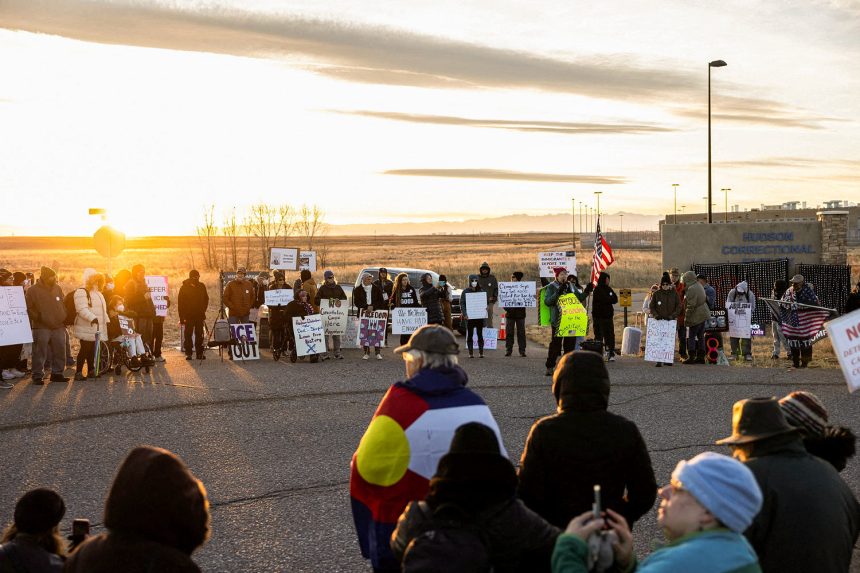
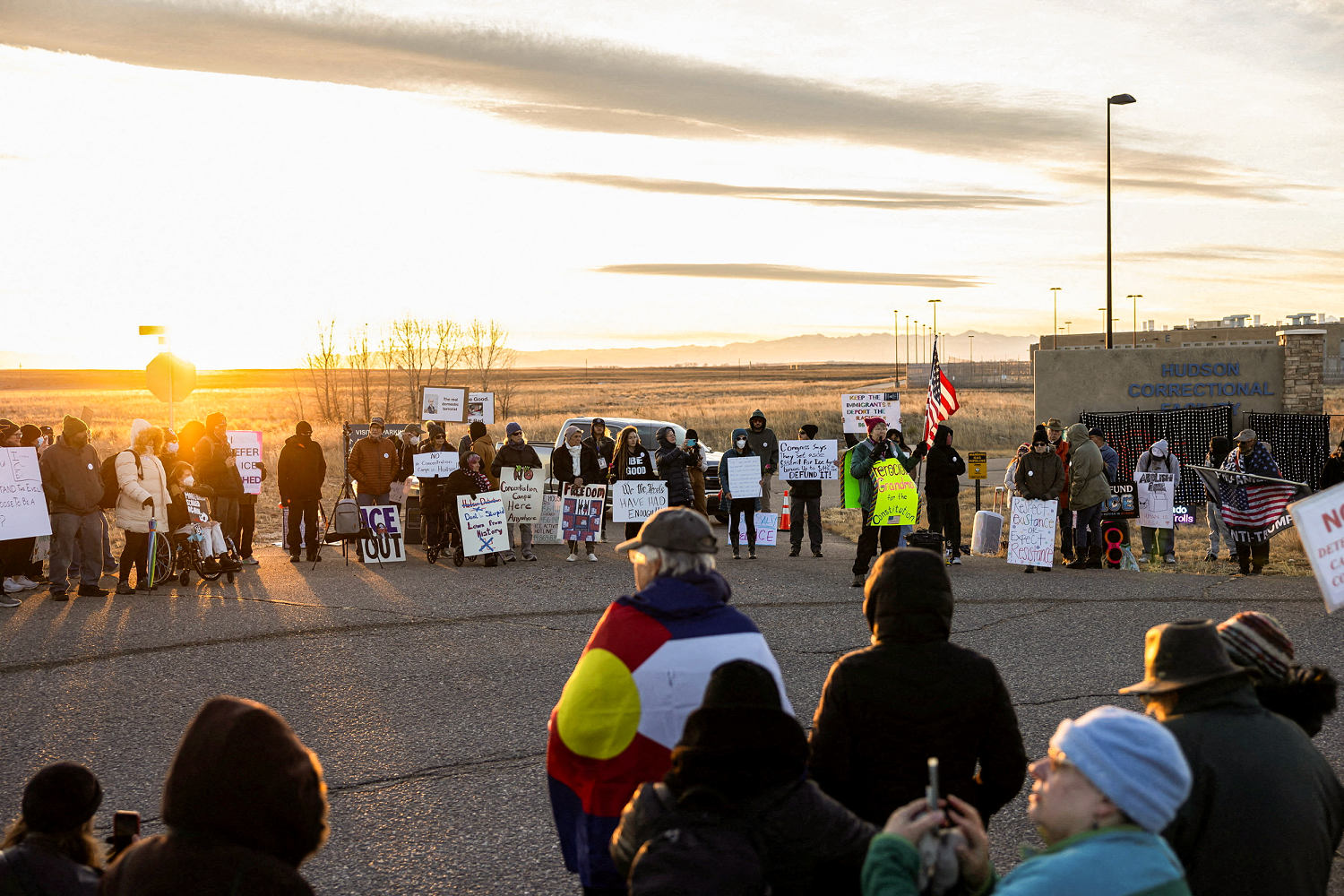
Opposition spread elsewhere. Protests occurred in Hagerstown, Maryland, despite cold weather, while advocates in Hudson, Colorado, flagged poor public transit limiting family and lawyer access. Groups in Arizona and Mississippi voiced similar worries over enforcement intensity and infrastructure limits like sewer capacity.[2]
- Proximity to homes and schools raises safety fears.
- Zoning violations and public safety threats cited by local leaders.
- Infrastructure overload, including water and utilities, strains small towns.
- Access barriers for detainees’ support networks in remote areas.
Expansion Fits Record Detention Surge
ICE currently detains more than 70,000 immigrants across 224 facilities, per early February agency data.[1] The warehouse initiative supports the Trump administration’s mass detention goals, first detailed last November. Past sites like Fort Bliss, Texas, faced scrutiny after three detainee deaths in 44 days, including one ruled a homicide.
Congressional demands led to court orders permitting unannounced visits, underscoring oversight needs. Contractors anticipate heavy modifications for living quarters, plumbing, and recreation, altering initial square-footage-based capacity estimates.[1]
- ICE secured high-value warehouse purchases amid plans for 20+ sites nationwide.
- Contractors flag staffing shortages and safety risks in oversized facilities.
- Local protests focus on infrastructure strain and community disruption.
This push reveals deepening divides over immigration enforcement infrastructure. As conversions proceed, balancing capacity needs with community viability remains a core challenge. What impacts do you foresee for affected areas? Share your views in the comments.