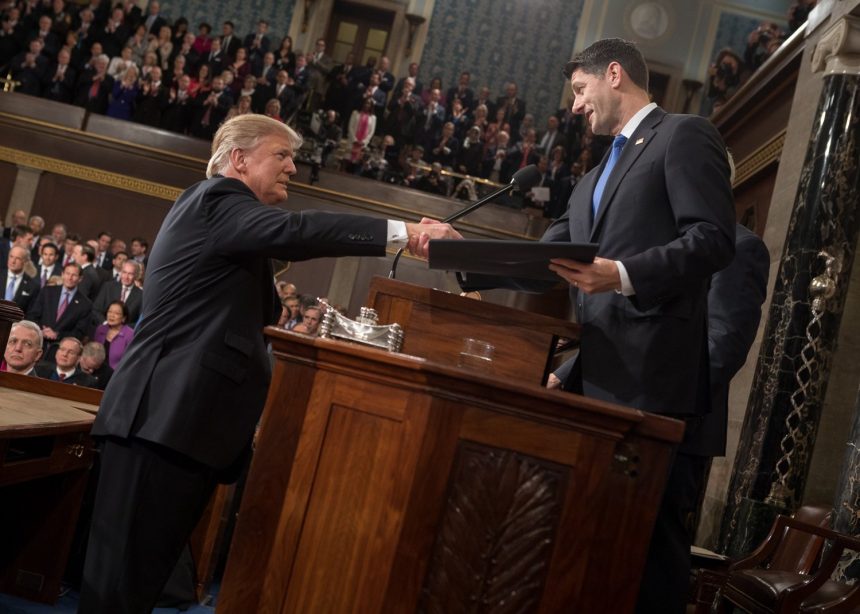

Spectacle Over Substance in Historic Length (Image Credits: Upload.wikimedia.org)
Washington – President Donald Trump spoke to Congress for a modern-record 108 minutes on Tuesday, using the marathon address to highlight economic progress and promise even brighter days ahead.[1]
Spectacle Over Substance in Historic Length
Trump shattered the previous mark for the longest speech to a joint session of Congress, clocking in at nearly two hours. Observers noted that while the event drew viewers for its entertainment value, the extended runtime tested attention spans in an era of short-form content. The address echoed past State of the Union traditions that have grown predictable, yet Trump’s style added drama akin to a high-stakes sporting event.
Political opponents responded with visible reactions, turning the chamber into a stage for partisan theater. Still, the president pressed on, weaving familiar themes into a lengthy narrative. Critics argued that conciseness might have amplified his message more effectively, as fewer Americans likely stayed tuned until the finale.[1]
Economy Takes Center Stage Amid Mixed Signals
Trump centered much of his remarks on the nation’s finances, a strategic choice given recent gains. Stock markets surged, growth held steady, gasoline prices dropped, and inflation eased. These developments painted a picture of recovery, yet surveys revealed widespread unease over living costs and long-term prospects.
The president positioned his policies – lower taxes and reduced regulations – as the path to broader prosperity. He assured listeners that current successes marked just the beginning. “You’ve seen nothing yet,” Trump declared. “We’re going to do better and better and better. This is the golden age of America.”[1]
- Roaring stock market performance fueled investor confidence.
- Reasonable GDP growth sustained business expansion.
- Cheaper fuel eased burdens on consumers and commuters.
- Declining inflation restored purchasing power for families.
- Public polls, however, highlighted persistent worries about affordability.
Border Security and Global Wins Highlighted
Beyond finances, Trump touted gains in immigration control along the southern border. He credited his administration with restoring order after previous lapses. Foreign policy triumphs included bold operations in Venezuela and Iran, which he framed as demonstrations of renewed American resolve.
Domestic pride found expression through recent athletic victories, such as U.S. hockey gold at the Winter Olympics. Trump linked these moments to a broader narrative of national strength and unity. Such examples aimed to rally support across divides.
Partisan Jabs and Path to Midterms
Trump did not shy from critiquing Democrats, accusing them of hypocrisy on economic issues. He pointed to their tenure as responsible for the worst inflation in four decades, contrasting it with his focus on affordability today. The exchange underscored deepening divides as midterms loomed.
Convincing undecided voters remains key. Trump’s agenda seeks to deliver wage increases and opportunities for workers, building on early-term momentum. The speech laid foundational arguments for that campaign.
Key Takeaways:
- Trump’s 108-minute address set a new endurance benchmark for presidential speeches.
- Positive economic data clashed with voter anxieties over costs.
- Promises of a “golden age” framed future policy wins.
Trump closed with soaring rhetoric: “There is no challenge Americans cannot overcome, no frontier too vast for us to conquer, no dream too bold for us to chase, no horizon too distant for us to claim.”[1] Whether that vision resonates will shape political battles ahead. What aspects of the address stood out to you? Share in the comments.