Most people experience a festival stage the same way: from the front, music already playing, lights already blazing. What they never see is the quiet, exhausting, often chaotic week that came before. The stage that looks so natural and inevitable on Friday night was, just days earlier, a muddy field with a delivery schedule and a deadline that couldn’t move.
Building a festival stage is genuinely one of the more complex temporary construction projects a production team can take on. It combines structural engineering, electrical work, weather management, and creative design, all compressed into a brutally short window of time. Here is what that process actually looks like, from the earliest planning stages to the moment the lights finally go dark.
Planning Starts Far Earlier Than You’d Expect

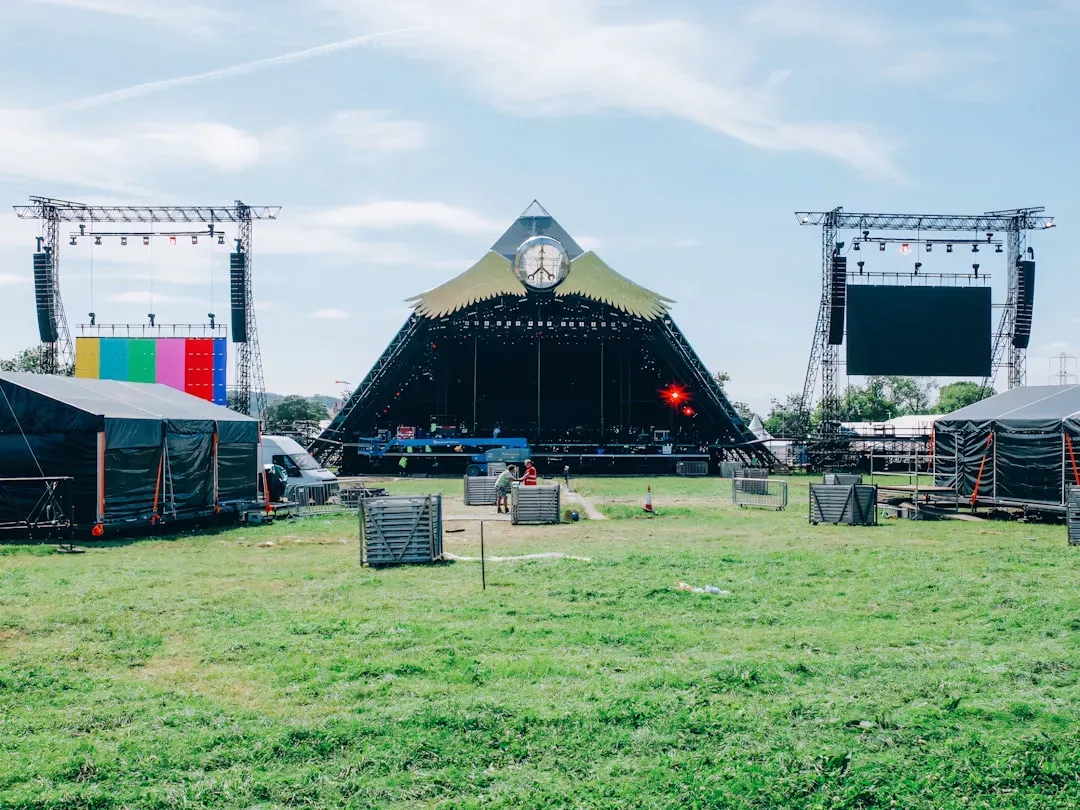
Major festivals start planning at least one year out from the event date, and stage design in particular should probably begin a year in advance, requiring professional stage designers who know how to create something memorable within a given budget. That timeline often surprises people who assume stage construction is a last-minute affair.
Permits must be secured from local authorities, which can be a lengthy process involving safety inspections and environmental checks. Structural designs get drawn up, and the needs of headline artists are factored in, sometimes demanding intricate stage layouts. The further out a team can plan, the fewer nasty surprises they face during build week itself.
Who Actually Builds the Stage

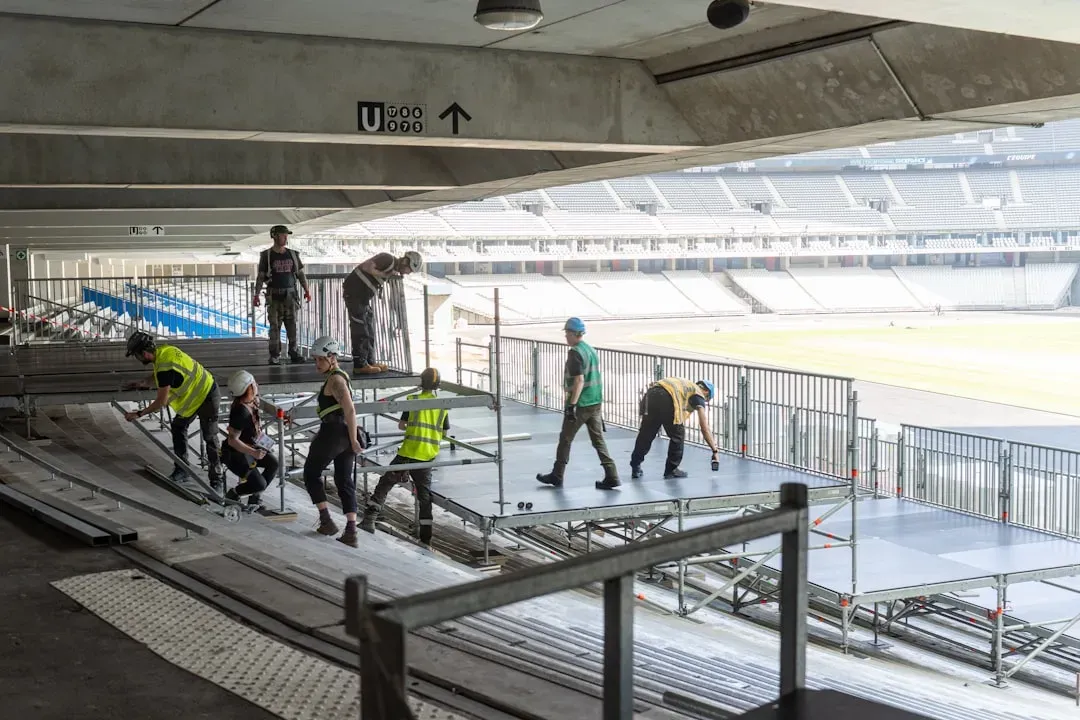
The industry relies on specialized staging companies and dedicated festival set engineering services. These firms provide the heavy-duty truss systems, scaffolding, and custom fabrication required for a modern music festival stage. As a producer, the job isn’t to figure out how to build a stage from scratch, but rather to procure the right partners who specialize in temporary demountable structures.
Stage crew, also known as stagehands, event crew, or run crew, are essential workers in the live event industry responsible for setting up, running, and dismantling productions. Stage crew members work under various specialized roles, such as riggers who set up overhead equipment, audio engineers, lighting technicians, and stage managers. It’s a dense web of specialists, not a generalist workforce.
The Build Week Timeline: Order Matters Enormously

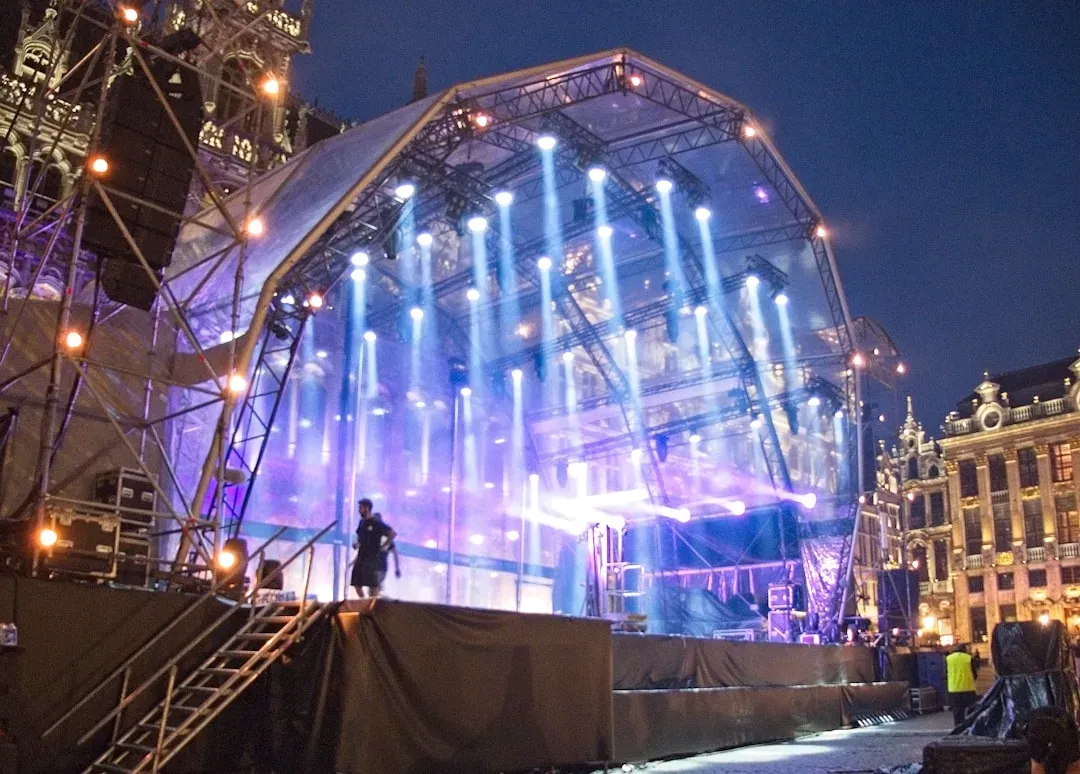
The final week before a festival opens is an intense, high-stakes period. This is when months or even years of planning turn into tangible structures on-site. Load-in and build week, the days dedicated to constructing stages, installing equipment, and setting up infrastructure, can determine whether the festival opens its gates smoothly or descends into last-minute chaos.
The sequence follows the needs of construction and safety. First to arrive are site prep teams handling fencing, ground leveling, and utilities, with perimeter fencing sometimes starting weeks before load-in to secure the grounds. Next, staging crews bring in stages, platforms, and rigging structures, building a solid foundation, assembling scaffolding and trusses, then adding the stage deck and roof. Only after all of that is complete can the lighting and sound teams begin their work.
How a Stage Is Actually Constructed, Layer by Layer

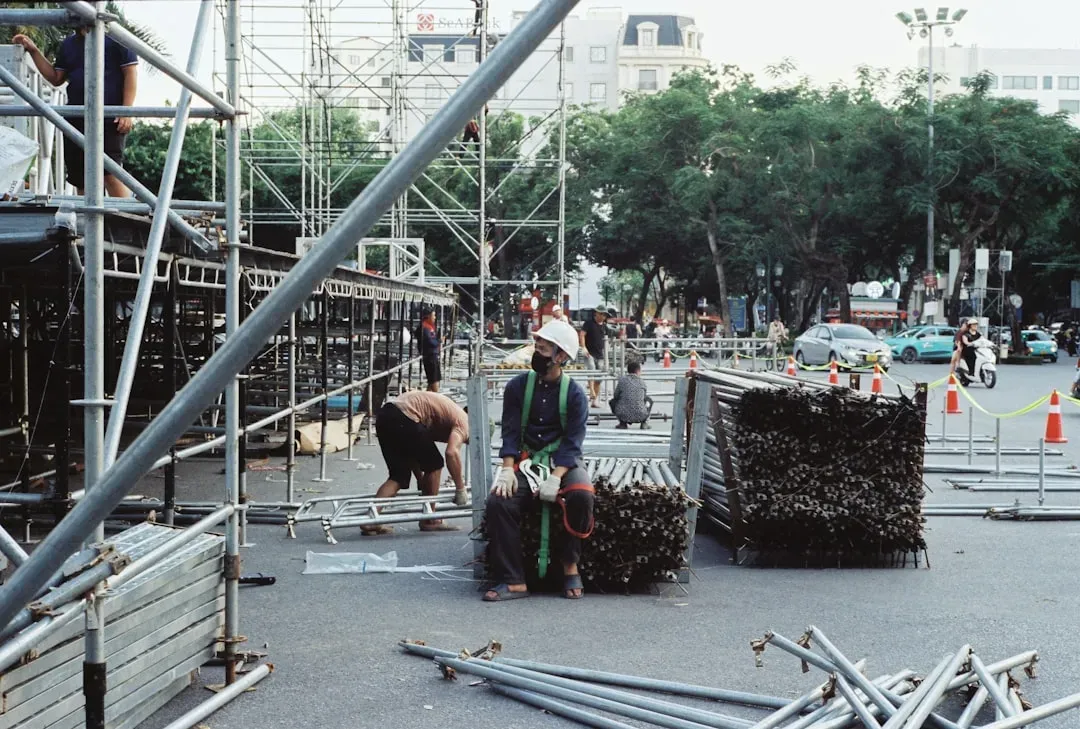
Constructing a festival stage follows a layered sequence: first comes the foundation, which has to be rock solid to support everything above. Next, scaffolding is erected, followed by flooring and roofing structures. Once the basic frame is ready, teams move on to installing lighting rigs and sound systems. Only after all the heavy lifting is done do crews start on the decorations and aesthetic elements that wow the crowd.
Cranes, forklifts, and scissor lifts are all part of the daily routine. These machines are needed to hoist heavy beams, move massive lighting rigs, and get structures in place quickly and safely. Every operator must follow strict safety protocols, because one wrong move could put lives at risk. The Event Safety Alliance reports that modular stages can sometimes be set up in just 24 hours, while for larger events, stages can rise five to six feet from the floor, with stadium-scale festival stages going even higher.
The Engineering Behind a Temporary Structure
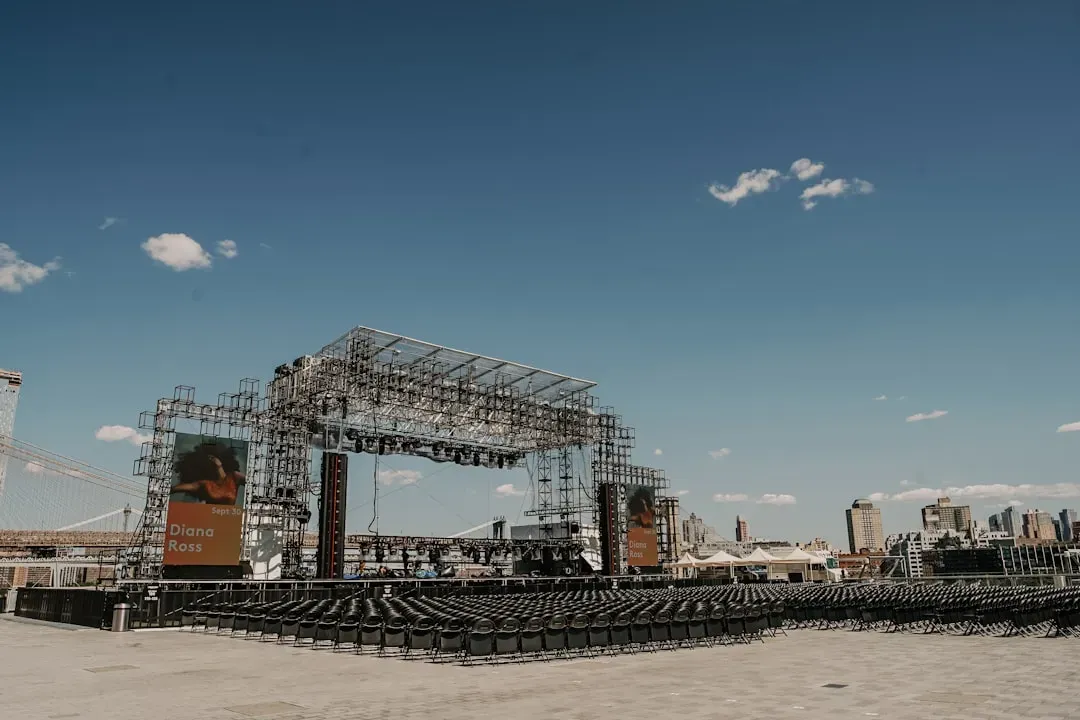
Most stages require a roof, whether for shade, to hang lighting, sound, or video, or for signage. The main thing to consider is how safe the roof needs to be given the environment it will be in, and most roofs will need to be inspected by local authorities or signed off by a third party engineering firm before an event can use them.
If using an LED video wall as a dynamic backdrop, the stage structure must be able to support its weight, as these walls often come in panels that attach to a supporting truss tower. Quick attachment systems like hooks or slide-in brackets make it faster to install and strike such backdrops. Always having a safe way to raise and lower these elements, such as chain motors for heavy scenic panels, protects the crew and allows for quicker scene changes.
Power, Cables, and the Invisible Infrastructure

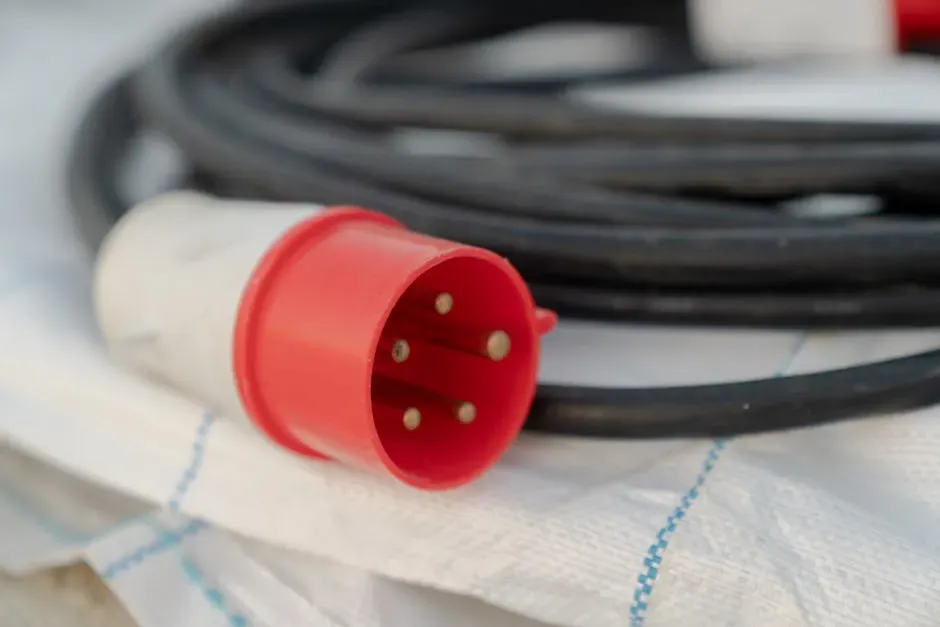
Most festival sites don’t come with a convenient power grid, so organizers essentially have to create their own mini electrical company. Generator farms become the beating heart of the festival, pumping electricity to stages, vendor booths, security systems, and the lights. Festival organizers appoint mains electrical contractors who provide power to the whole site, coordinating with various other contractors during construction.
Beneath the stage and all around it, a tangled world of cables powers everything from sound to video screens and special effects. Crews often lay down miles of cabling, carefully labeling each one to avoid confusion. One misplaced connection can cause a blackout or silence the whole sound system. Color-coded ties and detailed cable maps are standard practice on any professional build.
When Weather Becomes the Enemy
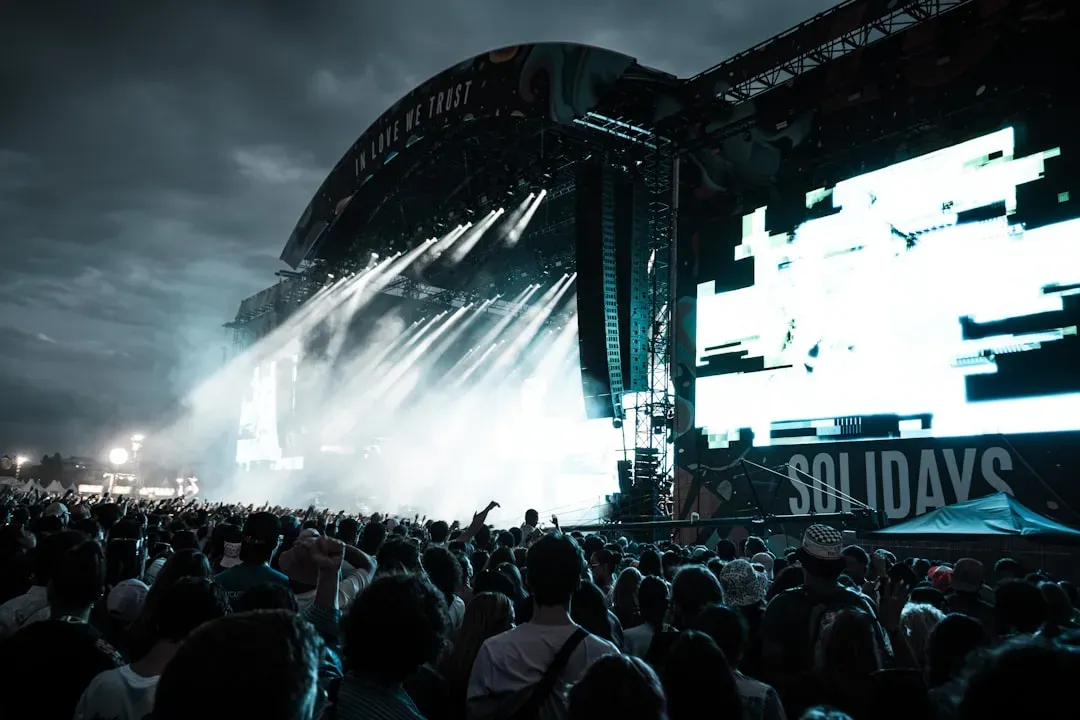
Mother Nature can turn stage building into a high-stakes game: rain turns ground into mud making equipment movement difficult, extreme heat saps crew energy, while strong winds are nightmares for tall structures, with wind gusts over 30 mph being dangerous for outdoor builds according to the National Weather Service.
When Storm Lilian hit Leeds Festival in 2024, the organizers promptly shut down three stages for a day when winds exceeded safety limits. Some big performances were lost, but no one was hurt and the main stages reopened when conditions improved. That decision surely involved difficult conversations with artists and fans, but it was the right call. When structural safety is on the line, the show simply cannot go on.
Overnight Shifts and the Human Cost of Build Week

Working overnight is just part of the job. With tight deadlines, it’s common to see floodlights illuminating a half-finished stage at 2 a.m. The Bureau of Labor Statistics reports that entertainment industry crews often work nights, weekends, and holidays to get the job done. There are no concessions for schedules that slip.
The festival industry is entering a new era of organized labor. Across 2026’s events landscape, festival crews and contractors are increasingly pushing for better working conditions and even unionizing. From stagehands and lighting techs to security teams, workers who once toiled long hours without complaint are now banding together to demand fair treatment. It’s a shift that’s slowly reshaping how build weeks are structured and compensated.
When Things Go Wrong: The 36-Hour Miracle

The stuff of festival legend: just two days before the 2025 Tomorrowland festival, the mainstage, a piece of art that was years in the making, was completely destroyed by a fire. Cancellation seemed inevitable. Instead, the production team pulled off what was widely described as a “herculean feat.”
As crews cleared the smoldering wreckage at 2 a.m. on Thursday, a team of 200 builders began constructing a new stage. By 6 a.m., a massive logistical puzzle began, sourcing roofs, floors, and scaffolding from warehouses and even other festival sites. By Friday at 4 p.m., a new, fully functional mainstage was ready. The festival opened with only a two-hour delay. They rebuilt the mainstage in just 36 hours. This wasn’t luck; it was the result of decades of experience and trusted partnerships.
Tearing It All Down: The Load-Out
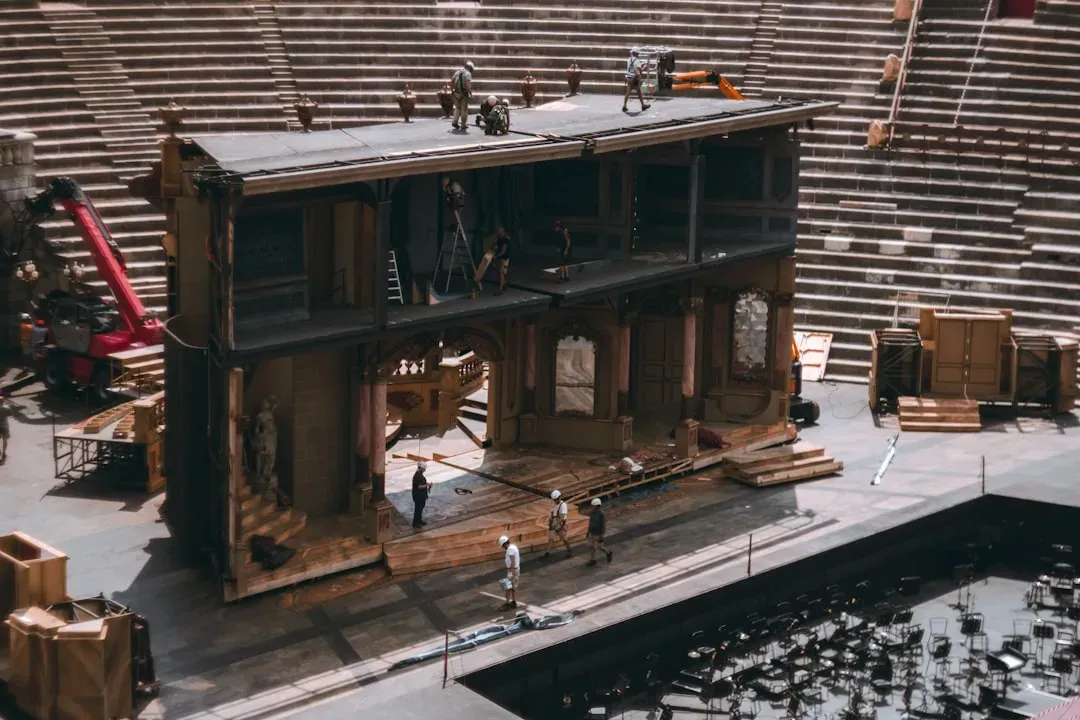
As soon as the last note fades, the clock starts ticking. Dismantling the stage is a race against time, often finished in less than 24 hours. What took a week to build can vanish overnight. The Event Safety Alliance notes that a fast, well-coordinated tear-down is essential to move on to the next event or return the site to normal.
Despite the stress, the energy at a festival build is electric. There’s a sense of excitement and pride in creating something that thousands of people will remember forever. Crew members say that the adrenaline and camaraderie make the long hours worth it. Every person knows they’re part of something bigger than themselves, something that will disappear as quickly as it appeared. That fleeting magic keeps people coming back year after year.