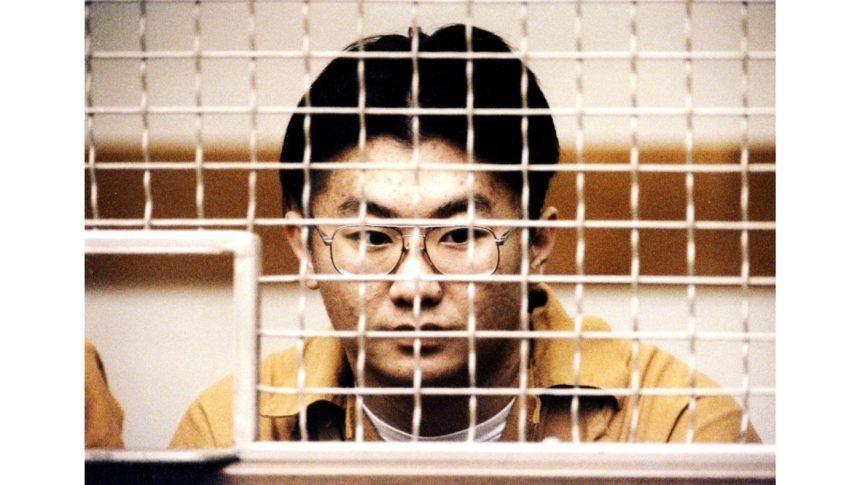


A Plot Among Straight-A Students Unravels (Image Credits: Sbsun.com)
Orange County courts revisited the brutal 1992 slaying of honors student Stuart Tay this week as convicted lookout Kirn Young Kim testified he never expected the plot against his classmate to turn deadly.[1][2]
A Plot Among Straight-A Students Unravels
Stuart Tay, a 17-year-old Foothill High School student from a Singaporean immigrant family, fell victim to former friends on New Year’s Eve 1992. Robert Chan, an 18-year-old valedictorian contender at Sunny Hills High School, orchestrated the killing out of fears Tay would betray a planned computer equipment theft.[3] The group lured Tay to Abraham Acosta’s backyard in Buena Park, where Chan and Acosta beat him for seven minutes with a baseball bat and sledgehammer as he pleaded for mercy.
They forced rubbing alcohol down his throat and sealed his mouth with duct tape, leading to his death by asphyxiation on his own vomit. The perpetrators buried his body in a shallow grave they had dug the day before, then staged a carjacking by driving his vehicle to Compton.[1][4]
Kim’s Claim: Disbelief in a ‘Ridiculous’ Scheme
Kirn Young Kim, then 16 and himself an honors student, waited in his car nearby as the lookout. He later took Tay’s keys and gloves from Chan, drove the car as directed, and claimed ignorance of the fatal outcome.[2] Kim testified that Chan, known for empty threats like false claims of past killings, repeatedly mentioned murdering Tay during planning and a rehearsal, but he dismissed it as bluster while distracted by his Game Boy.[1]
Prosecutors countered that Kim saw the grave – initially mistaken for a dog’s – and heard the intent multiple times, fully aiding the crime. His attorney, Ray Chen, described the plot as “ad hoc” and “hastily thrown together,” questioning whether Kim truly believed it would succeed.[1]
Partner offer

Trials, Prison, and Model Rehabilitation
All five Sunny Hills students faced murder charges. Here’s a breakdown of their outcomes:
- Robert Chan: Convicted of first-degree special circumstances murder; life without parole.[3]
- Kirn Young Kim: Convicted of first-degree murder; sentenced to 25 years to life, paroled in 2012 after over a decade.[2]
- Abraham Acosta: Convicted; sent to California Youth Authority.
- Mun Bong Kang: Pleaded guilty to first-degree murder; 25 years to life.
- Charles Bae Choe: Pleaded guilty, testified for prosecution; Youth Authority placement.
Kim emerged from prison rehabilitated, having pursued education and avoided trouble in a stable home without gangs or drugs beforehand.[2]
New Laws Spark Bid for Justice Reform
California’s legislative changes ended the “natural and probable consequences” doctrine, which held accomplices liable for unintended murders in group crimes. Now, prosecutors must prove direct knowledge of murderous intent.[1] Kim, 49, has petitioned Orange County Superior Court Judge Gary S. Paer to vacate his conviction since his release.
Hearings unfolded in late February and early March 2026 in Santa Ana, with Kim testifying over two days. Prosecutor Brian Fitzpatrick deemed his account “unbelievable,” insisting Kim “knew what was going to happen” and “intended to help it happen.”[1] The judge requested briefs from both sides, signaling a decision weeks away that could face appeals.
Key Takeaways
- Youth from privileged backgrounds committed a savage crime, shattering suburban stereotypes.
- State reforms target outdated accomplice liability for teens.
- Kim’s case tests boundaries of intent and rehabilitation in murder convictions.
This saga underscores evolving views on juvenile culpability, where a teen’s immaturity once led to life terms but now prompts second looks. What do you think about revisiting such old convictions? Tell us in the comments.
Partner offer
Planning a trip to Vegas?
Compare hotel rates and show tickets on VEGAS.com.