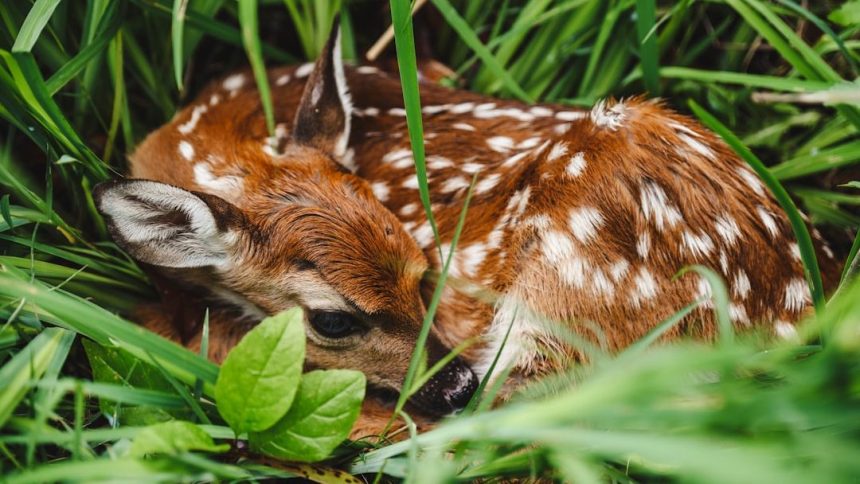

‘Fawn-napping’: CA wildlife officials warn against taking young deer found alone, leading to deaths – Image for illustrative purposes only (Image credits: Unsplash)
Monterey County residents often spot young deer fawns tucked away in grassy spots during spring outings, sparking concern over their apparent abandonment. Wildlife officials stress that this isolation forms a critical part of the animals’ early survival strategy, with mothers foraging out of sight for hours at a time. Recent reports from local rehabilitation centers highlight how human interventions, dubbed “fawn-napping,” impose lethal stress on these vulnerable newborns, prompting urgent statewide reminders as birthing season peaks.[1][2]
Mothers’ Clever Camouflage Keeps Fawns Safe
Adult female deer, known as does, give birth from late spring through early summer across California. They select secluded areas in tall grass or brush to hide their spotted offspring, which lack a strong scent to evade predators. The mother then leaves the fawn motionless for extended periods – sometimes up to a full day – while she searches for food over vast territories spanning 100 to 600 acres.[3]
This behavior ensures the fawn remains undetected, as it instinctively curls into a tight ball and stays silent. Officials note that does return at dawn or dusk to nurse, but only when the area feels secure. Human presence or pets can deter her from approaching, prolonging the fawn’s solitude unnecessarily.[2]
Stress from Handling Claims Young Lives
Well-meaning people who scoop up these seemingly orphaned fawns transport them to rescue centers, unaware of the trauma involved. Beth Brookhouser, from SPCA Monterey County, described the process: “They scoop them up, throw them in the car and bring them to us. Which is so incredibly stressful to the fawns. And, sometimes, they don’t even survive that stress.”[1]
So far this year in Monterey County, the SPCA handled six such cases, with two fawns succumbing to the ordeal. Even survivors face bleak prospects, as they miss essential lessons from their mothers on foraging, predator avoidance, and wilderness navigation. Jeff Stoddard, a CDFW Northern Region wildlife program manager, explained that rehabilitated fawns rarely regain full wild competencies: “Even if we are able to rehabilitate them, they aren’t going to learn the skills necessary from their mother to find forage, to survive, to know what predators are.”[1][2]
Cases spike during holidays like Memorial Day, when recreation draws crowds to deer habitats. Limited licensed facilities struggle with capacity, and disease risks prevent relocating fawns beyond their home county. Long-term, many end up in captivity or face euthanasia due to scarce sanctuary space.
Recognizing Genuine Distress
Not every lone fawn requires action, but certain indicators signal true peril. Wildlife centers provide clear guidelines to distinguish normal hiding from emergencies, helping the public avoid unnecessary interference.
- Labored or rapid breathing
- Walking and vocalizing continuously for over an hour
- Visible blood, broken bones, or flies and maggots on the body
- Lying prone on its side with legs extended
- A deceased mother nearby
These signs warrant attention, but experts advise against direct handling.[4][3]
Legal Rules and Proper Response Steps
California law prohibits possessing wild deer without permits, classifying violations as misdemeanors punishable by fines up to $1,000 or six months in jail. Feeding deer carries similar penalties, as it disrupts natural behaviors and promotes dependency.
If distress appears evident, contact professionals immediately rather than intervening. SPCA Monterey County’s Wildlife Rescue and Rehabilitation Center urges callers to dial 831-264-5427 for on-site evaluation, often via video assessment. For fawns in immediate hazards like roadsides, gently relocate them nearby using a towel, then retreat to allow maternal reunion. CDFW regional offices handle reports of injured or confirmed orphans statewide.[2]
Observers should maintain distance, leash dogs, and refrain from lingering, preserving the mother’s confidence to return.
Preserving Wild Futures Through Restraint
Each misguided rescue strains overburdened centers that admit thousands of patients annually, diverting resources from genuinely needy wildlife. By understanding deer ecology and heeding these guidelines, Californians protect fawns’ best chance at thriving in the wild. As Stoddard advised, the simplest directive remains: “Our direction most often is to stay clear of the animal so the mother feels safe to return.”[2] This spring, restraint honors nature’s design more effectively than any hurried act of kindness.