Recasting a child actor has always carried a certain quiet awkwardness to it. One week a familiar young face is on screen, the next week a different kid is sitting at the same fictional kitchen table. Audiences mostly shrug. Studios move on. But the reasons driving recasting decisions in Hollywood, and the broader direction those decisions are pointing toward, reveal something considerably more uncomfortable about how the entertainment industry treats its youngest performers.
Over the past few years, a convergence of factors – growing legal pressure, an AI-driven production landscape, inconsistent labor protections, and the lingering fallout from high-profile abuse scandals – has pushed the recasting of child stars into new and genuinely troubling territory. This isn’t just about one kid losing a role. It’s about a system that still hasn’t figured out how to protect the people it profits from most.
Growing Up Too Fast: The Original Problem With Recasting
Recasting happens a lot with child stars because they grow up quickly, and sometimes a series needs to create the illusion that time is passing more slowly. Other times, a series might need a character to age quickly for a time jump. That tension between a child’s natural development and a production’s creative timeline has always been the most visible reason young performers get replaced.
In the case of “Big Love,” the show’s co-creator stated that the young actress playing Teenie was simply maturing too quickly and starting to look significantly older than the character was supposed to be, leaving them no choice but to recast her. The pattern repeats constantly. Nickelodeon once decided that a voice actress playing Dora had already started to sound too old to play the character after just 35 episodes across a three-year stint.
The Exploitation Backdrop That Never Really Went Away

The five-part docuseries “Quiet On Set: The Dark Side of Kids TV,” which aired in March 2024, uncovered industry abuses and the toxic culture behind Nickelodeon’s most popular children’s shows of the 1990s and early 2000s, including All That, The Amanda Show, Drake and Josh, Zoey 101, iCarly, and Victorious. The ripple effects of that documentary were significant, prompting national conversation about who, exactly, is responsible for protecting young performers while they work.
Through manipulation, non-disclosure agreements, and ostracism, production companies tried to keep their victims quiet, but despite the obstacles, some have still made efforts to be heard. The troubling dimension is that very few structural changes followed. Kids still remain the focal point of entertainment on TV, and in new forms of media that have complicated the safeguards intended to protect them.
A Legal Framework Full of Holes

Unfortunately, many think that federal labor laws provide adequate protection for all minors, but the truth is that minors in the entertainment industry are entirely exempted from the Fair Labor Standards Act. That’s a significant gap. The FLSA, which governs working conditions across most American industries, simply doesn’t apply to child performers.
Currently, 17 states do not regulate child entertainment laws at all, including Arizona, Kansas, Kentucky, Mississippi, Nevada, Ohio, Oklahoma, Tennessee, Utah, and others. That means in roughly a third of U.S. states, a production can hire a child actor with almost no state-level guardrails whatsoever. The lack of federal protection for children in the entertainment industry has prompted some states to pass their own legislation, but states with well-established ties to the entertainment community, such as California and New York, have the most comprehensive protections.
When Laws Exist But Go Unenforced

With Los Angeles widely considered the hub of the entertainment industry, many legal protections in place to protect child stars are centered in California. In 2012, former Governor Jerry Brown signed a bill that required adults working with child entertainers to pass background checks and fingerprinting to ensure they were not registered sex offenders. On paper, that sounds meaningful. In practice, it told a different story.
According to a 2018 investigation by Deadline, the law was largely unenforced. They found that no Hollywood publicists working at the time had obtained a permit, and that dozens of managers, acting coaches, and photographers had not complied with the law. Passing legislation and enforcing it are two very different things, and child performers have historically fallen through exactly that gap.
Financial Vulnerability: A Problem as Old as Hollywood

The earliest milestone regarding protections for child actors occurred in the mid-1930s and involved Jackie Coogan, who first gained fame starring alongside Charlie Chaplin in the 1921 classic “The Kid.” When he turned 21, he discovered that his mother and stepfather had spent the bulk of the money he had earned. That case directly led to what became known as Coogan Law, requiring that a portion of a child performer’s earnings be set aside in a trust.
Many child stars have fallen victim to financial mismanagement from those meant to protect them – their parents. Decades after Coogan’s situation forced a legal reckoning, the problem persists in various forms. In New York, a trust account must be established for child performers, and employers are required to transfer fifteen percent of earnings into that account. Still, protections like this remain inconsistent state by state and are rarely extended to children working in digital content.
Partner offer
The Mental Health Toll Nobody Tracks Properly
Society has simply accepted the entertainment industry as it is and has blamed former child actors for their alcohol addiction, anxiety, depression, PTSD, and lack of education that stems from their childhood. That framing shifts responsibility away from the industry and onto the individuals it shaped. The structural causes – erratic work schedules, adult pressures placed on developing minds, and sudden loss of income or identity when a role disappears – rarely get the same scrutiny.
Kids are still developing emotionally and socially, and how they’re treated on set can leave a lasting impact. Keeping language age-appropriate, avoiding unnecessary exposure to violent or mature content, and giving young performers space to speak up are all part of creating a responsible set culture. Those are baseline expectations. The fact that they still need to be spelled out in professional guidance documents in 2025 says quite a bit about the gap between intention and practice.
Recasting in the Streaming Age: Faster, Quieter, Less Accountable
Whenever a role is recast, speculation swirls about what happened behind the scenes. In the streaming era, that speculation tends to dissolve quickly. Platforms release seasons all at once, audiences binge through episodes, and the fact that a child was quietly replaced often registers as little more than a footnote. The speed and volume of content production that streaming demands makes recasting decisions feel almost routine.
Digital savviness and online presence now add value for young performers, with familiarity in self-tapes and remote casting helping them showcase personality beyond the stage. Adaptability and resilience in the face of last-minute script changes or digital demands are especially appealing to casting professionals. In other words, children are being expected to navigate an increasingly complex professional environment, often without adequate adult protection around them.
AI: The Newest and Most Unsettling Layer

From digital replicas potentially replacing actors to AI-driven personalized content and immersive viewing experiences, AI is reshaping Hollywood by changing how movies are both made and experienced. For adult performers, that’s already alarming enough. For child actors, the implications are even less examined.
Amongst the biggest concerns is the unauthorized use of AI-generated digital replicas of a performer’s digital visual or vocal likeness for commercial purposes. A child who performed a role at age ten could theoretically have their likeness retained, aged, or altered digitally in ways that strip them of any ongoing control or compensation. As of 2025, many industry labor unions including SAG-AFTRA have been pushing for stronger transparency and legal regulations regarding the use of AI, but child-specific protections in this area remain largely underdeveloped.
The Casting Shift Toward “Naturalism” and What It Demands of Kids
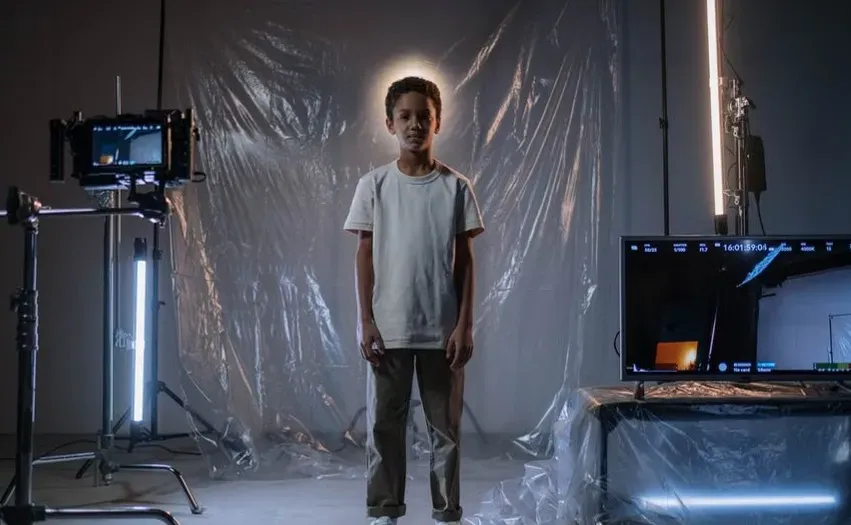
The trend is moving toward realism, with natural and relatable delivery favored over overly rehearsed or theatrical performances. This is quite a change from the days when it was expected that child actors do everything by the book of technical training. On one hand, this is a genuine creative improvement. Naturalistic performances are often more compelling. On the other, it places child actors in an unusual bind.
It can take years for a grown actor to hone their craft, yet many child actors have displayed the same maturity and nuance that even the most veteran stars still strive for. While the early days of cinema and television required them to simply smile and look cute, many recent child actors have demonstrated some of the most impressive performances in TV and movies to date. The industry celebrates that precocious emotional depth. It is much slower to acknowledge the psychological cost of producing it on demand, year after year, from childhood onward.
The Disappeared: What Happens After the Recast

In multiple documented cases, child actors who were replaced in series have not acted since leaving the show, seeming to go in a different direction than a life in show business after their time in the role came to an end. For some, stepping away is a healthy and deliberate choice. For others, the abrupt end of a role – without proper transition support – leaves lasting professional and personal consequences.
The stereotype of the child star gone wrong is widely known. The legal troubles and rehabilitation stints of former child actresses have been portrayed in the media as a case study of the dark side of young Hollywood, and though not all child actors end up in downward spirals, many do face negativity and pressure that can impact them as they grow older. The industry tends to treat these outcomes as individual tragedies rather than systemic results, which is precisely why the pattern keeps repeating.
The recasting of child stars is, in isolation, a mundane production decision. In context, it is a small but telling symptom of an industry that has always moved faster than its safeguards. Until the structural problems – fragmented labor laws, digital rights gaps, inconsistent enforcement, and the psychological costs placed on young performers – are addressed with the same energy the industry spends on content output, the new direction in child casting will keep raising the same uncomfortable questions.
Partner offer
Planning a trip to Vegas?
Compare hotel rates and show tickets on VEGAS.com.